TV Stand Size: Choose the Right Dimensions for Your Space
Picking a TV stand feels simple until you realize it can mess up your view, crowd your room, or look awkward next to the sofa. The good news? You only need to check a few key measurements and you’ll be set. First, grab your TV’s width, height, and depth. Then think about how far you’ll sit and how much room you have on the wall or floor. Let’s break it down step by step so you don’t end up with a stand that’s too tall, too short, or just the wrong shape.
How to Choose the Right Height and Width
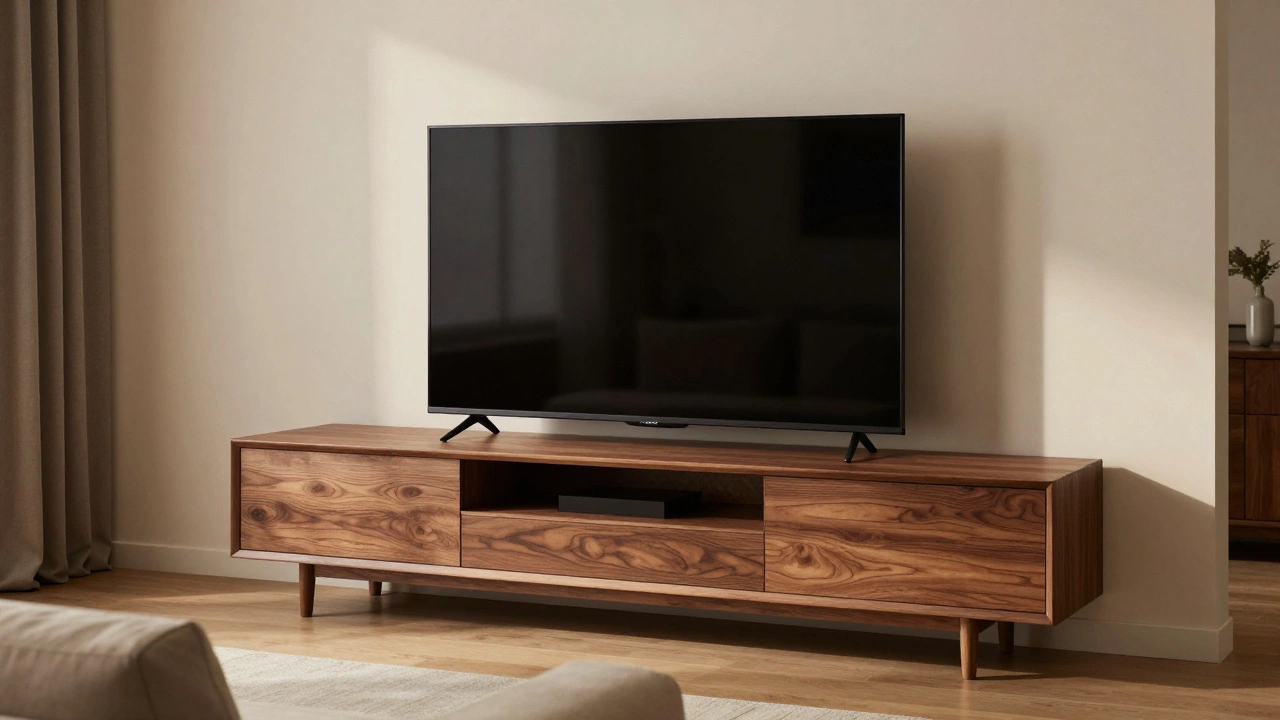
Height matters for comfort. A common rule is to line the TV’s center with your eye level when you’re seated. For most sofas, that means a stand height between 20‑30 inches. If you love lounging on a low couch, lean toward the lower end; if you sit upright in a chair, aim higher. Width is about balance. Your stand should be at least as wide as the TV, but adding a few inches on each side gives room for speakers, décor, or gaming consoles. A 55‑inch TV, for example, works well on a 60‑inch stand.
Depth, Stability, and Practical Extras
Depth is easy to overlook. The stand needs to extend past the TV’s back panel by at least a couple of inches to keep cables hidden and the TV stable. If your TV’s depth is 2 inches, look for a stand with a 4‑5 inch depth. Stability is another thing – heavier stands made from wood or metal won’t wobble if you have kids or pets. Finally, think about storage. Shelves, drawers, or a cable management system can turn a plain stand into a tidy media hub.
Now that you know the basics, measure your space. Use a tape measure to record the width of the wall area, the distance from floor to eye level, and the depth you can afford. Compare those numbers to the TV’s specs and the stand’s dimensions. If anything feels tight, step back and consider a slightly narrower TV or a wall‑mount option. Remember, a good fit improves your viewing comfort and keeps the room looking neat.
Common mistakes include picking a stand that’s taller than the TV, using a stand too narrow, or ignoring the depth needed for cables. Fix these by adjusting one measurement at a time – lower the stand height, widen the platform, or add a shallow console table underneath. Most furniture stores will let you test the stand with your TV before buying, so take advantage of that. With the right size, your TV will feel like it belongs, and you’ll enjoy movies without straining your neck.
Bottom line: a TV stand isn’t just a piece of furniture; it’s part of your viewing experience. Match height to eye level, keep width a bit wider than the screen, add enough depth for stability, and think about storage. Do a quick check of your room’s dimensions, compare them to the TV specs, and you’ll walk away with a stand that looks good and feels right.