TV Stand Safety Calculator
Calculate if your 65-inch TV will fit safely on your existing stand. This tool uses the safety guidelines from the article about maximum overhang and weight limits.
Safety Tips
Based on Consumer Product Safety Commission guidelines:
Overhang ≤ 6 inches per side
Overhang 6-7 inches per side
Overhang > 7 inches per side
You bought a new 65-inch TV. It looks amazing. But when you unbox it, you realize your old 55-inch stand is still sitting there-perfectly clean, no scratches, and you don’t want to buy a new one. So you ask: Can I put a 65-inch TV on a 55-inch stand? The short answer? Maybe. But not without risks.
Size isn’t everything-weight and balance matter more
A lot of people think if the TV is wider than the stand, it’s automatically unsafe. That’s not true. What really matters is whether the stand can hold the TV’s weight and keep it from tipping forward. A 65-inch TV typically weighs between 45 and 65 pounds. Most quality TV stands made for 55-inch TVs are built to handle up to 80 pounds. So if your stand is sturdy and made of solid wood or metal, it might be fine.
But here’s the catch: the TV’s center of gravity shifts the wider it gets. A 65-inch TV is about 14 inches wider than a 55-inch one. That means the front edge of the screen sticks out further. If the stand’s surface is only 55 inches wide, the TV’s base might sit flush, but the screen itself will overhang by 4 to 7 inches on each side. That’s not just a visual issue-it’s a safety hazard.
Overhang rules: How much is too much?
There’s no official building code for TV stands, but furniture engineers and safety experts agree on a simple rule: no more than 6 inches of overhang on each side. That means if your stand is 55 inches wide, the TV’s base should be no wider than 67 inches. Most 65-inch TVs have a base width between 58 and 62 inches. That’s within the safe range.
Check your TV’s manual. Look for the “base width” or “stand width” specification. If it says 59 inches, your 55-inch stand gives you only 2 inches of overhang on each side-perfectly acceptable. If the base is 64 inches, you’re looking at 4.5 inches overhang. Still okay, but you’ll need to be extra careful about placement.
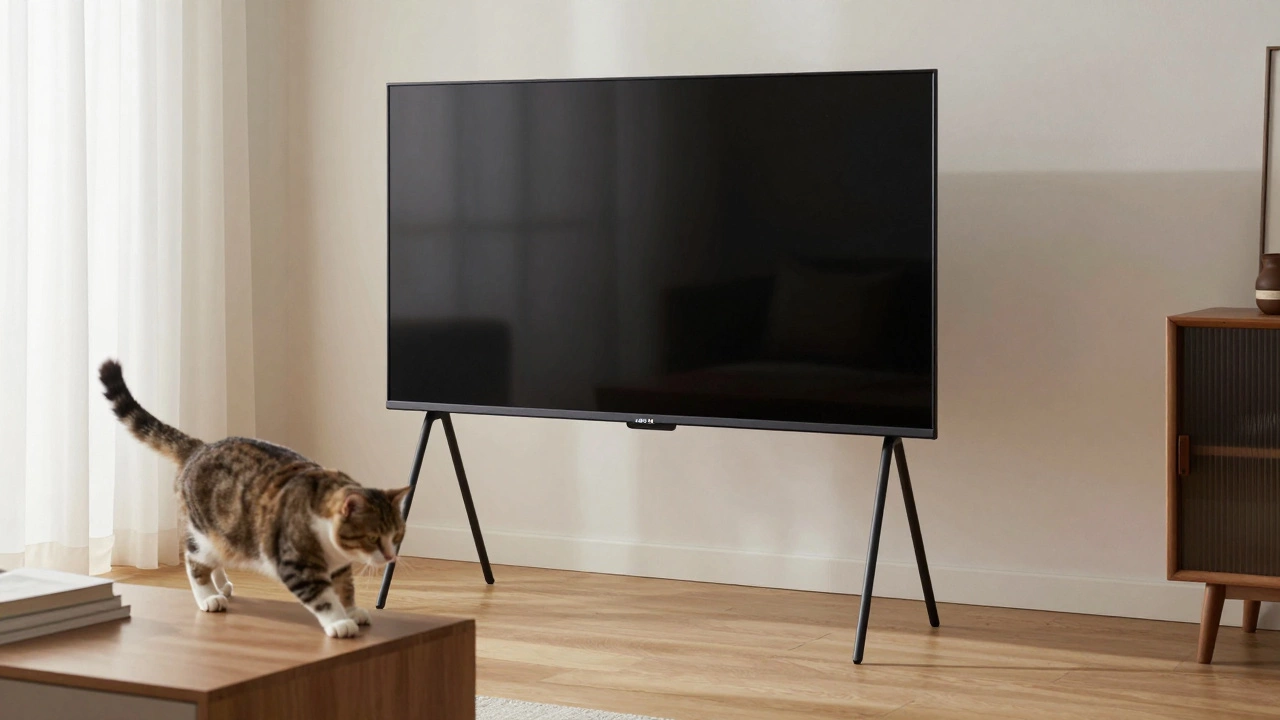
But if the base is 66 inches or wider? That’s 5.5 inches of overhang on each side. You’re pushing the limit. At that point, the TV becomes unstable if anything bumps into it-even a pet jumping up or a kid reaching for a toy.
Stability is the real killer
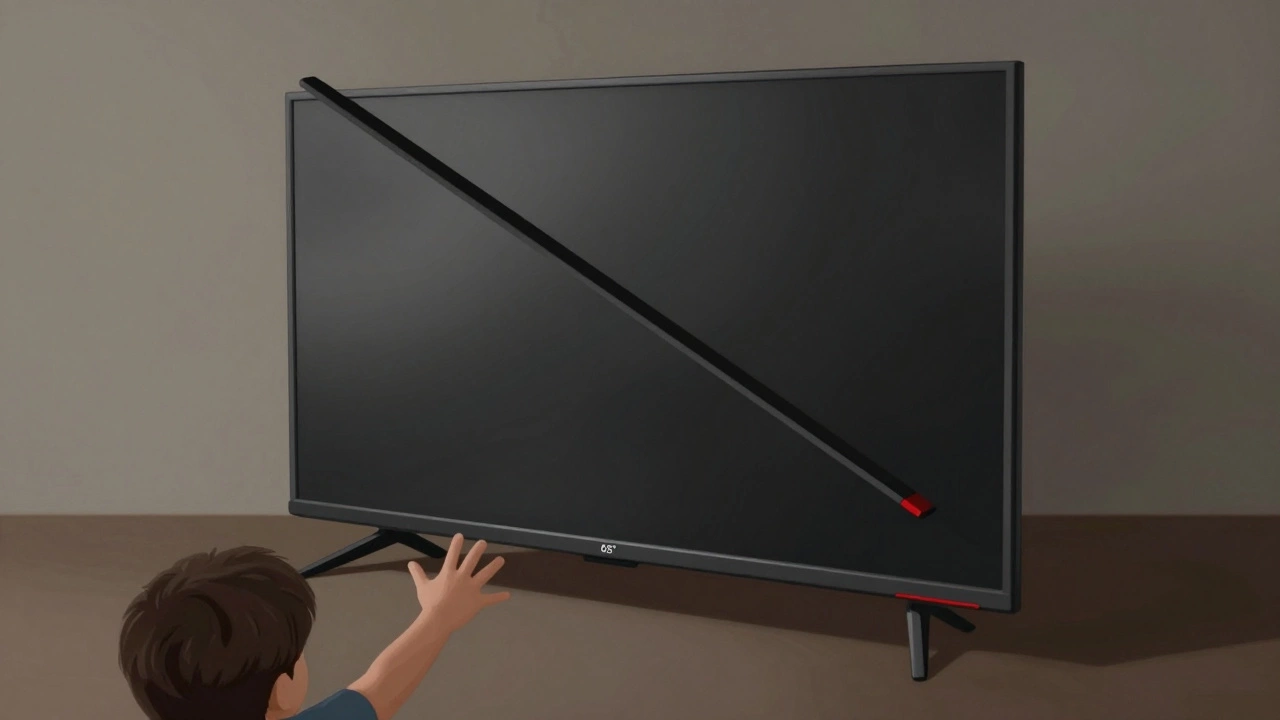
A TV that’s too wide for its stand doesn’t just look odd-it can tip. And once it tips, it doesn’t just fall over. It crashes. The screen shatters. The speakers and internal components fly out. And if it’s mounted on a stand near a couch or play area? Someone could get hurt.
TV tip-overs cause about 15,000 emergency room visits in the U.S. every year, according to the Consumer Product Safety Commission. Most involve children under 5, but adults get hurt too. A 65-inch TV falling at full height can land with the force of a small car crash.
Even if your stand is sturdy, the overhang makes it more prone to tipping. Think of it like a seesaw. The longer the arm, the easier it is to tip. Your TV’s screen is the long arm. The stand is the pivot. The wider the screen sticks out, the less force it takes to send it crashing down.
What about wall mounts? Are they safer?
If you’re worried about stability, a wall mount is the best solution. It removes the stand entirely. No overhang. No tipping risk. And you can position the TV at eye level for the perfect viewing angle.
But wall mounting isn’t always easy. You need to find studs, drill into concrete or wood, and make sure the mount supports the TV’s weight. Most 65-inch TVs need a VESA pattern of 400x400 or 600x400. Check your TV’s back panel for those numbers. Then buy a mount rated for at least 80 pounds. If you’re not comfortable drilling into your wall, hire a professional. It’s cheaper than replacing a broken TV-or paying medical bills.
Alternatives if your stand won’t work
You don’t have to buy a brand-new stand just because your old one is too narrow. Here are three smarter options:
- Use a wider console table. Many console tables are 60 to 72 inches wide and made of solid wood. They’re designed for TVs and have drawers for cables and gaming systems. Look for one with a weight capacity of 100 pounds or more.
- Get a TV stand with extendable arms. Some modern stands have adjustable side supports that slide out to widen the base. Brands like Sauder and Ameriwood offer these. They’re built to hold 75-inch TVs and cost under $200.
- Place the TV on the floor. If you have a low-profile TV and a flat, level surface like a rug or hardwood floor, you can set the TV directly down. Just make sure there’s enough ventilation underneath. Don’t block the vents. And keep it away from pets and foot traffic.
Real-world example: What worked in Leeds
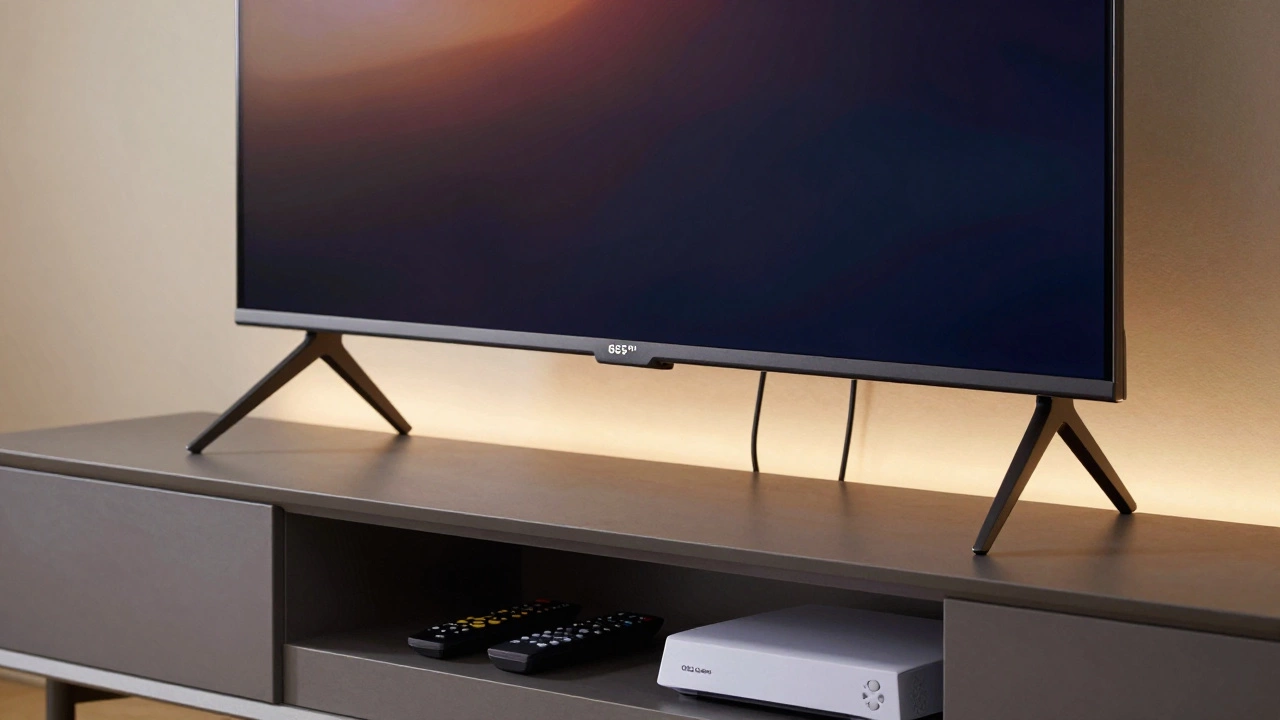
A customer in Headingley bought a 65-inch LG OLED and tried to put it on her 55-inch IKEA BESTÅ stand. The base was 61 inches wide-so 3 inches of overhang on each side. She thought it was fine. Then her cat jumped on the coffee table next to it, bumped the TV’s edge, and the whole thing tilted forward. It didn’t fall, but it cracked the plastic base. She ended up buying a new stand with a 68-inch width and extendable side supports. Cost: £180. Saved her from a $1,200 repair bill.
She didn’t need a fancy stand. She needed one that matched the TV’s footprint-not the screen size.
How to check if your stand is safe
Before you plug in your new TV, do this quick test:
- Measure the width of your TV’s base (not the screen). Write it down.
- Measure the width of your stand. Subtract the stand width from the TV base width. Divide by two to get overhang per side.
- If the overhang is more than 6 inches on either side, don’t use it.
- Try gently pushing the front edge of the TV. If it wobbles or shifts even slightly, it’s not stable.
- Check the stand’s weight rating. If it’s not listed, assume it’s only good for 50 pounds. Most 65-inch TVs weigh more than that.
Final verdict: Should you do it?
If your 65-inch TV’s base is 58 to 62 inches wide, and your 55-inch stand is solid, well-built, and doesn’t wobble-you can probably get away with it. But you’re taking a risk. You’re gambling that nothing will bump it. That your kids won’t reach for it. That your dog won’t jump up.
It’s not worth it.
TVs are expensive. Injuries are irreversible. A new stand costs less than a screen repair. And if you’re planning to keep the TV for five years or more, why risk it? Buy a stand that matches your TV’s size. It’s not about aesthetics. It’s about safety.
When in doubt, go wider. Go heavier. Go secure. Your future self-and your wallet-will thank you.
Can I put a 65-inch TV on a 55-inch stand?
You can, but only if the TV’s base is no wider than 67 inches and the stand is sturdy enough to hold its weight. Most 65-inch TVs have a base width between 58 and 62 inches, so a 55-inch stand may work if the overhang is under 6 inches per side. But it’s risky. A wider stand or wall mount is safer.
What’s the safest TV stand width for a 65-inch TV?
The safest stand width is between 60 and 72 inches. This gives you at least 1 to 3 inches of clearance on each side of the TV’s base. Look for stands labeled for 65- to 75-inch TVs. They’re built with stronger materials and wider bases to prevent tipping.
Is it safe to use a TV stand that’s too small?
No. A stand that’s too narrow increases the risk of tipping, especially if the TV is bumped, pulled, or if pets or children are around. Even if the TV doesn’t fall right away, repeated small nudges can loosen screws or crack the base over time. Safety should always come before saving money.
Can I use a wall mount instead of a stand?
Yes, and it’s often the best option. Wall mounts eliminate overhang and tipping risks entirely. They also let you adjust the height and angle for better viewing. Just make sure the mount supports your TV’s weight and VESA pattern. Installation requires drilling into wall studs, so hire a professional if you’re unsure.
How do I know if my TV stand is strong enough?
Check the manufacturer’s weight rating-most quality stands list this on the box or manual. If it’s not listed, assume it’s rated for 50 pounds. Most 65-inch TVs weigh 45 to 65 pounds, so if your stand doesn’t support at least 70 pounds, it’s not safe. Also, test for wobble: gently push the front of the TV. If it moves, the stand isn’t stable.