Open Closet Readiness Calculator
Determine if your home and lifestyle are ready for the doorless wardrobe trend.
You’ve probably noticed it happening in your feed or even at a friend’s house. Those sleek, modern bedrooms with clothes hanging out in the open, no doors to hide them behind. It looks chaotic if you’re not used to it, but for millions of homeowners and renters, removing closet doors is one of the smartest upgrades they’ve made to their living space. But why are people taking doors off closets? Is it just a passing aesthetic trend, or is there actual logic behind stripping away the barriers between your clothes and your room?
The shift toward open wardrobes isn’t random. It’s a reaction to how we live, shop, and organize our lives today. Traditional closed closets often become black holes where items go to die-forgotten until laundry day forces a confrontation. By removing the doors, you force a system of visibility that changes how you interact with your possessions. Let’s break down the real reasons this trend is exploding, the practical benefits, and what you need to know before you grab a screwdriver.
The Visibility Factor: Seeing Is Believing
The most immediate benefit of an open closet is psychological. When everything is hidden behind a door, you lose track of what you own. You buy duplicates because you can’t see the shirt you bought six months ago. You wear the same five outfits because the rest feels like 'work' to find. Removing the doors solves this by making every item visible at a glance.
This concept ties directly into efficient wardrobe organization, which relies on clear sightlines to maintain order. When you can see your entire collection, you make better choices in the morning. You stop reaching for the same three pairs of jeans because you remember you have four others right there. It reduces decision fatigue. For busy professionals or parents rushing out the door, seeing exactly what matches what saves time. It turns getting dressed from a scavenger hunt into a simple selection process.
Furthermore, visibility acts as a natural filter. If a piece of clothing looks wrinkled, stained, or out of place, it stands out against the backdrop of your room. This encourages you to keep things tidy. A closed closet allows mess to accumulate unseen; an open closet demands respect. You won’t leave a pile of dirty laundry in an open rack for weeks because it becomes part of your room’s visual noise.
Aesthetic Freedom and Spatial Illusion
Beyond functionality, there is a strong design driver. Closed closets, especially bulky built-ins with heavy wood doors, can make a small bedroom feel cramped and dark. They add visual weight and block light. By taking the doors off, you remove that bulk. The eye flows through the space rather than stopping at a solid surface. This makes rooms feel larger and airier, which is crucial for smaller apartments or studio layouts.
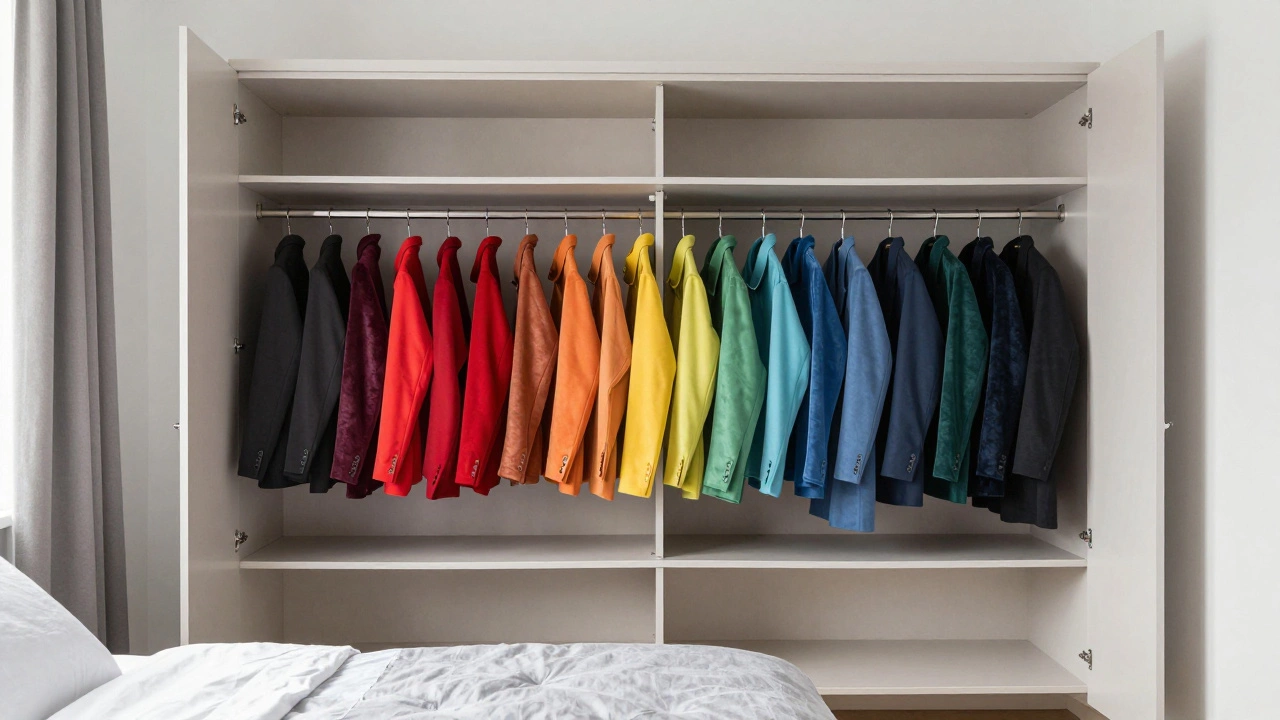
Open closets also allow you to treat your clothes as decor. Think about high-end retail stores. Do they hide their merchandise behind closed cabinets? No. They display it on racks and shelves to showcase the textures, colors, and shapes. Your bedroom can function similarly. A well-curated open wardrobe adds character and personality to the room. It shows off vintage finds, colorful knitwear, or statement jackets that would otherwise be wasted potential behind a generic white door.
This approach aligns with the broader minimalist interior design movement, which prioritizes openness and intentionality over clutter and concealment. However, it requires discipline. An open closet only looks good if it’s styled. It’s not just about dumping clothes on a rod; it’s about creating a cohesive look. Many people use uniform hangers-often slim, velvet, or wooden-to create a clean, uniform line that mimics the precision of a boutique window.
The Cost and Effort Savings
Let’s talk money. Replacing broken or outdated closet doors is expensive. Custom sliding doors, bi-fold doors, or even nice pocket doors can cost hundreds, if not thousands, of dollars depending on the size and material. If your current doors are damaged, sticking, or just ugly, removing them entirely is a zero-cost solution. You save the price of new doors, the hardware, and the labor to install them.
Even if your doors are fine, keeping them requires maintenance. Hinges loosen, tracks get jammed with dust, and handles break. By opting for a doorless design, you eliminate these maintenance headaches. There is nothing to lubricate, adjust, or repair. It’s a permanent fix that simplifies home upkeep. For landlords or property managers, this is also a selling point. Modern tenants often prefer the flexibility of open storage over rigid, dated cabinetry.
Additionally, removing doors opens up opportunities for creative storage solutions that don’t rely on the door structure. You can install tension rods, pegboards, or modular shelving units that fit directly into the frame without worrying about clearance for swinging or sliding doors. This maximizes the usable cubic footage of the closet.
Environmental and Lifestyle Shifts
There is also a sustainability angle. The fast fashion era is slowly giving way to more conscious consumption. People are buying fewer, higher-quality items. When you invest in a great coat or a perfect pair of trousers, you want to care for them properly. Hanging them openly allows fabrics to breathe, reducing moisture buildup that can lead to mildew or odors inside enclosed spaces. Proper ventilation extends the life of your garments.
Moreover, the trend reflects a shift toward transparency in lifestyle. We live in an age where authenticity is valued. Hiding our belongings behind closed doors feels increasingly artificial. Showing our stuff-even if it’s messy sometimes-feels more honest and human. It acknowledges that we live in our homes, not museums. This cultural shift supports the move toward open storage furniture designs that integrate seamlessly into daily life rather than segregating it.
Who Should Avoid This Trend?
While open closets are fantastic for many, they aren’t for everyone. If you struggle with clutter or have a very large, disorganized wardrobe, removing the doors might increase anxiety rather than reduce it. The 'out of sight, out of mind' principle exists for a reason. For some, seeing piles of clothes triggers stress.
Dust is another factor. Without doors, your clothes are exposed to airborne dust and pet dander. In areas with high pollution or allergies, you might find yourself vacuuming your closet floor more often. Using airtop containers for off-season items can help mitigate this. Also, consider security. If you live in a high-crime area or share housing with strangers, leaving valuables like jewelry or expensive watches openly displayed might not be wise. Keep those items in a locked box or a separate secure drawer.
| Feature | Closed Closet (Traditional) | Open Closet (Doorless) |
|---|---|---|
| Visual Space | Can feel cramped | Feels larger and airy |
| Maintenance | Hinges/tracks need care | No moving parts to fix |
| Dust Exposure | Low (protected) | High (requires frequent cleaning) |
| Organization Style | Hidden, easy to neglect | Visible, demands tidiness |
| Cost | High (doors/hardware) | Low (removal only) |
How to Make It Work: Practical Tips
If you’re convinced to take the plunge, preparation is key. Don’t just rip the doors off and hope for the best. Start by editing your wardrobe. Donate or sell anything you haven’t worn in a year. An open closet highlights excess; less is definitely more here.
Invest in uniform hangers. This is non-negotiable for a polished look. Slimline velvet hangers save space and prevent shoulders from bunching. Wooden hangers add warmth and texture. Avoid wire hangers-they look cheap and distort clothes. Next, group items by category and color. Hang shirts together, pants together, and arrange them from light to dark. This creates a rainbow effect that is pleasing to the eye and easy to navigate.
Use bins and baskets for items that don’t hang well, like sweaters or socks. Choose woven baskets or fabric bins that complement your room’s decor. These act as soft barriers, hiding the 'ugly' stuff while maintaining the open aesthetic. Finally, commit to a weekly reset. Spend ten minutes every Sunday folding, hanging, and straightening. Consistency is what separates a stylish open closet from a disaster zone.
Is it hard to remove closet doors myself?
It depends on the type. Bi-fold doors usually slide off hinges with a screwdriver. Sliding doors require lifting them out of the top track. Heavy custom doors might need two people. If you’re unsure, watch a tutorial specific to your hardware, but generally, it’s a manageable DIY project for beginners.
Will my clothes get dusty without doors?
Yes, they will accumulate dust faster. To combat this, vacuum your closet floor regularly and consider using a microfiber cloth to wipe down hanging items monthly. Keeping the room clean overall helps significantly.
Does an open closet lower home value?
Not necessarily. In fact, modern buyers often appreciate the flexibility and brightness of open storage. However, ensure the closet is impeccably organized during viewings. A messy open closet can deter buyers, so style it like a showroom.
What if I change my mind later?
You can always add curtains, sliding barn doors, or accordion panels later. These are cheaper and easier to install than traditional doors and give you the option to close off the space when needed.
Are open closets good for small bedrooms?
Yes, they are excellent. By removing bulky doors, you reclaim floor space and make the room feel less claustrophobic. Just ensure the closet contents are neatly arranged to avoid visual clutter overwhelming the small area.