Sofa Quality Calculator
Assess your sofa's quality using the article's key criteria. Enter details to get a quality score and identify potential issues.
Quality Assessment
Buying a sofa isn’t like buying a shirt. You can’t return it after a week if it starts to sag or squeak. A good sofa lasts 10 to 15 years-if you pick the right one. Too many people focus on color or style and end up with a couch that looks great in the showroom but collapses after two years. Here’s how to tell a good sofa from a cheap one, without spending hours in showrooms or reading marketing fluff.
Check the Frame First
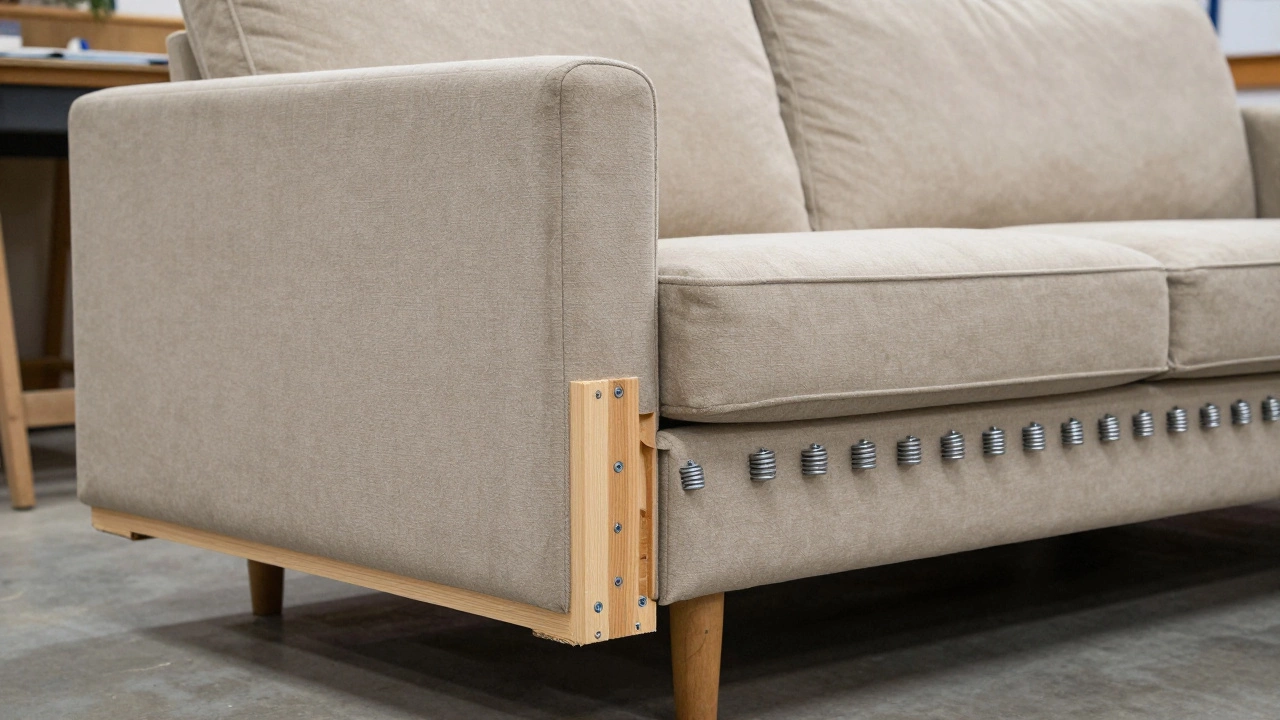
The frame is the skeleton of the sofa. If it’s weak, nothing else matters. A good sofa uses kiln-dried hardwood like oak, beech, or maple. You’ll rarely see this mentioned in ads, but it’s the biggest indicator of quality. Softwoods like pine or particleboard? Avoid them. They warp, crack, and loosen over time.
Here’s how to test it: Lift one corner of the sofa. If it wobbles or feels flimsy, walk away. A solid frame won’t flex. Turn the sofa on its side and look at the joints. They should be reinforced with corner blocks and screwed together, not just glued or stapled. If you see staples, that’s a red flag. Screws and glue? Acceptable. Dowels and corner blocks? That’s the gold standard.
Brands that still build in the U.S. or Europe-like Stickley, La-Z-Boy (their higher-end lines), or smaller UK makers like The Sofa Company-tend to use better frames. You don’t need to pay £3,000, but if a sofa costs under £500 and claims to be "handcrafted," it’s probably lying.
Feel the Cushions
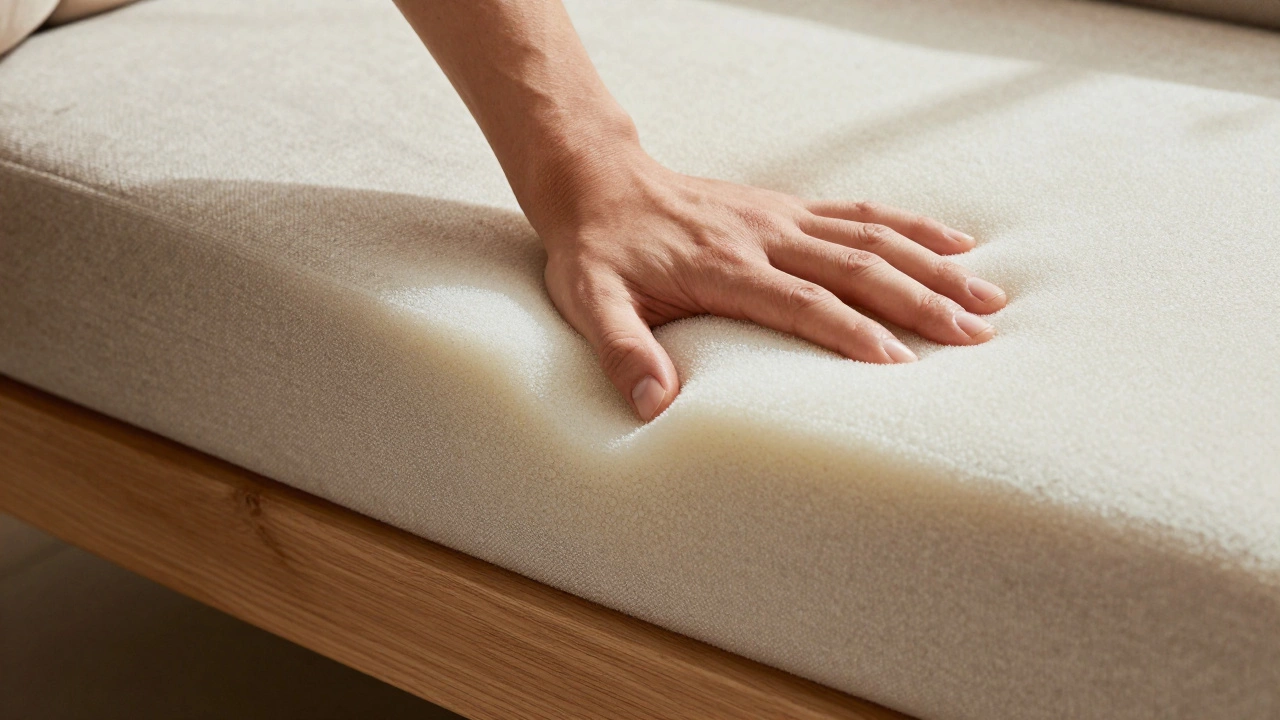
Cushions are where comfort lives. But not all foam is created equal. The best sofas use high-density polyurethane foam-2.5 lbs per cubic foot or higher. Anything below 1.8 lbs will flatten in under a year. You can’t see density, but you can feel it.
Press down hard on the seat cushion. If it sinks too easily and you feel the frame underneath, it’s low quality. A good cushion pushes back with firm resistance but still feels soft. It should spring back quickly when you remove your hand. If it stays squashed, skip it.
Down or feather blends are nice for a plush feel, but they need regular fluffing and can lose shape. If you want low maintenance, go for foam wrapped in a thin layer of fiber. That gives you the softness of down without the upkeep. Avoid 100% down-it’s expensive, messy, and doesn’t hold up.
Look at the Upholstery
Leather, linen, microfiber, velvet-each has pros and cons. But durability isn’t about the fabric type. It’s about the weave and weight.
For fabric sofas, check the rub count (also called Martindale rating). A good sofa has at least 20,000 rubs. Anything under 15,000 won’t survive daily use, especially with kids or pets. You won’t find this number on the tag unless you ask. Call the store or check the product page. If it’s not listed, assume it’s low quality.
Leather should be full-grain or top-grain. Bonded leather? It’s just scraps glued together with plastic coating. It cracks after a couple of years. Real leather has natural marks, slight color variations, and a rich smell. If it looks too perfect or smells like chemicals, it’s fake.
Microfiber is a great middle ground. It’s stain-resistant, soft, and holds up well. Look for ones with a tight weave-loose fibers pill easily. Test it by rubbing your fingers across the surface. If lint comes off, walk away.
Test the Arms and Back
A good sofa doesn’t just support your back-it supports your whole body. Sit down and lean back. Does the backrest feel solid? Or does it wobble when you lean? If it moves, the internal structure is weak.
Check the armrests. Press down on them. They shouldn’t sink or creak. Solid armrests are often made from the same hardwood as the frame. Hollow plastic or thin wood? They’ll break under pressure. If you rest your elbows on them often, make sure they’re wide enough-ideally at least 4 inches. Narrow arms are for show, not use.
Also, look at the stitching. Double stitching? Good. Single? Questionable. Loose threads? Red flag. Even the smallest stitch tells you about the care taken in construction.
Look Underneath
Flip the sofa over if you can. Most people don’t, but this is where you’ll find the truth.
A good sofa has a dust cover on the bottom-usually a woven fabric or non-woven material. It keeps dust out and holds the springs in place. No dust cover? That’s a sign the maker cut corners. Also, look at the springs. Eight-way hand-tied springs are the best, but they’re expensive. Sinuous (S-shaped) springs are fine if they’re made of tempered steel and spaced no more than 3 inches apart. If the springs are loose, uneven, or made of thin wire, it’s a cheap build.
Check the legs. Are they screwed in? Good. Glued or stapled? Bad. Solid wood legs are better than plastic or metal. Metal legs can scratch floors and look cheap. Wood legs match the frame’s quality and add stability.
Ask About the Warranty
A good sofa comes with a warranty that covers more than just defects. Look for at least a 5-year warranty on the frame and 3 years on cushions and upholstery. If the warranty is only 1 year, they know it won’t last.
Read the fine print. Some warranties exclude fading, stains, or normal wear. That’s fine-those aren’t manufacturing flaws. But if the frame isn’t covered for 5+ years, it’s a warning sign. Companies that stand behind their product don’t hide behind short warranties.
Also, ask if the cushions are removable and replaceable. If they are, you can reupholster them later or swap in new foam. That extends the life of the sofa by years.
Compare Real-World Use
Look at reviews from people who’ve owned the sofa for at least a year. Amazon or Trustpilot reviews often have photos showing sagging or fading. Pay attention to comments like:
- "The cushions flattened after 6 months."
- "The legs started wobbling."
- "The fabric pilled badly."
Don’t just look at the 5-star reviews. The 3-star ones tell you what goes wrong. If multiple people mention the same issue, it’s not an accident-it’s a design flaw.
Also, consider your lifestyle. If you have dogs, go for stain-resistant fabrics. If you entertain often, pick a deeper seat (at least 22 inches) so people can sit back comfortably. If you’re petite, avoid oversized sectionals-they’ll swallow you up.
Price Isn’t Everything, But It’s a Clue
You can find a decent sofa for £800-£1,200 if you know what to look for. Anything under £500 is almost always a compromise. That doesn’t mean you need to spend £2,500. But if you’re buying a sofa for your living room and plan to live in your home for more than five years, spending a little more saves money in the long run.
Think of it like shoes. You wouldn’t buy £20 sneakers for daily hiking. A sofa is the same. It’s the most used piece of furniture in your home. Spend wisely.
Final Checklist Before You Buy
Before you hand over your money, run through this quick list:
- Frame: Kiln-dried hardwood, no staples, reinforced corners
- Cushions: High-density foam (2.5+ lbs/ft³), springs spaced 3 inches or less
- Upholstery: 20,000+ rub count for fabric, full-grain leather, tight-weave microfiber
- Arms and back: Solid, no wobble, double-stitched
- Bottom: Dust cover present, legs screwed in, not glued
- Warranty: 5+ years on frame, cushions replaceable
- Reviews: At least 10+ reviews from owners with 1+ years of use
If it passes all these, you’ve found a good sofa. It might not be the flashiest one in the store, but it’ll still look and feel great when your neighbors’ couches are already on the curb.
What’s the most important part of a sofa to check?
The frame. Everything else-cushions, fabric, legs-can be replaced or repaired. But if the frame is made of particleboard or has weak joints, the whole sofa is doomed. A solid hardwood frame is the foundation of longevity.
Is leather better than fabric for a sofa?
It depends. Leather lasts longer and is easier to clean, but it can crack in dry heat or fade in sunlight. Fabric offers more style options and feels softer, but it needs higher rub counts (20,000+) to handle daily use. If you have pets or kids, high-quality microfiber is often the best balance.
How do I know if the foam is good without a label?
Press your hand firmly into the cushion. If it sinks deeply and takes more than 2 seconds to bounce back, it’s low-density foam. Good foam pushes back with firm resistance and springs back quickly. Also, sit on it for a few minutes. If you feel the frame underneath, it’s not dense enough.
Can I fix a sagging sofa instead of replacing it?
Yes, if the frame is still solid. You can replace the cushions with new high-density foam, add a plywood support underneath, or re-tie springs. Many local upholstery shops offer this service for under £200. It’s cheaper than buying new and keeps a good frame out of landfill.
Should I buy a sofa set or just a sofa and loveseat separately?
Buy them separately if you can. Sofa sets are often made to match, not to last. Pieces bought together may use the same low-quality materials. Buying individually lets you pick the best frame and cushion for each piece, and you can mix styles later if you want to update your space.