UK-US Furniture Translator
Confused by "closet" vs "wardrobe"? Select the item you are looking for or describe your need to see the correct term for your location.
Translation Result
Shopping Tip:
You walk into a friend's apartment in New York or Chicago and ask, "Where is your wardrobe?" They look at you blankly. Then they point to a built-in door in the hallway and say, "Oh, that's my closet." This linguistic mix-up happens constantly for Brits visiting the US, or vice versa. While we both mean the same thing-a place to hang clothes-the words we use reveal deep cultural differences in how homes are designed and furnished.
The short answer is simple: Americans rarely use the word "wardrobe" for their primary clothing storage. Instead, they call it a closet, which is typically a recessed space within a room or hallway, often built into the architecture of the house. If they have a standalone piece of furniture, they might call it an armoire or simply a freestanding closet. But here’s where it gets tricky: if you buy a freestanding unit in the US, you’ll likely find it labeled as a "closet" or sometimes a "chifforobe," depending on its design. Let’s unpack why this distinction exists and what it means for anyone shopping for furniture across the Atlantic.
The Core Difference: Built-In vs. Freestanding
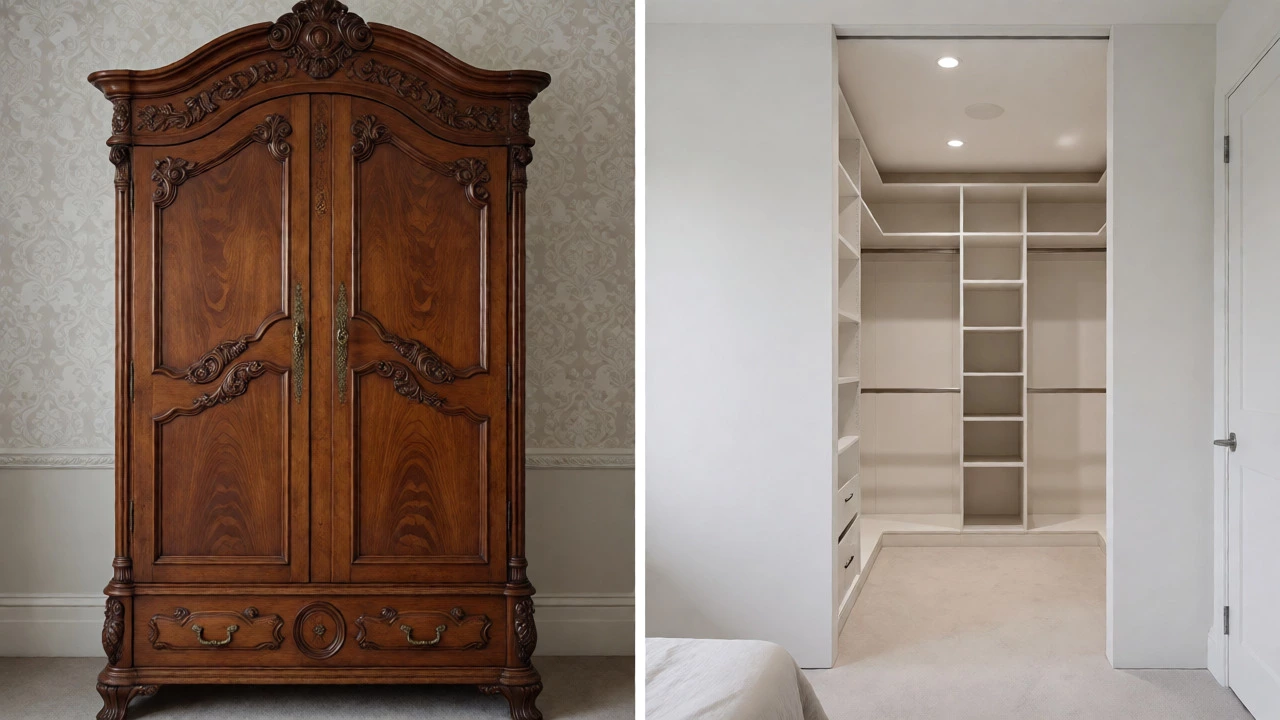
To understand the terminology, you have to look at the housing stock. In the UK, many older homes were built without dedicated built-in storage spaces. Consequently, the wardrobe became a necessary piece of furniture-a large, often ornate cabinet with doors and hanging rails. It stands against a wall, occupies floor space, and can be moved when you move house.
In contrast, most modern American homes, particularly those built after the mid-20th century, feature walk-in closets or reach-in closets built directly into the bedroom walls. These are architectural features, not furniture. You don’t buy them; they come with the house. Because the storage is part of the building structure, Americans refer to the space itself as a "closet." The term "wardrobe" in the US is mostly reserved for theatrical costumes (think "wardrobe department") or high-end antique furniture pieces that stand alone.
| Feature | UK Term | US Term | Description |
|---|---|---|---|
| Built-in Storage | Fitted Cupboard / Alcove | Closet | Architectural feature integrated into walls. |
| Freestanding Cabinet | Wardrobe | Armoire / Dresser / Chest | Movable furniture piece used for hanging or folding clothes. |
| Combined Unit | Bedroom Suite | Chifforobe | A hybrid unit combining drawers and a hanging rail. |
| Small Space Solution | Clothes Rail / Valet Stand | Garment Rack / Valet Stand | Open-frame stand for temporary hanging. |
Why Americans Say "Closet" Instead of "Wardrobe"
The word "closet" comes from the Latin *clausum*, meaning "closed place." Historically, it referred to any small private room. Over time, in American English, it narrowed down to specifically mean a small room or cupboard for storing clothes or household items. By the early 1900s, as home construction standardized, the "built-in closet" became a selling point for new houses. Real estate agents marketed these spaces as essential amenities, cementing the term in everyday language.
Meanwhile, in Britain, the industrial revolution changed housing too, but differently. Many Victorian and Edwardian homes had alcoves or fitted cupboards, but they weren't always standardized as "closets." When mass-produced furniture arrived in the 20th century, companies like IKEA popularized the flat-pack PAX system or similar modular wardrobes, reinforcing the idea that clothing storage was a product you bought, not a space you lived in.
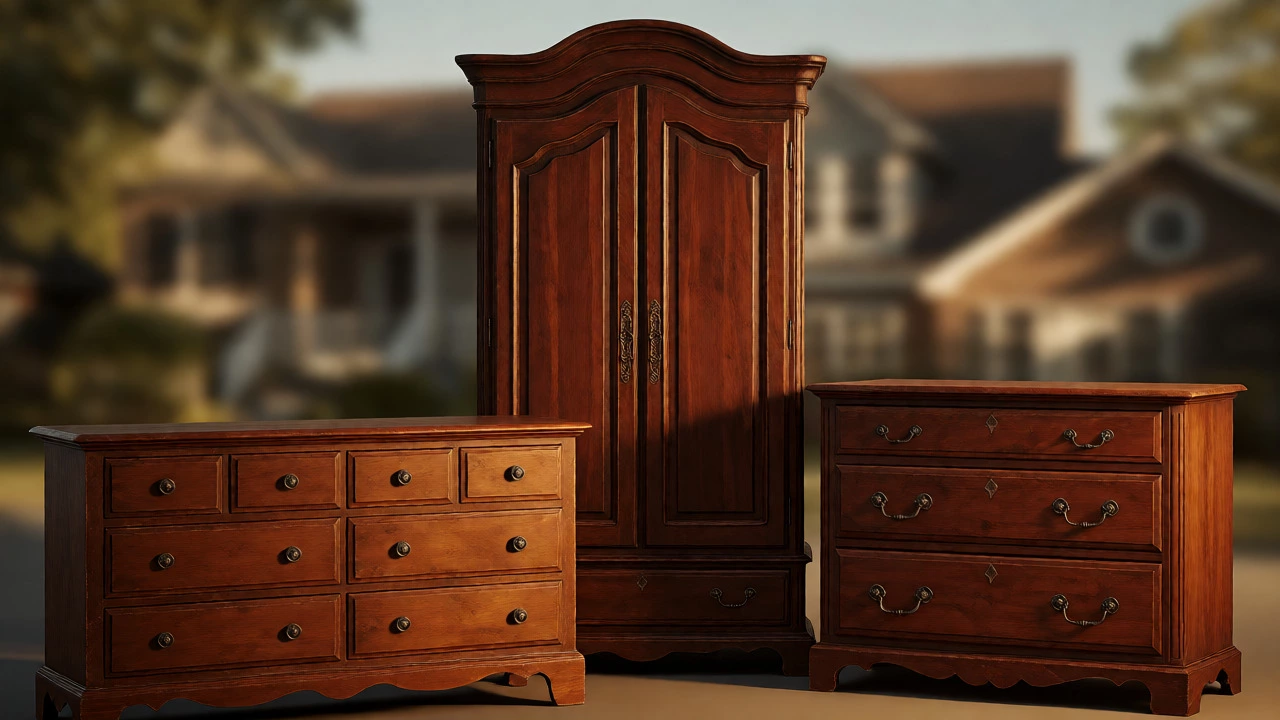
If you try to search for "wardrobe" on Amazon.com, you’ll see results for things that aren’t quite what a Brit expects. You’ll find armoires (tall, decorative cabinets), dressers (wide units with drawers only), and chifforobes (a portmanteau of "chest of drawers" and "wardrobe"). The lack of a single dominant term for freestanding hanging storage reflects the fact that most Americans don’t need one-they already have a closet.
Navigating US Furniture Stores: What to Ask For
If you’re moving to the US or shopping online from there, using the right terms saves time and frustration. Here’s how to translate your needs:
- Need hanging space? Ask for a "closet organizer" if you want shelves/hangers for your existing built-in closet. If you need a standalone unit, ask for an "armoire" or a "wardrobe-style dresser." Be prepared for salespeople to correct you gently.
- Need drawer storage? Americans call this a "dresser" or "chest of drawers." A "wardrobe" with drawers might confuse them unless you specify it’s a "combination unit."
- Looking for a specific style? Use descriptive terms like "freestanding closet," "open wardrobe," or "garment rack." These are understood universally.
- Buying second-hand? On platforms like Facebook Marketplace or Craigslist, sellers often use mixed terminology. Search for "armoire," "cabinet," and "closet" to catch all listings.
One common pitfall is the word "cupboard." In the UK, a kitchen has cupboards. In the US, "cupboard" usually refers to kitchen storage. If you say "bedroom cupboard," Americans might picture a small linen closet rather than a full-height wardrobe. Stick to "closet" or "storage unit" to avoid ambiguity.
Cultural Implications: Why It Matters
This isn’t just about semantics. The difference reflects how each culture views home ownership and interior design. In the US, customization happens inside the closet. Americans invest heavily in closet systems-custom shelving, lighting, and organizers from brands like California Closets. The closet is a hidden utility space. In the UK, because wardrobes are visible furniture, design matters more. People choose wardrobes based on aesthetics, material, and how they complement the room’s decor. An ugly freestanding wardrobe is a visual eyesore; an empty closet is just... empty.
This also affects resale value. A US buyer looking at a UK property might worry about the lack of built-in closets. Conversely, a UK buyer might appreciate the character of a period home with fitted wardrobes, seeing them as permanent fixtures rather than movable assets. Understanding these nuances helps when negotiating prices or designing spaces for international clients.
Common Misconceptions and Myths
Let’s clear up some frequent errors:
- "Wardrobe" is obsolete in the US. Not true. It’s still used in fashion contexts ("winter wardrobe") and for antique furniture. You’ll hear it in phrases like "walk-in wardrobe" in luxury real estate listings, though "walk-in closet" is far more common.
- All Americans have walk-in closets. False. Many apartments, especially in cities like New York, have tiny reach-in closets or no closets at all. Residents rely on freestanding armoires or under-bed storage.
- "Dresser" means the same as "wardrobe." No. A dresser has no hanging rail. It’s strictly for folded clothes. Confusing these leads to buying the wrong item.
Another myth is that British English is "more formal." Actually, "wardrobe" is practical and direct. "Closet" is equally functional. Neither is superior; they just fit different architectural norms. Language evolves to describe reality, and the reality of American housing made "closet" the dominant term.
Practical Tips for International Shoppers
If you’re furnishing a home abroad, here’s how to bridge the gap:
- Measure twice: US dimensions are in inches. UK dimensions are in centimeters. A "standard" US closet is 24 inches deep (61 cm). Ensure your imported wardrobe fits!
- Check assembly requirements: US furniture often ships flat-packed with complex instructions. UK wardrobes may arrive assembled or partially assembled. Factor in labor costs if hiring help.
- Consider climate: Humidity levels differ. Wooden wardrobes may warp in humid US states like Florida if not properly sealed. Metal frames resist warping better.
- Use visual aids: When communicating with sellers or contractors, show photos. Point and say, "I need something like this." Visuals transcend linguistic barriers faster than precise terminology.
Remember, communication is key. Don’t hesitate to clarify. Saying, "By 'wardrobe,' I mean a freestanding cabinet with hanging space," prevents misunderstandings. Most people will appreciate the clarity rather than judge your accent or vocabulary.
Do Americans ever use the word "wardrobe"?
Yes, but rarely for standard home storage. They use it in fashion contexts (e.g., "building a professional wardrobe") or to describe antique, decorative cabinets called armoires. In luxury real estate, "walk-in wardrobe" is sometimes used interchangeably with "walk-in closet," but "closet" remains the default term.
What is a chifforobe?
A chifforobe is a combination of a chest of drawers and a wardrobe. It features drawers on one side and a hanging rail on the other. It’s a common alternative to built-in closets in older American homes or apartments lacking sufficient storage.
Is a dresser the same as a wardrobe?
No. A dresser consists solely of drawers for folded clothes. A wardrobe includes a rail for hanging garments. Some units combine both, but technically, a dresser lacks hanging functionality.
Why do UK homes have fewer built-in closets?
Historical construction methods favored solid brick walls and smaller rooms. Adding built-in closets requires thicker walls or structural changes, which were less common in older British housing. As a result, freestanding wardrobes became the norm.
Can I install a US closet system in a UK home?
Yes, but check wall depth. US closets are typically 24 inches deep. UK alcoves vary widely. You may need custom adjustments or shallower systems to fit properly.