Recliner Value Calculator
Find Your Perfect Recliner Price Range
Answer a few questions to discover the ideal price range for your needs based on usage patterns, health considerations, and lifestyle factors.
Your Recommended Price Range
Key factors:
Buying a recliner isn’t like buying a coffee table. You sit in it for hours, sometimes all day. You lean back after a long shift, you nap in it, you read in it. If it breaks after six months, you don’t just feel disappointed-you feel betrayed. So how much should you really spend? The answer isn’t a single number. It’s a range shaped by your body, your habits, and what you’re willing to live with for the next five to ten years.
What Makes a Recliner "Good"?
A good recliner doesn’t just look nice. It supports your spine. It doesn’t creak when you lean back. The fabric doesn’t pill after three months. The mechanism doesn’t jam after a year. You should be able to recline it with one hand, even if you’re tired. And it shouldn’t smell like plastic or cheap glue when you first unbox it.
Most people think "good" means leather or a brand name. But that’s not true. A $400 recliner made with high-density foam, a steel frame, and durable polyester can outlast a $1,200 leather one with a flimsy internal spring system. Look for these signs:
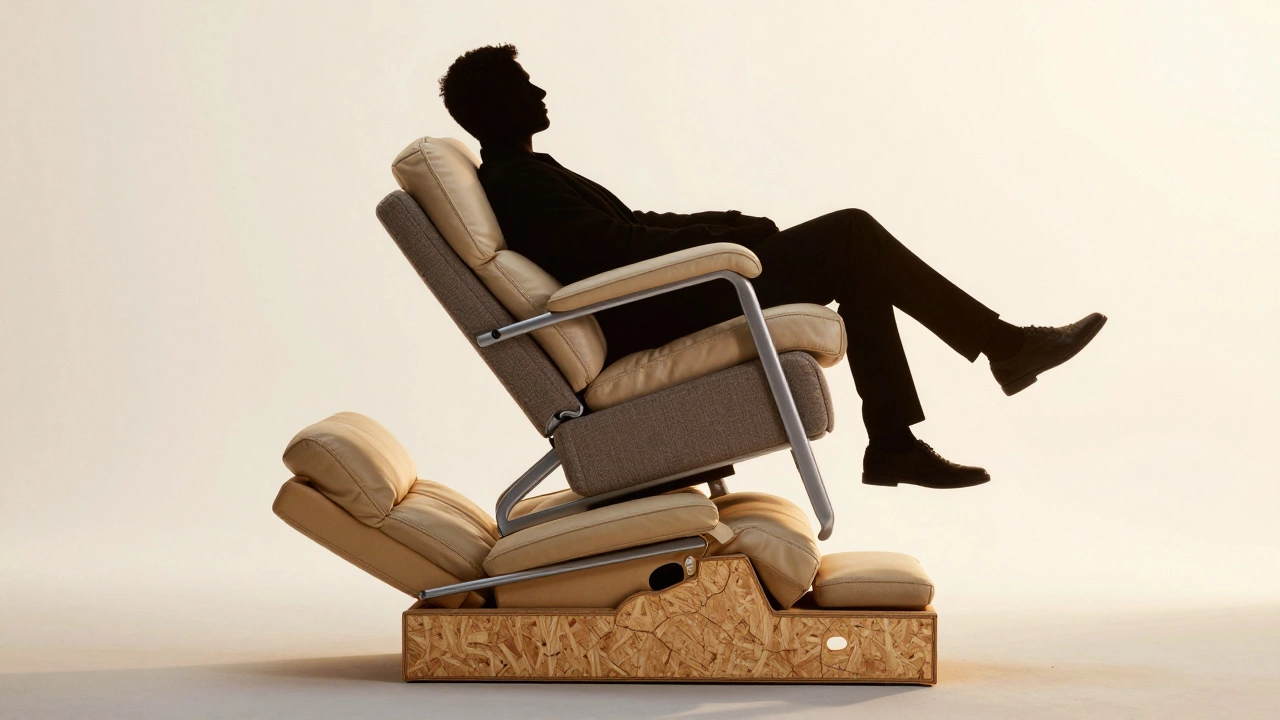
- Frame: Hardwood or steel. No particleboard or plywood-those warp and crack under weight.
- Padding: High-density foam (at least 2.5 lb/ft³). Low-density foam turns to mush in under a year.
- Reclining mechanism: Steel gears and reinforced joints. Avoid plastic parts inside the mechanism-they break fast.
- Upholstery: Performance fabric (like Crypton or Sunbrella) or top-grain leather. Avoid cheap microfiber that attracts lint and stains.
Price Tiers: What You Get at Each Level
Recliners fall into three clear price buckets. Each gives you something different.
Under $300: The Budget Option
This is where you’ll find most big-box store recliners. You’ll get a basic reclining function, soft cushioning, and a simple design. But here’s the catch: the frame is usually particleboard. The foam is low-density. The mechanism is plastic and noisy. Most of these chairs last 1-2 years before the recliner starts sticking or the seat sags. If you’re using it once a week and don’t mind replacing it every couple of years, this is fine. But if you sit in it daily? You’ll regret it.
$300-$700: The Sweet Spot
This is where most smart buyers land. You’re getting real durability here. Frames are hardwood or steel. Foam is high-density. Mechanisms are metal. Upholstery is usually performance fabric or bonded leather that holds up. Brands like La-Z-Boy, Ashley, and Flexsteel have solid models in this range. You can find recliners with heat and massage, adjustable headrests, and power reclining without breaking the bank. These chairs last 5-8 years with daily use. They’re the best value for most people.
$700-$1,500+: The Long-Term Investment
At this level, you’re buying for the long haul. These are chairs made for comfort and longevity. You’ll get genuine top-grain leather, custom cushioning, advanced ergonomic support, and sometimes even built-in USB ports or wireless charging. Brands like Stressless, Ekornes, and Natuzzi lead here. Some models have adjustable lumbar support that moves with your spine. Others use memory foam that molds to your body over time. These chairs are designed to last 10+ years. If you plan to use your recliner every day for the next decade, this is where you should spend.
Who Should Spend More?
Not everyone needs a $1,200 recliner. But some people absolutely do.
- If you have back pain: Spend more. A recliner with adjustable lumbar support and zero-gravity positioning can reduce pressure on your spine. Studies show that proper reclining posture helps with chronic lower back pain. Don’t save here-your body will thank you.
- If you’re over 6 feet tall: Standard recliners are made for 5’8”-5’10” people. If you’re taller, you’ll need a tall man’s model. These cost more because they’re built longer and wider. Don’t force yourself into a small chair-it’ll hurt your knees and lower back.
- If you use it daily: If you read in it every night, watch TV in it for hours, or nap in it after work, you’re using it 20+ hours a week. That’s 1,000+ hours a year. A $500 chair won’t survive that. A $800+ chair will.
- If you have pets or kids: Stain-resistant fabric is non-negotiable. Look for Crypton, Sunbrella, or performance microfiber. These fabrics repel spills, resist odors, and hold up to claws. They cost more upfront but save you from replacing the chair every two years.

Where to Buy (And Where to Avoid)
Don’t just buy the first recliner you see online. Here’s where to look:
- Specialty furniture stores: These places carry higher-end brands and let you test chairs in person. You can feel the foam, test the recline, and check the stitching. Stores like The RoomPlace or local independent furniture shops often have better quality than big chains.
- Manufacturer websites: Brands like La-Z-Boy and Stressless sell directly. You’ll often get the same quality as in stores but with better financing or free delivery.
- Amazon and Wayfair: These are fine for budget chairs, but be careful. Read reviews that mention long-term use-"after 6 months" or "after a year"-not just "looks nice." Avoid chairs with under 100 reviews.
- Big-box stores (IKEA, Walmart, Target): Avoid for anything beyond a temporary chair. The mechanisms are cheap, the foam is thin, and the warranty is useless.
What to Watch Out For
Here are the three most common mistakes people make:
- Buying based on looks alone: A chair that looks modern might have terrible support. Sit in it. Lean back. Does it feel like it’s going to collapse? If yes, walk away.
- Ignoring the warranty: A good recliner should come with at least a 5-year warranty on the mechanism and frame. Anything less means the manufacturer doesn’t trust it to last.
- Not testing the recline: Push the lever or button. Does it move smoothly? Does it lock in place? Does it make a grinding noise? If it feels cheap or sticks, it will get worse over time.
Real-World Example: A Leeds Homeowner’s Choice
One customer I know from Leeds bought a $650 La-Z-Boy recliner with power recline and heat. She uses it every evening after work. Her husband, who’s 6’3”, uses it to watch football. They’ve had it for four years. No sagging. No squeaking. The fabric still looks new. She says it was the best home improvement money she ever spent.
Another bought a $250 recliner from a discount store. It broke after 11 months. The recline mechanism jammed. The foam turned flat. She had to buy a new one-twice the cost of the first one, plus the hassle.
Final Advice: Spend Smart, Not Just More
You don’t need to spend $1,500. But you shouldn’t spend less than $300 if you use it regularly. The $300-$700 range gives you the best balance of comfort, durability, and value. If you have specific needs-back pain, tall frame, pets, daily use-go higher. If you’re just using it occasionally, a budget model might be fine.
Remember: a recliner isn’t a disposable item. It’s a daily comfort tool. Spend enough so you don’t have to replace it every few years. Your back, your time, and your peace of mind will thank you.
Is a $200 recliner worth buying?
Only if you’re using it once a week and plan to replace it in a year or two. Most $200 recliners use particleboard frames and low-density foam. They’ll sag, squeak, or break within 12-18 months. For daily use, it’s a false economy-you’ll end up spending more in the long run.
Should I buy leather or fabric?
Leather looks nice and lasts longer, but it’s more expensive and needs conditioning. Performance fabric (like Crypton or Sunbrella) is more practical for families, pets, or spills. It’s easier to clean, resists stains, and costs less. For most people, high-quality fabric is the smarter choice.
Do power recliners cost more to maintain?
They cost a bit more upfront, but maintenance is similar. The motor and wiring can fail after 8-10 years, but most warranties cover that. Manual recliners don’t have motors, so they’re simpler-but you have to push them back yourself. Power is worth it if you have mobility issues or just want to relax with a button press.
Can I find a good recliner on sale?
Yes. Major sales happen in January, July, and around Black Friday. Many stores offer 20-40% off during these times. But don’t buy just because it’s on sale. Test the chair first. A discounted bad chair is still a bad chair. Look for models that have been in stock for a while-they’re often the reliable ones.
How long should a good recliner last?
A well-made recliner in the $500-$800 range should last 7-10 years with daily use. Higher-end models (over $1,000) can last 15+ years. Cheaper ones (under $300) usually last 2-4 years. The key is the frame and mechanism-not the fabric or color.