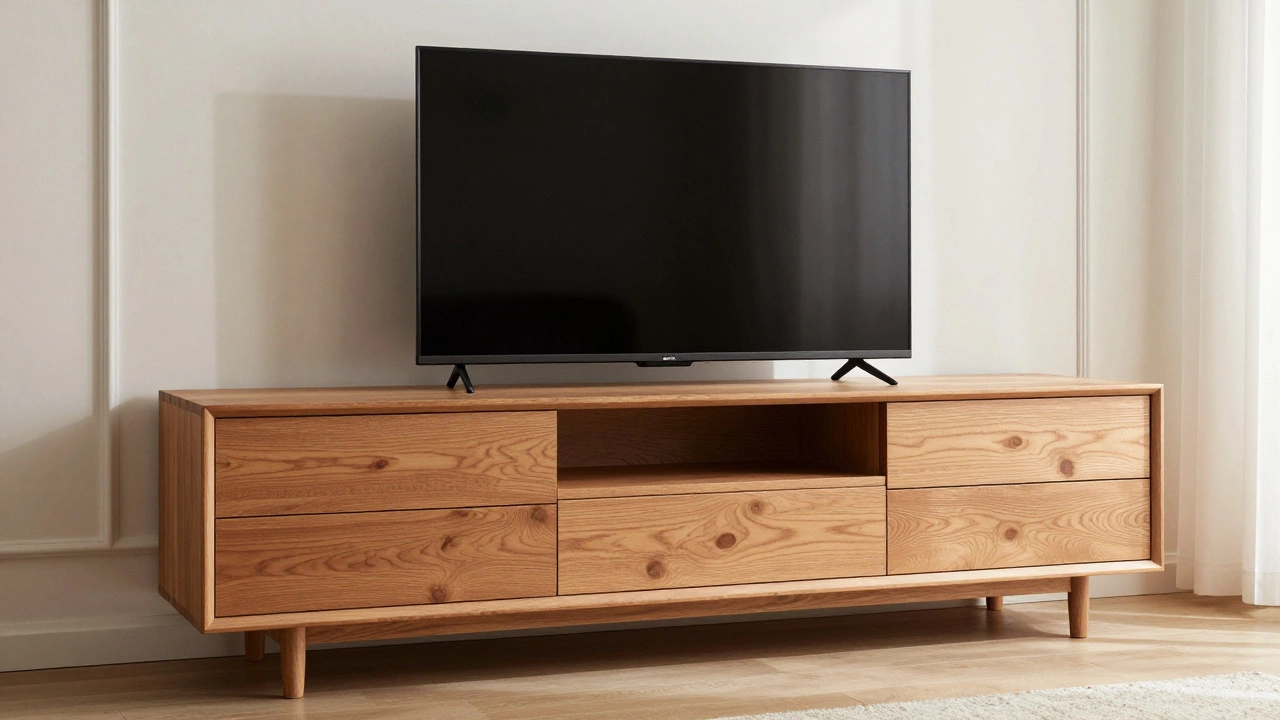
TV on Dresser Safety & Fit Checker
Enter Your Measurements
Safety Checklist
Before calculating, ensure these basics are met:
- Dresser legs flat on floor
- Anchor kit available for wall
- No significant wobbling when pushed
- Avoid placing TV if top surface sags under pressure.
Stability Rating
Viewing Experience
Action Plan
You’ve seen those minimalist living room setups online where someone placed their big wooden dresser under the flat screen. It looks sleek, saves money, and frees up space. But honestly? Putting a multi-hundred-dollar television on top of a chest of drawers is risky business. You can absolutely use your dresser as a TV stand, provided you check three critical things first.
The short answer is yes. If your unit is stable, wide enough, and won't tip over, it makes for a stylish hybrid piece of furniture. You avoid buying a separate media console, keeping more cash in your pocket. However, we aren't just talking about style. We're talking about gravity and physics. One wrong move, and you could face a shattered screen or worse, a heavy object falling on someone's foot.
This guide walks through exactly what to measure, how to secure the setup, and why some dressers simply cannot handle modern electronics. We'll look at weight limits, cable routing, and the best way to pull off this look without compromising safety.
Safety First: Assessing Stability Risks
The biggest concern with this idea is tipping. Traditional dressers were designed for clothes and shoes, not fifty-pound slabs of glass and electronics. In recent years, manufacturers improved anchor points, but older models might lack the necessary rigidity.
Before placing your Televisiona high-resolution display device used for video consumption on the dresser, check the center of gravity. A Dresser is often taller than a dedicated TV stand. This higher profile increases leverage if the unit gets bumped. If the base is narrow relative to its height, a slight nudge could cause the whole assembly to topple.
To mitigate this, check the width. Your TV needs to sit within the footprint of the furniture below it. Ideally, the TV should be narrower than the dresser surface itself. Overhangs beyond six inches on either side increase tipping risk significantly. Furthermore, consider anchoring the unit to the wall. An anti-tip bracket takes minutes to install and offers peace of mind for homes with active children or pets.
Understanding Weight Capacity Limits
Dressers vary wildly in structural integrity depending on their materials. A solid oak dresser from the 1980s holds differently than a particleboard vanity found at big-box stores. Particleboard is prone to delamination and bending under sustained heavy loads.
Most modern televisions weigh less than you think because of LED technology, but mounting hardware adds significant mass. For example, a 65-inch Class QLED TV weighs roughly 45 pounds, whereas a similar-sized older plasma model could weigh 100 pounds. Factor in soundbars, gaming consoles, and DVD players sitting behind the screen.
If you stack equipment, calculate the total load. If your dresser has thin drawers, do not put heavy electronics inside them. Instead, place them on top of the dresser or on a sturdy lower shelf. Always verify that the top surface supports the combined weight of the TV and all peripherals. If the surface sags or creaks under pressure, stop immediately and buy a dedicated unit.
Evaluating Dimensions and Viewing Height
Beyond safety, ergonomics matter immensely for daily viewing comfort. When people buy specific TV Standsspecialized furniture designed to support television sets and audio equipment, these products are built to keep the screen at eye level while seated. Most sofas place eyes about 30 to 35 inches off the floor.
A standard dresser top sits around 30 inches high, but adding the height of the TV and its stand base pushes the center of the screen much higher than ideal. If you mount a 50-inch TV on a tall dresser, your neck might ache after twenty minutes of watching the evening news.
To solve this, try tilting the TV backward slightly to bring the center down toward your line of sight. Some VESA Mounta standard interface used to attach televisions to walls or stands systems offer tilt features specifically for this reason. Measure your seating area before moving the TV permanently. You want the middle of the screen to align with your seated eye level.
Cable Management and Electronics Ventilation
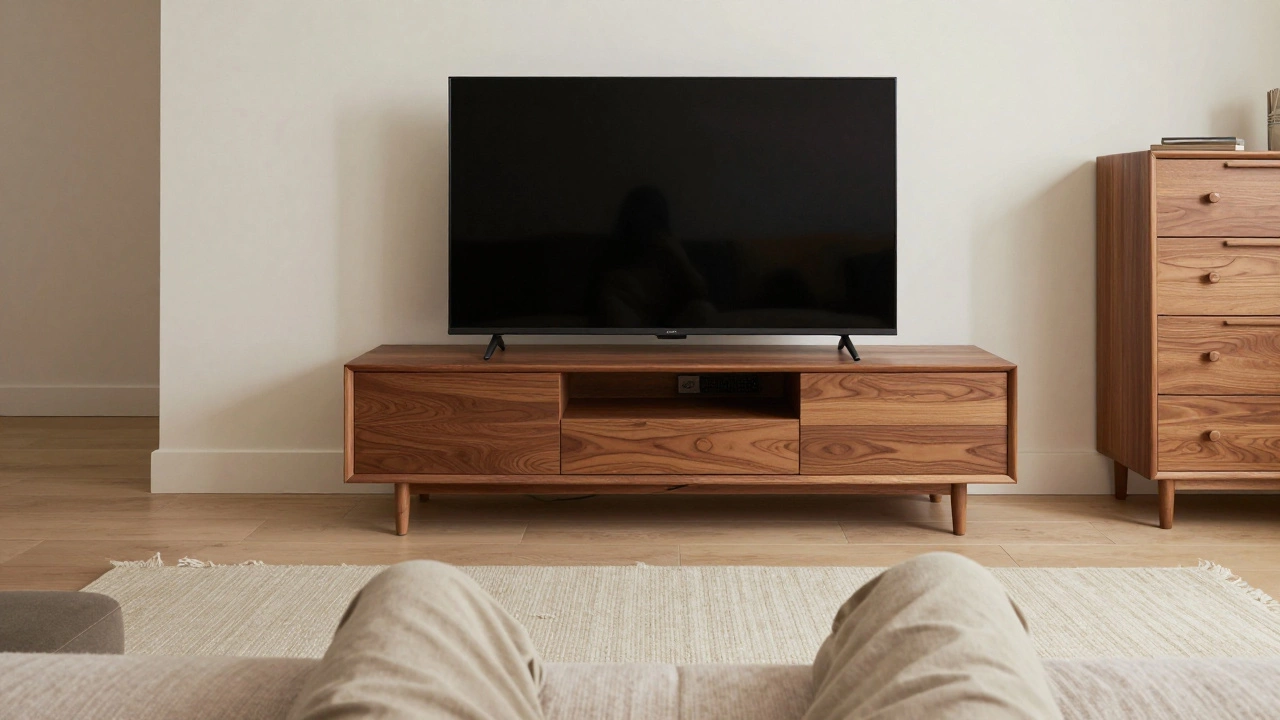
We often forget that TVs generate heat. Modern smart TVs have ventilation slots along the bottom or back edges to expel warm air. Blocking these vents with the back of the dresser or piling blankets nearby causes overheating, shortening the lifespan of your expensive gadget.
In addition to airflow, consider wiring chaos. A dresser does not come with built-in wire grommets like a custom entertainment center does. You will see black spaghetti wires trailing down the front legs. To fix this, run cables through the drawer slides if possible, or use adhesive raceways painted to match the wood finish.
Ventilation strategy is key here. Ensure there is at least two inches of clearance between the back of the TV and the wall so air circulates freely. Avoid pushing the dresser flush against the drywall if the TV blocks natural airflow paths.
Comparing the Hybrid Setup to Dedicated Units
Is it worth the effort? Sometimes yes, sometimes no. Let's break down the trade-offs between using existing furniture versus shopping for a new piece specifically designed for 2026 living room standards.
| Feature | Dresser Repurposed | Dedicated Media Console |
|---|---|---|
| Cost | $0 (Already owned) | $100 - $500+ |
| Depth | Often too shallow for large cabinets | Deep enough for consoles and speakers |
| Cable Management | Exposed wires (requires DIY fixes) | Hidden channels and rear access holes |
| Storage | Drawers for linens or documents | Open shelves for AV gear |
| Stability | May require wall anchors | Low center of gravity, inherently stable |
Style and Interior Design Harmony
Furniture pieces from different decades often clash. A mid-century modern dresser might look ridiculous holding a glossy black curved TV with chrome accents. However, mixing styles creates interest if executed well. Think about the material palette.
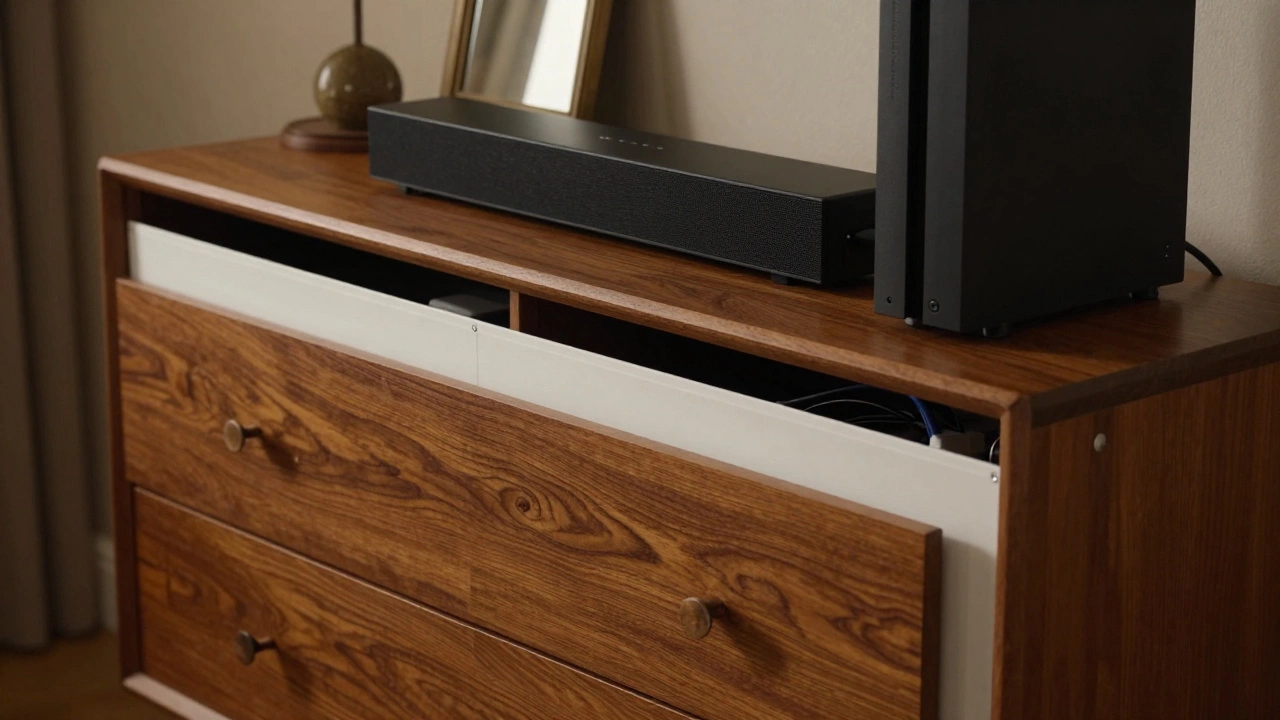
If your dresser is dark walnut, avoid pairing it with silver-heavy electronics that reflect light harshly. Matte black finishes tend to blend better. You can bridge the gap by using a rug underneath that ties both textures together, or by placing a decorative mirror above the dresser to balance the visual weight of the TV below.
Remember to hide remotes and loose wires. Open storage helps keep the top surface clutter-free, maintaining the "intentional design" look rather than the "messy patchwork" appearance.
When Not to Use a Dresser for TV Support
Some scenarios call for a hard "no." If you live in a rental apartment with strict lease clauses regarding wall drilling, you might struggle to secure the furniture against tipping. Additionally, if the dresser is made of hollow-core construction or feels wobbly even empty, do not trust it with your electronics.
If you have young children who play tag around the house, the added risk of a heavy object tipping is simply not worth saving a few hundred dollars. In households where movement is frequent, invest in a low-profile Entertainment Centerfurniture designed to store and organize media devices that sits closer to the ground.
Frequently Asked Questions
Will using a dresser void my TV warranty?
Usually no. Manufacturers like Sony or LG focus on defects, not placement. However, if the TV falls because the surface was unstable, the claim gets rejected as accidental damage.
How do I hide the power cord on a dresser?
Run the power strip behind the unit and feed the cord through a drilled hole in the back panel if possible. Alternatively, paint over the cords with white cable clips to minimize visibility.
What size TV fits on a 48-inch dresser?
You should leave 6 to 8 inches of breathing room on each side. A 40 to 43-inch TV is the sweet spot for a 48-inch wide dresser to prevent edge overhang risks.
Can I put a TV stand on top of a dresser?
Not recommended. Adding another layer raises the center of gravity. Stick to placing the TV directly on the dresser surface or using a minimal stand attached to the TV.
Are dressers deep enough for gaming consoles?
Older dressers are often too shallow. Newer ones have deeper tops, but check the dimensions. If the console doesn't fit inside, place it beside the unit on a matching side table.