Sofa Cushion Ratio Calculator
Configure Your Sofa
Recommendation
-Select your options and click calculate to see the ideal cushion setup.
Walk into any modern living room and you’ll likely see one of two extremes: a stark, minimalist sofa with zero pillows, or a chaotic mountain of decorative cushions that looks like it survived a hurricane. Neither approach usually works for daily life. If you’re staring at your sofa is a piece of furniture designed for seating multiple people, typically upholstered in fabric or leather wondering if it needs more fluff or less clutter, you are not alone. The number of cushions isn’t just about comfort; it’s about visual balance, ergonomics, and the actual size of your furniture.
There is no single magic number that applies to every home, but there are reliable formulas used by professional interior designers to create a look that feels intentional rather than accidental. Getting this right transforms your space from "lived-in" to "designed." Let’s break down exactly how many pillows you need based on your sofa type, your lifestyle, and the vibe you want to achieve.
The Golden Rule: Odd Numbers and Visual Weight
Before counting specific pillows, you need to understand the foundational principle of visual weight is the amount of heaviness an object appears to have in a composition, determined by color, texture, and size. In design, odd numbers almost always look better than even numbers. An even number creates symmetry, which can feel rigid or formal. An odd number creates asymmetry, which feels dynamic and relaxed.
This means you should generally aim for three, five, or seven cushions total. Avoid pairs unless you are going for a very strict, traditional hotel lobby aesthetic. For most homes, a trio of pillows on a standard sofa creates a focal point without overwhelming the seating area. This rule helps distribute attention across the piece rather than splitting it evenly down the middle.
Cushion Counts by Sofa Size
The physical dimensions of your sofa dictate the maximum number of cushions you can comfortably display. Overstuffing a small sofa makes it look cheap and cramped, while under-stuffing a large sectional makes it look unfinished. Here is a practical guide based on common furniture sizes.
| Sofa Type | Typical Width | Recommended Cushions | Style Tip |
|---|---|---|---|
| Love Seat | 50-60 inches | 1-3 | Use one large lumbar or two small square pillows. Keep it minimal. |
| Standard 3-Seater | 80-90 inches | 3-5 | Group three in the center or flank the ends with one each and a center piece. |
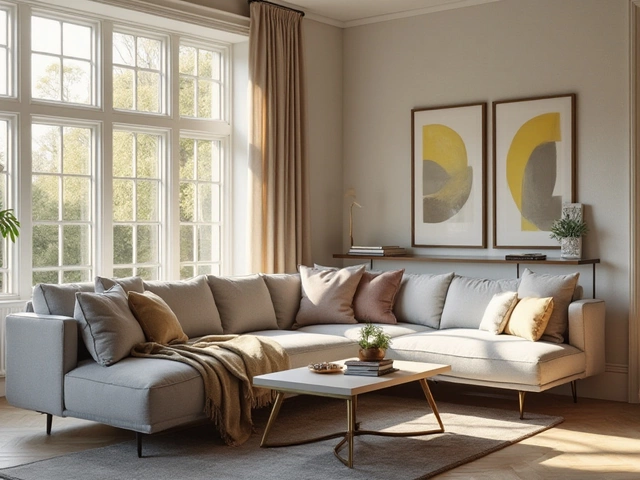
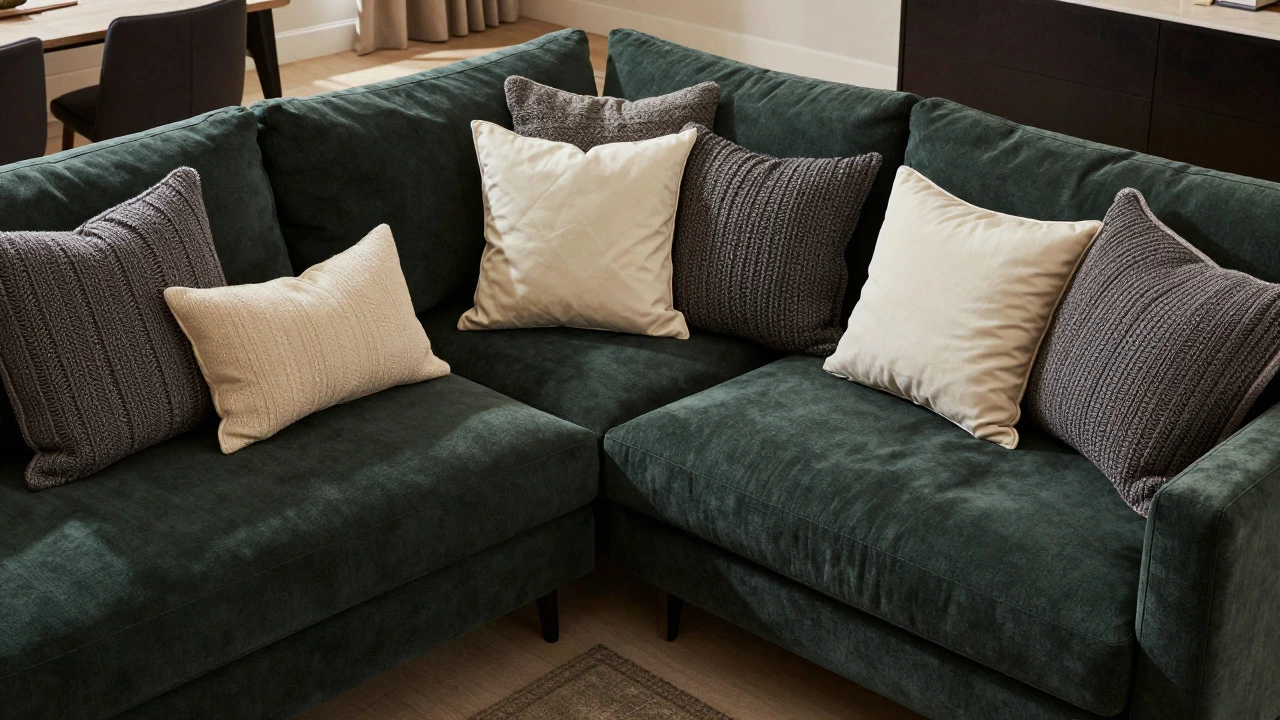
| Large Sectional (L-Shape) | 100+ inches | 5-7 | Distribute pillows along the backrests. Don't cluster them all in one corner. |
| Modular Sofa | Variable | 3 per module | Treat each distinct seating section as its own unit for balancing. |
If you have a standard three-seater, three pillows is the sweet spot. It allows enough space between the pillows so they don’t touch, creating negative space that makes the arrangement breathe. Five pillows work if you mix sizes significantly-two large backs against the wall, two medium ones in front, and one small accent pillow tucked in. Anything more than five on a standard sofa starts to look like a prop department overflow.
Mixing Sizes and Textures for Depth
Counting the pillows is only half the battle. How you stack them matters more. A flat row of identical square pillows looks sterile. To add depth, use a layered approach. Start with larger lumbar pillows are rectangular cushions designed to provide lower back support and add vertical height to a seating arrangement against the back of the sofa. These anchor the look. Then, place smaller square throw pillows in front of them.
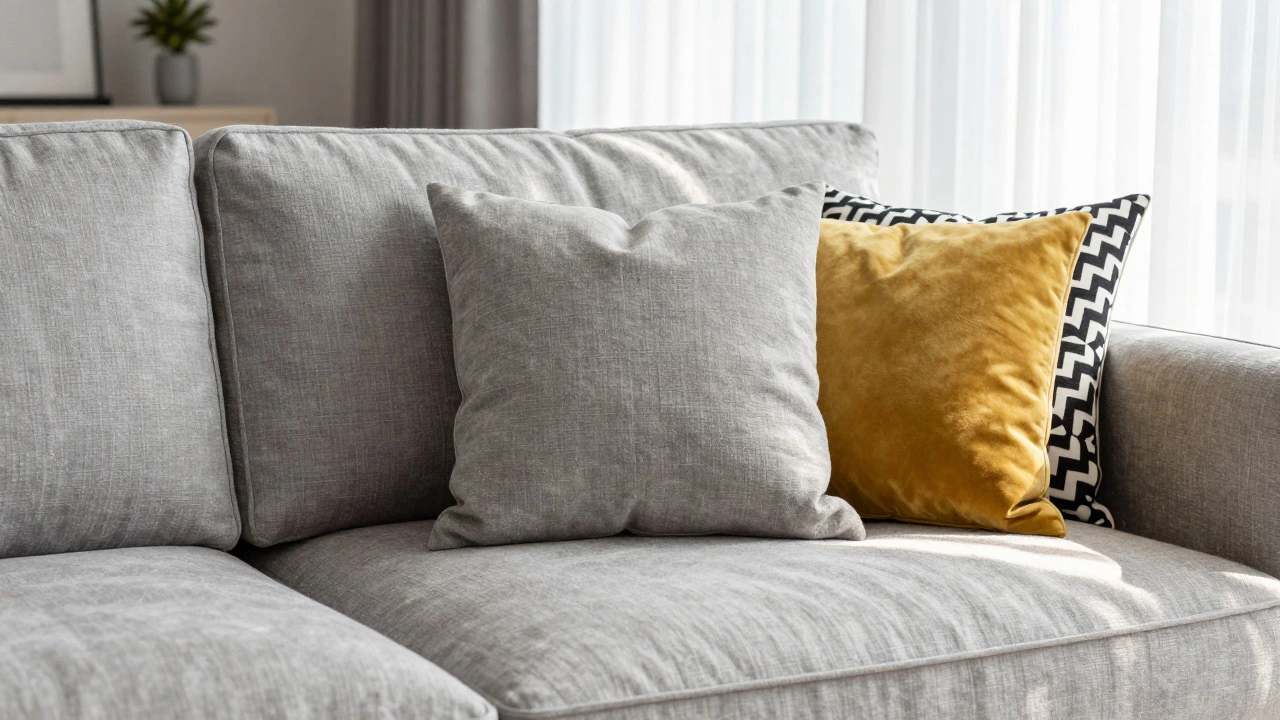
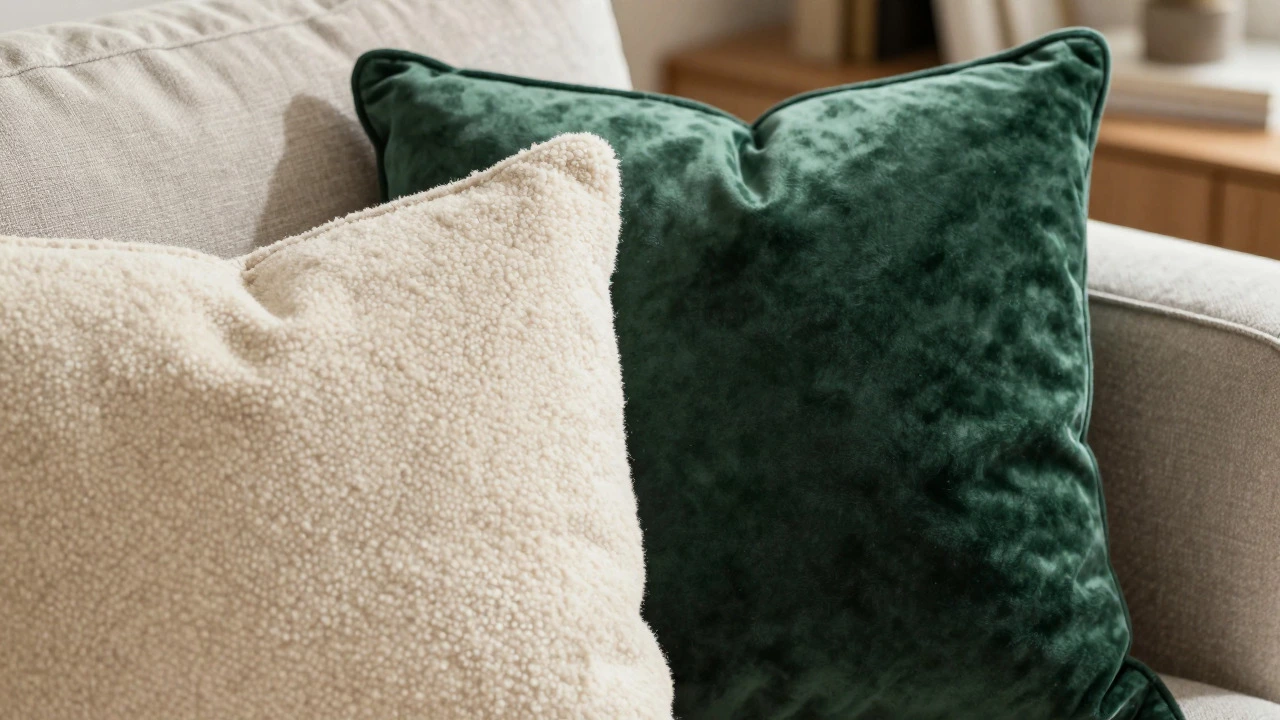
Vary the textures to keep things interesting. If your sofa is smooth leather, pair it with chunky knit wool or rough linen. If your sofa is already textured velvet, go for smoother silks or crisp cottons. This contrast prevents the eye from glazing over. For example, a grey linen sofa might look dull with grey cotton pillows, but adding a mustard yellow velvet pillow and a black-and-white geometric print pillow instantly creates a curated look.
Functionality vs. Decoration: The Reality Check
Let’s be honest: most people don’t sit on their sofas with perfect posture. We slouch, we lean, and we nap. Your decorative pillows need to serve a functional purpose too. If you have four identical square pillows, you will inevitably end up hugging one and ignoring the other three. That’s fine, but it defeats the purpose of having four.
Consider the "hug factor." At least one pillow should be soft and plush enough to actually hold. A firm, structured pillow looks great but feels terrible when you’re watching TV. Mix in a couple of softer, squishier options that invite interaction. Also, think about maintenance. If you have pets or young children, fewer pillows mean less laundry. Two washable, durable pillows are better than five delicate ones that live in a closet because you’re afraid to use them.
Common Mistakes to Avoid
Even with the right number of pillows, bad placement can ruin the look. Here are the most frequent errors I see in client homes:
- The Wall Hugger: Pushing all pillows flat against the backrest makes the sofa look stiff. Fluff them forward slightly so they look inviting, not staged.
- The Color Clash: Using too many competing patterns. Stick to one dominant pattern and one solid color, or two complementary patterns. Three different prints usually look chaotic.
- The Size Mismatch: Putting tiny 14-inch pillows on a massive, deep-seat sofa. They disappear. Pillows should be proportional to the seat depth. Deep seats need larger, thicker pillows.
- The Symmetry Trap: Mirroring the left and right sides exactly. While symmetrical arrangements work in formal dining rooms, living rooms benefit from asymmetry. Try a group of three on one side and one on the other.
Seasonal Swaps and Refreshing Your Look
You don’t need to buy new pillows every season. Instead, rotate what you have. Swap out heavy winter velvets for light linens in the spring. Change the cover colors to match your current mood or holiday decor. This keeps your living room decor is the collection of objects and arrangements used to enhance the aesthetic appeal of a living space feeling fresh without breaking the bank. Keeping a few spare covers in storage allows you to change the entire personality of your sofa in ten minutes.
Frequently Asked Questions
Is it okay to have no pillows on my sofa?
Yes, especially if you prefer a minimalist Scandinavian or mid-century modern style. However, ensure the sofa itself has clean lines and high-quality upholstery, as the lack of pillows puts the spotlight entirely on the furniture's shape and fabric.
How do I arrange pillows on a sectional sofa?
Treat each distinct seating area as a separate zone. Place two to three pillows on the main chaise section and two on the perpendicular part. Avoid clustering all pillows in the corner where the sections meet, as this creates a visual bottleneck.
What is the best size for sofa throw pillows?
For standard sofas, 18x18 inch or 20x20 inch squares are ideal. Lumbar pillows should be around 12x20 inches. For deeper, oversized sofas, consider 22x22 inch or even 24x24 inch pillows to maintain proportion.
Should my sofa pillows match my curtains?
Not necessarily. Matching perfectly can look dated. Instead, coordinate by pulling one or two accent colors from your curtains into your pillow scheme. This creates cohesion without looking like a catalog set.
How often should I replace my sofa cushions?
Replace them every 2-3 years if they lose their shape or become stained beyond cleaning. Rotate them weekly to prevent uneven wear and tear on the foam filling.