Couch Quality & Value Estimator
Enter your potential couch details below to see its expected lifespan, annual cost, and whether it falls into the "Sweet Spot" for durability.
You walk into a furniture store or scroll through an online catalog, and the price tags are all over the map. One sofa is $399; another identical-looking one is $2,500. Why? Is the expensive one actually better, or are you just paying for the brand name? If you’re asking what is the average price of a good quality couch, the honest answer is that "good quality" has a specific price floor. In 2026, you generally need to spend between $800 and $1,500 for a standard three-seater that won’t sag in two years. Anything below $500 is usually disposable furniture. Anything above $2,000 is often about luxury materials or custom design rather than basic durability.
Defining "Good Quality" Before You Spend
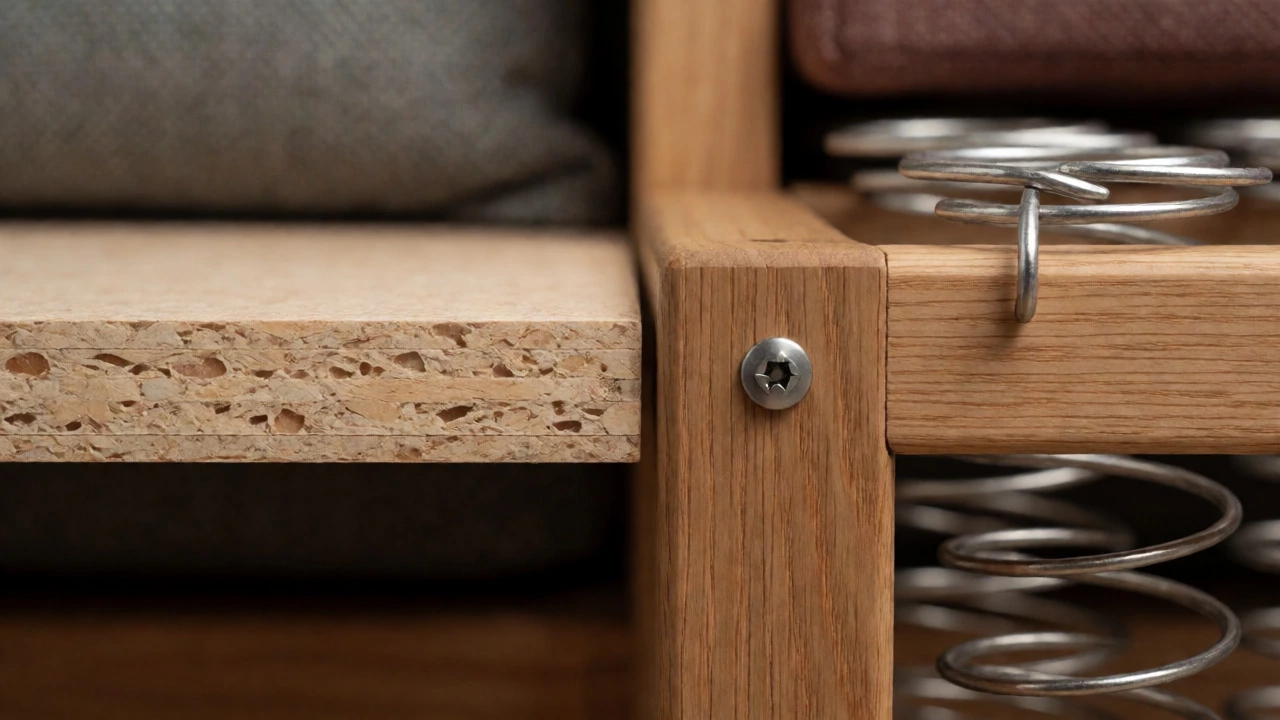
Before we talk numbers, let’s define what you’re actually buying. A "good quality" couch isn’t just about looks. It’s about construction. The National Association of Furniture Manufacturers (NAFM) suggests looking for kiln-dried hardwood frames, eight-way hand-tied springs or high-gauge sinuous springs, and high-density foam cushions wrapped in down or feather blends. If a couch doesn’t have these features, it’s not built to last more than five years, regardless of how pretty it looks in the showroom.
Think of it like buying a car. You can buy a base model sedan for $20,000 or a luxury sedan for $60,000. Both will drive. But one is engineered for longevity and comfort, while the other might be cutting corners on suspension and interior materials. Your couch is no different. The price reflects the hidden engineering, not just the fabric.
The Price Tiers: What Your Money Buys
Furniture pricing falls into distinct buckets. Understanding these helps you avoid overpaying for marketing or underpaying for junk. Here is how the market breaks down in 2026:
| Tier | Price Range (USD) | Expected Lifespan | Key Features |
|---|---|---|---|
| Budget / Fast Furniture | $200 - $500 | 1-3 Years | Plywood or particleboard frame, low-density foam, polyester blend fabric. |
| Entry-Level Quality | $500 - $800 | 3-5 Years | Mixed wood/metal frame, basic spring systems, decent upholstery. |
| Mid-Range (The Sweet Spot) | $800 - $1,500 | 7-10 Years | Kiln-dried hardwood, high-resiliency foam, durable performance fabrics. |
| High-End / Designer | $1,500 - $3,000+ | 10-15+ Years | Custom frames, premium leather or natural fibers, hand-tied springs, artisanal details. |
Notice the jump from Budget to Entry-Level. That extra $300 often buys you a metal-reinforced corner block instead of just glue and staples. The jump to Mid-Range is where the real value lives. This is where manufacturers start using solid hardwoods like oak or maple instead of rubberwood or pine, which warp over time.
Why Does Price Vary So Much?
If two couches look the same, why does one cost twice as much? It’s rarely just the fabric. Here are the hidden factors driving the price tag:
- Frame Material: Kiln-dried hardwood costs significantly more than softwood or engineered wood. Hardwood resists warping and cracking. Softwood bends. Engineered wood (like MDF) disintegrates if it gets wet.
- Suspension System: Eight-way hand-tied springs are labor-intensive and expensive. Sinuous springs (the S-shaped wires) are cheaper but can squeak or sag if the gauge is too thin. Webbing (just straps) is the cheapest option and fails fastest.
- Cushion Fill: High-density polyurethane foam lasts longer than low-density foam. Down-filled cushions feel luxurious initially but require constant fluffing and can go flat. Blends offer a middle ground but add complexity to manufacturing.
- Upholstery Durability: Performance fabrics (like Crypton or Sunbrella) resist stains and fading. They cost more per yard than basic cotton or polyester blends. Leather prices depend heavily on whether it’s top-grain (expensive, durable) or bonded (cheap, peels).
When you pay $1,200 for a sofa, roughly $400 goes to materials, $300 to labor, $200 to overhead, and $300 to profit and marketing. When you pay $400, the material budget is slashed, leading to shortcuts in every category mentioned above.
Real-World Examples: Comparing Brands
Let’s look at actual products available in the US market in 2026 to see how this plays out. We aren’t endorsing brands, but showing where your money goes.
Article Furniture is a modern furniture retailer known for transparent pricing and mid-range quality. Their standard sofas typically range from $900 to $1,400. You get a kiln-dried hardwood frame and high-density foam. It’s a solid choice for renters who want something that survives multiple moves.
La-Z-Boy is a legacy American brand specializing in recliners and traditional seating. Prices start around $800 for basic models but quickly climb to $2,000+ for power recliners with premium leather. You’re paying for the mechanical reliability of the reclining mechanism, which is complex and prone to failure in cheaper brands.
IKEA is a Swedish multinational conglomerate known for affordable, flat-pack furniture. Their higher-end lines, like the KIVIK or EKTORP series, hover around $500-$700. While stylish, they often use particleboard cores and lower-density foam. Great for short-term use, but expect replacement within 5-7 years.
How to Spot a Bargain vs. A Trap
Sales are everywhere. Black Friday, Memorial Day, Labor Day-retailers love discounts. But a 50% off sticker doesn’t mean you’re getting a good deal. Sometimes, the original price was inflated. Here’s how to check:
- Check the Frame:** Ask to see the bottom of the sofa. If you see staples and glue only, run. Look for dowels and screws. If it’s covered by a dust cover, ask the salesperson what’s underneath. Reputable stores will show you.
- Sit Test:** Sit on the edge. Does it creak? Press down hard on the armrests. Do they wobble? A sturdy couch feels heavy and solid. If you can lift it easily with one hand, it’s likely lightweight and fragile.
- Fabric Rub Count:** For synthetic fabrics, ask for the Martindale rub count. Anything under 15,000 double rubs is decorative only. For daily use, aim for 25,000+. This number tells you how many times the fabric can be rubbed before wearing through.
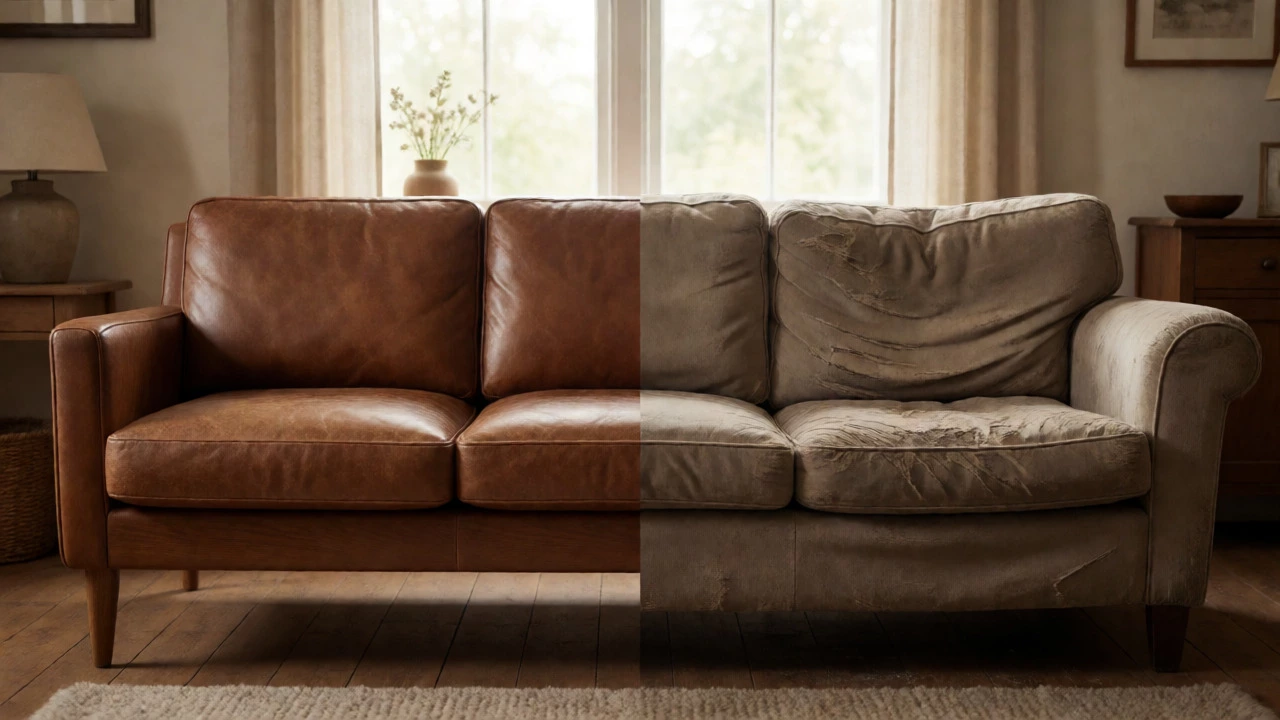
Don’t fall for the "leather" trap. Bonded leather is made from leather scraps glued together with polyurethane. It looks like leather for six months, then cracks and peels. Real top-grain leather costs more but ages beautifully. If the price seems too good for leather, it’s probably bonded or faux.
Hidden Costs Beyond the Sticker Price
The sticker price is just the beginning. To get a true picture of what a "good quality" couch costs, you must factor in logistics.
- Delivery Fees:** Many online retailers charge $100-$300 for white-glove delivery (bringing it inside and removing packaging). Some include it; others don’t.
- Assembly:** Flat-pack sofas save shipping costs but require assembly. If you hire someone, that’s another $50-$100.
- Protection Plans:** Retailers push protection plans for $100-$200. Read the fine print. Often, they exclude accidental damage or wear and tear, covering only structural defects-which are already covered by the manufacturer’s warranty.
- Disposal:** Getting rid of your old couch can cost $50-$100 if you don’t have a truck or curbside pickup service.
A $1,000 sofa might end up costing $1,250 after delivery and disposal. Always calculate the total landed cost before deciding if it fits your budget.
Is Investing More Worth It?
Here’s the math. A $500 couch lasts 3 years. Over 15 years, you buy five of them. Total cost: $2,500. Plus the hassle of shopping, delivering, and disposing of four old couches.
A $1,200 couch lasts 10 years. Over 15 years, you buy one and a half. Total cost: $1,800. You save $700 and countless hours of frustration. The upfront pain is higher, but the long-term value is undeniable. If you plan to stay in your home for more than five years, skip the budget tier entirely.
However, if you’re a student, a frequent mover, or furnishing a rental that might change hands soon, the $500 tier makes sense. Just know you’re renting the furniture, not owning it.
Frequently Asked Questions
What is the absolute minimum I should spend for a durable couch?
For a standard three-seater, aim for at least $800. Below this threshold, you are likely compromising on frame integrity (using softwoods or particleboard) or cushion density (low-quality foam that flattens quickly). At $800, you enter the mid-range market where kiln-dried hardwood frames and high-resiliency foam become standard expectations.
Do expensive couches really last longer than cheap ones?
Yes, significantly. A budget couch ($300-$500) typically lasts 2-4 years with regular use. A mid-range couch ($800-$1,500) lasts 7-10 years. High-end couches ($2,000+) can last 15+ years. The difference lies in the joinery (dowels/screws vs. staples/glue), spring systems, and foam density. Cheap couches fail structurally; expensive couches may only need reupholstering.
Is leather always more expensive than fabric?
Not necessarily. Top-grain leather is expensive due to material costs and tanning processes. However, bonded leather or faux leather (polyurethane) can be cheaper than high-performance fabrics like Crypton or Sunbrella. Also, some fabric designs use intricate patterns or natural fibers (linen, wool) that drive up the cost per yard, making them pricier than entry-level leather options.
Should I buy a sectional or a standard sofa?
Sectionals generally cost 20-30% more than standard sofas of comparable quality because they require more materials and complex construction (connectors, multiple cushions). However, sectionals provide more seating space per dollar spent. If you have the floor space, a sectional can be a better value for families, but ensure the connectors are sturdy, as this is a common failure point in lower-quality models.
When is the best time to buy a couch?
Major holidays like Presidents' Day, Memorial Day, Fourth of July, Labor Day, and Black Friday offer significant discounts (10-30%). Additionally, January and February are great for clearing out previous year's inventory when new models arrive. Avoid buying during peak moving seasons (May-August) unless you find a specific clearance event, as demand drives prices up.