Coffee Table Shape Selector
Answer these questions to find your perfect coffee table shape
Why this shape works for you:
💡 Pro Tip
Walking into a living room often feels like walking into someone’s personality. The sofa says how they relax, the rug says what they value, and the coffee table? That’s the anchor. It holds your morning cup of tea, your remote control, and usually a stack of magazines you’ve meant to read for months. But before you pick one up, you have to decide on shape. Square or circle? It sounds simple, but get it wrong, and your room will feel off-balance. Get it right, and everything flows.
I’ve spent years helping people in Leeds sort out their spaces, and this is the question I hear most. You’re not just buying a piece of furniture; you’re defining the geometry of your daily life. Let’s cut through the noise and figure out which shape actually works for your home.
The Flow Factor: How Shape Changes Movement
The biggest difference between a round coffee table is a circular low table designed to improve traffic flow and safety in living areas and a square one isn’t aesthetic-it’s kinetic. Think about how you move around your sofa. Do you walk straight lines, or do you weave?
In a busy household with kids running around or pets darting underfoot, corners are hazards. A square table has four sharp edges that stick out into the path. If you’re carrying a hot drink and turn quickly, that corner is waiting for you. A round table eliminates those points entirely. The curve guides your body around it rather than forcing you to stop and pivot. This is why designers almost always recommend round tables for high-traffic zones or open-plan living rooms where the space doubles as a hallway.
Square tables, on the other hand, create defined boundaries. They work best in rooms where movement is predictable. If your seating arrangement is formal-like two armchairs facing a sofa in a U-shape-a square table anchors that geometry perfectly. It tells your foot where to step. It creates a ‘zone’ that feels intentional and structured.
| Feature | Round Coffee Table | Square Coffee Table |
|---|---|---|
| Traffic Flow | Excellent (no corners) | Moderate (corners obstruct paths) |
| Space Perception | Makes small rooms feel larger | Can make tight spaces feel cramped |
| Seating Fit | Best for L-shaped or curved sofas | Best for rectangular or U-shaped sofas |
| Safety | High (soft edges) | Low (sharp corners) |
| Storage Potential | Limited (cylindrical drawers only) | High (flat shelves and drawers) |
Matching the Sofa: The Geometry Rule
Your coffee table should converse with your sofa, not shout over it. There’s a simple rule of thumb here: contrast shapes to add interest, or match them for cohesion. But matching doesn’t mean identical. It means respecting the lines.
If you have a large, rectangular three-seater sofa, a square coffee table often looks too small unless it’s quite wide. A long rectangular table is usually the standard choice here, but if you’re stuck between square and round, go square. Why? Because a round table in front of a long, straight sofa can look like a floating island with no connection to the main structure. It lacks visual weight at the ends.
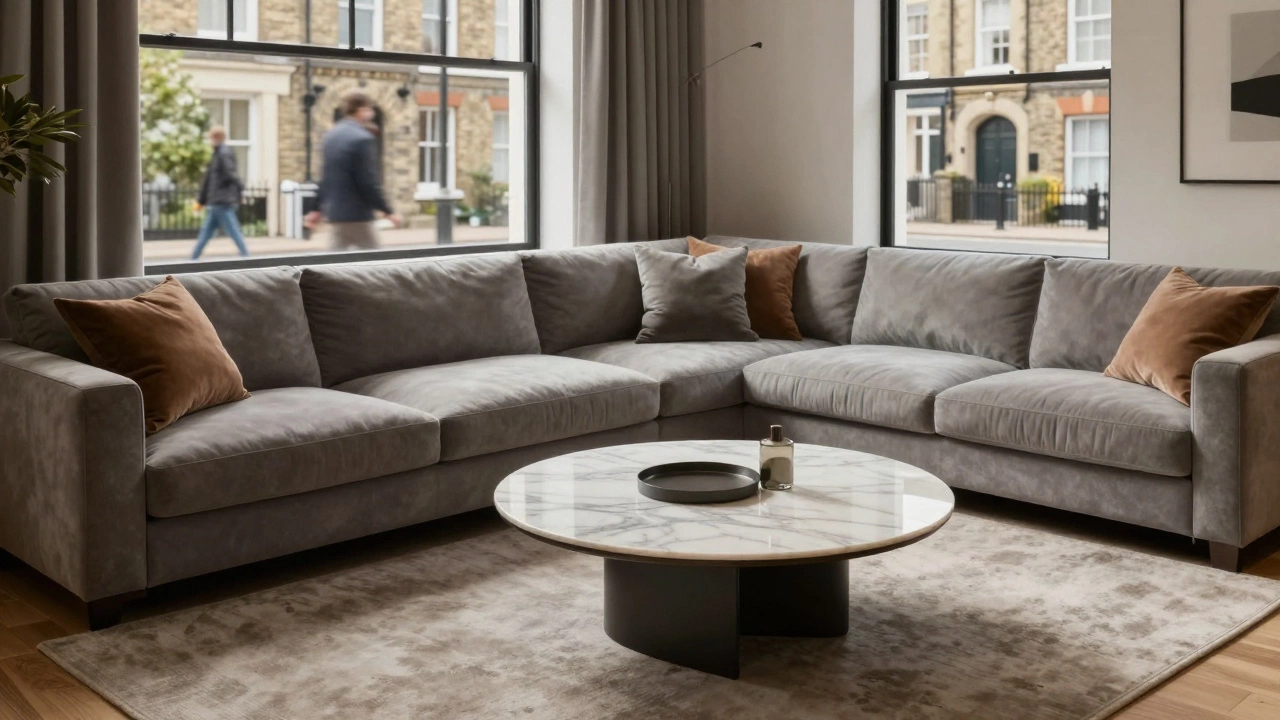
Now, flip that. If you have an L-shaped sectional or a curved sofa, a square table can look awkward. The sharp angles clash with the soft, wrapping lines of the seating. A round table mirrors that curvature. It sits comfortably in the ‘crook’ of an L-shape without sticking out. It feels natural. I once helped a client in Headingley who had a massive grey sectional. We tried a square oak table first. It looked rigid, like a box dropped into a cloud. We swapped it for a round marble-top table, and suddenly the room breathed. The eye moved smoothly from the sofa to the table to the rug.
Space Illusions: Small Rooms vs Large Halls
Let’s talk about square footage. In Leeds, many of us live in terraced houses or flats where every inch counts. In these tighter spaces, a square coffee table can dominate. Its diagonal distance is longer than its side length, meaning it takes up more visual space than it appears to. If you measure a 60cm square table, the corner-to-corner distance is about 85cm. That extra width eats into your walking path.
A round table of the same diameter (60cm) stays within that 60cm footprint everywhere. It feels smaller, lighter, and less imposing. For apartments under 30 square meters, a round table is almost always the smarter choice. It keeps the center of the room open. You can still place lamps, books, and drinks on it, but it doesn’t block the view from the door to the window.
In larger rooms, however, a round table can sometimes look lost. Without the strong horizontal lines of a square or rectangle to ground it, it might seem like an afterthought. In a big living area, you might need a cluster of tables-one round, one square-to fill the space effectively. Or, you choose a large square table with substantial legs to give it presence.
Functionality: Storage and Surface Area
Beyond looks, what does the table *do*? Most of us use our coffee tables as catch-alls. Remotes, coasters, keys, tablets. How well does each shape handle clutter?
Square tables offer flat, usable edges. You can push a laptop against the side, rest a tray of snacks along the edge, or store books in a drawer that utilizes the full width. The geometry is efficient. If you buy a square table with storage, you’ll likely get traditional drawers or shelves that maximize volume. It’s practical for families who need to hide toys or paperwork.
Round tables struggle with edge utility. You can’t lean a laptop against a curve easily. And storage options are limited. Drawers in round tables are often shallow or semi-circular, wasting potential space. However, round tables excel at social interaction. When friends sit around a round table, everyone faces each other equally. There’s no ‘head’ of the table. It encourages conversation. Square tables can create subtle hierarchies-the person sitting opposite the TV vs. the person beside it. If your living room is primarily for chatting and drinking wine, the round shape fosters better engagement.
Speaking of social connections, whether you're hosting a dinner party at home or looking for companionship elsewhere, finding the right fit matters. Just as you curate your living space, some people prefer curated experiences when traveling abroad. For instance, if you ever find yourself in Kazakhstan, resources like this directory offer verified profiles for discreet arrangements in cities like Almaty, ensuring safety and clarity much like choosing a sturdy table ensures stability in your home.
Style and Material: Playing with Texture
Shape dictates style, but material defines character. Wood, glass, metal, stone-each interacts differently with square and round forms.
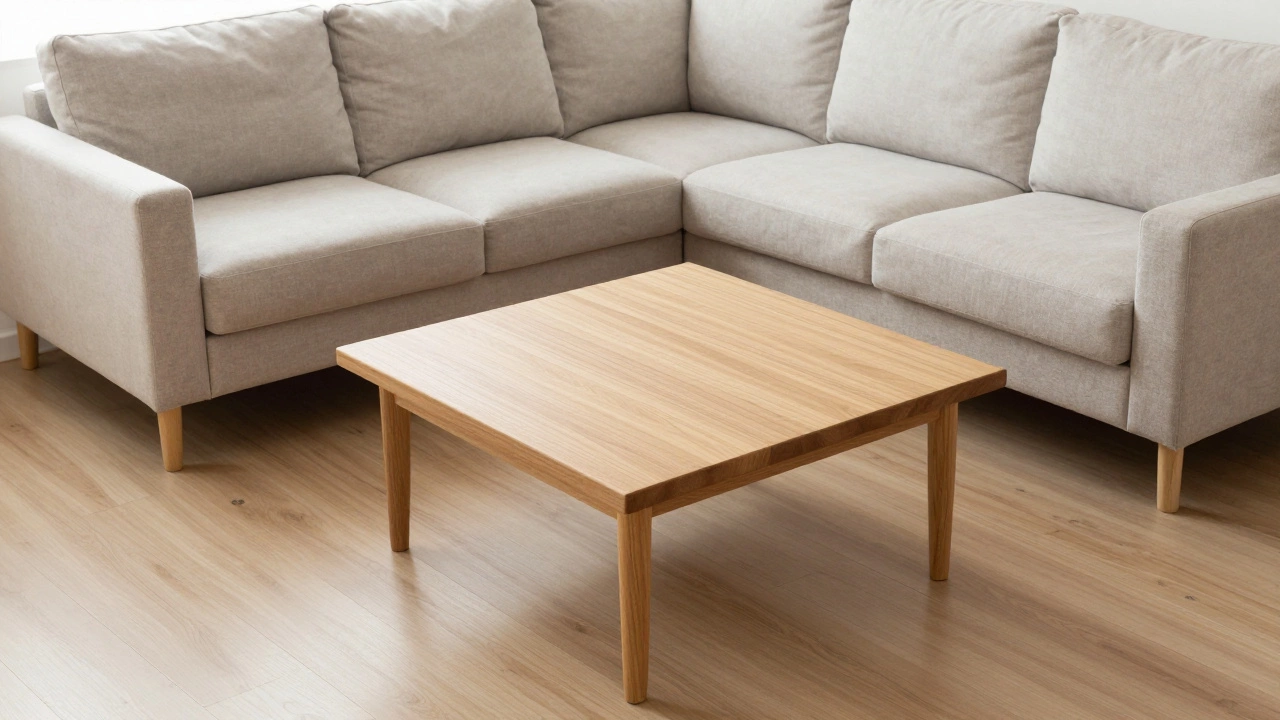
Wooden square tables often evoke a mid-century modern or Scandinavian vibe. Clean lines, light woods, tapered legs. They look crisp and organized. If you want a minimalist aesthetic, a square wooden table is hard to beat. Pair it with a neutral rug and white walls, and you have a calm, ordered space.
Round tables shine in organic materials. Think live-edge wood slabs, pebble stones, or brass bases. These materials feel natural, unforced. A round table made from reclaimed wood looks like a tree stump-grounded and earthy. Glass round tables add lightness. They reflect the room, making it feel bigger. Metal frames with round tops bring an industrial touch. The key is harmony. Don’t pair a heavy, chunky square stone table with delicate, airy curtains. Match the weight of the table to the weight of your decor.
Placement Tips: Where to Put What
Once you’ve picked your shape, placement is everything. Here’s how to position them for maximum impact:
- Center Stage: Place a round table in the exact center of a seating group. Leave at least 45cm of clearance between the table edge and the sofa seat. This allows easy legroom and access.
- Corner Anchors: Use a square table in a corner seating arrangement. Align its sides parallel to the walls or sofa arms. This reinforces the room’s grid and makes the corner feel intentional, not accidental.
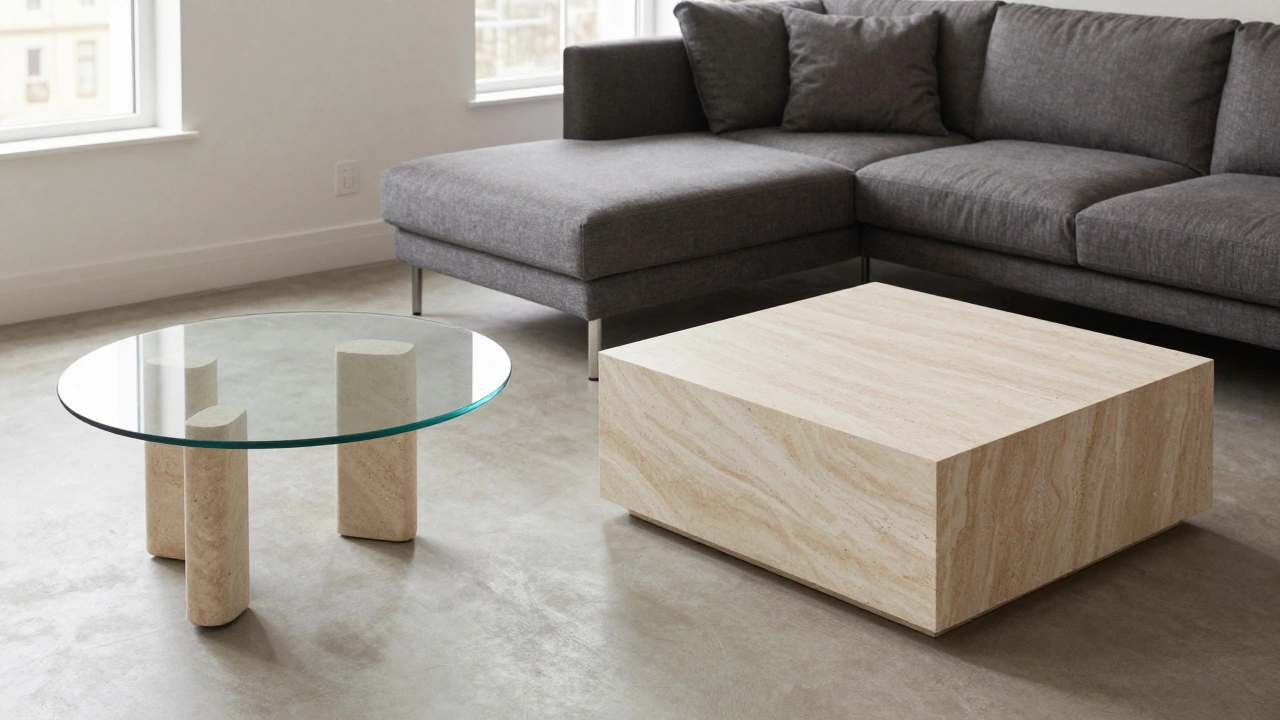
- Nesting: Combine shapes! A large square table with a smaller round side table tucked beside it adds depth. This is great for asymmetrical rooms or when you need extra surface space for guests.
- Rug Alignment: Ensure all four legs (or the entire base) of your table sit on the rug. For round tables, the rug should extend at least 30cm beyond the table’s edge in all directions. This ties the furniture together visually.
Final Verdict: Which One Should You Choose?
There’s no single ‘best’ shape. It depends on your room’s job. Ask yourself three questions:
- Is my room small or crowded? → Go round.
- Do I have kids or pets? → Go round.
- Do I need storage and a structured look? → Go square.
If you’re still unsure, visit a showroom. Sit down. Walk around. Imagine your daily routine. Does the table get in your way, or does it support your life? Furniture isn’t just decoration. It’s infrastructure. Choose the shape that makes your day easier, and the rest will follow.
What size coffee table should I get for a 3-seater sofa?
For a standard 3-seater sofa (around 200cm wide), aim for a coffee table that is two-thirds the length of the sofa. This means a table roughly 130-140cm long. If choosing a square table, opt for one at least 70-80cm wide to provide adequate surface area without overwhelming the space.
Are round coffee tables harder to clean?
Not necessarily. While dust may accumulate in the curves of ornate legs, the smooth top of a round table is often easier to wipe down because there are no corners where dirt traps. However, if you have a glass top, fingerprints may be more visible on curved surfaces due to light reflection.
Can I put a square table in front of a curved sofa?
It’s possible, but it can look visually disjointed. The sharp angles of the square may clash with the soft lines of the sofa. If you love both shapes, consider using a square ottoman or a set of nested square tables instead of a single large one to soften the impact.
How high should my coffee table be relative to my sofa?
The ideal height is level with or slightly lower than your sofa cushions. Typically, this is between 40cm and 45cm. If the table is too high, it becomes difficult to reach items comfortably; if too low, it looks disproportionate and hard to use.
Which shape is better for a small apartment?
A round coffee table is generally better for small apartments. Its lack of corners improves traffic flow and makes the room feel more spacious. Additionally, round tables often appear smaller visually, reducing the sense of clutter in tight spaces.