European Apartment Storage Planner
Moving to Europe? Most apartments don't come with built-in closets. Use this tool to estimate your storage needs based on your current habits and the typical dimensions of European furniture.
Enter your details and click calculate to see your recommended strategy.
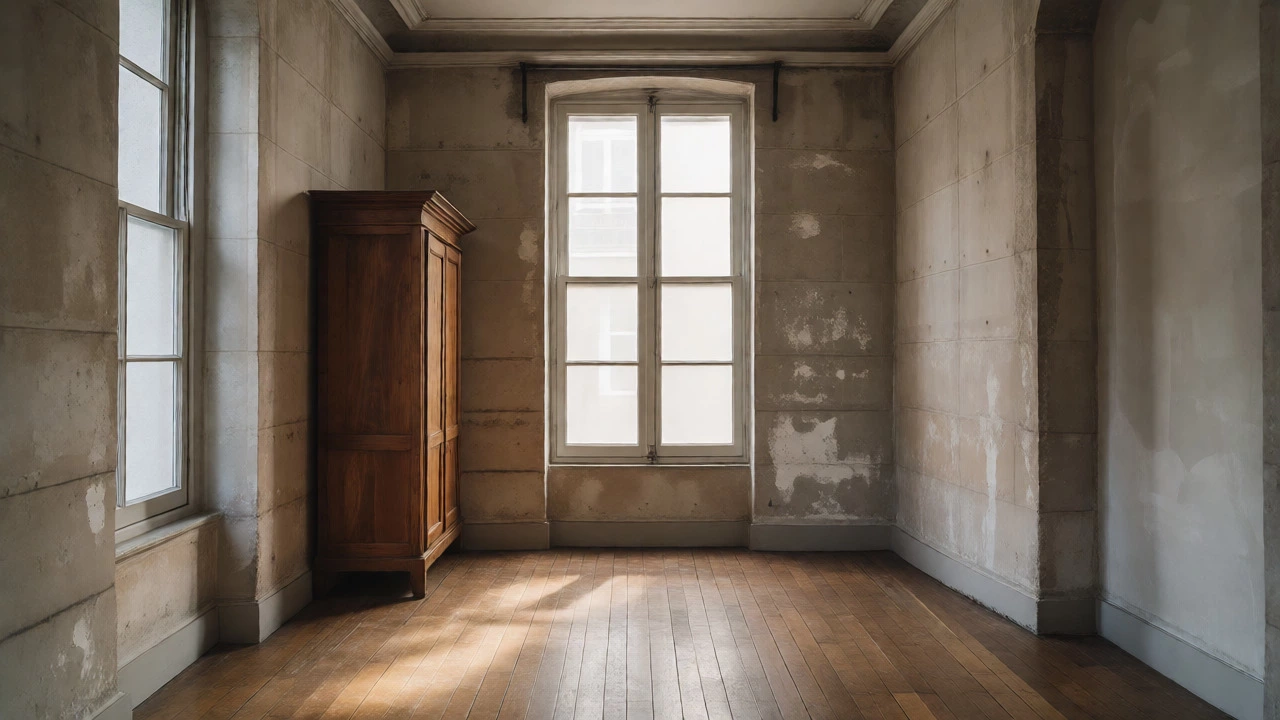
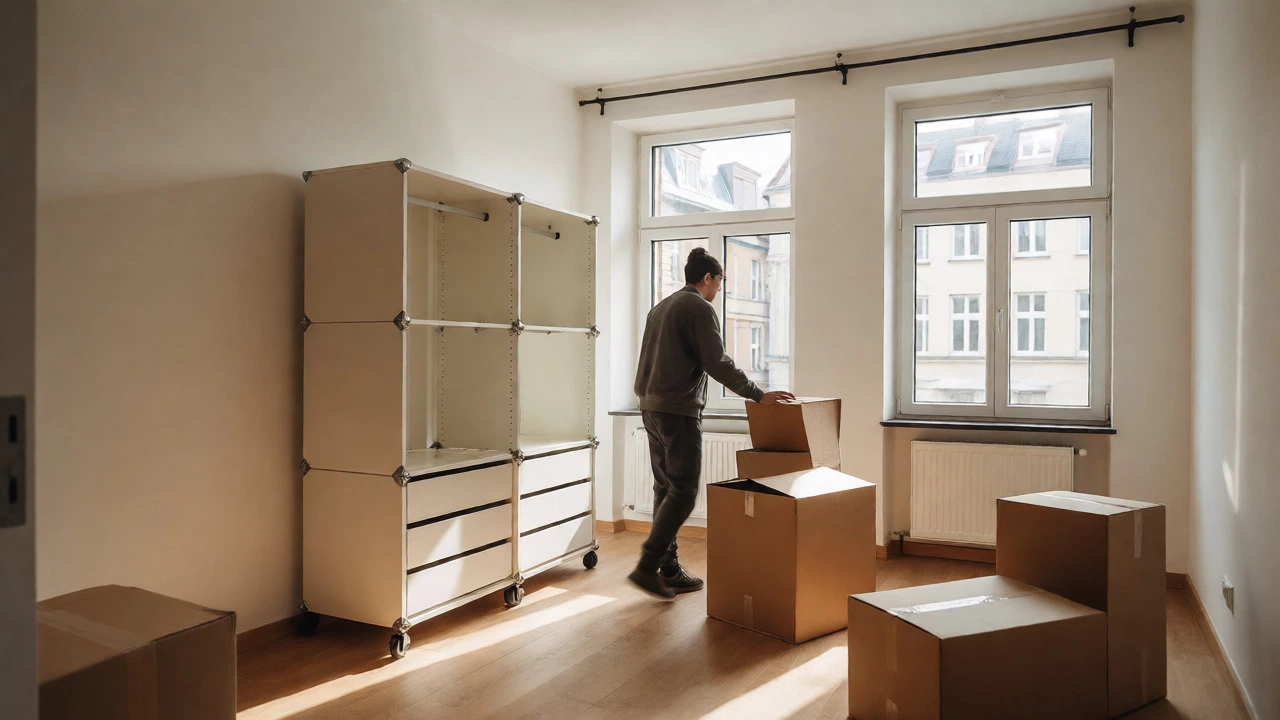
You walk into a new apartment in London, Paris, or Berlin, and you expect the standard American setup: a hallway lined with deep, recessed closets. Instead, you find bare walls. Maybe there’s a freestanding wooden box in the corner, but often, there is just empty space where your clothes are supposed to go. It feels like a mistake at first. Did the landlord forget to finish the room? Is this a design flaw?
It isn’t a bug; it’s a feature of centuries of architectural evolution. The absence of closets in European homes stems from historical building practices, space constraints, and a cultural preference for furniture over fixed structures. If you’re moving to Europe or just curious why your American-style closet doesn’t exist across the Atlantic, understanding the logic behind this design choice saves you money and frustration.
The Historical Root: Why Built-Ins Never Took Off
To understand the present, we have to look at the past. In the United States, the concept of the built-in closet exploded in the early 20th century. As suburban housing boomed, developers standardized layouts that included dedicated storage nooks. These were cheap to build during construction and added perceived value to the home.
Europe didn’t follow that script. Most European cities grew organically over hundreds of years. Medieval and Renaissance buildings were constructed with thick stone or brick walls, not the lightweight timber frames common in American suburbs. Cutting large, deep holes into load-bearing masonry walls was expensive and structurally risky. So, builders left the walls intact. Storage wasn’t built into the architecture; it was brought in as furniture.
This tradition stuck. Even when modern construction methods allowed for easier wall modifications, the habit persisted. Why pay extra to frame out a closet when you can buy a portable wardrobe that moves with you if you change apartments? For renters, who make up a significant portion of the population in countries like Germany and France, permanent fixtures are a liability. You can’t take a built-in closet with you when you move. You can, however, sell or donate a freestanding unit.
Space Economics: Square Footage vs. Usable Area
Let’s talk numbers. The average apartment size in major European capitals is significantly smaller than its American counterpart. According to Eurostat data, the median living space per person in the EU hovers around 35-40 square meters, whereas in the US, it’s closer to 60-70 square meters. When every square meter costs thousands of pounds or euros, wasting space on dead air inside a closet becomes a luxury few can afford.
A standard American reach-in closet is about 24 inches (60 cm) deep. That’s a lot of depth used for hanging shirts. In a compact European flat, those 24 inches could be the difference between fitting a desk, a bookshelf, or simply walking comfortably down the hallway. By using shallow open shelving or slim-profile furniture, residents maximize usable floor area.
| Feature | US Built-in Closet | European Freestanding Unit |
|---|---|---|
| Depth | ~24 inches (60 cm) | 18-22 inches (45-55 cm) |
| Portability | Fixed to house | Movable asset |
| Installation Cost | Included in build | Purchased separately |
| Space Impact | Reduces room volume | Utilizes vertical space |
Notice the depth difference. European wardrobes are often shallower because they rely more on folding clothes rather than hanging them. Hanging takes up width; folding takes up height. In a tall, narrow European apartment, going vertical is the only way to win.
Cultural Habits: How Europeans Organize Their Clothes
If you’ve ever visited a friend’s flat in Leeds or Lyon, you might have noticed their clothes aren’t all on hangers. This is a deliberate organizational strategy. Because closet space is premium real estate, many Europeans adopt a minimalist approach to clothing ownership. They own fewer items, which means they need less storage infrastructure.
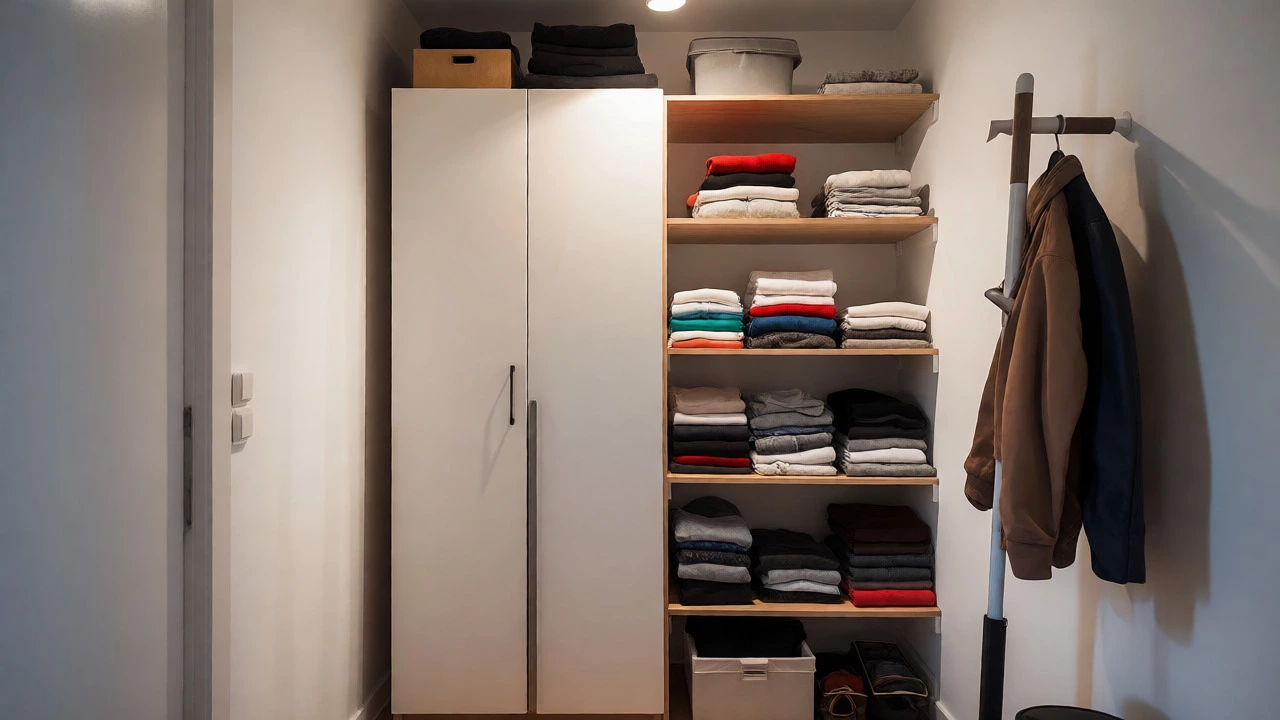
Folding is king. Drawer units, chest-of-drawers, and stackable boxes are ubiquitous. This method compresses fabric, allowing you to fit three times more clothes into a drawer than onto a rail. It also protects delicate fabrics from stretching on hangers. When you don’t have a cavernous closet to dump everything into, you’re forced to curate your wardrobe. It’s messy chaos versus disciplined curation, and most Europeans choose the latter.
Another factor is laundry habits. Many European apartments lack in-unit dryers. Clothes are dried on racks in the living room or on balconies. Once dry, they are folded immediately. There’s rarely a step where you hang damp clothes in a closet to finish drying, which reduces the need for hanging space. The workflow is: wash, dry on rack, fold, store in drawer. Simple, efficient, and space-saving.
The Rise of the "Armoire" and Modern Alternatives
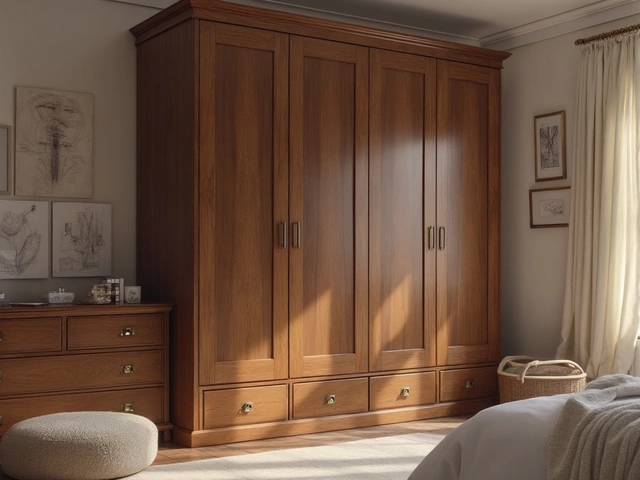
Just because there are no built-in closets doesn’t mean Europeans have nowhere to put their things. Enter the armoire, a tall, freestanding cabinet that has been a staple of European interior design since the Middle Ages. Historically made of heavy oak, modern armoires are sleeker, often made of MDF or particleboard, but the principle remains: storage is a piece of furniture, not a part of the wall.
Today, you’ll see several popular alternatives to the traditional armoire:
- IKEA PAX Systems: While technically modular, these are freestanding until anchored. They allow customization of depth and layout without cutting into walls.
- Open Shelving: Popular in industrial-style lofts. Clothes are displayed as decor. Requires high discipline to keep tidy.
- Under-Bed Storage: Essential for studios. Vacuum bags and rolling bins utilize the dead space under the bed frame.
- Hallway Coat Racks: Since bedroom space is tight, outerwear often stays in the entryway. It keeps dust off bedroom floors and frees up indoor storage.
These solutions are flexible. If you decide to repaint your room or rearrange your furniture, you can move your storage. With a built-in closet, you’re stuck with the layout forever. This flexibility appeals to the transient nature of modern urban living, where people change jobs and neighborhoods frequently.
Buying Real Estate: What to Expect in Different Countries
Not all of Europe is the same. The "no closet" rule applies broadly, but there are regional nuances. Understanding these helps if you’re planning a move or an investment.
United Kingdom: British homes often have "cupboards"-small, shallow cabinets usually found in hallways or bedrooms. They’re great for linens and coats but terrible for full wardrobes. New-build developments in London are increasingly adding fitted wardrobes to attract international buyers, but older Victorian and Georgian properties rarely have them.
France and Germany: Here, the tradition of the freestanding wardrobe is strongest. Landlords rarely provide storage. You are expected to bring your own. In Germany, it’s common for tenants to leave their built-in kitchen units behind when they move, but wardrobes are almost always personal property.
Spain and Italy: Southern European apartments often feature larger rooms but still lack built-in closets. However, you might find more plasterwork niches-shallow recesses in the wall used for displaying items or storing shoes, though rarely deep enough for hanging clothes.
Nordic Countries: Sweden and Denmark prioritize functionality. While they may not have American-style closets, they excel at integrated joinery. High-quality, custom-fitted cabinetry is common in newer builds, but it’s considered high-end luxury, not a standard expectation.
How to Adapt: Strategies for Small Space Living
If you’re coming from a culture of abundance and suddenly find yourself in a 40-square-meter flat in Amsterdam, don’t panic. You can adapt. Here is how to manage a wardrobe without a closet.
- Declutter Ruthlessly: Use the KonMari method. If it doesn’t spark joy, get rid of it. You cannot store what you don’t own.
- Go Vertical: Buy tall, narrow dressers. Use the top of the wardrobe for seasonal items stored in labeled boxes.
- Use the Door: Over-the-door organizers are lifesavers for shoes, accessories, and toiletries.
- Invest in Quality Hangers: Slim velvet hangers save 20% more space than plastic ones. Uniformity makes the space look intentional, not cluttered.
- Rent Extra Storage: If you truly can’t fit everything, rent a small self-storage unit nearby. It’s cheaper than paying for a larger apartment.
Living without a closet forces you to be mindful. You know exactly where every shirt and pair of socks lives. There’s no hiding mess in a dark corner. It’s a different relationship with your belongings, one that many people find liberating once they adjust.
Do all European houses lack closets?
No, not all. Newer constructions, especially luxury apartments in cities like London or Dublin, often include fitted wardrobes to appeal to global buyers. However, in older buildings and standard rentals across mainland Europe, freestanding furniture is still the norm.
Is it illegal to install a closet in a European rental?
It depends on the country and lease agreement. In the UK and Germany, making structural changes like cutting into walls usually requires landlord permission. Installing a freestanding wardrobe is always allowed and preferred.
Why do Americans love closets so much?
American housing developed with lighter timber-frame construction, making built-ins easy and cheap. Additionally, the post-WWII suburban boom emphasized convenience and privacy, leading to dedicated rooms for specific functions, including dressing areas.
What is the best wardrobe alternative for small spaces?
Modular systems like IKEA PAX are excellent because they offer customizable depth and height. Alternatively, open shelving combined with drawers provides visibility and accessibility while maintaining a light, airy feel in cramped rooms.
Do European landlords provide any storage?
Typically, no. Tenants are expected to furnish their own storage. Some leases might include a basic coat cupboard in the hallway, but full bedroom storage is almost exclusively the tenant's responsibility.