Garden Furniture Winter Survival Calculator
Select the primary material of your garden furniture to get a customized winter survival verdict and action plan.
Teak Wood
Natural oils, durable
Resin Wicker
Synthetic rattan look
Cast Iron
Heavy, painted metal
Aluminum
Lightweight, rust-free
Softwood/Pine
Budget wood, porous
Key Risks
Essential Actions
Pro Tip
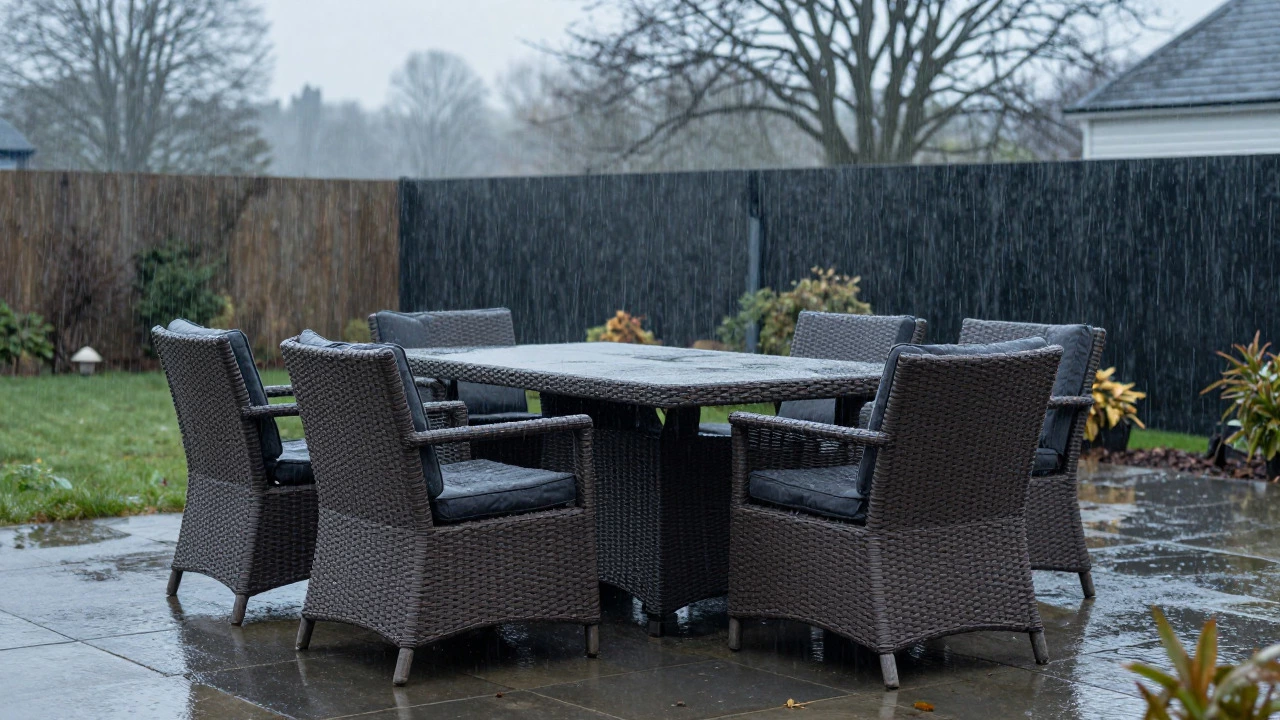
It’s mid-November, the rain is sideways, and you’re staring at your expensive rattan dining set sitting on the patio. You bought it for summer barbecues, but hauling it into the garage feels like a chore you’ve been putting off since October. So, can you just leave it there? The short answer is: maybe. But if you want that furniture to last more than two seasons, "maybe" isn’t good enough.
Leaving garden furniture outside during winter isn't just about aesthetics; it's a battle against moisture, freeze-thaw cycles, and UV damage. Whether you have teak, resin wicker, or cast iron, each material reacts differently to the British winter. Getting this wrong means splintering wood, rusted frames, and moldy cushions by April. Getting it right saves you hundreds of pounds in replacements.
The Material Matters More Than You Think
Not all garden furniture is built equal. Before you decide whether to cover or store, you need to know what you’re dealing with. Different materials have different tolerances for cold and wet.
| Material | Cold Resistance | Moisture Risk | Verdict: Leave Outside? |
|---|---|---|---|
| Teak Wood | High | Low (if untreated) | Yes, but silver-grey patina develops |
| Resin Wicker (Rattan) | Medium | High (brittleness) | No, unless covered tightly |
| Cast Iron | High | Very High (rust) | Only if painted/sealed perfectly |
| Aluminum | High | Low | Yes, generally safe |
| Softwood/Pine | Low | Very High (rot/warping) | No, must be stored dry |
Teak is the gold standard here. It contains natural oils that repel water, so leaving it out is usually fine. It will turn grey, but that’s cosmetic. Aluminum is also tough-it doesn’t rust, though cheap powder coatings can chip if ice forms underneath. The real danger zones are resin wicker and softwoods. Resin becomes brittle when temperatures drop below freezing. One heavy snow load, and those woven strands snap. Softwoods like pine absorb water like a sponge, leading to rot and warping within weeks.
The Hidden Enemy: Freeze-Thaw Cycles
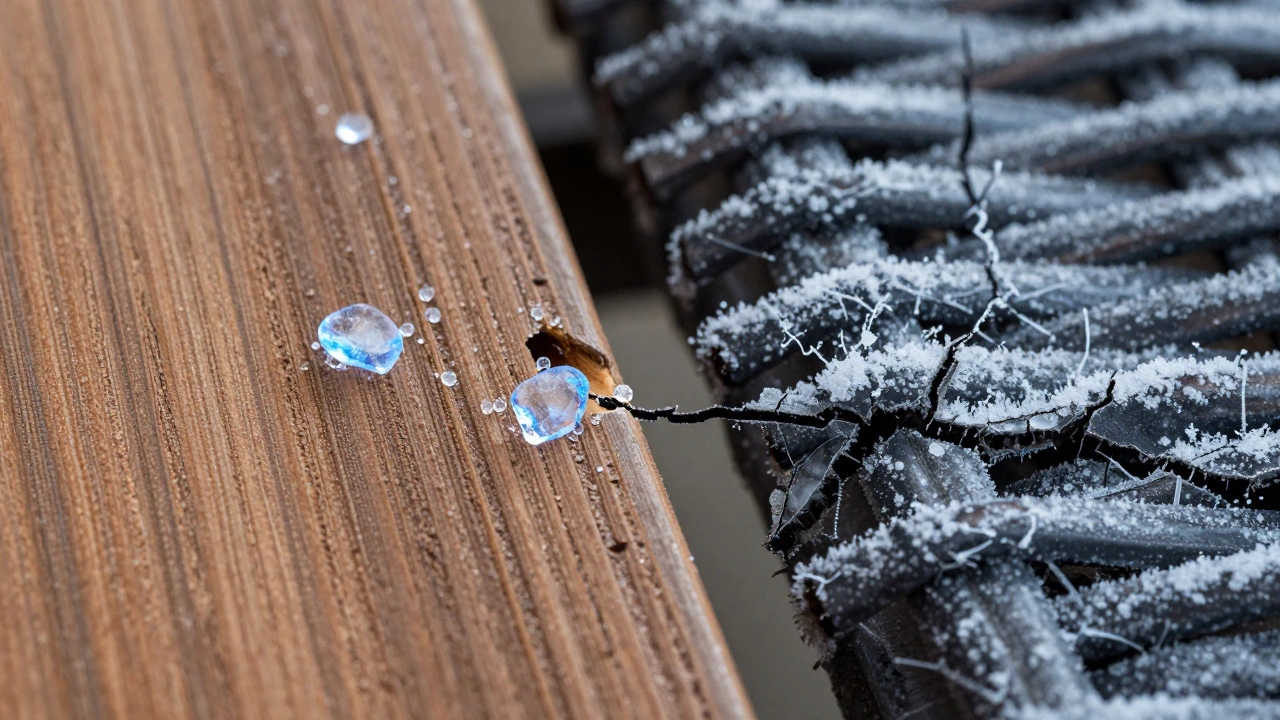
In Leeds, we don’t just get cold; we get wet-cold. And then, occasionally, a thaw. This cycle is destructive. When water sits in the pores of wood or under the weave of synthetic rattan, it freezes. Ice expands. This expansion cracks fibers from the inside out. By spring, your chair looks fine on the surface, but the structural integrity is gone. Sit down too hard, and the frame gives way.
This is why simply covering furniture isn’t always enough. If you throw a tarp over wet furniture, you trap the moisture. That trapped humidity creates a greenhouse effect, breeding mold and mildew. For fabric cushions, this is fatal. They will smell damp forever, no matter how much you wash them later.
How to Protect Furniture If You Must Leave It Out
If storage space is tight-and let’s be honest, garages are often full of bikes and old boxes-you can mitigate damage with the right preparation. Here is the step-by-step process to keep your outdoor setup intact through winter.
- Clean Thoroughly: Before the first frost, scrub everything. Use mild soap and water for metal and plastic. For wood, use a specialized cleaner to remove algae and dirt. Dirt holds moisture, so clean surfaces dry faster.
- Dry Completely: Wait for a sunny day. Ensure every crevice, especially under seat cushions and between slats, is bone dry before covering.
- Apply Protective Coatings: Treat wooden furniture with a penetrating oil or wax. For metal, check for scratches in the paint and touch them up immediately to prevent rust spots. Apply a silicone-based spray to resin wicker to maintain flexibility.
- Use Breathable Covers: Avoid plastic tarps unless they are elevated. Plastic traps condensation. Instead, use high-quality, breathable waterproof covers designed for outdoor furniture. These allow moisture vapor to escape while keeping rain out.
- Elevate Off the Ground: Place furniture on pallets, bricks, or rubber feet. Standing directly on concrete or soil draws up ground moisture. Elevation improves air circulation underneath.
A pro tip: secure your covers. Wind in the UK can be relentless. A loose flap banging against the frame night after night will wear away protective coatings and scratch finishes. Use bungee cords or ties to keep the cover snug.
When Storage Is Non-Negotiable
Some items simply cannot survive outdoors. If you have upholstered chairs, velvet sofas, or lightweight plastic sets, bring them in. Even if you live in a flat with no garage, look for alternative storage solutions.
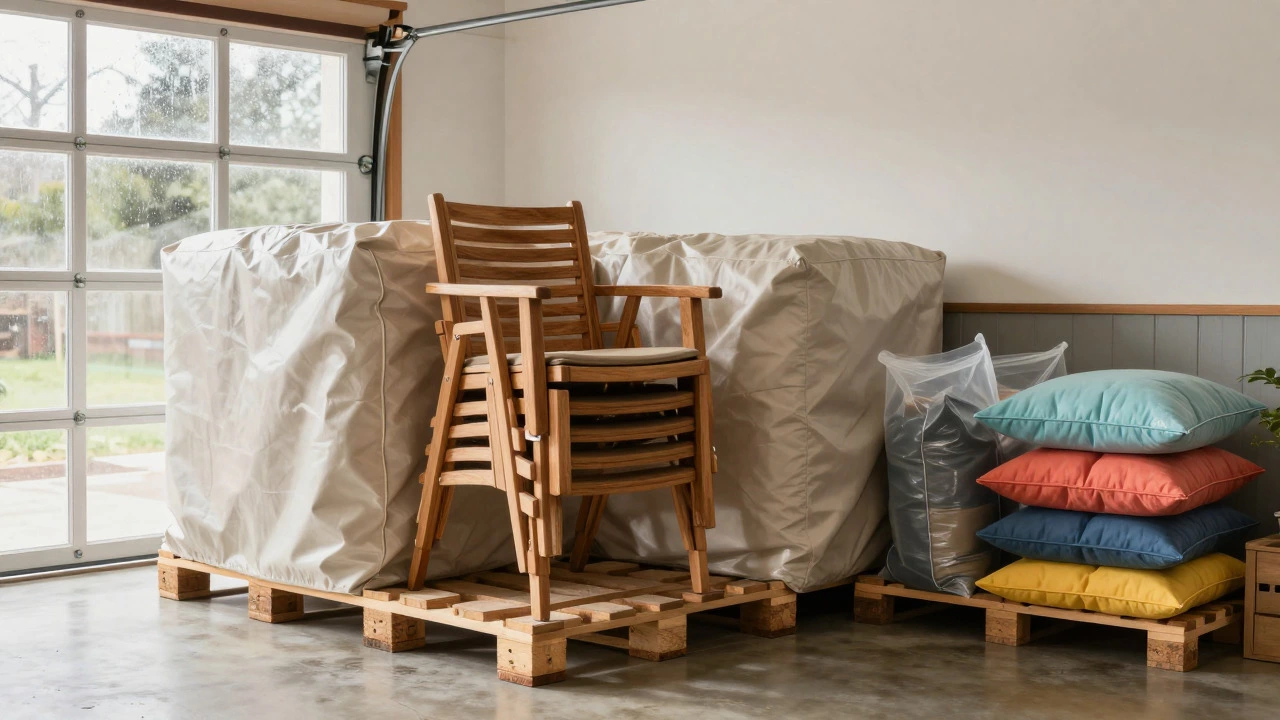
- Sheds: If you have a shed, line the floor with plastic sheeting or pallets to prevent damp rising from the concrete base. Keep furniture off the walls to allow airflow.
- Under Stairs: Stack chairs vertically. Use vacuum-seal bags for cushions to save space. This is ideal for smaller items like side tables or armchairs.
- Lofts: Only use lofts if they are dry and ventilated. Damp lofts are worse than outside because the heat accelerates mold growth on fabrics.
If you’re storing resin wicker indoors, keep it away from direct heat sources like radiators. Extreme heat can cause the plastic to warp or become sticky. Room temperature is perfect.
Cushions: The Weakest Link
Frames might survive, but cushions rarely do if left exposed. Foam absorbs water and loses its resilience. Fabric fades and molds. Always remove cushions before covering the frame. Store them in airtight containers or vacuum bags in a dry place. If you must leave them out, ensure they have quick-dry foam cores and stain-resistant, breathable covers. Even then, check them weekly for dampness.
Maintaining Your Investment Long-Term
Winter care isn’t just about survival; it’s about longevity. A little effort now means your furniture looks new next summer. In spring, don’t just uncover and go. Inspect for any damage caused by wind or ice. Tighten loose screws, re-oil wood, and wash off winter grime. Regular maintenance prevents small issues from becoming costly repairs.
Think of your garden furniture as an extension of your home. Just as you wouldn’t leave your indoor sofa in the rain, treat your outdoor pieces with similar respect. The cost of proper covers and cleaning supplies is tiny compared to buying a new set every few years.
Can I leave my resin wicker furniture outside in winter?
Ideally, no. Resin wicker becomes brittle in freezing temperatures and can crack under the weight of snow or ice. If you must leave it out, use a breathable, waterproof cover and ensure it is completely dry before covering. Elevate it off the ground to prevent moisture buildup.
Will teak furniture rot if left outside in winter?
No, teak is naturally resistant to rot due to its high oil content. It will turn silver-grey over time, which is a cosmetic change, not structural damage. To maintain its golden color, apply teak oil annually, but this is optional for durability.
Should I cover my garden furniture or put it away?
If you have storage space, putting it away is best, especially for cushions and softwoods. If you must leave it out, use breathable covers rather than plastic tarps to prevent moisture trapping. Clean and dry the furniture thoroughly before covering.
How do I stop aluminum furniture from rusting in winter?
Aluminum doesn’t rust like steel, but it can corrode if the powder coating is damaged. Check for chips or scratches and touch them up with matching paint. Keep it elevated off wet ground and use a breathable cover to protect the finish from salt spray or acidic rain.
What is the best way to store outdoor cushions?
Store cushions in a dry, well-ventilated area. Vacuum-seal them to save space and protect from dust and pests. Avoid damp sheds or lofts. If possible, keep them off the floor using shelves or pallets to prevent moisture absorption.
Can plastic garden furniture survive winter outside?
Most modern plastic furniture is UV-stabilized and cold-resistant. However, prolonged exposure to harsh weather can cause fading and brittleness. Stack them securely to prevent wind damage and consider covering them to reduce UV exposure even in winter.