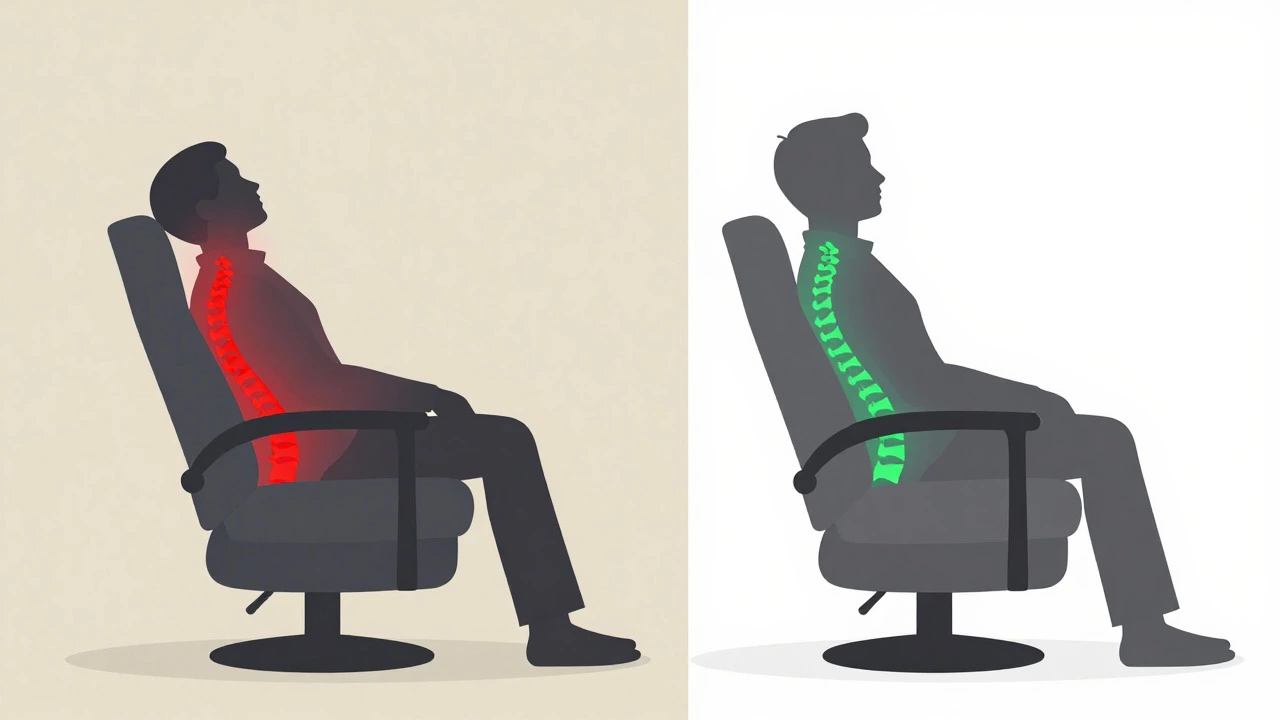
Recliner Ergonomics Simulator
Adjust Your Position
Drag the sliders to simulate different reclining positions.
Posture Analysis
Most of us treat our recliner chairs are upholstered seating furniture designed for comfort and relaxation, often featuring adjustable backrests and footrests as cozy retreats. We sink into them after a long day, expecting instant relief. But here is the uncomfortable truth: sitting wrong in a recliner can cause more harm than good. Poor posture leads to lower back pain, neck strain, and even circulation issues over time. The goal isn't just to sit; it is to sit in a way that supports your spine and keeps your body aligned.
The Myth of the "Slouch" Position
We have all done it. You pull the lever, the chair kicks out, and you slump forward with your head resting on your chest. It feels relaxed in the moment, but biomechanically, this is a disaster. When you slouch in a reclined position, your spine loses its natural S-curve. This puts immense pressure on the intervertebral discs, especially in the lumbar region (lower back). Over hours, this compresses nerves and strains muscles that are trying desperately to hold your torso up against gravity.
The healthiest approach starts with understanding that "relaxed" does not mean "collapsed." Your spine needs support, not surrender. If you find yourself needing to prop up pillows behind your lower back or under your knees to feel comfortable, your recliner is likely failing you ergonomically. The ideal setup requires active adjustment of the chair’s mechanisms to maintain neutral spinal alignment.
Why Zero Gravity Is the Gold Standard
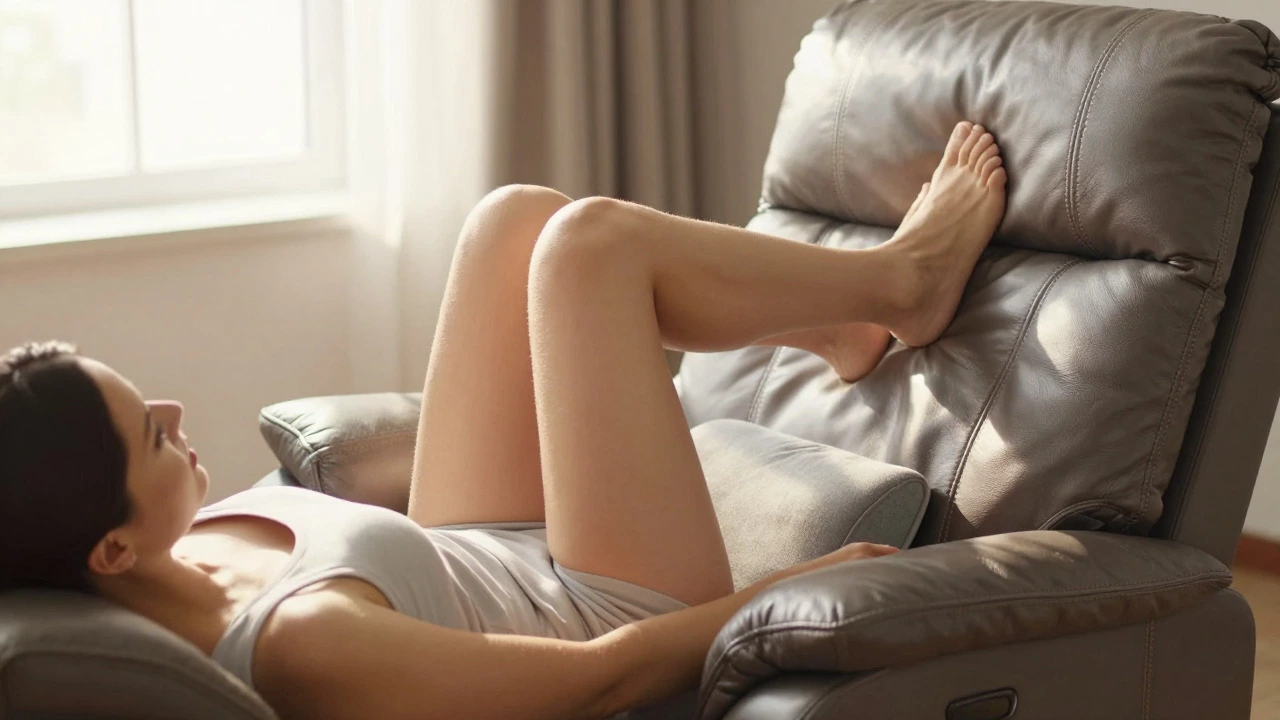
If there is one specific angle that orthopedic experts agree on, it is the zero gravity position is a seating posture where the legs are elevated above the heart level and the back is reclined at approximately 100-120 degrees. Originally developed by NASA to help astronauts withstand G-forces during launch, this position has become the gold standard for ergonomic seating.
In a true zero gravity setting, your knees are bent slightly higher than your hips. This alignment distributes your body weight evenly across the seat and backrest, rather than concentrating it on your tailbone and lower back. Studies published in journals like the Journal of Biomechanics suggest that this position reduces pressure on the spine by up to 50% compared to upright sitting. It also improves blood flow, which is crucial for people who suffer from swelling in the legs or poor circulation.
To achieve this in your recliner:
- Recline the backrest until it forms an obtuse angle (around 100 to 120 degrees) with the seat.
- Extend the footrest so your thighs are parallel to the floor or slightly elevated.
- Ensure your calves rest comfortably without dangling off the edge.
Critical Adjustments for Spinal Health
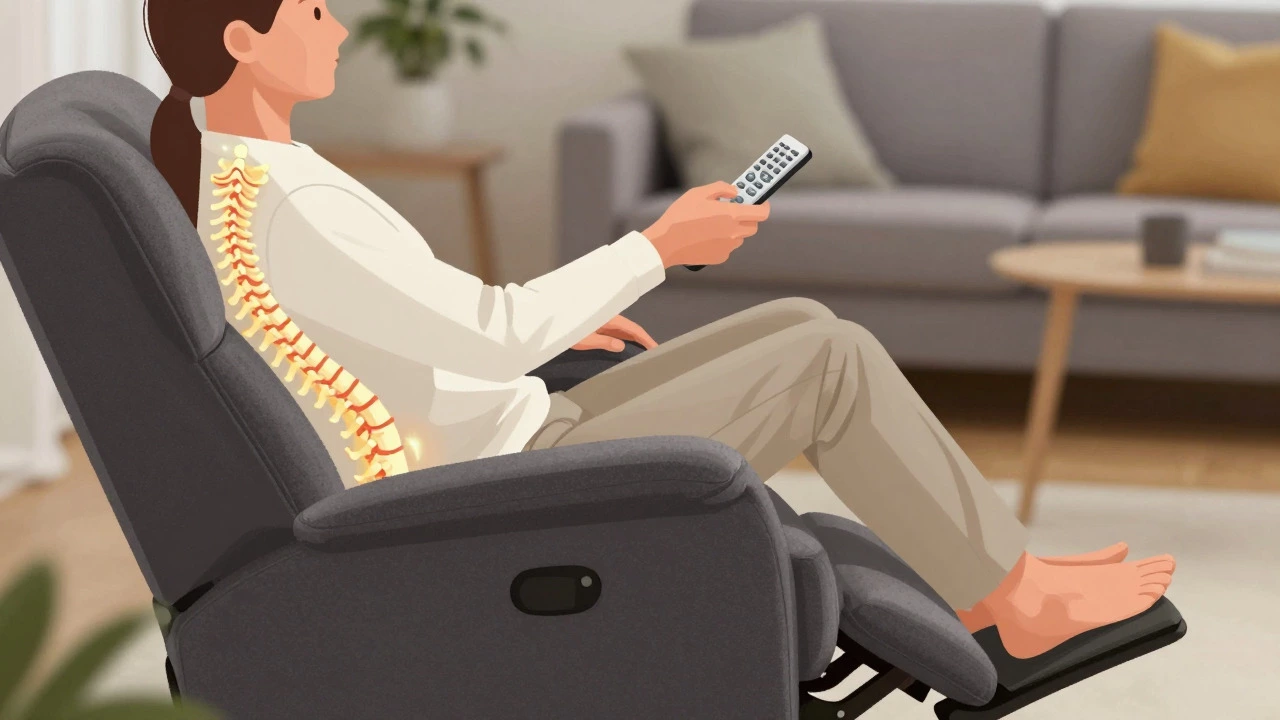
Not every recliner offers a perfect zero gravity mode, but you can still optimize your posture with minor tweaks. The key lies in supporting the three natural curves of your spine: cervical (neck), thoracic (mid-back), and lumbar (lower back).
Lumbar Support Is Non-Negotiable
Your lower back needs firm support to prevent it from rounding forward. Many modern lumbar support systems are adjustable mechanisms in chairs that provide targeted pressure to the lower spine to maintain its natural curve come with built-in cushions or air bladders. If yours doesn’t, use a small, rolled-up towel or a dedicated lumbar pillow placed at belt height. This fills the gap between your lower back and the chair, keeping the vertebrae stacked correctly.
Head and Neck Alignment
A common mistake is letting the headrest push your chin down toward your chest. This creates a "tech neck" hunch, straining the trapezius muscles and compressing the cervical spine. Adjust the headrest so it supports the base of your skull, allowing your ears to align vertically with your shoulders. If your recliner lacks a proper headrest, a thin travel pillow can bridge the gap without forcing your head forward.
Hip and Knee Angles
Your hips should be slightly higher than your knees, or at least level. If your feet dangle or your knees are sharply bent at 90 degrees while reclined, you restrict blood flow to your lower legs. Aim for a knee angle of about 100 to 110 degrees. This slight bend ensures that the popliteal artery (behind the knee) remains open, preventing numbness and tingling.
| Position Type | Spinal Pressure | Circulation Impact | Best For |
|---|---|---|---|
| Upright (90°) | High (140% of standing) | Moderate | Eating, reading short texts |
| Slouched Recline | Very High (Disc compression) | Poor (Restricted flow) | None (Avoid this) |
| Zero Gravity (100-120°) | Lowest (Even distribution) | Excellent (Enhanced flow) | Long-term relaxation, back pain relief |
| Flat Lie-Down | Low | Good | Napping, severe fatigue |
Duration Matters: The 20-Minute Rule
Even the best posture becomes harmful if held for too long. Static loading-keeping your muscles in the same position for extended periods-leads to stiffness and reduced oxygen delivery to tissues. Experts recommend changing your position every 20 to 30 minutes. Set a gentle timer on your phone. When it goes off, stand up, stretch, or shift your weight. This micro-movement resets muscle tension and promotes healthy joint lubrication.
If you plan to nap in your recliner, limit it to 20 minutes. Longer naps can lead to sleep inertia (that groggy feeling) and may disrupt your nighttime sleep cycle. For longer rest periods, consider a flat surface like a bed, which provides more uniform support for the entire body.
Choosing the Right Recliner for Your Body
Not all recliners are created equal. If you struggle with back pain, investing in a chair with specific ergonomic features can make a significant difference. Look for these attributes when shopping:
- Power Recline Mechanisms: These allow for precise adjustments. Manual levers often lock into preset positions that may not suit your body proportions. Power controls let you stop at the exact angle that feels right.
- Adjustable Lumbar Cushions: Fixed cushions might press too hard or too little. Adjustable ones let you customize the support depth.
- Firm Seat Density: Soft foam feels luxurious initially but collapses quickly, losing support. High-density foam maintains its shape and keeps your hips elevated properly.
- Wide Footrests: Ensure your entire calf rests on the footrest. Narrow footrests force your ankles to twist, causing strain.
For taller individuals, look for models with extended leg rests. For shorter users, ensure the seat depth allows your back to reach the backrest while your feet remain flat on the floor (or footrest) without pressure behind the knees.
Common Mistakes to Avoid
Many people unknowingly sabotage their comfort. Here are the most frequent errors:
- Sitting Too Far Forward: This leaves your lower back unsupported. Slide all the way back into the chair.
- Crossing Legs: While tempting, crossing legs tilts the pelvis and twists the spine. Keep both feet supported equally.
- Ignoring Armrest Height: Armrests should allow your elbows to rest at a 90-degree angle. If they are too high, your shoulders hike up, causing neck tension. If too low, you slump forward to reach them.
- Using Pillows Incorrectly: Large, fluffy pillows can push your head forward or create gaps in your back support. Use firm, supportive cushions instead.
Special Considerations for Specific Conditions
If you deal with chronic conditions, your recliner strategy needs tweaking.
Sciatica: Elevate your legs significantly to reduce pressure on the sciatic nerve. A wedge pillow under your knees can help if your recliner’s footrest isn’t high enough.
GERD/Acid Reflux: Avoid fully reclining immediately after eating. Stay upright for at least 30 minutes. When reclining, keep your upper body elevated to prevent stomach acid from flowing back into the esophagus.
Arthritis: Choose a recliner with easy-to-use controls. Power lifts can assist with standing up, reducing stress on knee and hip joints. Soft-touch materials prevent skin irritation.
Is it bad to sleep in a recliner?
Occasional naps are fine, but sleeping in a recliner regularly is not recommended. Most recliners do not provide adequate support for the neck and spine during deep sleep, leading to stiffness and pain. If you must nap, limit it to 20 minutes and ensure your head is well-supported to avoid neck strain.
What is the best angle for a recliner to relieve back pain?
The optimal angle for relieving back pain is between 100 and 120 degrees, known as the zero gravity position. This angle distributes body weight evenly, reduces pressure on the spine, and improves circulation. Adjust your footrest so your knees are slightly higher than your hips.
How can I improve my posture in a recliner?
To improve posture, ensure your lower back has firm lumbar support, your headrest supports the base of your skull without pushing your chin down, and your feet are fully supported on the footrest. Avoid slouching by engaging your core slightly and shifting positions every 20-30 minutes.
Are power recliners better for health than manual ones?
Yes, power recliners generally offer better ergonomic benefits because they allow for precise, incremental adjustments. You can find the exact angle that suits your body type and comfort needs, whereas manual recliners often lock into fixed positions that may not align perfectly with your spine.
Should I use a pillow in my recliner?
Use pillows strategically. A firm lumbar pillow can support your lower back, and a small neck pillow can cradle your head. Avoid large, soft pillows that push your head forward or create gaps in your back support, as these can worsen posture and strain muscles.