TV Mounting Safety: How to Install Your TV Without Risking Injury or Damage
When you mount a TV on the wall, you’re not just hanging a screen—you’re securing a heavy object that could fall and cause serious harm. TV mounting safety, the practice of securely installing televisions to prevent accidents, falls, or structural damage. It’s not optional. It’s not a suggestion. It’s the difference between a clean-looking setup and a disaster waiting to happen. Many people think if the mount looks sturdy and the TV fits, they’re good to go. But that’s not how it works. A TV that’s 75 inches can weigh over 70 pounds. Add in the weight of the bracket, and you’re dealing with nearly 100 pounds of force pulling on your wall. If the drywall anchors fail, or the studs aren’t properly located, that TV comes down—and fast.
TV placement, where and how high you position the screen matters just as much as the hardware. Mounting a TV too high forces you to tilt your neck up, which leads to strain. Mount it too low, and you get glare from windows or lights. The sweet spot? Center of the screen at eye level when seated—usually 40 to 42 inches off the floor. That’s not a guess. That’s what ergonomics experts and spine specialists agree on. And if you’re putting it above a fireplace or a coffee table, you still need to follow that rule. No exceptions.
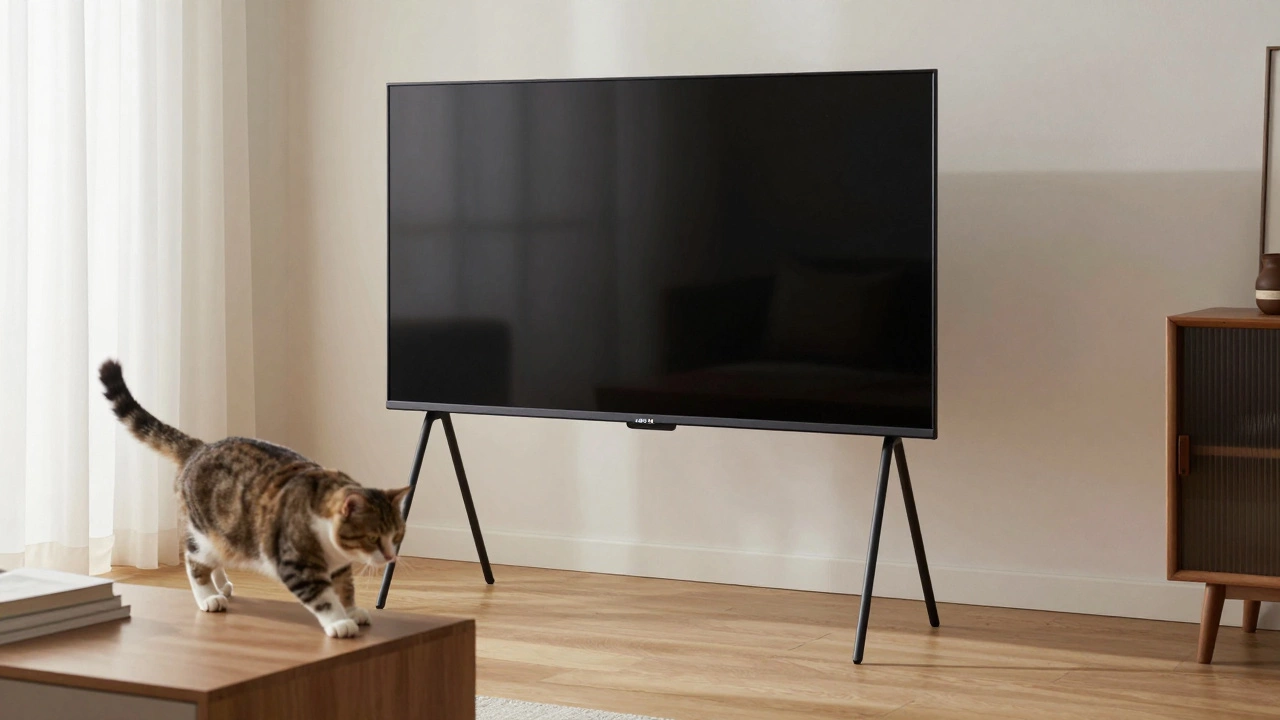
TV stand safety, the risk of placing a large TV on a stand that’s too small or unstable is another hidden danger. People put 75-inch TVs on 60-inch stands all the time because it "looks fine." But stability isn’t about looks—it’s about physics. A TV that overhangs the base by more than 6 inches on each side is a tipping hazard. Even if the stand doesn’t collapse right away, the stress on the frame and the risk of accidental bumps can lead to failure over time. That’s why wall mounts are often the smarter, safer choice.
And don’t forget the hardware. Not all mounts are made equal. Look for mounts rated for your TV’s exact weight and VESA pattern. Cheap mounts might say they hold up to 100 pounds, but if they’re made from thin stamped steel and use flimsy screws, they’ll bend or snap under pressure. Always check for certification marks like TÜV or UL. And always use the screws that come with the mount—not the ones you find in your toolbox. They’re sized for a reason.
There’s also the issue of hidden wires. Running cables through walls sounds neat, but if you’re not careful, you can cut into electrical lines or plumbing. Use a stud finder with AC detection. Turn off power to the room before drilling. And never rely on guesswork. One wrong hole and you’re not just risking your TV—you’re risking your home.
What you’ll find in the posts below aren’t just tips. They’re real-world lessons from people who’ve seen what happens when safety is ignored. From how to check if your wall can hold the weight, to why some TV stands are dangerously misleading, to the exact height you should hang your screen to avoid neck pain—this collection gives you the facts, not the fluff. No marketing. No hype. Just what you need to know to keep your TV up, and your family safe.