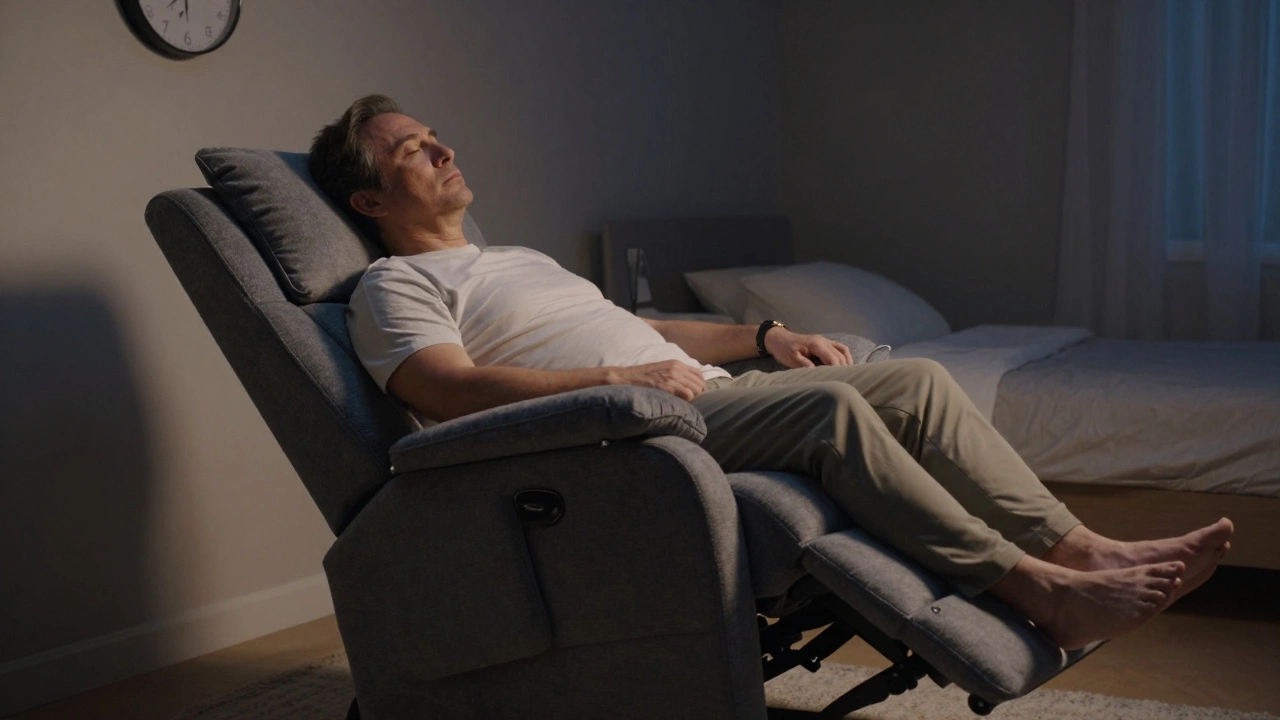
Sleeping in Recliner: Comfort, Health, and What Really Matters
When you sleeping in recliner, the act of resting or sleeping in a chair designed to lean back and support your legs. It's not just a habit—it's a choice many make for pain relief, relaxation, or simply because the bed feels too hard. It’s common, especially among older adults and people with back issues. But is it safe? Does it help or hurt your spine? The answer isn’t yes or no—it depends on how you do it, what chair you use, and how long you stay in it.
recliner chair, a type of seating furniture with a mechanism that lets you lean back and elevate your legs isn’t just for watching TV. For many, it’s the only place they get real rest. But not all recliners are built the same. A good one supports your lower back, keeps your hips level with or slightly higher than your knees, and lets your feet rest flat without dangling. Poorly designed models? They crush your spine, pinch your nerves, and leave your legs aching by morning. That’s why recliner comfort, how well a recliner supports your body during long periods of rest matters more than brand names or price tags. Look for adjustable headrests, lumbar support, and firm but cushioned padding—not too soft, not too hard.
People with degenerative disc disease, sciatica, or poor circulation often find relief in recliners. But if you’re sleeping in one every night, you need to watch for warning signs: numbness in your legs, stiff hips, or neck pain when you stand up. These aren’t normal. They’re your body telling you the angle is wrong or the support is missing. Simple fixes—like adding a small pillow behind your lower back or putting a footrest under your calves—can make a huge difference. And if you’re over 60, recliner health risks, potential physical harms from prolonged or improper use of recliner chairs become more real. Mobility, circulation, and spinal alignment all decline with age. The right recliner can help. The wrong one can make things worse.
There’s no magic formula. Some people sleep in recliners for years with zero issues. Others feel worse after just one night. The difference? Fit, posture, and movement. Don’t stay in the same position all night. Shift slightly. Get up to stretch every few hours if you can. Use a recliner that lets you fully extend your legs without your feet hanging off. Avoid models with too much cushion—your body sinks too deep, and your spine curves unnaturally.
Below, you’ll find real stories and practical fixes from people who’ve been there. We’ve pulled together advice on what makes a recliner work for sleep, what to avoid, and how to spot the signs your chair is doing more harm than good. Whether you’re dealing with back pain, sleep apnea, or just prefer the feel of a recliner over a mattress, there’s something here that’ll help you sleep better—without hurting yourself.