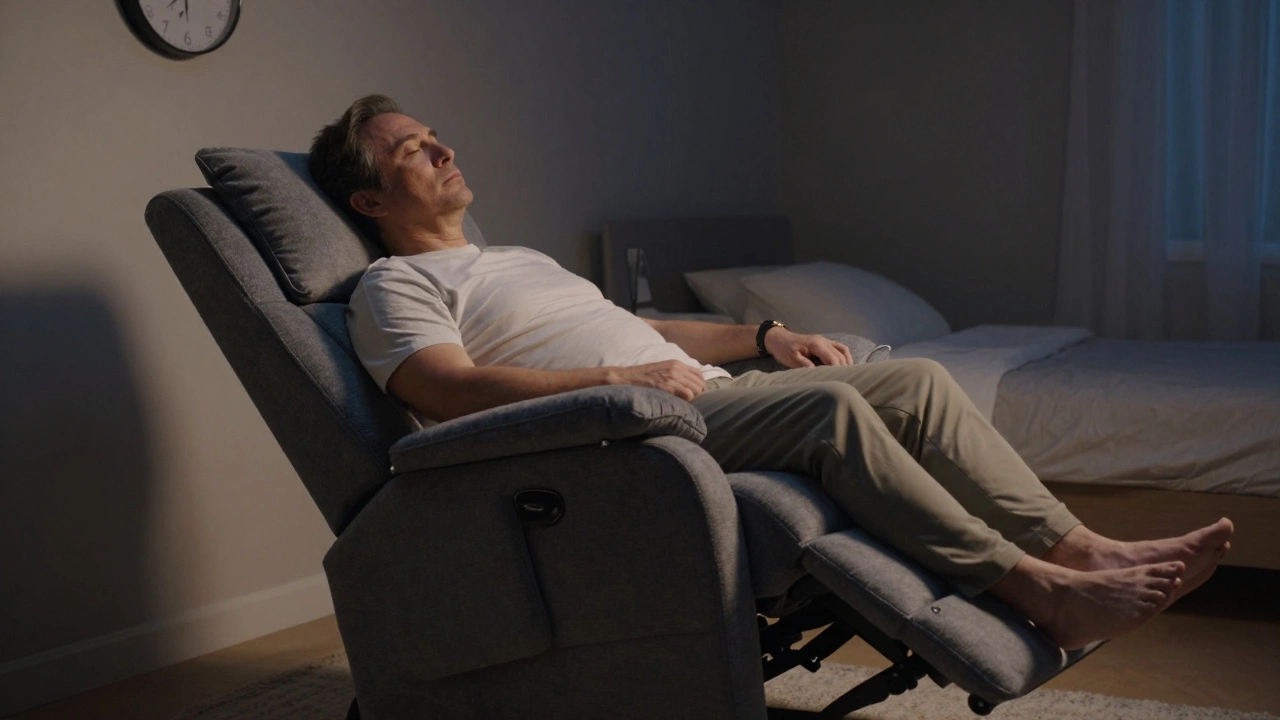
Recliner Chair Back Pain: Causes, Fixes, and What to Look For
When you sit in a recliner chair, a seated furniture piece designed to support the body in a tilted-back position, often with footrest and adjustable back. Also known as lazy boy, it's meant to relax you—but too often, it ends up hurting your back instead. This isn’t just bad luck. It’s usually a mismatch between your body and the chair’s design. Millions of people use recliners daily, but many don’t realize their chair is making their recliner chair back pain worse—not better.
Why does this happen? Most recliners are built for average heights and weights, but bodies come in all shapes. If your lower back isn’t supported, your spine curves unnaturally. If the footrest is too low or too high, your hips tilt, pulling your spine out of alignment. And if the cushion is too soft, you sink in until your lower back is left hanging. This isn’t just uncomfortable—it’s damaging over time. People with degenerative disc disease, a condition where spinal discs wear down, often causing chronic back pain and stiffness are especially at risk if their recliner lacks proper lumbar support. Even if you don’t have a diagnosed condition, poor posture in a recliner can trigger or worsen pain.
It’s not just about the chair, though. How you sit matters too. Leaning too far back without support, crossing your legs, or staying in one position for hours all add up. Some people think recliners are the answer to back pain—but without the right features, they’re part of the problem. Look for chairs with adjustable lumbar support, firm yet cushioned seats, and a recline angle that keeps your spine neutral. A chair that lets your feet rest flat on the footrest while your knees are slightly lower than your hips is ideal. If your current chair doesn’t do that, it’s not broken—you just need a better fit.
What you’ll find below are real, tested insights from people who’ve been there. We’ve pulled together posts that explain why your legs ache in a recliner, how recliners affect spinal health, what features actually help seniors or people with chronic pain, and how to spot a chair that’s built to last—not just look nice. No fluff. No guesses. Just clear, practical advice from real experiences. Whether you’re shopping for a new one or trying to fix your current setup, this collection gives you exactly what you need to sit without pain.