Think about your living room. Is there a coffee table in the middle? Maybe it’s covered in mugs, remote controls, and half-finished books. Or maybe it’s empty, gathering dust because you never use it. If you’ve ever wondered whether that piece of furniture is actually useful-or just taking up space-you’re not alone. In homes today, the coffee table isn’t always necessary. And sometimes, removing it makes the room feel bigger, cleaner, and more lived-in.
Why Coffee Tables Became Standard
Coffee tables have been around since the 1920s, originally designed as low tables for serving tea or coffee while sitting on sofas. Back then, homes were more formal. People sat in designated seating areas and used furniture for specific rituals. Today, living rooms are multi-use spaces: home offices, movie theaters, kids’ play zones, and casual hangouts. The old rules don’t fit anymore.
Most coffee tables are 16 to 18 inches tall. That’s the same height as a standard sofa seat. It makes sense for placing drinks, right? But how often do you actually use it for that? A 2024 survey of 1,200 UK households found that 43% of people rarely use their coffee table for drinks. Instead, they use side tables, laps, or the floor. The coffee table became a default, not a necessity.
What a Coffee Table Actually Does
Let’s be honest: a coffee table doesn’t do much. It holds drinks. It holds books. It holds kids’ toys. It holds clutter. And when it’s not holding anything, it just sits there-blocking movement, making the room feel cramped, and collecting dust.
Some people swear by its function as a visual anchor. It ties the sofa together. But a rug can do that better. A well-placed floor lamp or a pair of matching side tables can create balance without taking up the center of the room. A coffee table doesn’t add storage. It doesn’t provide seating. It doesn’t even make the room look more expensive. In fact, in small spaces, it often makes the room feel smaller.
Look at Scandinavian and Japanese interiors. They often skip coffee tables entirely. Instead, they use low, flexible platforms or ottomans that double as seating. That’s not just style-it’s smart design. Space is used for function, not decoration.
When You Might Still Want One
There are situations where a coffee table makes sense. If you have a large living room with a big sectional, a low table can help define the seating area. If you regularly host guests and need a central spot for snacks, drinks, or board games, it’s handy. If you have young kids who like to draw or play on the floor, a sturdy, rounded table can be a safe, contained play zone.
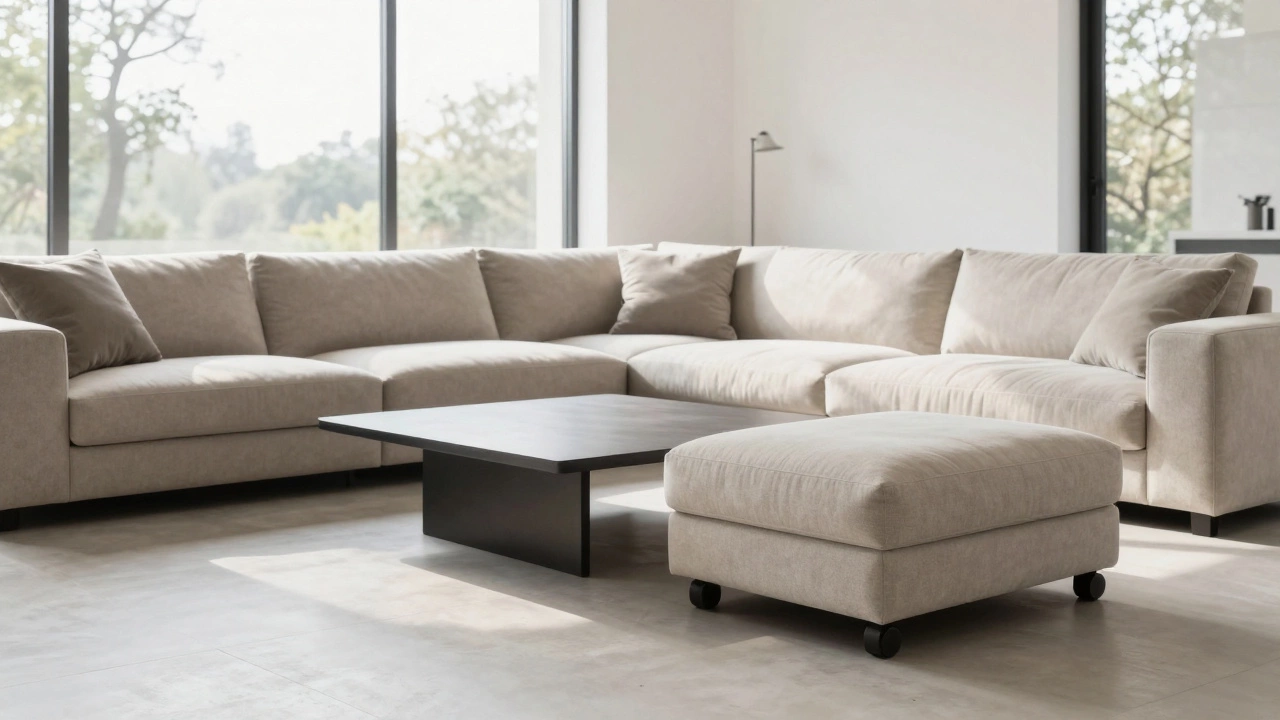
But even then, you don’t need a traditional coffee table. A large, low ottoman with storage inside? A stack of two or three nesting tables you can move around? A wide, shallow bench that doubles as seating? These alternatives give you the same benefits without the fixed, bulky footprint.

Real-Life Examples: What Works
Take a flat in Leeds with a small L-shaped sofa. The owner kept a small, round coffee table for two years. It was always full of stuff. Then she replaced it with a large, cushioned ottoman on wheels. Now she can slide it to the side when watching TV, use it as a footrest, or pull it into the middle for snacks. No more clutter. No more tripping over sharp corners.
Another family in Bradford removed their coffee table after their toddler started using it as a climbing frame. They swapped it for a low wooden platform with soft edges. It’s still a surface for toys and snacks, but it’s safer, more flexible, and doesn’t block the view of the TV.
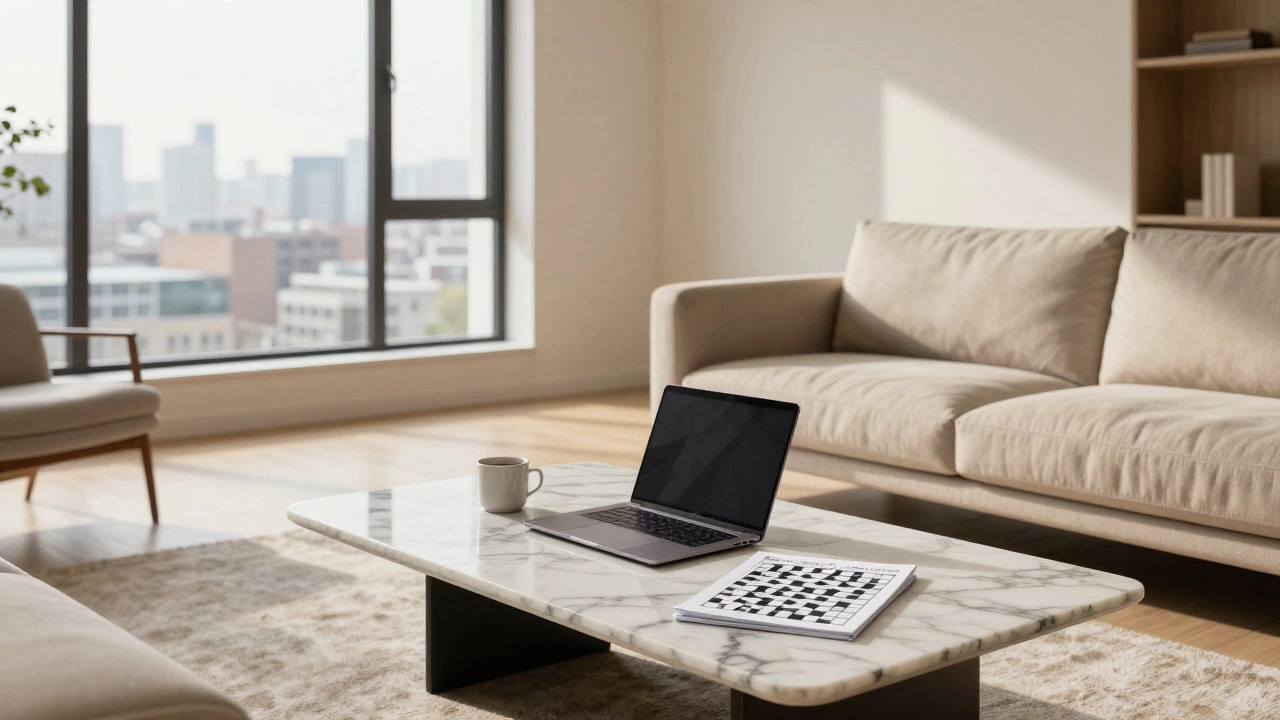
On the other end, a couple in Huddersfield kept their heavy marble coffee table because they use it every day-for laptops, coffee, and Sunday crossword puzzles. They have a large room, minimal furniture, and no kids. For them, it works. But they admit: if they moved to a smaller space, they’d ditch it.
Alternatives to the Traditional Coffee Table
You don’t have to go without a surface. You just have to rethink what that surface looks like.
- Side tables on each side of the sofa-use them for drinks, lamps, or books. You get more flexibility and less clutter.
- Ottomans with hidden storage. They’re great for feet, extra seating, and stashing blankets or games.
- Nesting tables you can pull out when needed. Slide them back when you want more floor space.
- Low benches or long, wide platforms. They’re ideal for open-plan spaces and give you room to stretch out.
- Stacked crates or wooden pallets-yes, really. A few sturdy, painted crates can hold books and look modern.
These options don’t lock you into one position. They adapt. They move. They clear out when you need to vacuum or let the dog run through.
How to Decide: A Simple Test
Here’s how to find out if your coffee table is serving you-or just taking up space:
- Remove it for a week. Just move it out of the room.
- Notice what you miss. Do you find yourself reaching for a drink and having to walk to the kitchen? Do you miss a surface for your laptop?
- Notice what you gain. Is the room easier to clean? Does it feel more open? Can you walk around more freely?
- After seven days, decide: did you need it? Or did you just think you did?
This isn’t about style. It’s about function. If you don’t miss it, don’t bring it back.
The Bigger Picture: Less Is More
Modern living rooms are about comfort, flow, and freedom. Too many pieces of furniture make a space feel like a showroom. The goal isn’t to fill every inch-it’s to make every inch work.
Think about your daily routine. Do you sit on the sofa and reach for a drink? Then a side table is enough. Do you have pets or kids? Then a smooth, low surface you can wipe clean is better than a hard-edged table. Do you work from home? Then a dedicated desk or a mobile cart beats a fixed table that blocks your view.
Removing the coffee table doesn’t mean losing utility. It means gaining space, movement, and clarity. In a world where clutter is a silent stressor, sometimes the most powerful design choice is to take something away.