Best Sleep Position: What Works for Your Body and Why
When it comes to best sleep position, the way you lie down at night directly impacts how well you rest, how much pain you feel, and even how alert you are during the day. Also known as sleep posture, it’s not just about comfort—it’s a health factor many ignore until their back hurts or their snoring wakes them up. There’s no single perfect position for everyone. What works for a person with lower back pain might make someone with sleep apnea worse. The key is matching your position to your body’s needs, not to what’s trendy on Instagram.
Most experts agree that sleeping on your back, a position where you lie flat with your head and spine aligned. Also known as supine sleep, it’s often the healthiest for spinal alignment and reduces acid reflux. But if you snore or have sleep apnea, this position can make breathing harder. That’s where sleeping on your side, lying on either left or right with knees slightly bent. Also known as lateral sleep, it’s the go-to for reducing snoring and improving airflow comes in. Left-side sleeping even helps with digestion and pregnancy comfort. The problem? It can put pressure on your shoulder and hip over time.
Then there’s stomach sleeping—rarely recommended. It twists your neck and flattens your spine’s natural curve. But if you’re a die-hard stomach sleeper, a thin pillow or none at all can help. The real win? Pairing your position with the right mattress and pillow. A too-soft mattress turns even the best sleep position into a backache factory. A pillow that’s too high or too low throws your neck out of alignment, no matter how you lie down.
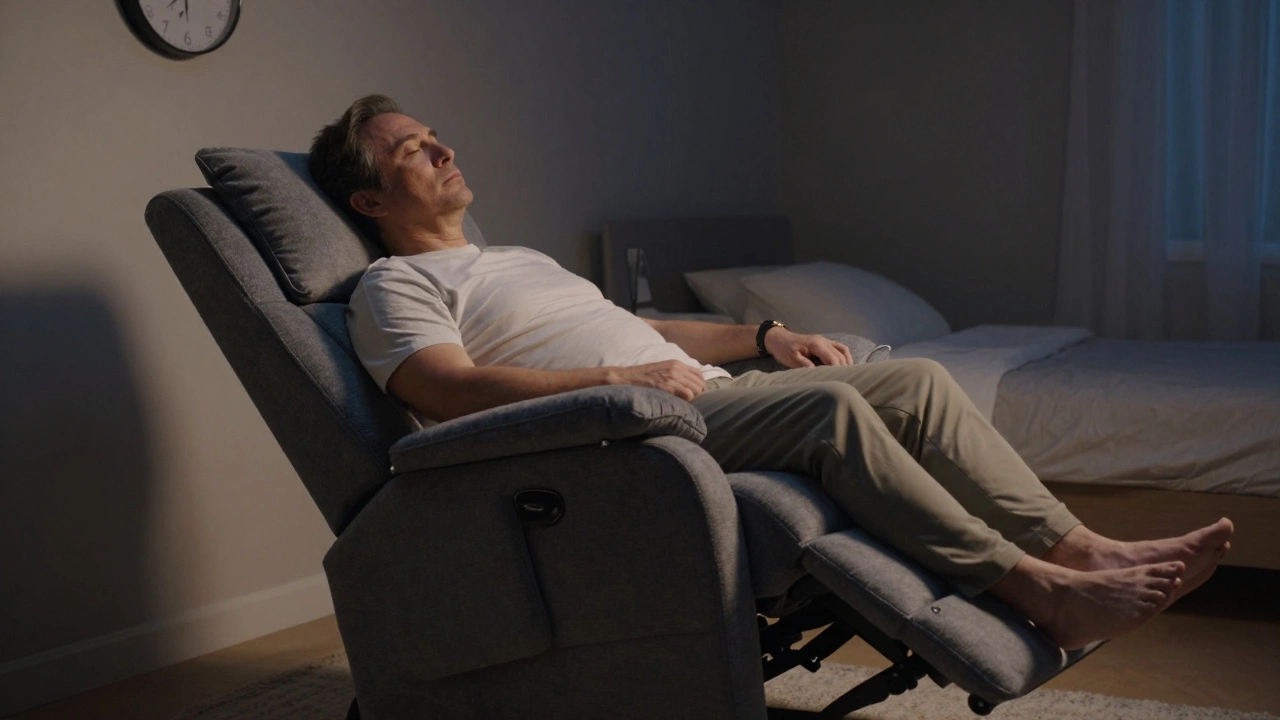
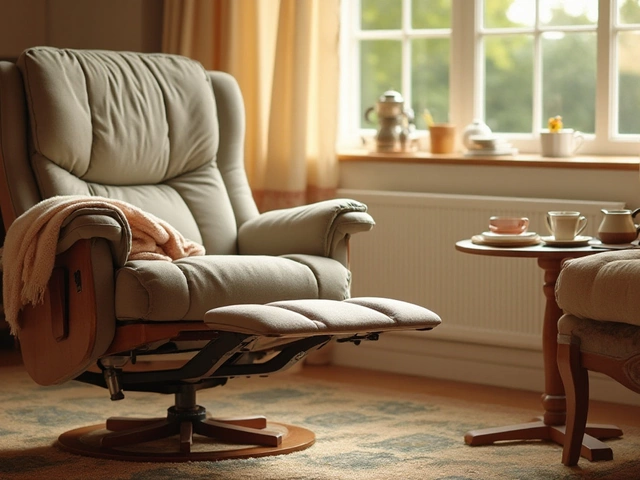
What you’ll find in the posts below isn’t guesswork. It’s real-world advice from people who’ve tried everything—from recliners that hurt their legs to sofas that don’t support their spine. You’ll learn how recliner design affects sleep posture, why sofa depth matters even when you’re not sitting, and how furniture choices like a Japanese sofa bed or Dutch bed can change your night. You’ll see why a 75-inch TV on a 60-inch stand might seem harmless but could be pulling your neck out of alignment during late-night binges. And you’ll find out why the color of your bedroom furniture might be quietly messing with your ability to wind down.
This isn’t about buying a new bed. It’s about understanding how your whole environment—from your chair to your closet—shapes how you rest. The best sleep position isn’t just where you lie down. It’s what you’ve built around you to make that moment work.