Couch to Coffee Table Distance Calculator
Recommendation
You just bought a gorgeous new sofa. It’s deep, plush, and inviting. Then you slide in the coffee table, step back, squint, and feel… off. Something isn’t right. Is it too far? Too close? Does it look like an airport waiting area or a cramped subway car?
Here is the truth: there is no single "magic number" that works for every living room. But there is a sweet spot. A specific range of inches that balances comfort with functionality. If you get this wrong, you’ll either be stretching your neck to reach your remote or bumping your shins every time you stand up. Let’s fix that.
The Golden Rule: 14 to 18 Inches
If you take one thing away from this guide, let it be this: the standard comfortable distance between a couch and a coffee table is 14 to 18 inches (35 to 46 cm). This gap allows you to reach your drink without leaning forward awkwardly, but keeps the table close enough so it doesn’t feel isolated in the middle of the room.
Why this specific range? It comes down to human ergonomics. Most adults have an arm length of about 20-25 inches when seated. Subtracting the depth of your hand and some buffer space, 14-18 inches puts items within easy reach. Anything less than 14 inches feels claustrophobic and makes legroom tight. Anything more than 18 inches forces you to lean forward, which ruins the relaxation vibe of your sofa.
Think of it as a handshake zone. Close enough to connect, far enough to respect personal space. This rule applies whether you have a sectional, a loveseat, or a classic three-seater.
Adjusting for Your Specific Sofa Depth
Not all couches are created equal. That trendy low-profile modern sofa sits differently than your grandfather’s overstuffed recliner. You need to adjust the distance based on how deep your seat cushions are.
If you have a shallow sofa (seat depth under 20 inches), stick to the lower end of the spectrum: 14 inches. Since you sit further back against the frame, you need the table closer to compensate. Conversely, if you own a deep-seated lounge chair or a sprawling sectional where you sink into the cushions, push the table out to 18 inches. If you don’t, your knees will hit the table edge before you can even settle in.
| Sofa Type | Seat Depth | Ideal Gap | Why? |
|---|---|---|---|
| Standard Sofa | 21-23 inches | 16 inches | Balanced reach and legroom |
| Deep Lounge | 24+ inches | 18 inches | Prevents knee collision |
| Shallow Modern | <20 inches | 14 inches | Compensates for rear seating position |
| Sectional Corner | Variable | 15-17 inches | Accounts for diagonal seating angles |
Don’t Forget the Walkway Clearance
Comfort isn’t just about sitting; it’s about moving around your space. If your coffee table is perfectly positioned relative to the couch, but you have to squeeze sideways to walk past it, you’ve failed the test.
Designers generally recommend leaving at least 30 inches of walking space behind the coffee table if people frequently pass through that area. If the table is in a dead-end corner or rarely traversed, you can get away with 18-24 inches. But if you’re hosting parties or have kids running around, prioritize flow over perfect symmetry. A cramped room feels smaller and more stressful, regardless of how pretty the furniture looks.
Pro tip: Use painter’s tape on your floor. Mark the outline of your sofa and your proposed table position. Walk the path. Sit down. Stand up. If you feel like you’re navigating an obstacle course, widen the gap.
Height Matters Just as Much as Distance
Distance solves horizontal comfort, but height solves vertical strain. If your coffee table is too high, you’ll hunch your shoulders reaching for snacks. If it’s too low, you’ll strain your back bending down.
The general rule of thumb: The top of your coffee table should be level with, or slightly lower than, the seat cushion of your sofa. For most sofas, this means a table height of 16 to 18 inches. If your sofa has a very high seat (like a traditional Chesterfield), go higher. If you have a mid-century modern piece with thin cushions, go lower.
Consider the function of the table. If you plan to eat dinner on it, aim for the same height as your dining chairs (around 29-30 inches) or use nesting tables that can be pulled closer and raised. If it’s mostly for decorative objects and remotes, keep it low and sleek.
Shape Changes Everything
A rectangular table behaves differently than a round one. With a rectangle, the corners create hard barriers. You need to ensure those corners aren’t jabbing into someone’s knee when they try to cross their legs. Round or oval tables allow you to pull them slightly closer because there are no sharp edges to catch on clothing or limbs.
If you have small children or pets, round tables are safer and often allow for tighter layouts since you can tuck chairs underneath them. However, rectangular tables offer more surface area for books and magazines. Match the shape of your table to the shape of your rug and the flow of traffic in the room.

Special Cases: Sectionals and TV Viewing
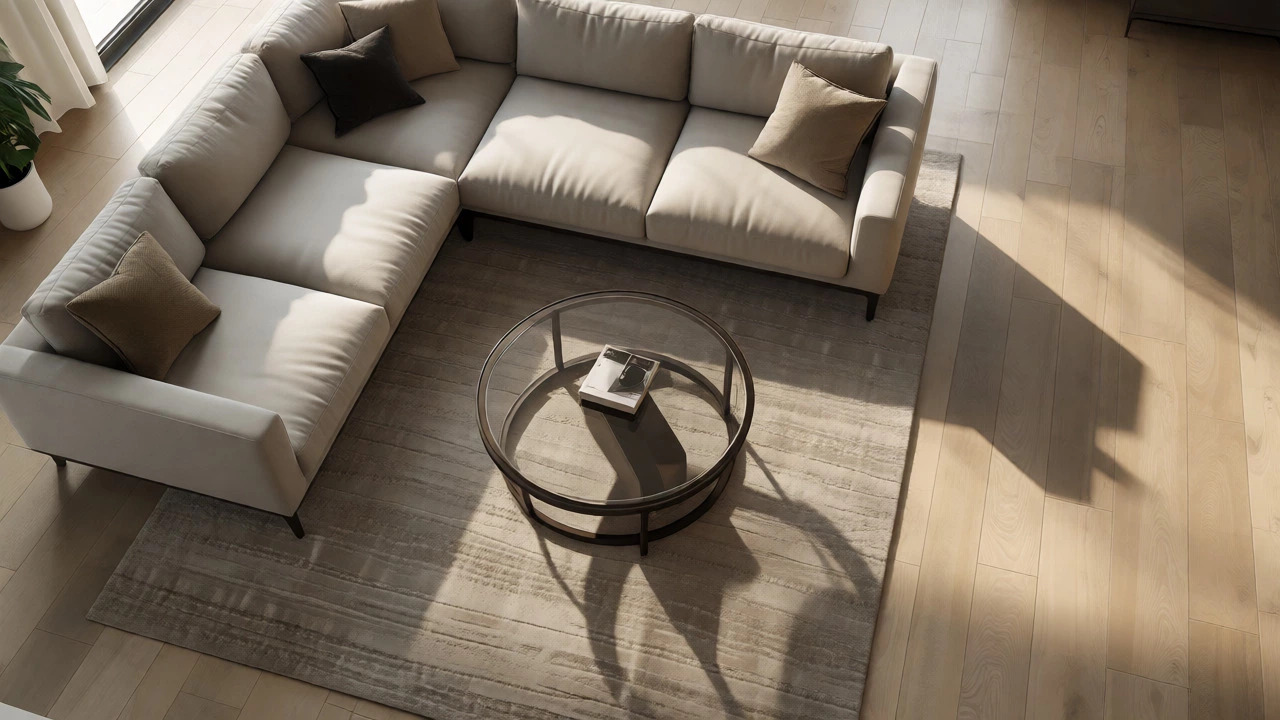
Sectionals complicate things because they create multiple seating zones. Don’t treat the entire L-shape as one unit. Focus on the primary viewing seats. Usually, this means placing the table centered in front of the main long section, not tucked into the corner.
For TV lovers, visibility is key. If your coffee table is tall and cluttered, it might block the bottom of your screen. In this case, increase the distance to 20 inches or choose a glass-top table that maintains sightlines. Alternatively, opt for a bench-style ottoman instead of a solid table. You can move it out of the way when watching movies and pull it in when guests arrive.
How to Test Your Setup Before Buying
Before you commit to a permanent arrangement, do the "sit-and-reach" test:
- Sit on your sofa in your normal relaxing posture.
- Extend your arm fully toward where the table would be.
- Can you touch the center of the table easily? If yes, the distance is good.
- Stand up quickly. Did your shin hit the table? If yes, move it back.
- Check your sightline. Can you see the TV clearly without tilting your head down excessively?
If you fail any of these checks, adjust. Furniture is meant to serve you, not the other way around.
Is 12 inches too close for a coffee table?
Yes, 12 inches is generally considered too close for most standard setups. It restricts leg movement and makes it difficult to stand up without knocking into the table. Only consider 12 inches if you have very shallow seating and limited floor space, and even then, expect frequent minor bumps.
What if my coffee table is too big for the space?
If the table dominates the room, swap it for two smaller side tables placed on either side of the sofa. This creates the illusion of more space while maintaining functionality. Alternatively, choose a transparent material like glass or acrylic, which visually recedes and makes the room feel larger.
Does the rug size affect the distance?
Indirectly, yes. Ideally, the front legs of your sofa should rest on the rug, and the coffee table should sit entirely on the rug. If your rug is too small, pushing the table onto bare wood or tile can make the setup look disjointed. Ensure your rug is large enough to anchor both pieces comfortably before finalizing the distance.
How far should a coffee table be from a TV stand?
There is no strict rule here, but aim for at least 24-30 inches of clearance between the coffee table and the TV console. This ensures you have room to walk between them without squeezing through. If the TV is mounted on the wall, you can bring the table closer, focusing primarily on the sofa-to-table distance.
Should I match the height of the coffee table to the sofa arms?
Matching the sofa arm height is a common aesthetic choice, but it’s not always ergonomic. Sofa arms are usually higher than seat cushions (often 24-26 inches). If your table matches the arms, it might be too high for eating or working. Prioritize matching the seat cushion height for comfort, unless you strictly want a visual alignment with the arms.