Find Your Perfect TV Hiding Solution
$0 - $50
Budget Friendly
$50 - $200
Moderate Investment
$200+
Premium Solution
Rustic / Industrial
Wood, raw textures
Modern / Minimalist
Clean lines, sleek
Soft / Cozy
Fabrics, warmth
Renting 🏠
Need non-permanent solutions
Owning 🔑
Open to permanent changes
Small / Medium
Under 40 inches
Large
40+ inches
Dominant
Needs total concealment
Your Best Match
Staring at a black rectangle on your wall while trying to sleep is not exactly relaxing. In a small bedroom, every square inch counts, and a bulky television can dominate the room visually, making it feel cramped rather than cozy. You want the convenience of watching shows in bed without the visual clutter that disrupts your rest. The good news is that you don't need a mansion or expensive custom carpentry to solve this. With a few clever design tricks and smart furniture choices, you can seamlessly integrate your TV into your small bedroom decor.
Hiding your TV isn't just about aesthetics; it's about reclaiming your mental space. When the screen is covered or integrated, your brain stops seeing it as an intruder and starts seeing the room as a sanctuary. Here are seven practical ways to hide your TV in a small bedroom, ranging from budget-friendly DIY hacks to high-end built-in solutions.
1. Use Sliding Barn Doors for Instant Disappearance
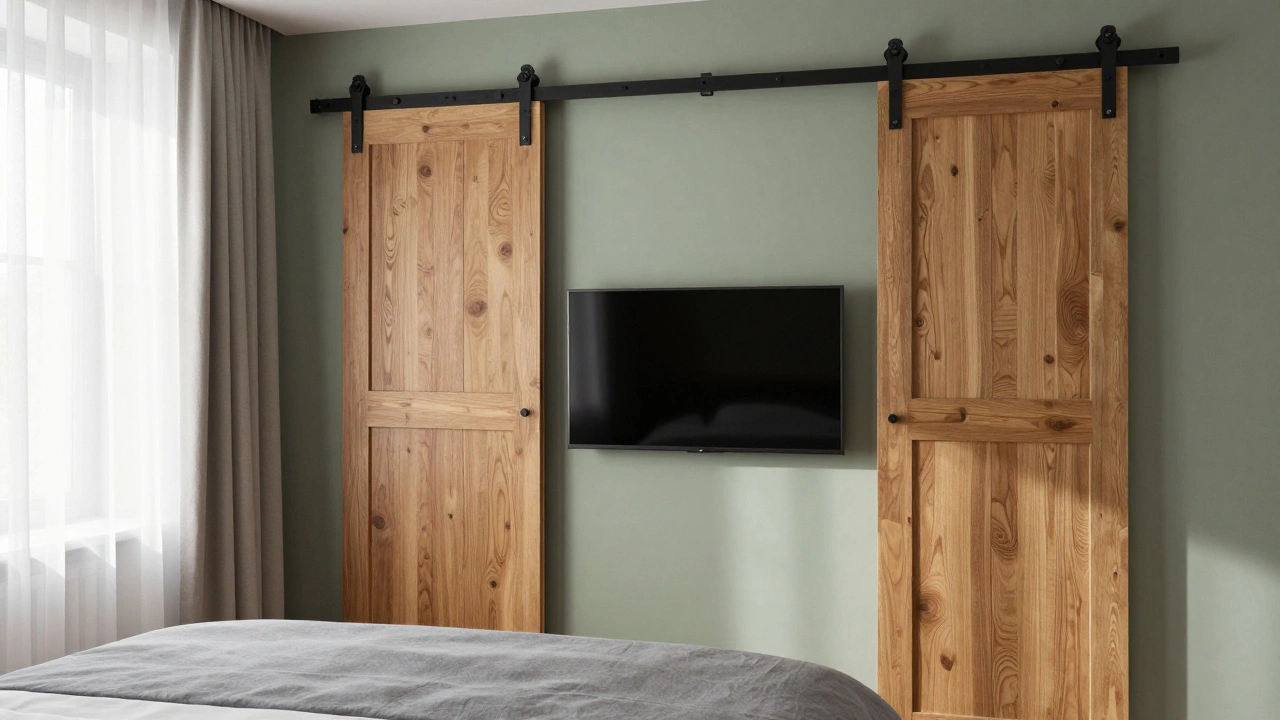
If you love the rustic charm of Barn Doors sliding doors typically made of wood with metal tracks, often used for closets or room dividers, you already know their potential for hiding TVs. This is one of the most popular methods for small spaces because it doesn't require swing clearance like traditional hinged doors. You mount a track above your TV and slide a wooden panel across when you're done watching.
- The Setup: Mount your TV flush against the wall. Install a sturdy overhead track system capable of holding the weight of both the door and any vibration from movement.
- The Look: Choose a door that matches your bedroom’s existing wood tones-oak, walnut, or painted white for a minimalist vibe.
- Pro Tip: Leave a slight gap between the door and the wall to allow heat to escape from the TV vents. Electronics need airflow, even when hidden.
This method turns your TV into a piece of art when closed. It’s simple, effective, and adds character to the room without taking up floor space.
2. Opt for a Wall-Mounted Cabinet with Bi-Fold Doors
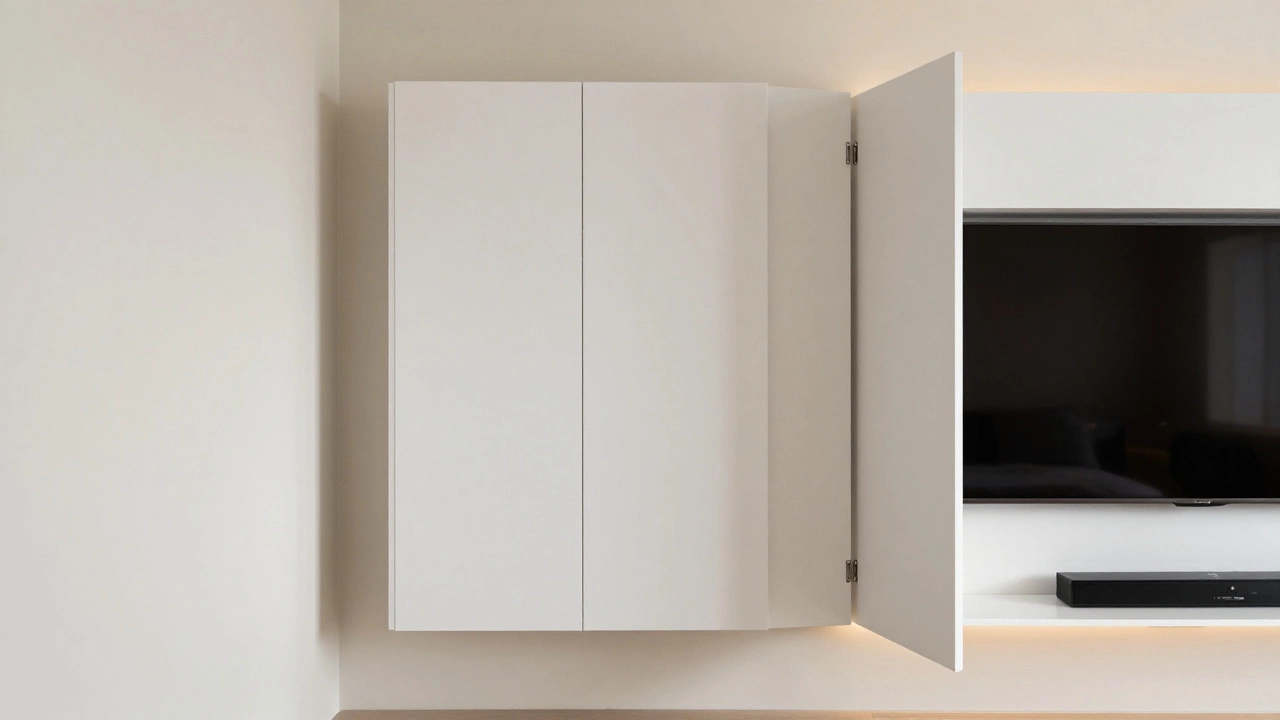
For a cleaner, more modern look, consider a Wall-Mounted Cabinet a storage unit fixed to the wall to save floor space, often used for bathrooms or small kitchens. Unlike barn doors, bi-fold doors fold inward, creating a compact enclosure that looks like a standard wardrobe or media console. This is ideal if you have other electronics like a soundbar or gaming consoles that also need hiding.
Look for cabinets specifically designed for TV integration. These units usually have cutouts for cables and ventilation holes in the back panel. If you can’t find a pre-made one, many flat-pack furniture stores offer customizable wall units where you can order doors with precise dimensions. Ensure the hinges are heavy-duty; frequent opening and closing can wear out cheap hardware quickly.
| Method | Cost Range | Installation Difficulty | Best For |
|---|---|---|---|
| Sliding Barn Door | $50 - $200 | Moderate (DIY friendly) | Rustic or Industrial styles |
| Bi-Fold Cabinet | $150 - $400 | Hard (Requires precise mounting) | Modern, clean lines |
| Art Frame Cover | $100 - $300 | Easy | Minimalist apartments |
| Curtain Concealment | $20 - $80 | Very Easy | Renters on a budget |
3. Turn Your TV Into Art with a Frame Cover
Technology has given us a brilliant solution for those who hate the look of screens: the TV Art Frame a specialized bezel or motorized cover that displays artwork when the TV is off. Brands like Samsung and LG now offer TVs that look like framed paintings when turned off. However, if you already own a TV, you can buy aftermarket frame kits.
These frames attach around the perimeter of your screen. Some are static-you manually slide a canvas over the screen-but others are motorized and open/close with the remote. While the high-end motorized options can cost upwards of $500, static frames are much cheaper. Just ensure the frame is deep enough to accommodate your TV’s thickness so it sits flush against the wall. This approach transforms your TV from a tech gadget into a decorative element, blending seamlessly with your bedroom’s color palette.
4. Integrate the TV Into a Headboard Niche
If your bedroom is extremely narrow, vertical space is your best friend. Building a Headboard Niche a recessed area in a headboard or wall unit designed to hold objects like lamps or televisions allows you to mount the TV directly above your bed, hidden within a shelving unit or custom-built headboard. When not in use, you can place books, plants, or decorative boxes in front of the screen.
This requires careful planning. Measure your TV’s width and height, then add at least two inches of clearance on all sides for air circulation. If you’re renting, you might not be able to build a niche into the wall, but you can buy a tall bookshelf or wardrobe that acts as a headboard. Place the TV inside a shelf compartment and close the doors. It’s a dual-purpose solution that saves space and hides the screen effectively.
5. Use Heavy Curtains for a Soft Approach
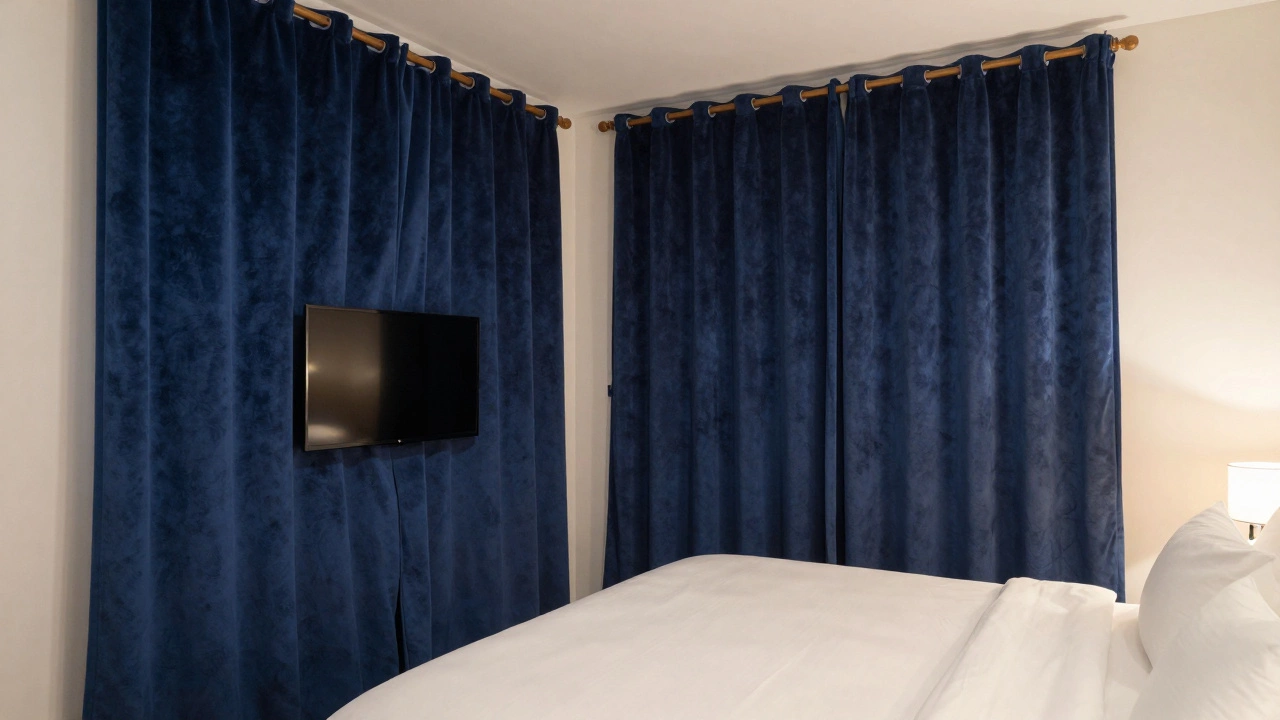
Sometimes, the simplest solution is the best. Hanging Heavy Curtains thick fabric drapes used for light blocking and privacy, often lined for insulation in front of your TV is a low-cost, no-drill option perfect for renters. Choose curtains that match your window treatments to create a cohesive look. When you want to watch TV, simply pull them aside. When you’re sleeping, they block the standby light and the visual bulk of the screen.
To make this work well, install the curtain rod slightly wider than the TV itself. This ensures the fabric doesn’t bunch up awkwardly in front of the screen when opened. Use blackout lining to enhance the mood-setting effect of your bedroom. This method is particularly effective if your TV is mounted near a window or on a wall that lacks strong architectural features.
6. Camouflage with Mirrors or Glass Doors
Mirrors can make a small room feel larger, and using them to hide your TV is a clever trick. A Mirror Cabinet a storage unit with mirrored doors that reflects light and space with sliding or hinged doors can conceal your TV while reflecting the rest of the room. This creates an illusion of depth, making your small bedroom feel airy and expansive.
Be cautious with lighting, though. Direct sunlight or bright bedside lamps can cause glare on the mirror, which might be distracting. Position your mirrors away from direct light sources, or use anti-glare film. This method works best in rooms with neutral colors, as the reflection will double whatever is opposite the mirror. Keep the opposite side tidy to avoid doubling clutter!
7. Build a False Wall or Alcove
For homeowners willing to do some construction, building a False Wall a non-structural wall built within a room to create storage or hide utilities or alcove is the ultimate hiding spot. You construct a shallow box on the wall, mount the TV inside, and cover it with a door or panel. This integrates the TV completely into the architecture of the room.
This approach requires drywall skills and paint matching, but the result is seamless. You can paint the covering panel the same color as the rest of the wall, making the TV virtually invisible. Add a thin LED strip light behind the TV for ambient backlighting, which reduces eye strain and adds a modern touch. This is a permanent solution, so measure twice and cut once.
Important Considerations Before You Hide Your TV
Before you start drilling or buying furniture, keep these critical factors in mind:
- Ventilation: TVs generate heat. Never seal them in a tight, unventilated box. Always leave gaps for air flow or use active cooling fans if necessary.
- Cable Management: Visible wires ruin the illusion. Use cable channels, drill holes through the wall (if possible), or run cables inside hollow walls to keep them hidden.
- Remote Access: Ensure your remote control sensors aren’t blocked by thick materials. Most IR sensors can penetrate thin wood or glass, but thick fabrics or metal may block the signal. Consider using a Bluetooth remote or an IR extender kit.
- Accessibility: Can you easily reach the TV inputs? If you frequently plug in USB drives or game consoles, choose a hiding method that allows easy access without dismantling the entire setup.
Can I hide my TV behind a painting?
Yes, you can mount your TV on the wall and hang a lightweight painting or canvas in front of it using a wire system or magnetic mounts. However, this limits your ability to see the screen unless you move the artwork. It’s better suited for occasional viewing rather than daily use. Ensure the artwork is light enough to not damage the TV surface.
Is it safe to put a TV inside a closet?
Generally, no. Closets are poorly ventilated, and trapping heat inside can damage your TV’s internal components over time, leading to premature failure. If you must do this, ensure there are large ventilation gaps and consider adding a small fan to circulate air. It’s safer to use a dedicated media cabinet with perforated backs.
What is the cheapest way to hide a TV in a small bedroom?
The cheapest method is using heavy curtains. You can buy affordable blackout curtains and a tension rod or basic bracket system for under $50. Another budget option is placing a tall bookshelf in front of the TV and using books or baskets to block the view when not in use.
Will hiding my TV affect the picture quality?
No, hiding the TV does not affect picture quality. However, if you use a mirror cover, reflections can interfere with viewing during the day. If you use a cabinet, ensure the door opens fully so the screen is unobstructed. Heat buildup from poor ventilation can indirectly affect performance over time, so airflow is key.
Can I hide a large TV in a very small bedroom?
It’s challenging but possible. Large TVs take up significant wall space. Consider mounting it high up in a corner or integrating it into a tall wardrobe unit. Sliding barn doors work well here because they don’t require swing space. Avoid bulky stands that eat up floor space. Focus on vertical integration to keep the floor clear.