The Bookshelf Efficiency Calculator
Your Reading Stats
Enter details about a book you are currently struggling to finish.
The Sunk Cost Reality
If you quit now, that money is gone. But if you force yourself to finish a boring book, you aren't saving the money—you are spending more time.
Potential Waste if Boring: 0 hrs of your life.
Verdict based on 50-Page Rule
Enter your stats to see if you should keep reading or let go.
You’ve read fifty pages. Maybe a hundred. And you’re still bored. You look at the stack of books on your nightstand and feel that familiar pang of guilt. Did you waste money? Are you just not smart enough to get into this story? Or is it time to toss it aside?
Here is the hard truth: finishing every book you start is a myth that clutters your mind and your shelves. If you are looking for a specific number, here it is. Most avid readers suggest giving a book 50 pages before deciding if it’s worth keeping. But the real answer isn’t about page counts. It’s about respecting your time and curating a collection you actually love.
The 50-Page Rule: Why It Works
The concept of the "50-page rule" became famous thanks to author Anne Lamott, but the logic behind it applies to anyone who reads for pleasure. Fifty pages is usually enough to establish the voice of the writer, the pace of the plot, and whether the characters resonate with you. It is a fair trial period.
Think of it like a job interview. You don’t hire someone after five minutes, but you certainly don’t sign a ten-year contract after an awkward handshake. Fifty pages gives the book a chance to hook you. If the writing style feels dense, the dialogue stilted, or the premise confusing by page 50, it is highly unlikely to suddenly become a masterpiece on page 150.
However, context matters. A heavy historical non-fiction book might take 100 pages to set the stage. A fast-paced thriller should grab you in the first five. Adjust the number based on the genre, but stick to the principle: give it a reasonable shot, then let go if it doesn’t click.
The Sunk Cost Fallacy in Reading
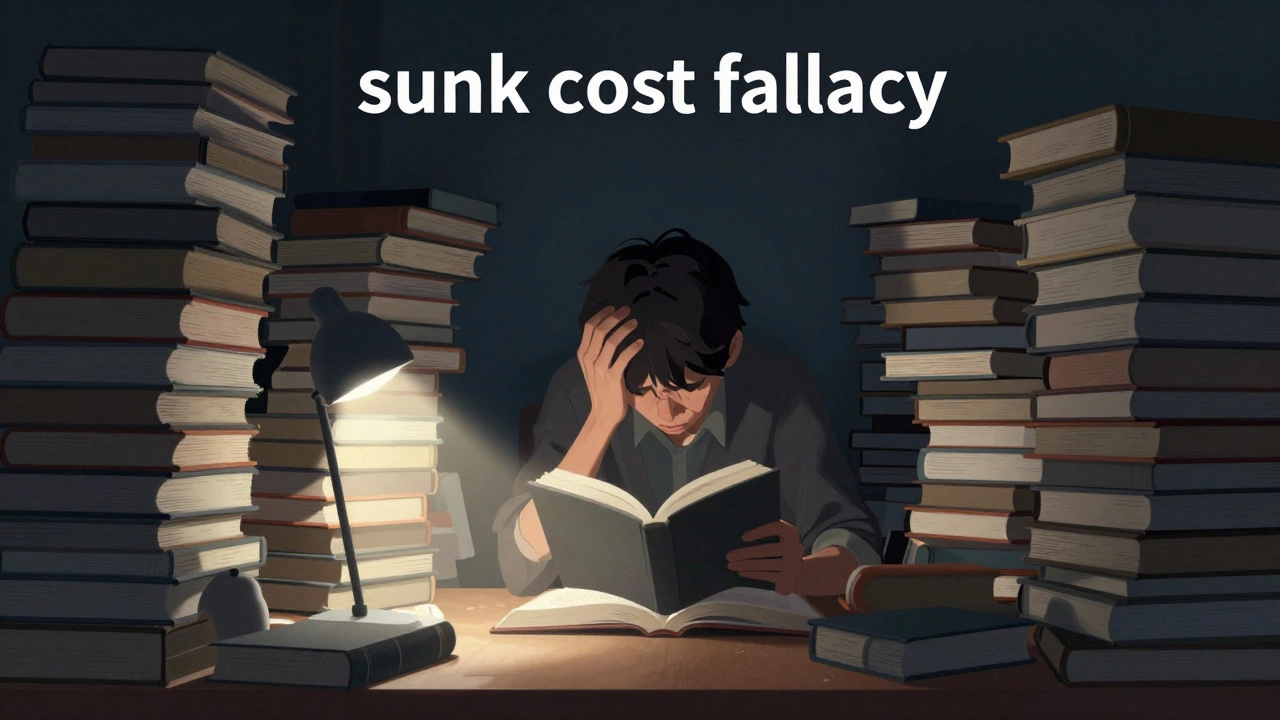
Why do we struggle to quit? Because of the sunk cost fallacy. This is a cognitive bias where you continue a behavior because of previously invested resources-time, money, or effort-even when the current costs outweigh the benefits.
You bought the book for $15. You’ve spent three evenings reading it. If you stop now, it feels like those $15 and those three evenings were wasted. So you keep reading to "justify" the investment. But here is the reality check: continuing to read a book you hate wastes *more* time. It steals hours from a book you might genuinely enjoy. The money is already gone. The only thing you can control is your future enjoyment.
Quitting a bad book is not failure. It is efficiency. It frees up mental space for stories that inspire, educate, or entertain you. When you treat reading as a consumption of quality rather than a completionist checklist, you start to appreciate the craft more.
Curating Your Physical Collection
This brings us to the physical reality of your home. You have bookcases. They have limited capacity. Every book you keep on your shelf takes up space that could be used for something you love.
If you never discard or donate books you’ve abandoned, your bookshelf becomes a graveyard of good intentions. Over time, this creates visual clutter and psychological pressure. Seeing rows of unread or half-read books can make your living room feel chaotic rather than cozy.
Consider your storage furniture as part of your reading ecosystem. A well-organized bookcase should display books you want to revisit or recommend. If a book has failed to engage you after a fair try, it has served its purpose: it taught you what you *don’t* like. That is valuable data. Now, move it along.
- Donate: Local libraries and charities often accept gently used fiction and non-fiction. It gives the book a second life.
- Sell: If it’s a rare edition or a popular textbook, you might recoup some costs online.
- Recycle: For damaged copies, paper recycling is the responsible choice.
By rotating your collection, you keep your environment fresh. It encourages you to buy fewer duplicates and seek out new authors. Your home decor reflects your current interests, not your past regrets.
Digital vs. Physical: Does Format Matter?
If you read on an e-reader, the stakes feel lower. There is no physical object taking up space. You can hide the unfinished title in a folder labeled "Later" and forget about it. While this reduces clutter, it can lead to a different problem: digital hoarding.
Many people accumulate thousands of unread eBooks, creating a sense of obligation similar to physical piles. The 50-page rule applies here too. If you haven’t opened the file in six months, delete it. Subscription services like Kindle Unlimited or Audible subscriptions allow you to swap titles instantly. Use this flexibility to your advantage. Don’t let a bad algorithm recommendation trap you in a boring narrative.
Audiobooks offer another layer. Sometimes, a book you struggled to read silently comes alive with a great narrator. If you are on page 50 and struggling, try switching formats. If it still doesn’t work, drop it. The medium shouldn’t save a mediocre message.

When to Push Through
Not every difficult book should be abandoned. Some classics are challenging because they demand patience. Here is how to tell the difference between a "bad" book and a "hard" book.
| Quit If... | Persist If... |
|---|---|
| You are actively bored or annoyed. | You find the ideas complex but fascinating. |
| The writing is poorly edited or confusing. | The language is poetic or archaic (e.g., Dickens). |
| You skimmed pages without retaining info. | You need to re-read paragraphs to understand concepts. |
| You dread picking it up. | You feel intellectually stretched but rewarded. |
If you are reading for education or professional development, the threshold is higher. You might push through a dry technical manual because the knowledge is necessary. But for leisure reading, your primary goal is engagement. If the spark isn’t there, fanning the embers won’t help. Strike a new match.
Building a Sustainable Reading Habit
Giving up on bad books helps build a sustainable habit. When reading becomes a chore, you’ll avoid it entirely. By filtering out low-quality content, you associate reading with pleasure and discovery. This positive reinforcement keeps you coming back to your bookcase.
Try this experiment for the next month. Pick up a book you’ve been dragging yourself through. Read 50 more pages. If you’re not hooked, close it. Donate it. Buy or borrow something new. Notice how much lighter your mental load feels. Notice how eager you are to open the next one.
Your bookshelf is a reflection of your curiosity, not your endurance. Keep the books that light you up. Let go of the rest.
Is it rude to give up on a book?
No. Reading is a personal experience. Authors write to connect with readers, but not every connection happens. Giving up allows you to find books that truly resonate, which is better for your literary growth.
What should I do with books I didn't finish?
Don't let them pile up. Donate them to local libraries, charity shops, or community centers. You can also sell them online if they are in good condition. Recycling is an option for damaged copies.
Does the 50-page rule apply to audiobooks?
Yes. While there are no physical pages, 50 pages roughly translates to 45-60 minutes of listening. If you aren't engaged by then, consider stopping unless the narrator improves the experience significantly.
How do I organize my bookshelf if I quit books often?
Use a "current read" section separate from your permanent collection. Rotate finished favorites onto your main shelves. Keep unfinished books in a "to-drop" box until you decide to donate them. This keeps your visible space curated and inviting.
Can I ever re-read a book I gave up on?
Absolutely. Your tastes change over time. A book that was too complex or dull at age 20 might be perfect at 30. Keeping a small list of "abandoned but potentially interesting" titles can be useful for future revisits.