UK Outdoor Furniture Rain Risk Calculator
Select your furniture details to determine if you need to bring it inside or cover it up.
Safe to Leave Out
Your current setup is resilient against the selected conditions.
No immediate action required. Monitor for long-term wear.
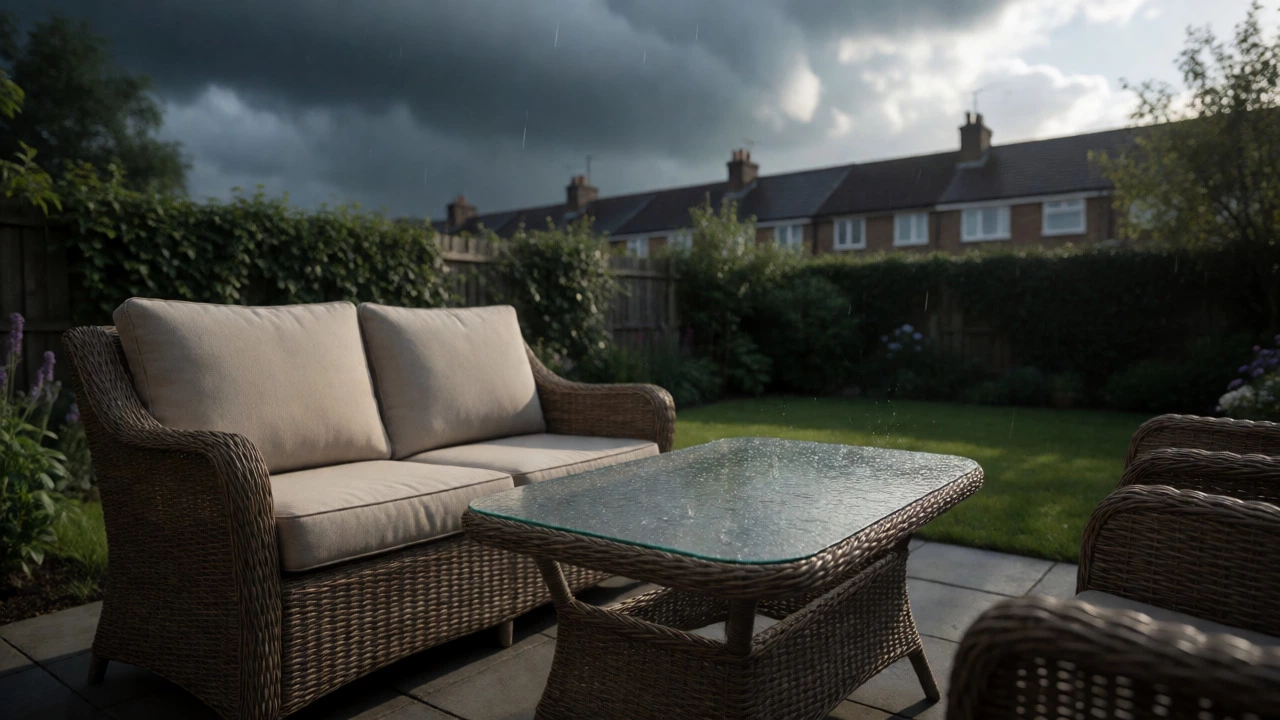
You’ve just bought a beautiful set of rattan chairs and a glass-topped table. You place them on your patio, pour a cup of tea, and watch the clouds roll in over Leeds. The first drop hits the table. Panic sets in. Do you run outside at 6 PM to drag heavy cushions inside? Or can you trust that "weather-resistant" label?
Here is the hard truth: most outdoor furniture cannot survive constant rain without help. While marketing terms like "all-weather" sound reassuring, they rarely mean "indestructible." In the UK, where we get an average of 150 rainy days a year, leaving your gear exposed is a gamble with your wallet. But it doesn’t have to be a nightmare. Let’s break down exactly what happens to different materials when the sky opens up, and how you can stop worrying about every forecast.
The Myth of "Weather-Resistant" vs. "Waterproof"
Manufacturers love vague language. There is a massive difference between waterproof, which means water cannot penetrate the material at all, and water-resistant. Most high-end garden sets are only water-resistant. They are designed to shed light drizzle or handle a quick shower, not a three-day Atlantic storm.
If you leave water-resistant fabric soaked for days, two things happen. First, mold starts growing in the foam padding, which smells terrible and ruins the cushion forever. Second, the stitching rots. You won’t see the damage immediately, but within six months, your seat backs will start sagging or tearing. If you live in a wetter region like Scotland or North West England, assume everything needs protection unless stated otherwise by a rigorous IP rating (like IPX4 or higher).
Material Breakdown: What Survives the Downpour?
Not all furniture reacts to moisture the same way. Knowing your material dictates your action plan. Here is how common garden items fare against British rain.
| Material | Rain Tolerance | Main Risk | Action Required |
|---|---|---|---|
| Teak Wood | High | Graying, cracking if dried too fast | Minimal; oil annually |
| Aluminium | Very High | None (rust-proof) | Wipe down occasionally |
| Wrought Iron | Low | Rust formation | Must be covered or stored |
| Synthetic Rattan | Medium | Mold in crevices, UV fade | Cover during prolonged rain |
| Plastic/Polyresin | High | Brittleness from cold/wet cycles | Safe to leave out |
Teak and Hardwoods
Teak is a dense hardwood rich in natural oils that repel water. It is one of the few woods you can genuinely leave outside year-round. However, there is a catch. Teak turns silver-gray when exposed to UV and rain. Some people love this look; others hate it. If you want to keep the golden color, you must apply teak oil regularly. If you don’t, the wood is still structurally sound, just aesthetically changed. Other woods like pine or cedar are less forgiving. Without a sealant, they absorb water, swell, and eventually rot from the inside out.
Metals: Aluminium vs. Iron
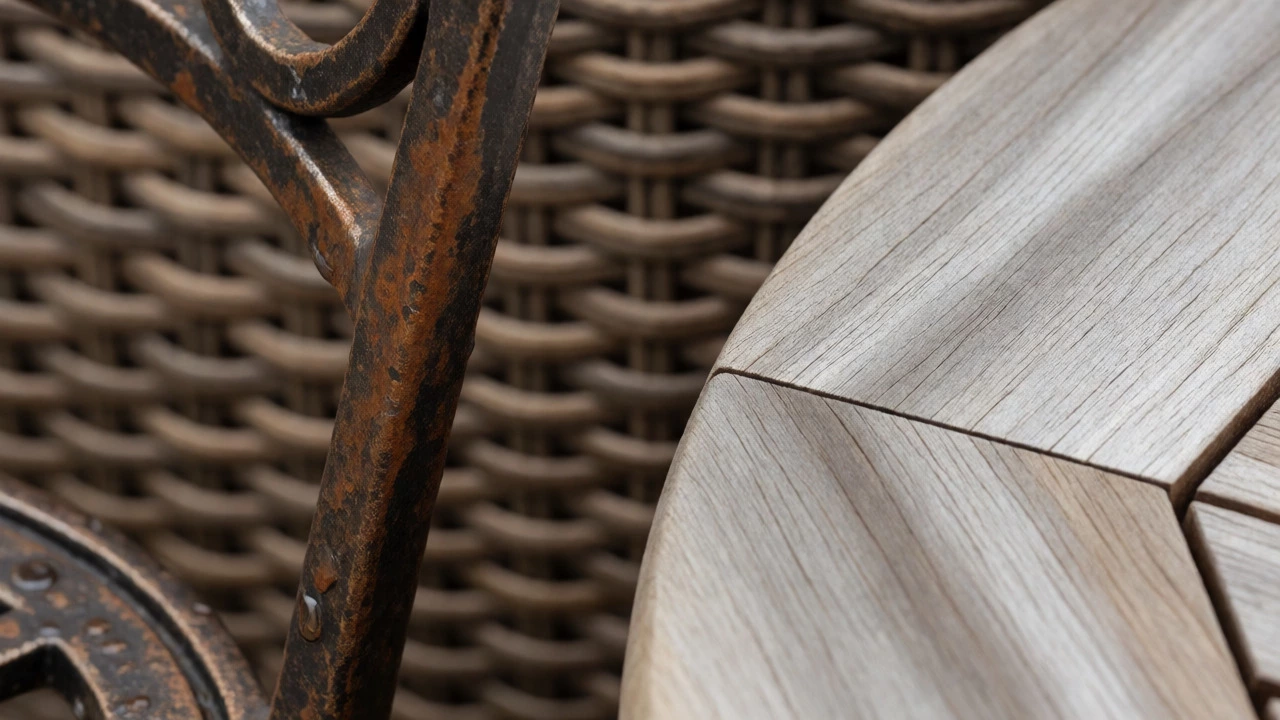
This is a classic mistake. People see "metal" and think "tough." But aluminium does not rust because it forms a protective oxide layer when exposed to oxygen. It is lightweight and perfect for rainy climates. Wrought iron, however, is highly susceptible to oxidation when water sits on its surface. Even powder-coated iron can chip. Once the coating breaks, water reaches the metal, and rust blooms within weeks. If you have iron furniture, covering it is non-negotiable.
Fabric and Cushions
Never leave cushions out overnight if rain is predicted. Even Sunbrella fabric is solution-dyed acrylic that resists fading and mildew but absorbs water. When foam gets saturated, it takes days to dry. Trapped moisture breeds bacteria and mold. This isn’t just ugly; it’s a health hazard. If you forget to bring them in, stand them on their edges so water drains out, and let them air dry completely before using them again.
The Hidden Dangers: Mold, Rust, and Structural Damage
Rain itself isn’t always the killer. It’s what rain enables. Standing water creates a microclimate under your furniture. This dampness attracts pests like slugs and spiders, who build nests in the corners. Worse, it accelerates chemical breakdowns.
Consider plastic furniture. It seems impervious. But repeated freeze-thaw cycles-common in UK winters-make cheap plastic brittle. Water seeps into microscopic cracks, freezes, expands, and shatters the piece. That’s why a £50 plastic chair often snaps after two winters, while a £200 poly-resin one lasts decades. The resin is flexible enough to handle expansion.
For wooden tables, water pooling on top causes warping. If the grain swells unevenly, the tabletop bows. Once warped, you can’t fix it easily. You’re left with a wobbly table that rocks every time you set down a plate. Prevention is cheaper than replacement.
Strategies to Protect Your Garden Gear
You don’t need to store everything in a garage. That’s impractical for most homes. Instead, use smart barriers.
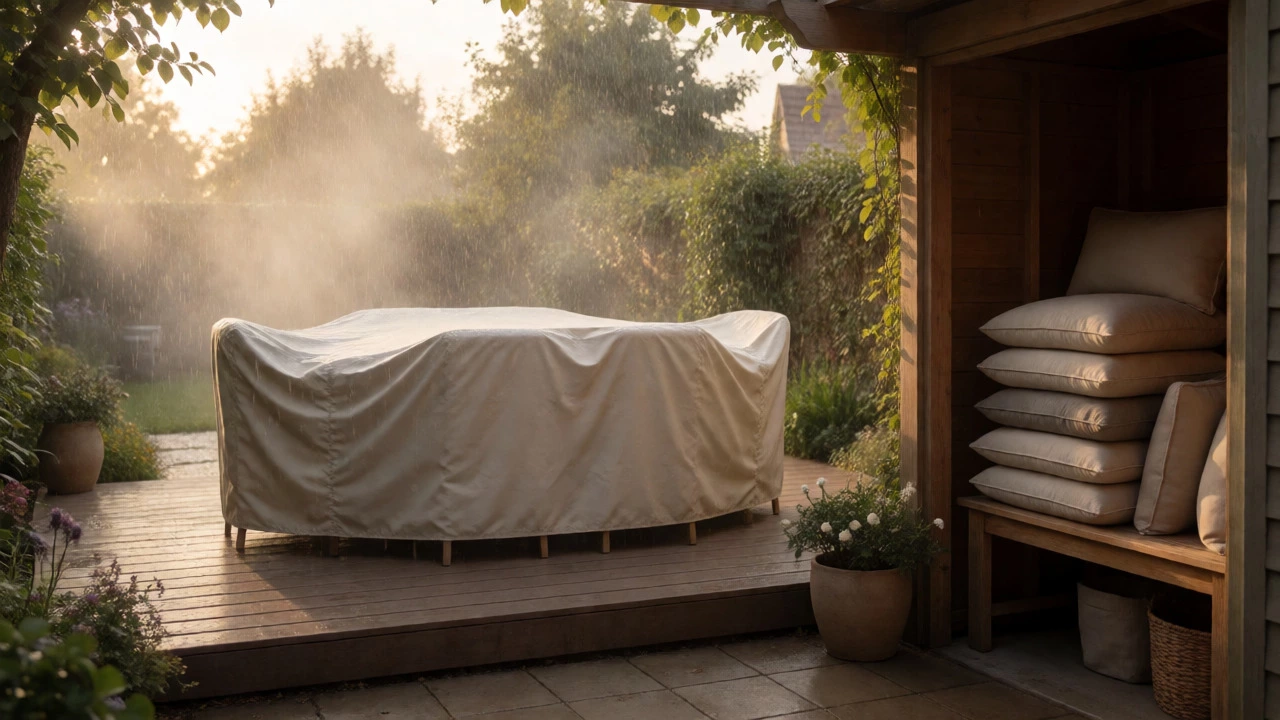
- Invest in Quality Covers: Not all covers are equal. Cheap vinyl traps heat and condensation, creating a greenhouse effect that cooks your furniture. Look for breathable polyester with a PU coating. It lets moisture escape while keeping rain out. Ensure the cover fits snugly; loose flaps flap in the wind and wear out fast.
- Elevate Everything: Never let furniture sit directly on wet grass or paving. Use feet pads or raise legs slightly. This allows airflow underneath, preventing waterlogging and rot. For lighter items, consider wall-mounted hooks for storage when not in use.
- Drainage Matters: Check your patio for drainage issues. If water pools around your table legs, move the set. Persistent puddles accelerate corrosion and staining. A slight slope away from your house helps, but even a few millimeters of elevation via brick risers makes a huge difference.
When to Bring It Inside
There are specific scenarios where covering isn’t enough. You need to physically move items indoors or into a shed.
- Storms and High Winds: Wind drives rain horizontally. Covers can tear off or fail to protect sides. Additionally, lightweight aluminium chairs can become projectiles. Secure them or move them behind a wall.
- Winter Months (November-March): In the UK, winter brings frost. Frost damages almost everything. Water expands when frozen, cracking ceramics, splitting wood, and buckling metal joints. Unless your furniture is rated for extreme cold, store it.
- Prolonged Humidity: If you notice a musty smell lingering despite sunny days, humidity is trapped. Move cushions inside for 24 hours in a warm room to kill mold spores.
DIY Maintenance Tips for Longevity
A little routine care extends the life of your set by years. Don’t wait until it looks bad.
Every spring, wash your furniture with mild soapy water. Remove dirt and pollen, which hold moisture against surfaces. For teak, apply a fresh coat of oil if you want color retention. For metal, check for chips in the paint and touch them up with matching enamel paint immediately. This stops rust before it spreads.
Check screws and bolts twice a year. Wood expands and contracts with temperature changes, loosening hardware. Tighten them gently. Over-tightening can strip threads, especially in softer woods like pine.
Finally, rotate your cushions. Sun fades fabric unevenly. Flipping them ensures even wear. If you have removable covers, wash them according to the tag instructions. Usually, cold machine wash and line dry work best. Avoid tumble drying, as high heat shrinks synthetic fibers.
Real Talk: Is It Worth the Hassle?
Some people argue that outdoor furniture should be lived in, not coddled. And they have a point. If you buy cheap plastic chairs, replacing them every two years might be cheaper than buying a heavy-duty storage box. But if you’ve invested £500+ in a proper set, the hassle pays off.
Think of it like maintaining a car. You wouldn’t leave your convertible open in a hailstorm. Treat your patio set with the same respect. Spend ten minutes checking the forecast each evening. It’s a small habit that saves hundreds of pounds and keeps your outdoor space inviting rather than grimy.
Is rattan furniture waterproof?
Natural rattan is not waterproof and will rot if left wet. Synthetic rattan (HDPE) is water-resistant and can handle rain better, but prolonged exposure can still cause mold growth in tight weaves. Always dry synthetic rattan thoroughly after heavy rain.
How long can outdoor cushions stay outside?
Ideally, no longer than 24-48 hours in wet conditions. If they get soaked, bring them inside immediately. Leaving damp cushions outside leads to mold and mildew, which are difficult to remove and can ruin the foam filling permanently.
Does rain ruin aluminium furniture?
No, aluminium does not rust. It is one of the best materials for rainy climates. However, salt air near coastal areas can corrode it faster. Regular cleaning with soapy water prevents buildup and keeps it looking new.
Should I cover my furniture in summer?
Yes, but primarily for UV protection and bird droppings, not just rain. UV rays fade colors and make plastics brittle. Covers also keep debris out. Just ensure the furniture is completely dry before covering to prevent trapped moisture.
What is the best material for wet climates?
Powder-coated aluminium, teak, and HDPE synthetic rattan are top choices. They resist rust, rot, and mold effectively. Avoid wrought iron, untreated pine, and low-quality vinyl fabrics in consistently wet regions like the UK.