
Toilet Evolution Timeline Explorer
Explore the Timeline
Drag the slider or use buttons to travel through toilet history
Key Milestones in Sanitation History
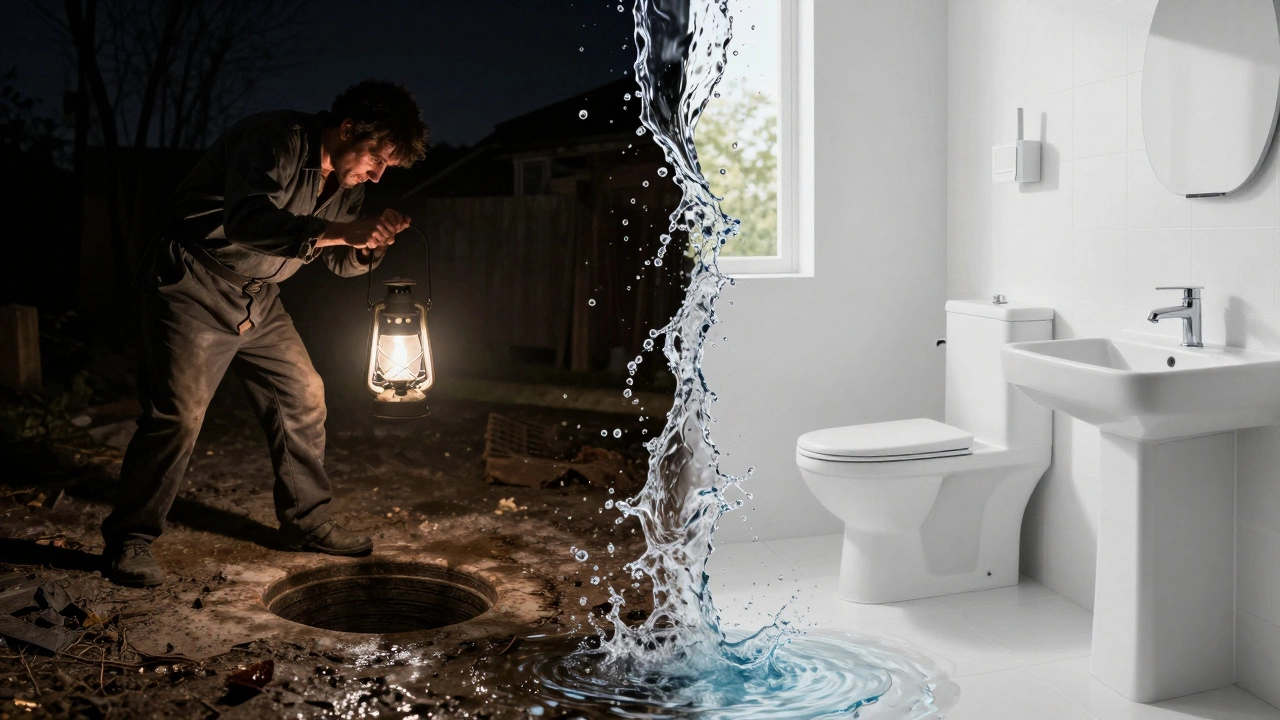
Picture this: It’s a freezing Tuesday night in Leeds. You’ve had a long day, maybe a glass too many with friends, and you need to use the bathroom. Instead of walking down the hallway to a warm, tiled room, you’re shivering in your socks, trudging across a muddy lawn to a wooden box tucked behind the shed. Sounds miserable, right? But for hundreds of years, this was normal life for millions of people.
If you’ve ever visited an old country cottage or watched a period drama set in the 19th century, you might have noticed that the toilet wasn’t inside the house. In fact, it was often out in the garden, sometimes quite far from the main building. Why did our ancestors accept such discomfort? Was it just bad design, or were there practical reasons we’ve forgotten?
The answer isn’t simple laziness or poverty alone. It comes down to a mix of engineering limitations, public health crises, and a slow but steady technological revolution. Let’s unpack why the "garden loo" became a staple of old houses and how we finally moved the facilities indoors.
The Pre-Plumbing Era: Where Did Waste Go?
Before the 19th century, most houses didn’t have what we call "plumbing." There were no pipes running through walls connecting to a municipal sewer system. So, where did human waste go? It depended on where you lived and who you were.
In cities like London or Paris, waste was often thrown into the street or collected in cesspits-large underground pits dug near the house. When these pits filled up, a worker known as a "nightsoil man" would come at night (to avoid the smell and embarrassment) to scoop it out. This waste was then sold to farmers as fertilizer. It was a circular economy, albeit a smelly one.
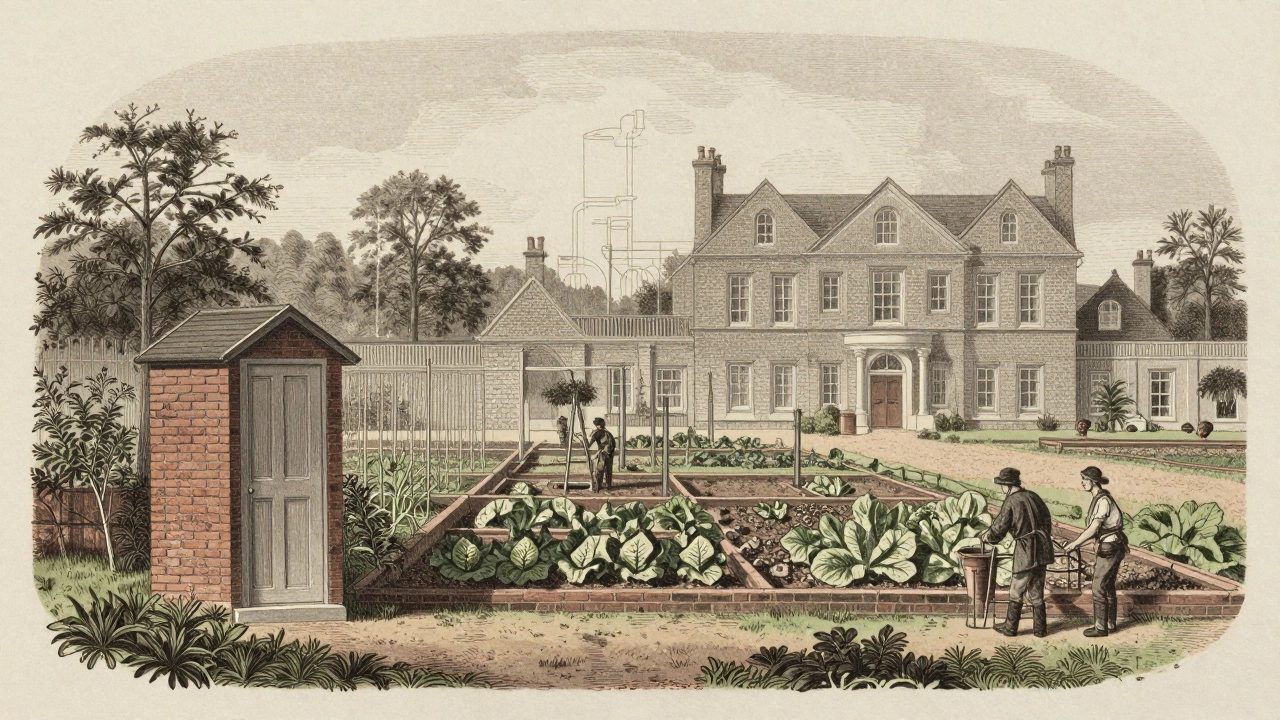
In rural areas, things were different. Many homes used a "privy," which is essentially a hole in the ground covered by a small wooden structure. These privies were almost always located outside the house. Why? Because digging a deep pit right next to your living room was risky. If the pit leaked, it could contaminate your water well, leading to deadly diseases like cholera and typhoid.
Cesspit is an underground tank used to contain sewage or other waste, typically found in older properties before modern sewer systems existed. Unlike modern septic tanks, cesspits were often unlined, meaning waste could seep directly into the soil and groundwater if not managed carefully.
The Smell Factor: Why Distance Mattered
Let’s be honest: toilets smell. Even with modern flushing mechanisms, they can produce odors. Before sealed pipes and ventilation fans, an indoor toilet was a guarantee of a foul-smelling home. Placing the toilet outside served a simple purpose: keep the stench away from where you slept, ate, and socialized.
In the 18th and early 19th centuries, hygiene standards were vastly different from today. People didn’t understand germ theory-the idea that invisible microbes cause disease. They knew that smells were unpleasant, but they didn’t necessarily link bad smells to sickness. However, common sense dictated that keeping waste sources away from food preparation and sleeping areas was wise.
This is why you’ll often find old garden toilets positioned downwind from the house. Homeowners weren’t just trying to hide the facility; they were strategically placing it so the prevailing winds would carry the odor away from their windows.
The Victorian Revolution: Water Closets Arrive
Things started to change in the mid-19th century, particularly during the Victorian era in Britain. Two key inventions changed everything: the flush toilet and the sewer system.
In 1775, Alexander Cummings patented the S-trap, a curved pipe that holds water to block sewer gases from entering the house. Later, in 1857, Thomas Crapper (yes, really) improved the design and popularized the ballcock mechanism, which automatically refills the cistern. These innovations made indoor toilets more feasible because they reduced odors significantly.
However, technology alone wasn’t enough. You also needed infrastructure. Cities began investing in massive sewer networks. In London, Joseph Bazalgette designed a comprehensive sewer system after the Great Stink of 1858, when the Thames River became so polluted it paralyzed Parliament. This network allowed households to connect their toilets directly to a central disposal system, rather than relying on individual cesspits.
Joseph Bazalgette is a British civil engineer who designed the first major sewerage system for London, fundamentally improving public health and urban sanitation. His work in the 1860s prevented countless deaths from cholera and set the standard for modern urban infrastructure.
Why Didn’t Everyone Move Indoors Immediately?
If flush toilets and sewers were invented in the 19th century, why did many houses still have outdoor toilets well into the 20th century? The answer is cost and class.
Installing indoor plumbing was expensive. It required breaking up floors, laying pipes, installing a water supply line, and connecting to the sewer. For working-class families living in cramped terraced houses, this was a luxury they couldn’t afford. Many landlords saw no reason to upgrade if tenants were already paying rent.
Additionally, space was at a premium. Adding a bathroom meant losing valuable floor space in a small home. In many cases, the outdoor toilet remained because it was cheaper to maintain and didn’t require structural changes to the house.
It wasn’t until after World War II, with government housing initiatives and rising living standards, that indoor bathrooms became a standard expectation in most Western countries. By the 1950s, new builds rarely included outdoor privies unless they were very basic or rural.
| Feature | Outdoor Privy/Cesspit | Indoor Flush Toilet |
|---|---|---|
| Cost of Installation | Low | High |
| Maintenance | Manual emptying required | Connected to sewer/septic |
| Hygiene Risk | High (if close to water source) | Low (with proper sealing) |
| Convenience | Poor (weather-dependent) | Excellent |
| Odor Control | Poor (relies on distance) | Good (S-trap vents gas) |
The Legacy Today: What Happened to Those Old Toilets?
So, what happened to all those outdoor toilets? Most were demolished when houses were renovated or when new sewer connections were made. However, some remain, especially in rural areas or historic properties.
In places like the UK, you might still see old brick or concrete structures in gardens. These are often called "gardener’s loos" because they were originally built for workers who tended the land. Over time, some homeowners converted them into potting sheds, storage rooms, or even tiny guest rooms.
Interestingly, there’s been a slight resurgence of interest in outdoor toilets, but for different reasons. Modern eco-toilets and composting toilets are gaining popularity among environmentally conscious homeowners. These systems don’t require a sewer connection and use minimal water, making them ideal for off-grid living or reducing environmental impact.
Composting Toilet is a dry toilet system that treats human waste by aerobic decomposition, turning it into usable compost without using water. Unlike traditional flush toilets, composting toilets separate liquids from solids and add bulking agents like sawdust to aid breakdown.
Lessons From the Past: Hygiene and Infrastructure
The story of the outdoor toilet teaches us a lot about how society values comfort and health. For centuries, people accepted inconvenience because alternatives were unavailable or too costly. It took a combination of scientific understanding (germ theory), engineering innovation (sewers), and economic growth to make indoor plumbing universal.
Today, we take for granted the ability to press a button and have waste disappear instantly. But behind that simple act is a complex network of pipes, treatment plants, and regulations designed to protect public health. The shift from outdoor privies to indoor bathrooms wasn’t just about convenience-it was one of the greatest public health achievements in history.
Next time you use your bathroom, think about the journey that brought you there. From muddy holes in the ground to sleek ceramic fixtures, the evolution of the toilet reflects our broader progress as a society. And while we may never return to the days of midnight trips to the garden, understanding this history helps us appreciate the modern comforts we often overlook.
When did indoor toilets become common in the UK?
Indoor toilets began appearing in wealthy homes in the late 19th century, but they didn’t become standard in average households until after World War II, around the 1950s. Government housing programs and improved infrastructure played a key role in this transition.
What is the difference between a cesspit and a septic tank?
A cesspit is a simple underground hole that collects waste until it needs to be manually emptied. A septic tank is a more advanced system that uses bacteria to break down waste, separating solids from liquids. The liquid effluent then drains into a soakaway field, while solids remain in the tank for periodic pumping.
Why were outdoor toilets called "gardener’s loos"?
Many outdoor toilets were originally built for gardeners and farm workers who spent long hours away from the main house. These structures provided convenient access for laborers without requiring them to enter the employer’s home. Over time, the term stuck even after the original workers were gone.
Did everyone have an outdoor toilet in the past?
Not everyone. Wealthier households often had indoor chamber pots or early flush toilets. Poorer families, especially in urban slums, might share communal privies or rely on street drainage. Rural families typically had private outdoor privies due to lack of sewer infrastructure.
Are outdoor toilets still legal today?
In many places, yes, but with strict regulations. Modern outdoor toilets must meet health and safety standards, including proper ventilation, waste containment, and distance from water sources. Traditional cesspits are often banned in favor of septic systems or composting toilets to prevent groundwater contamination.