Sofa Bed Value & Cost Breakdown Calculator
Not sure if the higher price tag is worth it? Use this tool to calculate the Cost Per Year for different quality levels based on your actual usage habits.
Your Usage Profile
Analysis Results
Why Premium Costs More: Quick Reference
You walk into a showroom, see a sleek sofa bed that looks like it could double as a throne and a guest room in one, and then you see the price tag. It makes you flinch. Why does this piece of furniture cost three times what a standard couch costs? Is it just markup, or is there something hidden under those cushions?
The short answer is that you aren't just paying for fabric and foam. You are paying for engineering. A standard sofa has one job: to hold your weight while you watch TV. A sofa bed has two conflicting jobs: to be comfortable enough to sit on for hours and flat enough to sleep on without waking up with a crick in your neck. Achieving both requires complex mechanics, higher-grade materials, and rigorous testing. If you have ever wondered where your money goes when you buy a convertible couch, here is the breakdown.
The Mechanism: Engineering Complexity Drives Up Costs
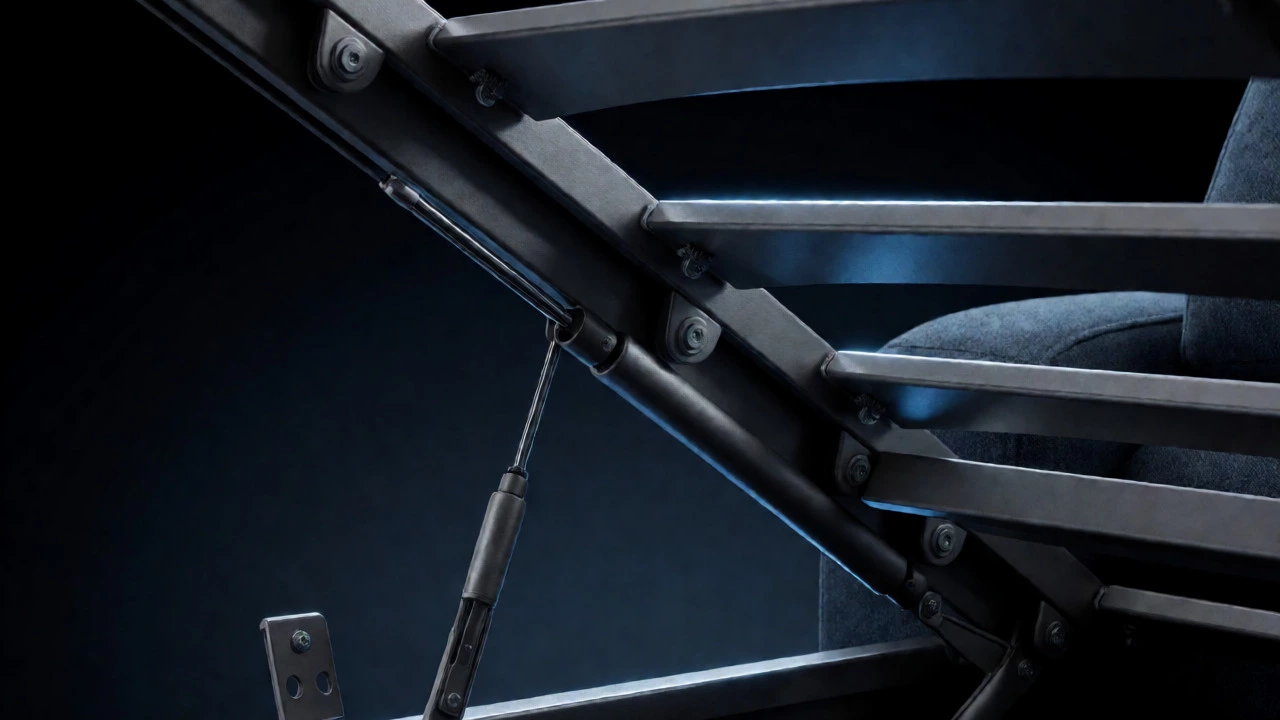
The biggest difference between a regular sofa and a sofa bed is the mechanism-the hardware that allows the seat to fold out into a sleeping surface. This isn't simple hinge work. We are talking about heavy-duty steel frames, gas struts, and precision gears.
Think about the forces at play. When you pull a sofa bed open, you are moving hundreds of pounds of frame and cushioning. The mechanism must support this weight repeatedly without sagging, squeaking, or breaking. Cheap sofas use basic wooden slats or thin metal bars. Quality sofa beds use reinforced steel frames, often powder-coated to prevent rust. They incorporate self-locking latches so the bed doesn't collapse while you're sleeping.
| Mechanism Type | Complexity Level | Average Lifespan | Cost Factor |
|---|---|---|---|
| Fold-Out (Pull-Out) | Low | 3-5 Years | $ (Budget) |
| Click-Clack | Medium | 5-7 Years | $$ (Mid-Range) |
| Trundle / Pull-Out Frame | High | 10+ Years | $$$ (Premium) |
| Wall Bed (Murphy Style) | Very High | 15+ Years | $$$$ (Luxury) |
The 'Click-Clack' mechanism is popular because it is simple, but it often lacks the durability of a true pull-out frame. Premium brands invest heavily in patented mechanisms that allow the mattress to remain attached to the backrest, eliminating the need to lift heavy mattresses every time you convert the bed. This convenience adds significant R&D costs, which are passed on to you.
Upholstery and Fabric: More Material, Higher Standards
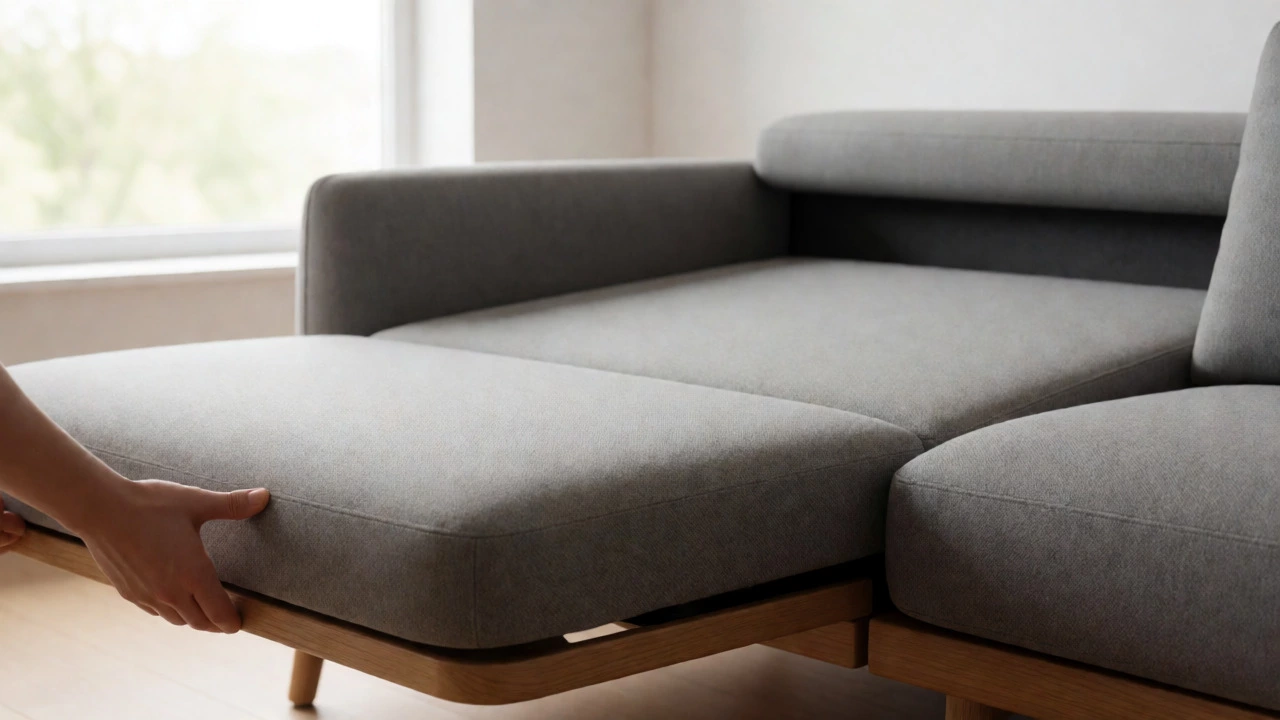
Here is a fact many people miss: a sofa bed uses significantly more fabric than a standard sofa. Why? Because the backrest usually folds down to become part of the headboard or footboard, and the seat cushions flip over. This means the fabric is exposed to friction from the floor, the wall, and your body in multiple positions.
Manufacturers cannot use cheap, low-duplication fabrics. Low-quality cloth will pill, tear, or fade quickly when subjected to the constant folding and unfolding action. Instead, they use high-performance textiles designed for commercial use. These fabrics are treated for stain resistance, abrasion resistance, and colorfastness.
Consider the Martindale test, which measures how many rubs a fabric can withstand before showing wear. A decent domestic sofa might use fabric rated for 15,000 rubs. A high-end sofa bed often uses fabric rated for 40,000 to 100,000 rubs. That extra durability costs money. Additionally, because the fabric wraps around moving parts, cutting patterns are more complex, leading to more waste during manufacturing. You are paying for that wasted material too.
The Mattress Dilemma: Comfort vs. Thickness
If you have slept on a cheap sofa bed, you know the horror of feeling the metal bars through the mattress. High-end sofa beds solve this by using specialized mattresses that are thin enough to fold but dense enough to provide support.
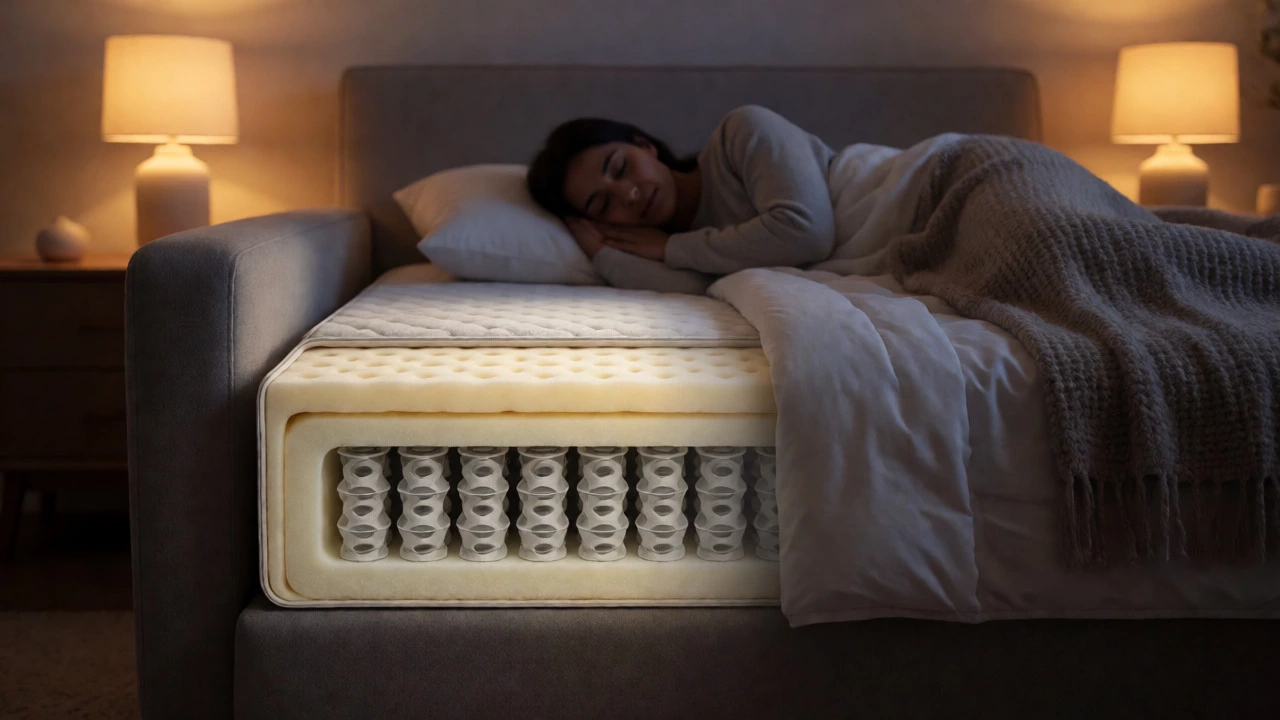
This is an engineering paradox. Standard spring mattresses are thick and rigid; they don't fold well. Memory foam is soft but can feel like sleeping on a pancake if not layered correctly. Premium sofa beds use hybrid solutions:
- Pocket Spring Cores: Individually wrapped springs that contour to your body but compress evenly when folded.
- High-Density Polyurethane Foam: Much denser than standard couch foam, providing a firmer, more supportive sleep surface.
- Latex Layers: Natural or synthetic latex offers superior resilience and breathability, preventing the "sleeping hot" issue common with memory foam.
A standard sofa cushion might use 25kg/m³ density foam. A premium sofa bed mattress core often uses 40kg/m³ or higher. The cost of raw polyurethane increases exponentially with density. Furthermore, these mattresses often come with removable, washable covers-a feature that requires additional zippers, stitching, and fabric layers.
Structural Integrity: Built to Survive Transformation
A regular sofa sits still. A sofa bed moves. Every day, potentially. This movement stresses the joints, the legs, and the frame. To handle this, manufacturers reinforce the structure.
Look under the hood of a cheap sofa bed. You will likely find particleboard and staples. Now look at a mid-to-high-range model. You will find kiln-dried hardwood frames, corner blocks glued and screwed together, and metal brackets reinforcing stress points. Kiln-drying wood removes moisture to prevent warping and cracking over time, a process that takes weeks and requires energy-intensive kilns.
Legs are another differentiator. Cheap models use plastic caps or hollow aluminum tubes. Premium models use solid hardwood legs or heavy-gauge steel. Why? Because when you convert the sofa to a bed, the center of gravity shifts. Weak legs can buckle under the dynamic load. Reinforcing the base adds weight, which also increases shipping costs-a hidden expense often baked into the retail price.
Research, Development, and Safety Testing
Have you ever tried to fold out a sofa bed and pinched your finger? Or watched a child struggle with the latch? Designing a user-friendly mechanism is hard. Brands spend years refining the ergonomics of their products.
Safety standards for furniture, especially items used for sleeping, are strict. In the UK and EU, furniture must meet specific fire retardancy standards (such as BS 7176). Upholstery and fillings must pass rigorous burn tests. Meeting these standards often requires treating foams with chemical retardants or using inherently fire-resistant fibers like wool, which are more expensive than synthetic alternatives.
Additionally, reputable brands conduct fatigue testing. They put thousands of cycles of opening and closing onto prototype units. If a mechanism fails after 5,000 cycles, it goes back to the drawing board. This iterative design process involves prototyping, failure analysis, and re-engineering. All that labor contributes to the final sticker price.
Is It Worth the Premium? Calculating Value Per Use
So, should you pay double for a better sofa bed? It depends on how you use it.
If you only open your sofa bed twice a year for guests, a budget model might suffice. But if you live in a studio apartment and sleep on it five nights a week, the math changes. Let's do a quick comparison:
- Budget Sofa Bed (£300): Lasts 2 years with daily use. Cost per year = £150.
- Premium Sofa Bed (£1,200): Lasts 10 years with daily use. Cost per year = £120.
The premium option is actually cheaper in the long run. Plus, the comfort factor is non-negotiable for daily sleepers. Poor sleep affects health, productivity, and mood. Investing in a mechanism that operates smoothly and a mattress that supports your spine pays dividends in quality of life.
Tips for Getting the Best Deal Without Sacrificing Quality
You don't always have to pay full retail price. Here is how to spot value:
- Check the Warranty: Look for at least a 5-year warranty on the mechanism. This signals the manufacturer's confidence in their engineering.
- Feel the Weight: Heavier is usually better. It indicates solid wood and steel rather than particleboard and plastic.
- Test the Fold: Do not just look at it. Open and close it yourself. It should move smoothly without jerking or excessive force.
- Ask About Replacement Parts: Can you buy replacement feet or mattress covers? Modular designs extend the life of the furniture.
- Shop Off-Season: January and July are often sales periods for furniture in the UK. Showrooms need to clear stock for new arrivals.
Ultimately, the high price of a sofa bed reflects the complexity of its dual purpose. You are buying a machine disguised as furniture. When you understand the engineering behind the hinges, the density of the foam, and the durability of the fabric, the price tag starts to make sense.
How much should I expect to pay for a good quality sofa bed?
For a reliable sofa bed suitable for occasional guest use, expect to pay between £400 and £800. For a model intended for daily sleeping with high-density foam and a robust mechanism, prices typically range from £900 to £2,000+. Luxury designer brands can exceed £3,000 due to brand premiums and bespoke materials.
Are all sofa bed mattresses uncomfortable?
No, but there is a trade-off. Budget models often use thin foam that feels like sleeping on a board. High-end models use pocket springs or high-resilience latex that mimic real mattresses. If you plan to sleep on it regularly, avoid models with visible metal bars in the mattress description and look for terms like "orthopedic support" or "hybrid core."
What is the most durable sofa bed mechanism?
The trundle-style pull-out mechanism is generally considered the most durable because it keeps the mattress separate from the folding action, reducing stress on the fabric and frame. Click-clack mechanisms are simpler but can suffer from hinge wear over time. Always check for steel construction and lubricated joints.
Can I replace the mattress on my sofa bed?
On many modern sofa beds, yes. Some designs allow you to unzip the cover and remove the foam or spring unit entirely. However, custom-sized mattresses can be difficult to source. Check with the manufacturer for spare part availability before buying if you anticipate needing replacements.
Why are some sofa beds lighter than others?
Lightweight sofa beds often use aluminum frames, particleboard, and lower-density foams to reduce shipping costs and make them easier to move. While convenient for small apartments, they may lack the stability and longevity of heavier, steel-framed models. If you move frequently, a lighter model might be worth the slight compromise in durability.