Storage Terminology Finder
Describe Your Storage
Definition goes here.
Contextual Advice:
Select options on the left to find the precise terminology for your storage needs.
You stand in the middle of your bedroom, looking at that massive piece of furniture. You need to describe it for an insurance form, a rental listing, or maybe you’re just trying to sound more precise when talking to an interior designer. The word wardrobe is common, but it’s not the only option. In fact, using the right term can clarify exactly what kind of storage you have, how much space it takes up, and even its historical value.
The English language offers several distinct words for storing clothes, each carrying specific nuances about size, mobility, and style. Confusing them can lead to awkward situations-like promising a buyer a freestanding cabinet when you actually mean a built-in room feature. Let’s break down the exact vocabulary you should use depending on the context.
Wardrobe vs. Closet: The Fundamental Distinction
The biggest source of confusion lies between "wardrobe" and "closet." While people often use them interchangeably in casual conversation, they refer to two completely different physical objects.
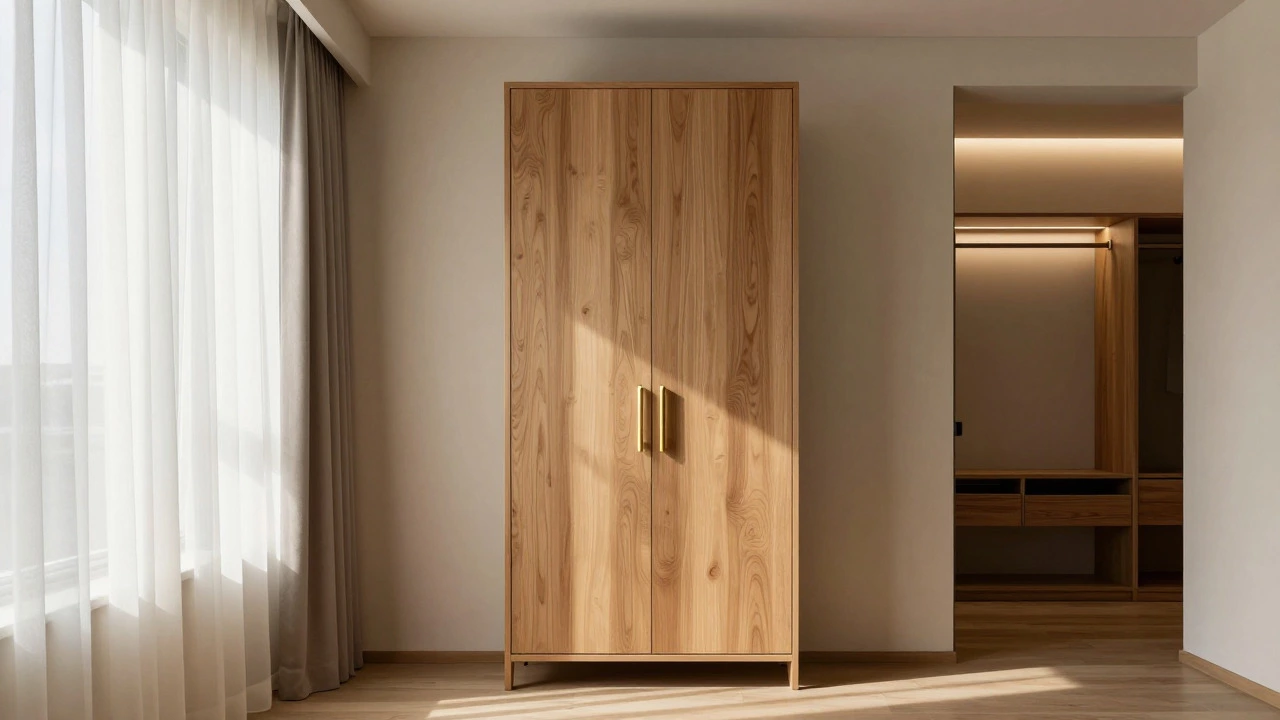
A wardrobe is a tall, standalone piece of furniture with doors, shelves, and hanging rods used for storing clothes. It is movable. If you buy a new sofa, you can push the wardrobe aside. If you move houses, you take the wardrobe with you. Historically, wardrobes were essential because most homes did not have dedicated spaces for clothing storage.
A closet is a small room or recessed space within a wall, designed specifically for storage. It is fixed. You cannot move a closet. In North American real estate, the presence of closets is a standard expectation, whereas in many European countries, wardrobes are the norm because closets are less common in older housing stock.
If you are writing a rental agreement or describing a property, this distinction matters. Saying "the bedroom has a large wardrobe" implies there is furniture present. Saying "the bedroom has a walk-in closet" implies architectural features. Using the wrong term might mislead someone about the amount of floor space available.
Armoire: The Decorative Alternative
If you want to replace "wardrobe" with a word that sounds more elegant or specific to certain styles, armoire is your best bet. An armoire is technically a type of wardrobe, but the word carries different connotations regarding design and origin.
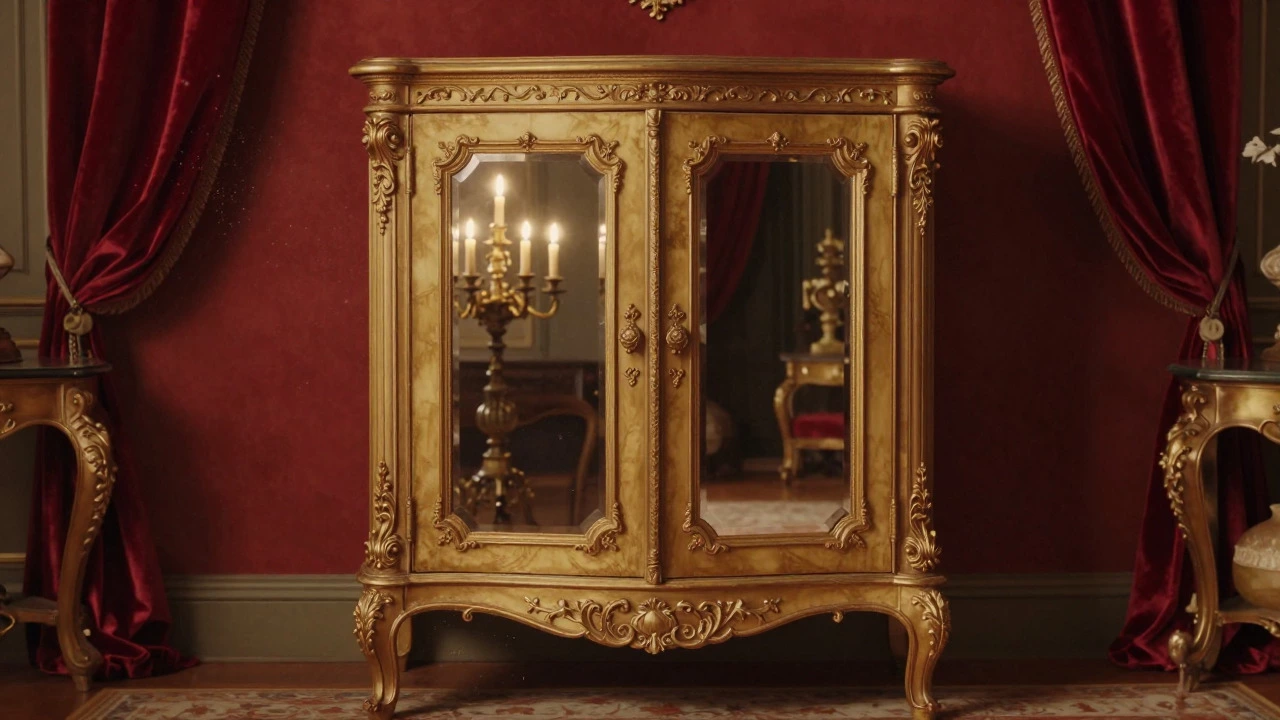
Armoires typically originate from French furniture traditions. They are often taller, narrower, and more ornate than standard wardrobes. Many armoires feature double doors that open outward, sometimes with decorative carvings, mirrors, or glass panels. In modern usage, if you see a large, antique-looking wooden cabinet used for clothes, calling it an armoire signals that it is a statement piece rather than just functional storage.
Consider the difference in tone: "I need to buy a wardrobe" sounds practical and utilitarian. "I’m looking for an armoire" suggests you care about aesthetics, vintage charm, or specific interior design themes like Victorian or French Provincial. If your storage unit has intricate woodwork or serves as a focal point in the room, "armoire" is the more accurate descriptor.
Cupboard and Press: Regional and Historical Terms
Language varies significantly by region, and some synonyms for wardrobe are heavily tied to geography or history. Understanding these helps avoid confusion when dealing with international clients or reading older literature.
In British English, the word press (or "dresser") is frequently used to describe what Americans call a chest of drawers or a low wardrobe. However, a "cupboard" can also refer to a wardrobe-like structure. Traditionally, a cupboard was a covered shelf or compartment for storing goods. Over time, the term evolved. In the UK, a "bedroom cupboard" might refer to a built-in storage space similar to a closet, while a "freestanding cupboard" could be a smaller version of a wardrobe.
If you are communicating with someone in the United Kingdom or Ireland, asking if they have a "press" for their shirts might make more sense than asking for a "drawer unit." Conversely, using "cupboard" in the US usually brings to mind kitchen storage, so it’s risky to use it for bedroom furniture unless you specify "bedroom cupboard" to avoid culinary associations.
Built-Ins and Walk-In Closets: Architectural Storage
When the storage is part of the house structure, you stop using furniture terms entirely. Instead, you use architectural terminology. This is crucial for real estate descriptions, renovation plans, and insurance assessments.
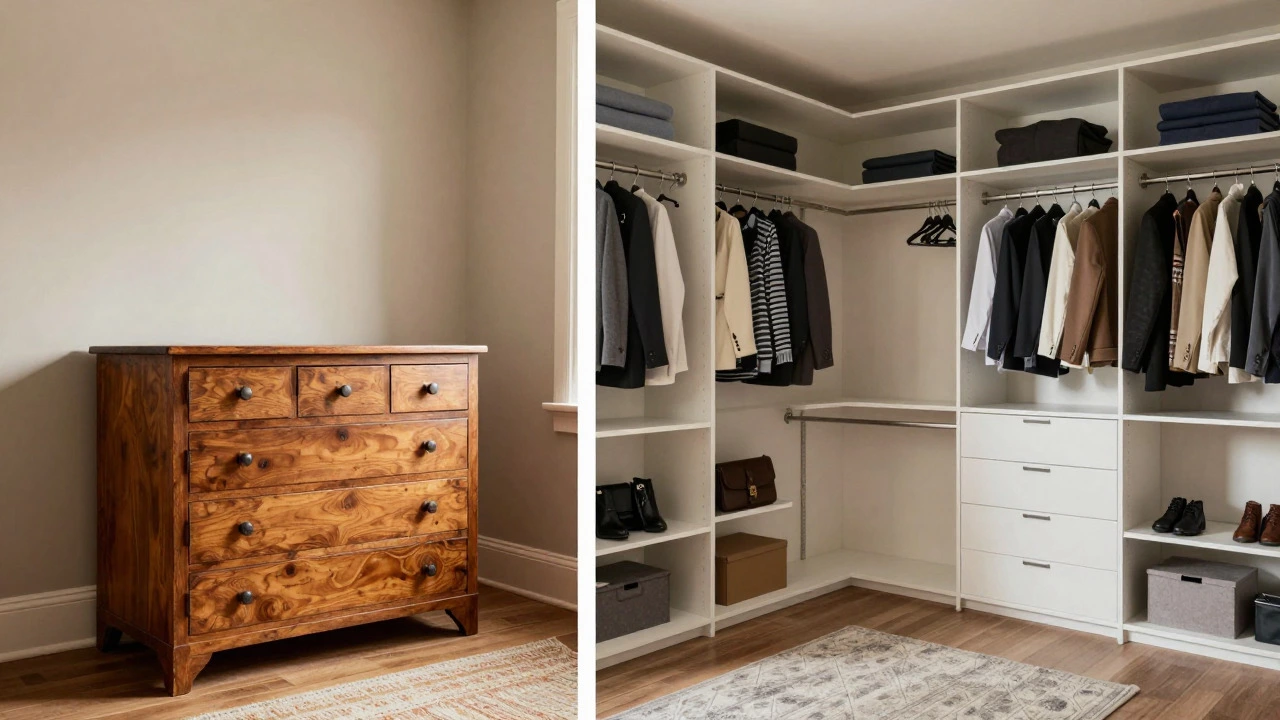
- Walk-in closet: A large closet spacious enough for a person to enter fully. These often include shelving, drawers, and hanging rods installed directly into the walls.
- Built-in wardrobe: Custom cabinetry installed flush with the walls, maximizing vertical space without protruding into the room. These are permanent fixtures.
- Linen closet: A smaller, often narrow built-in space designated for towels, sheets, and linens, though sometimes used for off-season clothing.
If you are selling a home, never describe a built-in closet as a "wardrobe." Buyers expect wardrobes to be included in the sale price as personal property, whereas built-ins are part of the real estate. Mislabeling them can lead to disputes over what stays and what goes during a move.
Chest of Drawers and Dresser: Low-Level Storage
Not all clothing storage stands tall. For folded items like t-shirts, jeans, and underwear, horizontal storage is preferred. Here, the terms shift again.
A chest of drawers is a tall, narrow piece of furniture with multiple stacked drawers. A dresser is wider and lower, often topped with a mirror. While neither is a direct synonym for a wardrobe (which implies hanging space), they are part of the same ecosystem of bedroom storage. In casual speech, people might say, "I put my clothes in the dresser," effectively replacing the function of a wardrobe for folded garments.
If you lack hanging space, a dresser becomes your primary clothing storage solution. Describing your setup accurately helps others understand your organization system. "I have no wardrobe, just a dresser" tells the listener that you fold everything, which impacts how much floor space you need and how accessible your clothes are.
Comparison Table: Choosing the Right Term
| Term | Type | Mobility | Primary Use | Regional Preference |
|---|---|---|---|---|
| Wardrobe | Furniture | Movable | Hanging clothes | Global (UK/EU/Aus) |
| Closet | Architecture | Fixed | General storage | North America |
| Armoire | Furniture | Movable | Decorative hanging | US/Europe (Vintage) |
| Press/Dresser | Furniture | Movable | Folded clothes | UK/Ireland |
| Cupboard | Furniture/Arch | Varies | Mixed storage | UK/Commonwealth |
| Walk-in Closet | Architecture | Fixed | Luxury storage | North America |
Context Matters: When to Use Which Word
Selecting the right synonym depends on who you are talking to and why. Here are three common scenarios where precision prevents misunderstanding.
1. Real Estate Listings: Always distinguish between built-in closets and freestanding wardrobes. Use "walk-in closet" for high-value architectural features. Use "includes wardrobes" to indicate that furniture is staying with the house. Ambiguity here leads to buyer disappointment.
2. Interior Design Consultations: If you want a custom look, ask for "built-in wardrobes" or "custom cabinetry." If you prefer flexibility, request "freestanding armoires" or "modular wardrobe systems." Designers need to know if you want fixed infrastructure or movable assets.
3. Moving and Logistics: When hiring movers, specify "wardrobes" as heavy furniture items. Do not call them "closets," as movers might assume you mean empty rooms. Mentioning "armoire" alerts them to potential fragility due to glass or delicate woodwork.
Mini-FAQ: Common Questions About Storage Vocabulary
Is a wardrobe the same as a closet?
No. A wardrobe is a movable piece of furniture, while a closet is a fixed architectural space built into the walls of a house. The key difference is mobility and installation.
What is the difference between an armoire and a wardrobe?
An armoire is a specific type of wardrobe that is typically more ornate, taller, and often associated with French or antique design styles. All armoires are wardrobes, but not all wardrobes are armoires.
Why do British people use the word 'press' for storage?
In British English, "press" (or "dresser") refers to a piece of furniture with drawers or doors for storing clothes. It is a regional linguistic preference that differs from American English, which uses "dresser" or "chest of drawers" for similar items.
Can I call a built-in closet a wardrobe?
Technically, no. A built-in closet is part of the house structure. Calling it a wardrobe may confuse buyers or insurers who expect a removable furniture item. Use "built-in wardrobe" only if it is a custom-fitted cabinet that looks like furniture but is attached to the wall.
What is the best term for luxury clothing storage?
For luxury contexts, "walk-in closet" or "dressing room" are the most appropriate terms. These imply significant space, high-end finishes, and organizational features beyond simple hanging rods.