Antique Storage Identifier & Guide
Discover the correct historical name for your storage piece or learn the differences between these classic terms.
Status: Luxury / High-end
- • Freestanding cabinet
- • Ornate carving/decor
- • Often lacks hanging rails (shelves/drawers)
- • Made of Walnut or Oak
Status: Working Class / Utilitarian
- • Sturdy pine or oak
- • Two outward-opening doors
- • Shelves only (no hanging rods)
- • Used for linens/bedding
Status: Space-Saver
- • Tall stack of drawers
- • Supported on legs
- • Dovetail joints (antique)
- • Organizes folded clothes
Status: Portable / Traditional
- • Large wooden box
- • Hinged lid
- • Doubles as seating
- • Stored garments/trunks
Status: Standard / Modern
- • Doors with internal rails
- • Can be built-in or freestanding
- • Mass-produced versions common
- • Generic term for clothing storage
Status: Dining / Display
- • Originally for food tasting
- • Evolved into sideboard/cabinet
- • Focus on display/storage mix
- • Less focused on hanging clothes
Result
Description goes here.
Select attributes from the left to identify the historical name.
Question loading...
Quiz Complete!
You scored out of 3.
You walk into an antique shop or browse a vintage listing online, and you see a tall, imposing piece of wooden storage. The label doesn't say "wardrobe." It says Armoire is a large movable cabinet used for storing clothes, originating from the French word for bookcase. Or maybe it’s called a "press" or a "tallboy." If you’ve ever wondered what the old name for wardrobe is, you’re not alone. The answer isn’t just one word; it’s a timeline of social class, craftsmanship, and linguistic borrowing.
Today, we call them wardrobes. But for centuries, these pieces went by different names depending on where you lived, who you were, and what they held inside. Understanding these terms helps you spot genuine antiques versus modern reproductions. It also explains why some cabinets have doors that swing out while others slide shut. Let’s unpack the history behind the name.
The Most Common Historical Alternative: The Armoire
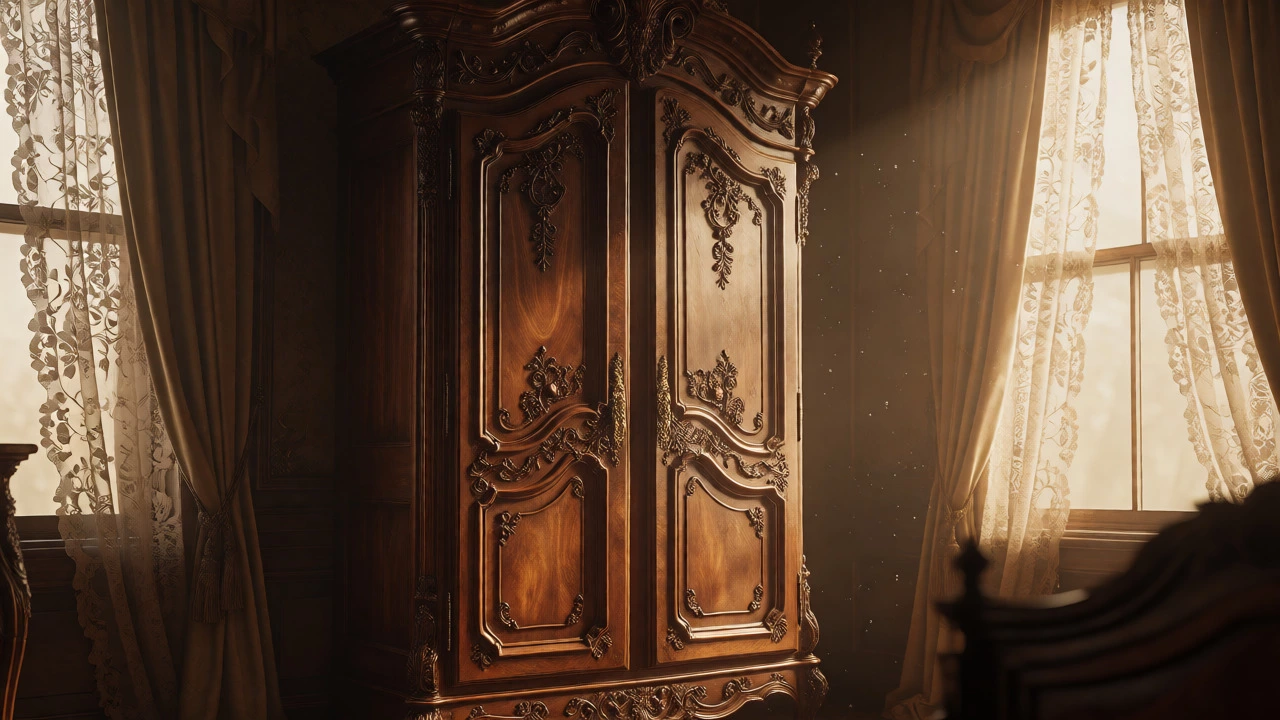
If there is one term that immediately signals "antique wardrobe," it’s the armoire. This word comes from the Latin *armarium*, which originally meant a place to store books or arms (weapons). By the Middle Ages in France, the term had shifted to mean a large cabinet for clothing. When this style crossed the English Channel, particularly during the Victorian era, it retained its French flair.
Why did people use the word armoire instead of wardrobe? Mostly status. In the 18th and 19th centuries, having French-influenced furniture was a sign of wealth and sophistication. An armoire wasn’t just storage; it was a statement. These pieces were often carved with intricate details, made from walnut or oak, and designed to be freestanding rather than built-in.
Here is how to tell if a piece is truly an armoire:
- Freestanding structure: Unlike built-in closets, armoires stand independently.
- Ornate detailing: Look for hand-carved wood, brass hardware, or painted finishes.
- Interior layout: Traditional armoires often have shelves and drawers but may lack the hanging rails found in modern wardrobes.
While "wardrobe" became the standard English term for any closet-like furniture, "armoire" stuck around as a specific descriptor for high-end, decorative cabinets. So, if you see a listing for a "French Country Armoire," you are looking at the direct ancestor of the luxury wardrobe.
The British Working-Class Hero: The Press Cupboard
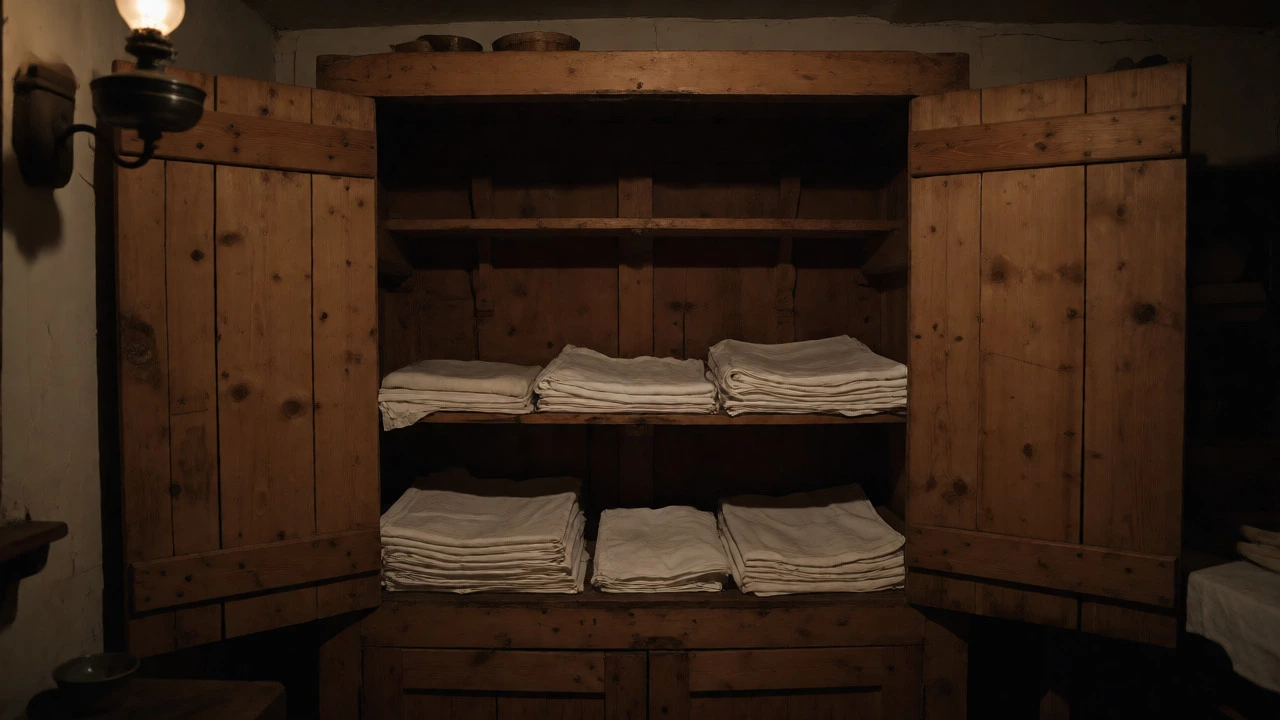
In England, especially in the North and Midlands, the most common predecessor to the modern wardrobe was the Press Cupboard is a sturdy, often plain wooden cabinet used primarily for storing linens and bedding. You might hear older relatives refer to their linen closet as a "press." This term dates back to the practice of "pressing" linens flat between boards to keep them crisp and wrinkle-free.
Unlike the ornate armoire, the press cupboard was utilitarian. Made from solid pine or oak, it featured two doors that opened outward to reveal shelves. There were rarely hanging rods because working-class families folded their clothes. Hanging space was a luxury reserved for the wealthy who owned delicate fabrics like silk or lace that required air circulation.
The press cupboard served multiple jobs in a small home. During the day, it stored tablecloths and sheets. At night, it might hold food if kept in a cool kitchen area. Its simplicity meant it survived many household moves and renovations. Today, finding a good quality 19th-century press cupboard is easier than finding a matching set of antique dining chairs. They are durable, practical, and carry a lot of character.
The Tall and Narrow Option: The Chiffonier and Tallboy
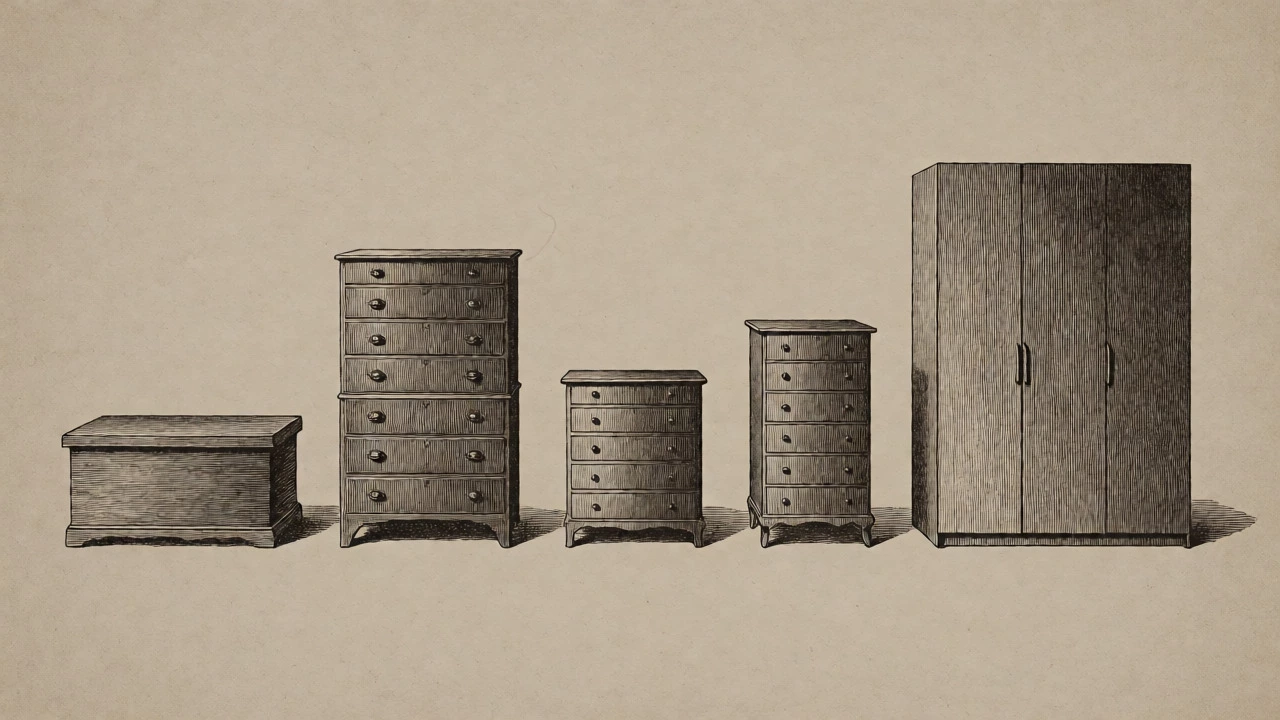
Not all old storage solutions were wide boxes. Some were tall, narrow chests known as Tallboys is a tall chest of drawers supported on legs, popular in the late 17th and early 18th centuries. While technically a dresser, the tallboy functioned as a wardrobe for those with limited floor space. If you couldn’t afford a massive armoire, you bought a tallboy.
These pieces stacked drawers vertically, allowing users to organize clothes by type-shirts in the top drawers, socks and accessories below. The related term "chiffonier" refers to a similar piece, though often slightly shorter and more delicate. In the American colonies, tallboys were ubiquitous. They provided significant storage volume without dominating the room visually.
It’s important to distinguish these from modern dressers. A true antique tallboy has dovetail joints and hand-cut drawer runners. If the drawers glide smoothly on metal slides, it’s likely a reproduction or a later modification. The name "tallboy" itself is somewhat informal, a colloquialism that stuck because it described exactly what the object was: a boy-sized tower of drawers.
Regional Variations and Obscure Terms
Language changes across borders and even counties. In Scotland, you might encounter the term "Kist is a traditional Scottish chest used for storing clothes and valuables." A kist is essentially a large wooden box, often with a hinged lid. Before hanging clothes became common, people stored garments in trunks or kists. These were portable, essential for moving households, and sometimes doubled as seating.
In parts of Europe, other terms persist. The Italian "Credenza is a sideboard or cupboard originally used for tasting food before serving to check for poison" evolved from a dining room server to a general storage cabinet. In Spain, the "Vitrina is a glass-fronted display cabinet often used for china or collectibles" focuses on display rather than concealment, though it shares the same DNA of enclosed storage.
Even within the UK, dialect matters. In some rural areas, a simple wooden cabinet was called a "locker" or a "coffer." A coffer specifically referred to a strongbox for money and jewels, but over time, the line blurred. If you are researching family history, knowing these regional terms can help you interpret old wills and inventories. An entry for "one oak press" tells you something different than "one mahogany armoire."
| Term | Origin | Primary Use | Key Feature |
|---|---|---|---|
| Armoire | French/Latin | Luxury clothing storage | Ornate carving, freestanding |
| Press Cupboard | English | Linens and bedding | Shelves, no hanging rails |
| Tallboy | English/American | Folded clothing organization | Tall stack of drawers |
| Kist | Scottish | Portable storage | Hinged lid, box shape |
| Wardrobe | Old French/Norman | General clothing storage | Doors, internal rails/shelves |
Why Did the Word "Wardrobe" Take Over?
So, why did "wardrobe" win the naming battle? The word itself comes from the Old French *warderobe*, meaning "guard robe." It literally meant a place to guard your robes. As housing styles changed in the 19th and 20th centuries, built-in closets became common in middle-class homes. Manufacturers needed a generic term for freestanding versions of these closets.
Industrialization allowed for mass-produced furniture. Companies could make identical units in factories and ship them nationwide. They labeled these "wardrobes" because it was the most widely understood term. Specialized names like armoire or press faded from everyday conversation, surviving mostly in antique dealers' catalogs and academic texts.
Today, we use "wardrobe" as an umbrella term. However, using the correct historical name adds precision. If you buy a "wardrobe" from IKEA, you get particleboard and sliding doors. If you buy an "armoire," you expect solid wood and character. Knowing the difference saves you money and disappointment.
How to Identify Authentic Antique Storage Pieces
When hunting for vintage storage, don’t just trust the label. Check the construction. Pre-1950s furniture typically uses dovetail joints in drawers. Screws should be hand-made with irregular threads, not machine-perfect Phillips heads. Wood shrinkage causes gaps in paneling, which is a good sign of age.
Also, consider the weight. Solid oak or walnut presses are heavy. Modern reproductions often use veneer over plywood, making them lighter and less stable. If a piece feels surprisingly light, ask questions about its materials. Authenticity lies in the details, not just the name on the tag.
Understanding these terms transforms how you view old furniture. It’s not just clutter; it’s a record of domestic life. Whether you call it a press, an armoire, or a wardrobe, the function remains the same: keeping your belongings safe, organized, and hidden from view.
Is an armoire the same as a wardrobe?
Functionally, yes. Both store clothes. Stylistically, no. An armoire is typically freestanding, ornately decorated, and of French origin, while a wardrobe is a broader term that includes simpler, functional designs and built-in options.
What is a press cupboard used for?
A press cupboard was traditionally used for storing linens, tablecloths, and bedding. The name comes from the practice of pressing fabrics flat between boards to remove wrinkles. It usually features shelves rather than hanging rods.
Why do some old wardrobes have no hanging space?
Historically, only the wealthy could afford to hang delicate fabrics. Working-class families folded their clothes to save space and prevent stretching. Therefore, many antique cabinets like presses and tallboys feature drawers and shelves exclusively.
What is the difference between a tallboy and a dresser?
A tallboy is a very tall chest of drawers, often reaching six feet or more, designed to maximize vertical storage in small rooms. A dresser is generally wider and shorter, often including a mirror attached to the back.
Can I use a press cupboard as a modern wardrobe?
Yes, with modifications. You can install a tension rod inside for hanging clothes. Alternatively, use it for folded items, shoes, or blankets. Many people repurpose antique presses as bar cabinets or pantry storage due to their sturdy shelves.