Small Wardrobe Finder
Confused by terms like armoire, closet, and wardrobe? Use this tool to find the exact name for the piece of furniture you need.
You’re staring at that narrow gap between the bed and the wall in your bedroom. It’s too tight for a standard double-door unit, but you desperately need somewhere to hang your coats or fold your jumpers. You go online to search for a solution, type in "small wardrobe," and suddenly you’re bombarded with terms like armoire, a tall, often ornate cupboard used for storing clothes, freestanding wardrobe, closet, and chest of drawers. Which one do you actually buy?
The confusion isn't just you. The furniture industry loves using interchangeable terms that mean slightly different things depending on who you ask-or where you live. In the UK, we might call it a wardrobe; in the US, it might be a closet or an armoire. But here’s the truth: knowing the correct name helps you find exactly what fits your space and budget.
Key Takeaways
- Armoire: A tall, freestanding cabinet, often with decorative doors, traditionally used for hanging clothes.
- Freestanding Wardrobe: A general term for any standalone storage unit not built into the wall.
- Chest of Drawers: Often confused with wardrobes, but strictly for folded items, not hanging clothes.
- Wardrobe vs. Closet: In British English, a wardrobe is a piece of furniture; a closet is a room or recess. In American English, they are often swapped.
- Best Small Options: Look for slimline armoires, over-the-door organizers, or vertical chest-of-drawers hybrids.
The Big Three: Armoire, Freestanding Wardrobe, and Closet
Let’s clear up the naming mess right away. When people ask, "What is a small wardrobe called?" they are usually looking for one of three specific types of furniture. Understanding the difference ensures you don’t end up buying a shelf when you needed a rail.
First, there’s the armoire. Historically, this was a large, movable wooden cabinet used to store valuables or linens. Today, it’s essentially a fancy word for a tall, freestanding wardrobe. If it has solid doors (wood or glass) and stands on its own legs rather than being bolted to the floor, it’s likely an armoire. They tend to be deeper and more decorative than modern minimalist wardrobes.
Next is the freestanding wardrobe. This is the catch-all term for any standalone storage unit designed for clothes. Unlike built-in closets, these can be moved. If you’re renting, this is your best friend. They come in all shapes-single door, double door, sliding door-but if it’s not attached to the building structure, it’s freestanding.
Then we have the closet. Here is where geography matters. In the UK, a closet is a small room or a recess in the wall with a door. You don’t buy a closet; you build one. In the US, however, "closet" is the default word for what Brits call a wardrobe. So, if you’re shopping on an American site for a "small closet," you’re actually looking for a small wardrobe unit.
Why Do We Confuse These Terms?
It comes down to function versus form. People use the words interchangeably because the end goal is the same: hiding clothes. But the structural differences matter when you’re trying to fit something into a 60cm wide gap.
For example, a chest of drawers is often mistaken for a small wardrobe by people who only fold their clothes. But if you try to hang a dress in a chest of drawers, you’ll fail. Chests are for folded items. If you need hanging space, you need a rail. That means you’re looking for an armoire or a wardrobe with a hanging section, even if it’s tiny.
Another culprit is the hall stand. These are tall, thin units found in entryways. They often have hooks for coats and shelves for shoes. While technically a type of small wardrobe for outerwear, they rarely offer enclosed storage for delicate fabrics. If you need to hide your winter coat from dust, a hall stand won’t cut it-you need a closed unit.
Types of Small Wardrobes and Their Specific Names
Once you know the basic categories, you can drill down into the specific styles that save space. Here is a breakdown of the most common "small wardrobe" names you’ll encounter in stores.
| Type Name | Best For | Hanging Space? | Typical Width |
|---|---|---|---|
| Slimline Armoire | Bedrooms with limited floor space | Yes (usually one rod) | 45-60 cm |
| Single-Door Wardrobe | Small guest rooms or kids' rooms | Yes | 45-50 cm |
| Over-the-Door Organizer | Dorms or rental apartments | No (hooks/pockets only) | Fits standard door |
| Vertical Chest with Rail | Hybrid storage needs | Yes (top section) | 40-50 cm |
| Hall Stand | Entryway outerwear | Open hooks | 30-40 cm |
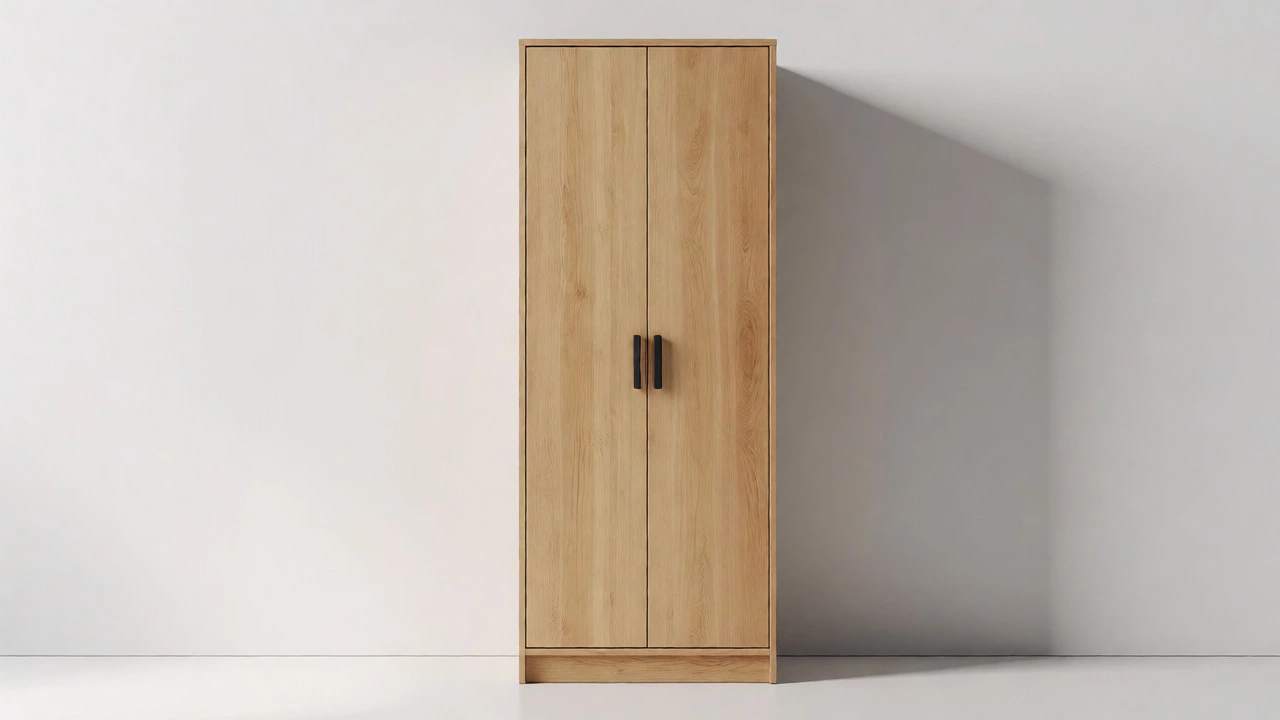
The slimline armoire is the MVP of small-space living. Manufacturers design these specifically to fit into narrow alcoves. They sacrifice width for height, giving you plenty of vertical hanging space without eating up your floor plan. If you see a unit labeled "narrow wardrobe" or "compact armoire," this is usually what it is.
A single-door wardrobe is another common variant. It’s straightforward: one door, one interior rod, maybe a top shelf. It’s less decorative than an armoire but often cheaper and easier to assemble. These are perfect for children’s bedrooms or studio flats where aesthetics take a backseat to utility.
Don’t overlook the vertical chest with a rail. Some manufacturers combine drawers and a hanging section in a single narrow column. You hang shirts on top and store socks in the drawers below. It’s a clever hybrid that answers the question, "Can I have both hanging and folding space in a 40cm footprint?" Yes, you can.
Regional Differences: UK vs. US Terminology
If you’re shopping internationally, language barriers can cost you money. Let’s say you’re in Leeds and you want a small unit for your spare room. You search for "wardrobe." Great. Now imagine you’re searching on a US-based retailer like Wayfair or Amazon US.
In the States, asking for a "wardrobe" might bring up results for entire rooms or very large, traditional pieces. Americans often use armoire for anything freestanding and tall. If you want a simple boxy unit, they might call it a closet organizer or a storage cabinet.
Conversely, if you’re a US reader searching for a "closet," you might get built-in solutions that require carpentry. To get a freestanding piece, you need to specify "freestanding closet" or "portable wardrobe." Knowing these nuances prevents you from ordering a $500 installation service when you just wanted a $150 IKEA-style unit.
How to Choose the Right Name (and Unit) for Your Space
Stop guessing. Use this quick decision tree to find the exact term you should be searching for.
- Do you need to hang long items (dresses, coats)?
If yes, you need a unit with a minimum height of 170cm and a depth of at least 50cm. Search for "tall slimline wardrobe" or "narrow armoire." - Is your space under 50cm wide?
Standard wardrobes start around 50cm. If you have less, look for "extra-narrow wardrobe" or consider a vertical rack with a cover, which functions as a soft-sided wardrobe. - Do you rent?
Avoid anything described as "built-in" or "fitted." Stick to "freestanding" or "portable" keywords. Flat-pack furniture is your friend here. - Do you mostly fold clothes?
You don’t need a wardrobe. You need a chest of drawers or a cabinet. Save money and space by skipping the hanging rail entirely.
Remember, the name on the label doesn’t always match the product inside. Always check the dimensions. A "large armoire" in one store might be smaller than a "compact wardrobe" in another. Measure your space first, then filter by size, not just by name.
Beyond the Wardrobe: Alternative Storage Solutions
Sometimes, the answer to "what is a small wardrobe called?" is "nothing, because you shouldn’t buy one." If your space is truly tiny, a traditional wardrobe-even a slim one-might feel bulky. Consider these alternatives:
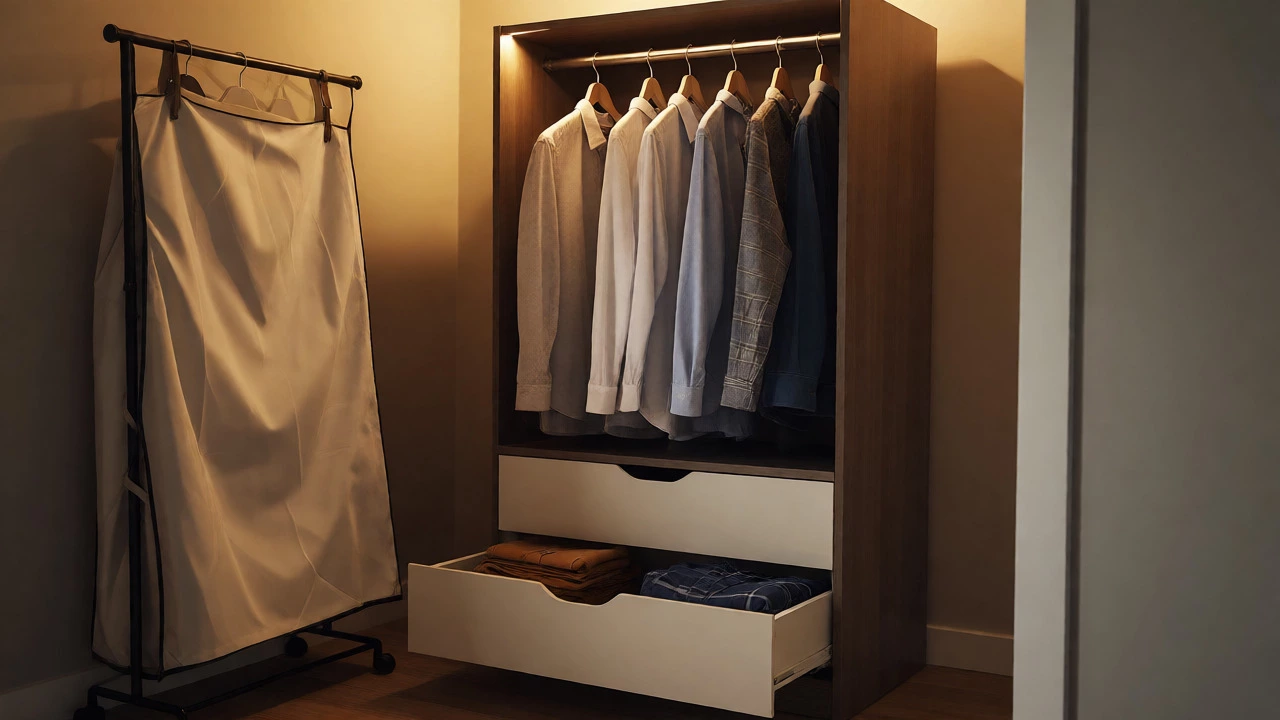
- Racks with Covers: Often called garment racks or cloth wardrobes. These are metal frames draped with fabric. They’re lightweight, cheap, and easy to move. Perfect for temporary setups or students.
- Wall-Mounted Rails: Not a wardrobe per se, but a floating rail can replace a bulky unit. Add a curtain for privacy, and you’ve created a DIY closet.
- Under-Bed Storage: If you can’t fit a wardrobe, utilize dead space. Rolling drawers or vacuum bags stored under the bed can free up enough room to skip the big furniture piece entirely.
These options aren’t failures; they’re smart adaptations. A garment rack isn’t a wardrobe, but it solves the problem of hanging clothes in a 10-square-meter room better than a clunky wooden box ever could.
What is the difference between an armoire and a wardrobe?
Technically, an armoire is a freestanding, often decorative cabinet that stands on legs, while a wardrobe can be either freestanding or built-in. In modern usage, especially in the US, "armoire" is frequently used to describe any tall, freestanding clothing storage unit, whereas "wardrobe" is the preferred term in the UK and Australia. Functionally, they serve the same purpose: hanging and storing clothes.
Can I call a chest of drawers a small wardrobe?
No, not accurately. A chest of drawers is designed exclusively for folded items. It lacks the internal hanging rail required for dresses, shirts, or jackets. If you need hanging space, a chest of drawers will not suffice unless you add a separate rack nearby. However, some hybrid units combine a small drawer set with a top hanging section, which can be marketed as a compact wardrobe.
What is the smallest standard size for a wardrobe?
The narrowest standard single-door wardrobes typically measure between 45cm and 50cm in width. Anything narrower is considered custom or specialized "slimline." Depth is usually standardized at 50-60cm to accommodate hangers, though shallow-depth options exist for jackets and shirts only.
Is a closet the same as a wardrobe?
It depends on where you live. In British English, a closet is a small room or recess in the wall, while a wardrobe is a piece of furniture. In American English, "closet" is the common term for a built-in or freestanding clothing storage space, and "wardrobe" often refers to the collection of clothes itself or a large, traditional freestanding piece.
What do you call a small wardrobe for a child's room?
These are often sold as "children's wardrobes," "junior armoires," or simply "single-door wardrobes." Because children’s clothes are shorter, these units may have lower hanging rails and more shelving. Safety features, such as anti-tip kits, are crucial regardless of the name.