Wardrobe vs. Closet Decision Tool
Your Ideal Storage Solution:
Wardrobe Score
Closet Score
Why this choice?
You’re standing in a showroom or staring at your empty bedroom corner, and the terms wardrobe and closet are flying around. They seem interchangeable, right? Both hold clothes. Both have doors. But mixing them up can cost you money, space, or sanity. One is a piece of furniture you buy; the other is often part of the building itself. Knowing the difference isn’t just pedantic-it’s crucial for planning your layout, budgeting correctly, and actually fitting all your winter coats without squeezing them into a tight squeeze.
The Core Difference: Furniture vs Architecture
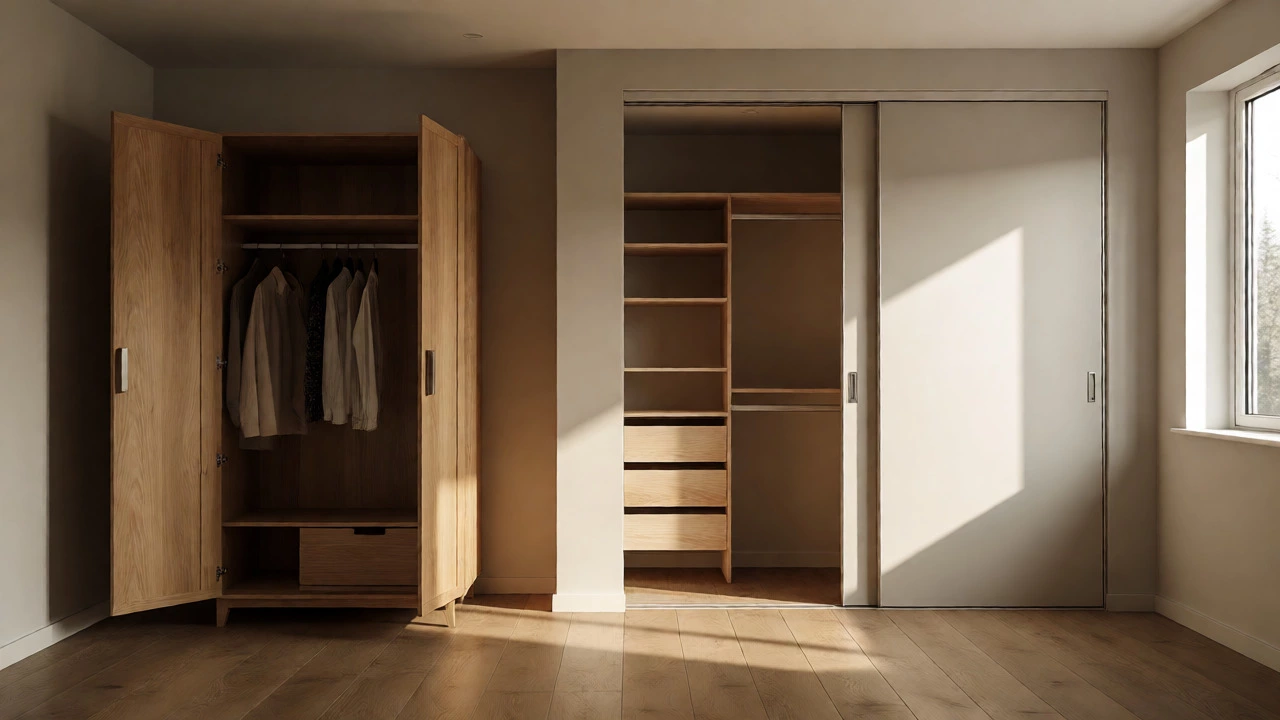
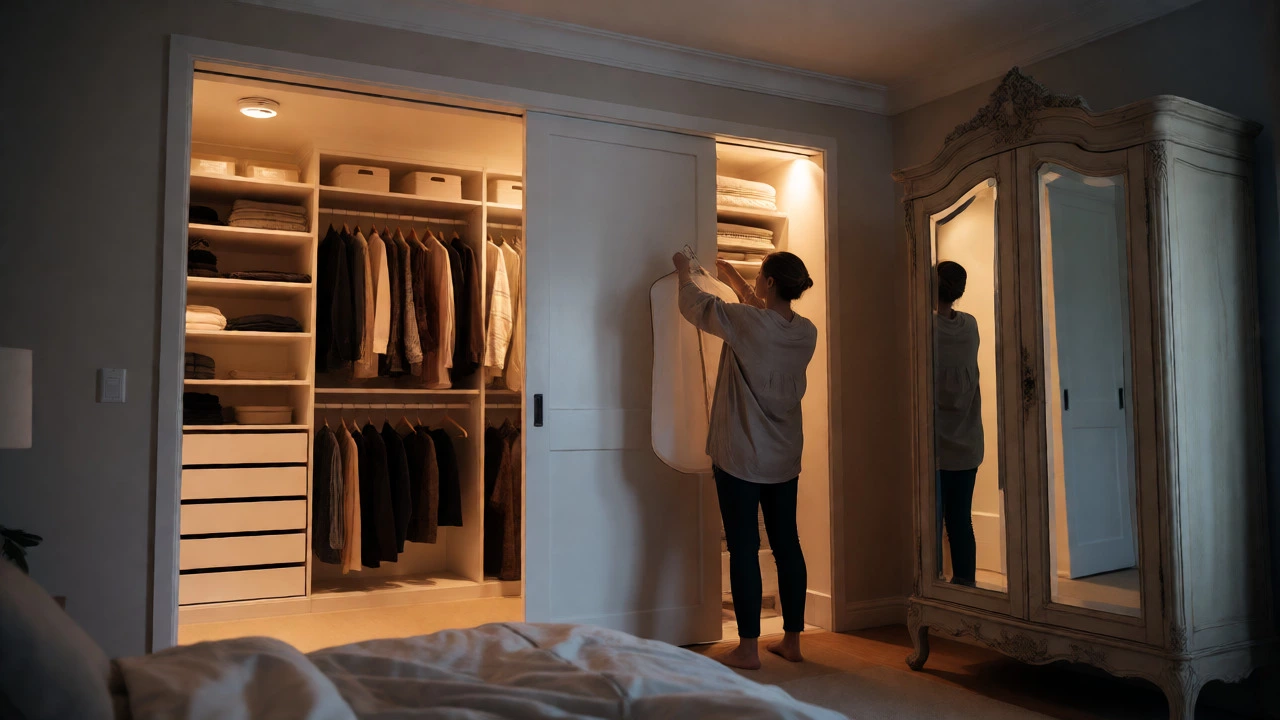
Here is the simplest way to distinguish them: a wardrobe is a freestanding item of furniture, while a closet is typically an architectural feature built into the wall structure. If you can pick it up and move it (even if it’s heavy), it’s a wardrobe. If removing it requires a sledgehammer and some drywall patching, it’s a closet.
This distinction changes everything about how you shop for them. When you buy a wardrobe, you are purchasing a finished product with specific dimensions, materials, and hardware. You own it outright. When you deal with a closet, you are dealing with a cavity in your home’s framework. The "closet" is the hole in the wall; the doors, shelves, and rods inside are accessories you might add later. In many modern apartments, especially in the UK and Europe, what people call a "built-in wardrobe" is technically a closet fitted with custom joinery. But strictly speaking, the term Wardrobe refers to the standalone cabinet designed for storing clothes, usually made of wood, metal, or plastic.
Why does this matter? Because maintenance differs wildly. A wardrobe door hinge breaks? You replace the hinge. A closet frame warps due to dampness behind the plasterboard? That’s a contractor job. Understanding whether you are buying furniture or modifying architecture helps you set realistic expectations for installation time and cost.
Anatomy of a Wardrobe
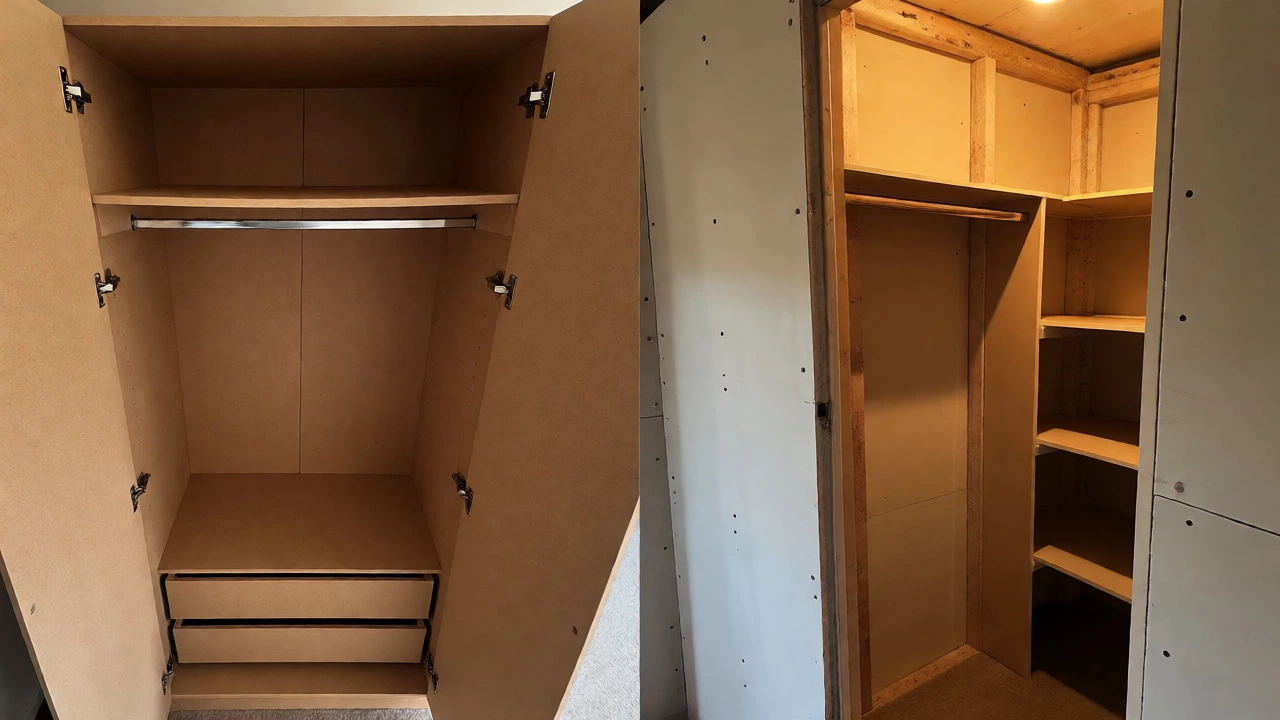
A wardrobe is a self-contained unit. It has its own back panel, side panels, top, and bottom. This means it can be placed anywhere there is floor space. Most wardrobes come with a standard internal configuration: a hanging rail at the top, a shelf above it for folded items, and sometimes drawers at the base. Higher-end models include soft-close mechanisms, integrated lighting, and specialized compartments for ties or jewelry.
Materials vary significantly. Solid wood wardrobes, like those from oak or pine, offer durability and a classic look but come with a hefty price tag and significant weight. MDF (Medium Density Fibreboard) is the most common material for mid-range options. It’s smooth, paintable, and cheaper, but it hates water. If you put a freestanding wardrobe in a damp bathroom or a leaky attic room, MDF will swell and crumble. Metal wardrobes are industrial, durable, and easy to clean, often found in gyms or student housing, but they lack the aesthetic warmth of wood.
Size is another critical factor. Standard wardrobes range from narrow single-door units (about 45-60 cm wide) to massive four-door giants (over 2 meters wide). Height usually caps at around 200-210 cm because that’s what fits through standard doorways and under most ceiling heights. If you need more vertical storage, you’ll likely need a custom-built solution, which starts blurring the line between furniture and joinery.
The Reality of Closets
Closets are recesses in the wall. They don’t have their own structural integrity unless reinforced. In older homes, closets were often converted from chimney breasts or small alcoves. In new builds, they are framed out during construction using timber studs and plasterboard. The key advantage of a closet is customization. Since it’s part of the house, you can tailor the interior exactly to your needs-extra deep shelves for boots, double rails for shirts and trousers, or pull-out valet rods.
However, closets have downsides. They are fixed. You cannot move them when you redecorate. They also tend to collect dust in hard-to-reach corners if not properly sealed. Ventilation is a major issue; poorly ventilated closets can trap moisture, leading to mold on your clothes. Unlike a wardrobe, which stands away from the wall slightly (allowing air circulation behind it), a closet is flush against the exterior wall of the house. If that wall gets cold in winter, condensation forms. This is why many homeowners install dehumidifiers or use breathable garment bags in their closets.
Doors are another point of divergence. Wardrobes usually have hinged doors that swing outward, requiring clearance space in front. Closets often use sliding doors or bi-fold doors to save space. Sliding doors are great for small bedrooms where a swinging door would hit the bed. But sliding tracks can jam with dust and hair, requiring regular cleaning. Bi-folds are tricky to adjust and can pop off their hinges if forced.
Space Planning: Which Fits Your Room?
Let’s talk numbers. Imagine you have a spare bedroom that’s 3 meters by 3 meters. You want to store clothes for two people. A large freestanding wardrobe takes up permanent floor area. Even if it’s only 60 cm deep, it reduces the usable walking space. In a tight room, this can make the space feel cramped. You might find yourself bumping into it every time you walk past.
A closet, conversely, utilizes dead space. It sits within the wall thickness or in a corner that wouldn’t otherwise be used for furniture. This makes closets ideal for small apartments or studio flats. However, converting a wall into a closet requires renovation work. You lose the ability to hang art or mirrors on that wall section. You also commit to a specific location. If you decide to turn that bedroom into a home office in five years, you’re stuck with that closet unless you demolish it.
| Feature | Wardrobe | Closet |
|---|---|---|
| Type | Freestanding Furniture | Built-in Architectural Feature |
| Mobility | High (can be moved) | None (fixed to structure) |
| Installation | Assembly required (DIY or pro) | Construction/Renovation required |
| Cost Factor | Purchase price + delivery | Material + Labor + Finishes |
| Ventilation | Natural airflow behind unit | Often poor; needs active ventilation |
| Customization | Limited to model options | Highly customizable interiors |
Cost Analysis: Buying vs Building
People often assume closets are cheaper because they don’t require buying a big wooden box. That’s rarely true. A decent quality flat-pack wardrobe from a high-street retailer might cost £200-£400. Custom-made sliding doors alone for a closet can cost £500+. Add the cost of framing, plastering, painting, and installing shelving systems, and you’re easily looking at £1,000-£2,000 for a basic fitted closet. Plus, you have to hire tradespeople, which adds labor costs.
Freestanding wardrobes are transparent in pricing. What you see is what you pay. Delivery fees apply, but assembly is often straightforward. If you damage a shelf, you can buy a replacement part. With a closet, if you damage a shelf, you have to cut a new piece of melamine or wood, measure it precisely, and fit it. Mistakes are expensive and messy.
Consider the long-term value too. A high-quality solid wood wardrobe lasts decades. Move houses? Take it with you. It adds value to your new home as a desirable furniture piece. A closet adds value to the property itself, potentially increasing resale appeal, but it doesn’t travel with you. If you rent, you almost certainly want a wardrobe. Landlords rarely allow tenants to build closets, and taking down existing ones is usually prohibited.
Common Misconceptions and Regional Terms
Language plays a huge role here. In American English, "closet" is the default term for any enclosed storage space for clothes, even if it’s a standalone armoire. In British English, the distinction is sharper. We say "wardrobe" for the furniture and "cupboard" or "closet" for built-ins. An "armoire" is a specific type of tall, ornate wardrobe, often antique, with mirrored doors. Don’t confuse an armoire with a generic wardrobe; the former implies decorative craftsmanship, the latter functional storage.
Another myth: "Built-ins always look better." Not necessarily. Cheap particle-board fitted closets can look dated quickly. A well-chosen freestanding wardrobe can anchor a room’s design style, adding character and texture. Conversely, a poorly planned closet with awkward angles can waste space. The key is intentionality. Don’t choose one over the other based on trend; choose based on your lifestyle.
Practical Tips for Decision Making
If you’re renting, buy a wardrobe. Look for modular systems that can be disassembled and reassembled. IKEA-style PAX systems are popular because they offer some customization while remaining freestanding. Just check the depth-standard rooms may not accommodate the 58cm depth plus door swing clearance.
If you own your home and plan to stay for 10+ years, consider a closet. It maximizes square footage. Use slimline sliding doors to save space. Install LED motion-sensor lights inside so you never fumble for dark corners. Add velvet hangers to prevent shoulder bumps on delicate knits.
For hybrid solutions, consider a "walk-in" setup in larger master bedrooms. This is essentially a closet large enough to enter, functioning like a mini-room. It requires significant floor space (at least 2m x 2m) but offers unparalleled organization. Here, the lines blur completely-you’re building walls within a room, creating a dedicated dressing area.
Can I convert a wardrobe into a closet?
Not directly. A wardrobe is furniture; a closet is a structural void. To get a closet effect, you’d need to remove the wardrobe and build a partition wall to create a recess, then finish it with doors and shelving. This is a renovation project, not a simple swap.
Which is better for small bedrooms?
Closets are generally better for small bedrooms because they utilize wall space without protruding into the room. However, if you can’t renovate, choose a narrow-depth wardrobe (around 45-50cm) with sliding doors to minimize footprint.
Do built-in closets increase home value?
Yes, well-designed fitted closets are attractive to buyers, particularly in master bedrooms. They suggest ample storage and premium finishes. Ensure they are neutral in color and functionally sound to maximize appeal.
What is the best material for a freestanding wardrobe?
Solid wood is best for longevity and aesthetics but is expensive. High-density MDF with a laminate finish is the most practical choice for most homes, offering durability and ease of cleaning at a reasonable price.
How do I prevent mold in my closet?
Ensure good ventilation. Leave gaps between clothes and walls. Use silica gel packets or charcoal bags to absorb moisture. In humid climates, consider installing a small extractor fan or keeping the closet door open occasionally to air out.