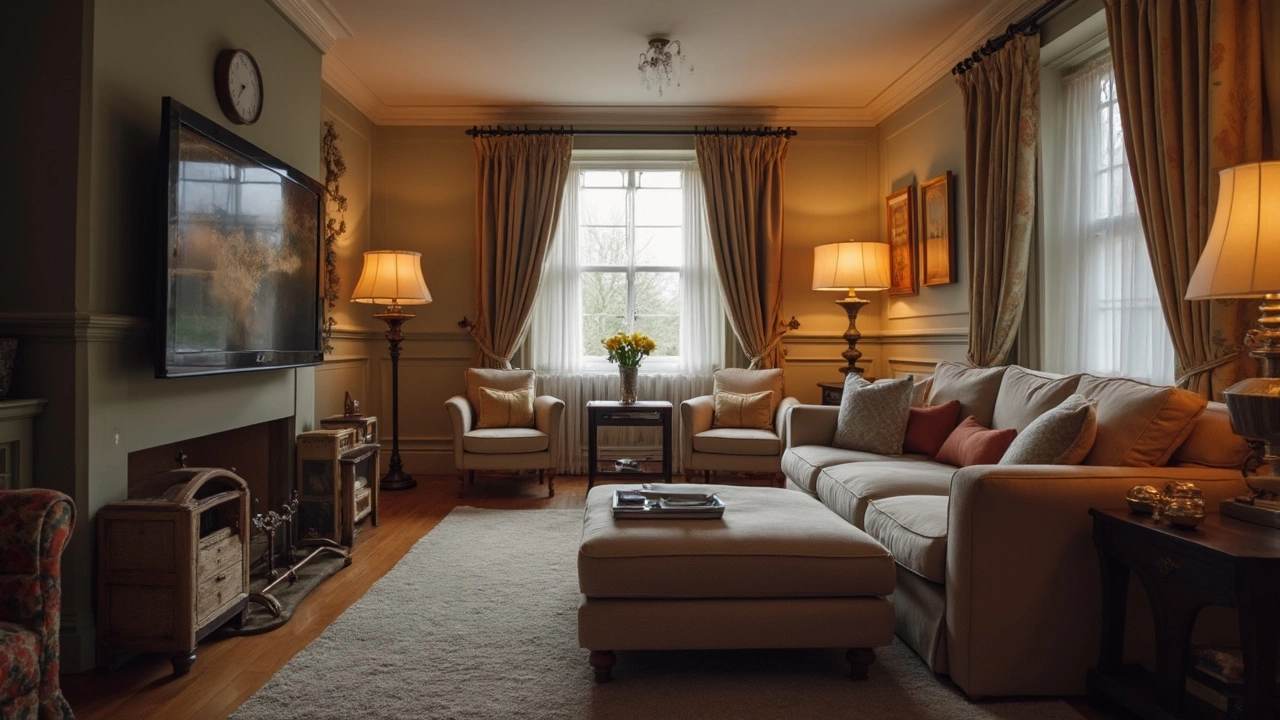
Optimal TV Position: Height, Distance and Layout Tips
Ever wonder why your favourite show looks great on a small screen but feels off on your big TV? It’s not the TV – it’s where you put it. The right TV position makes the picture clearer, reduces neck strain and lets your furniture shine. Below you’ll get simple rules to set the perfect height, figure out the sweet spot for viewing distance, and arrange your room so the TV feels like part of the design, not an after‑thought.
How High Should Your TV Be?
The golden rule is: the center of the screen should sit about eye level when you’re seated. Measure the height of your couch or armchair seat, add the height of the cushion (usually 18‑20 cm), and then place the TV so the middle line matches that mark. For a 55‑inch screen, the center is roughly 68 cm from the bottom, so if your eye level sits at 100 cm, the TV bottom should be around 32 cm high.
If you prefer a wall mount, use a tilting bracket. It lets you lower the angle a bit without moving the whole unit, which is handy when the TV sits higher than eye level. A stand‑up TV works too, but keep the stand low enough so the screen’s middle stays at the same height as a wall‑mounted set. Anything higher forces you to crane your neck and will eventually cause discomfort.
Finding the Right Viewing Distance
Distance matters as much as height. A simple formula: multiply your TV’s diagonal size by 1.5 to 2.5. That means a 55‑inch TV looks best about 2.1 to 3.5 metres away. Sit closer and you’ll see pixel grid, sit farther and the details blur.
Take your room’s shape into account. If the couch is on a rug that pushes it back, adjust the distance accordingly. You can also use the “three‑foot rule”: the viewing line should be roughly three times the height of the screen. For a 65‑inch TV (height about 80 cm), a distance of 2.4 m fits the rule and feels comfortable.
When you know the right distance, arrange your sofa, chairs or bean bags so they line up with the TV’s center. Avoid placing seats too far to the sides—off‑center viewing reduces picture uniformity and can cause eye strain.
Finally, think about furniture and décor. A sleek wall‑mount keeps the floor clear, making the room feel larger. If you love a stand, choose one that matches the style of your other pieces—mid‑century wood, modern metal, or a custom‑made unit from Crafted Furniture Solutions. A well‑chosen stand can double as storage for media devices, keeping cables tidy and the look cohesive.
By setting the TV at eye level, keeping the viewing distance in the ideal range, and pairing the setup with furniture that fits your style, you’ll get a cinematic experience without the aches. Go ahead, test the height with a piece of tape, sit back, and enjoy the picture exactly how the maker intended.