Patio Furniture Pest Risk & Inspection Tool
Assess Your Setup
Risk Assessment Result
Inspection Checklist
Click items to mark as doneSelect your furniture details to generate a personalized pest risk profile and inspection guide.
You’re finally ready for that evening drink on the terrace. You pull up your favorite chair, sit down, and immediately feel something scratchy against your legs. Or worse, you see a movement in the cushion folds. It’s not just dirt; it’s an infestation. The question isn’t really *if* bugs can live in patio furniture-it’s which ones have already moved in.
The short answer is yes. Your garden set is basically a five-star hotel for insects, spiders, and even small rodents if you leave it unattended. Outdoor furniture provides shelter from rain, warmth from stored heat during the day, and plenty of hiding spots in cushions and weave patterns. If you want to keep your seating area bug-free this summer, you need to understand what attracts them and how to kick them out.
Why Insects Choose Your Garden Chairs
Insects don’t pick your patio furniture because they hate you. They pick it because it meets their survival needs perfectly. Think about what a bug wants: protection from predators, moisture control, and temperature stability. A wicker chair or a stack of plastic loungers offers all three.
Moisture is the biggest draw. When rain hits your deck, water pools under tables and inside crevices. This creates a microclimate that stays damp longer than the surrounding grass. Spiders love this humidity. Wasps look for dry, enclosed spaces like hollow metal legs or the underside of wooden benches to build nests. Even ants will trail along the legs of your table looking for sugar spills or crumbs left behind after a barbecue.
Material matters too. Natural fibers like rattan, cane, and untreated wood are organic. To an insect, that means food. Termites and carpenter ants don’t just hide in wood; they eat it or tunnel through it to create galleries. Synthetic materials like resin wicker or powder-coated aluminum are less appealing as food sources, but they still provide excellent shelter.
| Furniture Material | Most Likely Intruders | Risk Level |
|---|---|---|
| Natural Rattan/Wicker | Spiders, Silverfish, Moths | High |
| Untreated Wood | Termites, Carpenter Ants, Beetles | Very High |
| Resin/Synthetic Wicker | Wasps, Hornets, House Spiders | Medium |
| Metal (Aluminum/Iron) | Wasps, Ants, Mosquitoes (breeding) | Low-Medium |
| Fabric Cushions | Bed Bugs, Fleas, Mites | High (if dirty) |
The Usual Suspects: Who Is Living There?
Not all bugs are created equal when it comes to damage and danger. Some are harmless nuisances, while others can destroy your investment or cause medical issues.
Spiders are the most common residents. You’ll find cobwebs in the corners of chair backs and under seat cushions. Most garden spiders are beneficial-they eat mosquitoes and flies. However, dense webs indicate a settled colony. If you have young children who crawl around, these webs can become a tripping hazard or get tangled in hair.
Wasps and Hornets are the real troublemakers. They seek out enclosed spaces for nesting. A hollow tube leg on a metal chair or the space beneath a wooden bench lid is prime real estate for a paper wasp nest. These nests can grow rapidly in June and July. Disturbing one can lead to painful stings. Always check underneath seats before sitting down if you haven’t used the furniture in a few weeks.
Ants often establish trails along furniture legs. While they rarely damage synthetic materials, they can chew through soft woods. More importantly, they track bacteria from the ground onto your dining surface. If you see a line of ants marching up a chair leg, there’s likely a food source nearby-maybe a dropped chip or a sticky soda spill.
Wood-boring beetles and termites are silent killers. If you own solid teak or cedar furniture, you need to inspect it regularly. Look for small holes in the wood grain or sawdust-like frass accumulating at the base. Once termites move in, the structural integrity of the piece degrades from the inside out. By the time you see visible damage, the cost of repair may exceed the value of the furniture.
How to Check for Infestations
You don’t need to be an entomologist to spot a problem. A quick visual inspection takes two minutes and saves you hours of cleaning later. Start by moving the furniture away from walls and fences. Bugs thrive in tight gaps where air doesn’t circulate.
Flip over every cushion. Lift the fabric and look into the seams. Are there tiny black dots? Those could be flea eggs or bed bug fecal matter. Smell the cushion. A musty, sour odor often indicates mold growth, which attracts silverfish and carpet beetles. Run your hand along the underside of tables and chairs. Feel for sticky residue-this is honeydew, excreted by aphids or scale insects that might be feeding on nearby plants and dripping onto your furniture.
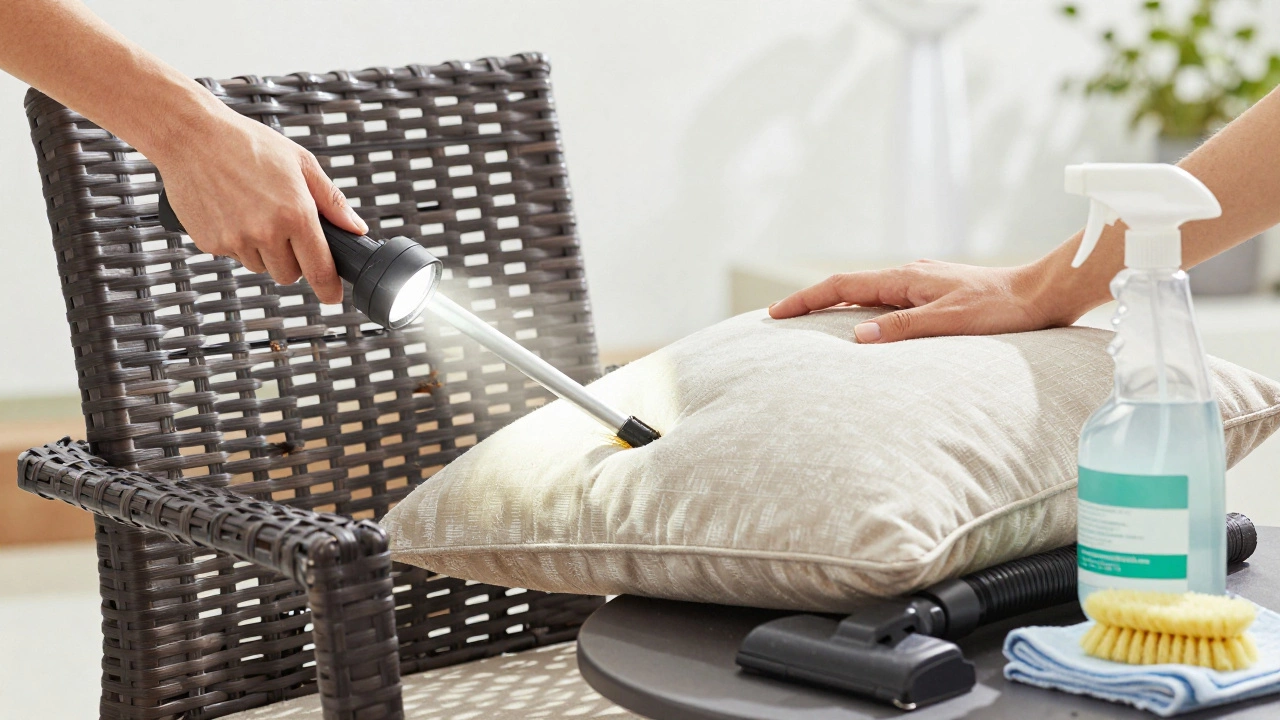
For woven materials like wicker, use a flashlight. Shine it through the weave pattern. Shadows moving inside the structure usually mean spiders or crickets have taken up residence. Tap gently on hollow metal legs. A dull thud might suggest debris buildup, while a buzzing sound confirms a wasp nest. If you hear buzzing, stop tapping and call a professional. Do not attempt to remove an active wasp nest yourself unless you have protective gear and experience.
Cleaning and Removal Strategies
Once you’ve identified the intruders, it’s time to evict them. The method depends on the pest and the material.
For **spiders and general dust**, a simple vacuum works wonders. Use the brush attachment to go deep into crevices. Follow up with a hose-down using warm soapy water. Mix a tablespoon of mild dish soap into a gallon of water. Scrub with a soft-bristle brush, then rinse thoroughly. Let the furniture dry completely in the sun before putting covers back on. Moisture trapped under a cover breeds more problems.
If you’re dealing with **ants**, locate the entry point. Wipe down legs with vinegar solution (50% white vinegar, 50% water). Vinegar disrupts their scent trails, confusing the colony. For persistent infestations, place bait stations near-but not directly on-the furniture. Avoid spraying insecticides directly on surfaces where people will sit or eat, especially if children or pets are involved.
**Wasp nests** require caution. If the nest is small and accessible, you can use a commercial wasp spray designed for long-range application. Wear thick gloves and eye protection. Spray at dawn or dusk when wasps are least active. If the nest is large, hidden, or located in a hard-to-reach spot, hire a pest control expert. It’s cheaper than treating multiple stings.
For **wood-boring insects**, treatment is more complex. Surface cleaning won’t reach larvae inside the timber. You may need borate-based treatments like Bora-Care, which penetrates deep into the wood and kills termites and beetles on contact. Apply according to manufacturer instructions, usually by brushing or spraying onto bare wood. Seal the wood afterward with a marine-grade varnish to prevent future moisture absorption.
Prevention: Keeping Them Out Long-Term
Cleaning is reactive; prevention is proactive. The goal is to make your patio furniture an undesirable habitat.
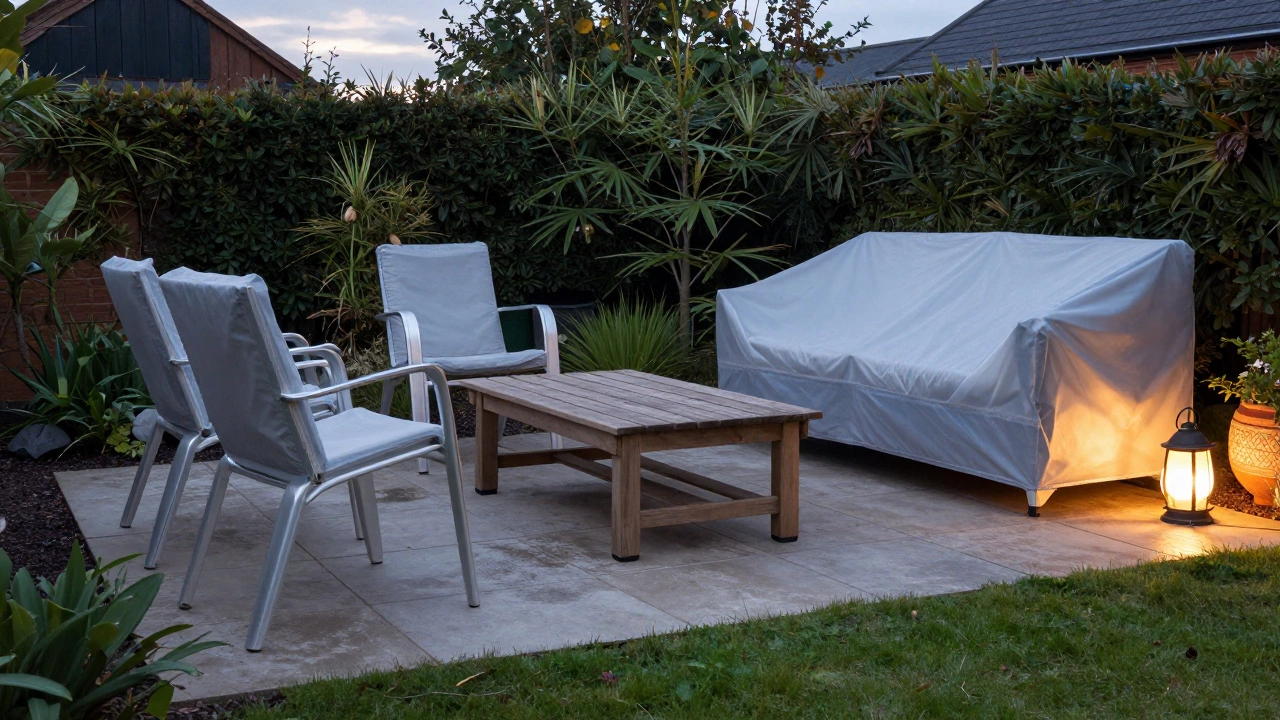
Use fitted covers. Not just any tarp, but breathable, waterproof covers designed for specific furniture shapes. Tarps trap condensation underneath, creating a swampy environment. Breathable fabric allows airflow while keeping rain out. Secure covers with straps or weights so wind doesn’t flap them open, letting bugs sneak in.
Elevate your furniture. Place rubber feet or pavers under heavy pieces. This lifts them off wet soil or damp decking, reducing moisture exposure. It also makes sweeping underneath easier, removing leaf litter that attracts ants and slugs.
Store cushions indoors. Fabric absorbs humidity and retains odors. Even high-quality outdoor fabric will degrade faster if left exposed. When not in use, bring cushions inside or store them in a sealed plastic bin with silica gel packets to absorb moisture. This prevents mold, mildew, and the insects that feed on them.
Maintain surrounding vegetation. Trim bushes and trees away from your seating area. Overhanging branches drop leaves and pollen, which accumulate in furniture crevices. Dense shrubs next to your patio provide a bridge for ants and spiders to migrate onto your chairs. Keep a clear perimeter of at least two feet around your furniture.
Regular inspections. Make it a habit to check your furniture once a month during peak season (May through September). Early detection prevents minor annoyances from becoming major headaches. A five-minute sweep now saves you from discovering a wasp nest right before a dinner party.
When to Call a Professional
There are limits to DIY pest management. If you suspect termites, do not delay. Termite damage compromises safety. A weakened chair leg can collapse under weight. Contact a licensed exterminator who can perform thermal imaging or moisture testing to assess the extent of infestation.
Similarly, if you have a severe allergy to bee or wasp venom, treat any potential nest as a high-risk situation. Professionals have protective suits and industrial-strength sprays that ensure complete elimination without risking your health.
If your furniture is antique or made of rare hardwoods, consult a restoration specialist before applying chemicals. Some treatments can discolor or weaken historic wood. Preservation requires specialized knowledge that balances pest control with material integrity.
Do bed bugs live in outdoor furniture?
Yes, bed bugs can survive in outdoor furniture, especially in cushions and fabric seams. They hitch rides from indoors or other infested areas. If you find bed bugs in your patio set, wash all fabrics in hot water (at least 60°C) and dry on high heat. Inspect indoor bedding simultaneously, as outdoor presence often signals an indoor outbreak.
How do I get rid of spider webs on my patio chairs?
Vacuum webs first to remove eggs and spiders. Then wipe surfaces with a mixture of water and peppermint oil (10 drops per cup). Peppermint repels spiders naturally. For stubborn cases, use a diluted bleach solution (1 part bleach to 10 parts water), but rinse thoroughly afterward to avoid damaging finishes.
Can wasps nest in artificial wicker furniture?
Yes. Although synthetic wicker isn’t organic, the hollow spaces between strands and the frame underneath offer perfect shelter. Wasps are attracted to quiet, protected areas. Check the base and underside of resin wicker pieces regularly, especially in late spring and early summer.
Is it safe to use insecticide on patio furniture?
Only if labeled for outdoor use and applied correctly. Never spray chemicals on surfaces where food is served or where children play until fully dried and rinsed (if recommended). Prefer natural repellents like citrus oils or diatomaceous earth for non-toxic control. Always follow label instructions regarding ventilation and re-entry times.
Should I store my patio furniture indoors during winter?
Ideally, yes. Indoor storage protects against snow, ice, and freezing temperatures that crack materials. If indoor space is limited, use high-quality breathable covers and elevate furniture off the ground. Rotate pieces monthly to ensure even drying and prevent mold buildup in shaded areas.