Plastic Storage Safety Checker
Is Your Container Safe?
Select the plastic type and use case to get safety recommendations based on article research
Safety Assessment
Select options and click "Check Safety" to see results.
Plastic containers are everywhere. You see them in your kitchen, garage, basement, even in your kid’s toy box. They’re cheap, lightweight, and stackable - perfect for storing leftovers, tools, seasonal clothes, or craft supplies. But if you’ve ever wondered whether it’s really safe to store things in plastic containers, especially for long-term use, you’re not alone. The truth? It depends. Not all plastics are created equal, and what works for dry cereal might not be right for hot soup or baby formula.
Not All Plastics Are the Same
There are seven main types of plastic, each with a recycling symbol on the bottom. These numbers tell you what the plastic is made of and how it behaves over time. If you’ve ever stared at that little triangle with a number inside and thought, "What does this even mean?" - here’s the quick version:
- #1 (PET) - Used for water bottles and soda containers. Not meant for reuse. Can leach antimony and phthalates if heated or scratched.
- #2 (HDPE) - Milk jugs, detergent bottles. One of the safest. Resistant to chemicals and doesn’t leach easily. Great for dry goods and non-food storage.
- #3 (PVC) - Pipes, shower curtains. Contains chlorine and can release toxic fumes when heated. Avoid for food or kids’ items.
- #4 (LDPE) - Grocery bags, squeeze bottles. Flexible and safe, but not rigid enough for heavy storage.
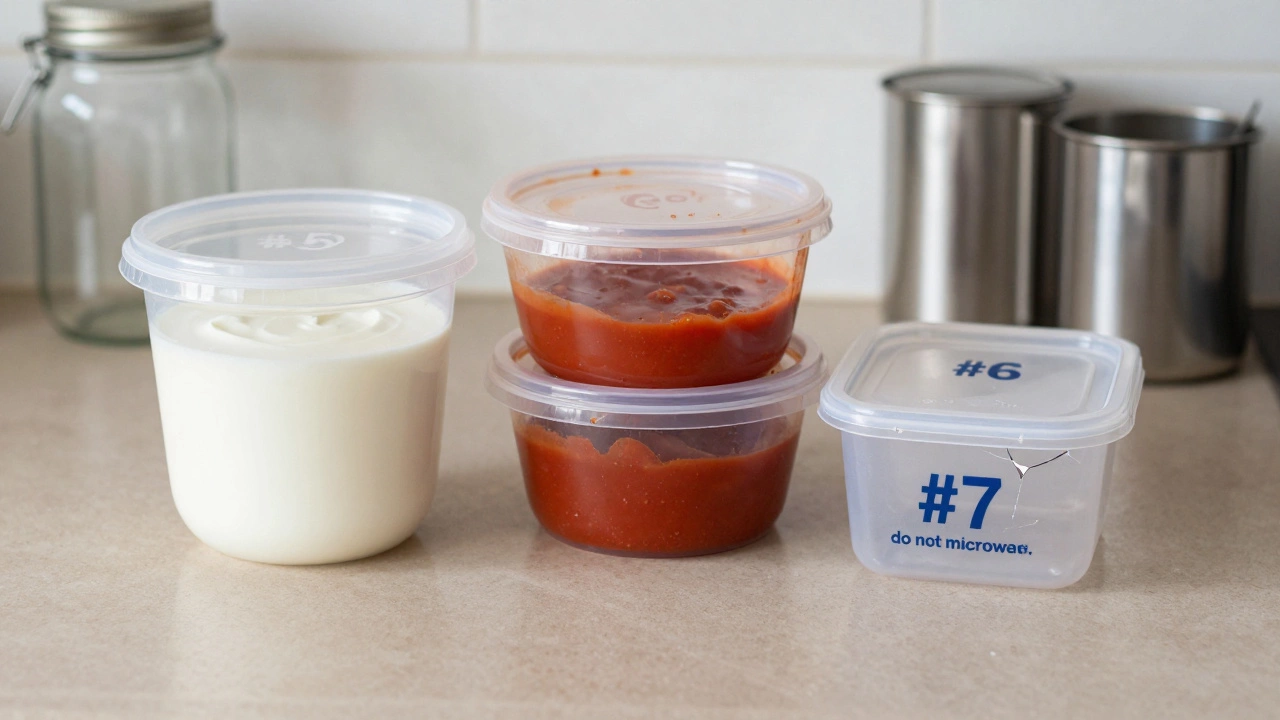
- #5 (PP) - Yogurt cups, Tupperware. Heat-resistant, BPA-free, and dishwasher-safe. The best choice for food storage.
- #6 (PS) - Foam takeout containers, plastic cutlery. Brittle and can leach styrene, a possible carcinogen. Never microwave.
- #7 (Other) - Includes polycarbonate, which often contains BPA. Avoid unless labeled "BPA-free." Some #7 plastics are safe (like PLA plant-based), but always check.
If you’re storing food, look for containers labeled #5 (polypropylene) or #2 (HDPE). These are the most stable under normal use. Skip #3, #6, and unmarked #7 plastics - especially for anything hot or acidic.
Food Storage: What Really Happens Over Time?
You’ve probably heard that plastic containers can leach chemicals into food. That’s true - but only under certain conditions. The biggest risk comes from heat, wear and tear, and acidic or oily foods.
Studies from the National Institute of Environmental Health Sciences show that when plastic containers are exposed to temperatures above 70°C (158°F), chemicals like bisphenol A (BPA) and phthalates can migrate into food. This is why microwaving leftovers in a takeout container is a bad idea - even if it says "microwave-safe." That label usually just means the plastic won’t melt. It doesn’t mean it won’t release toxins.
Also, acidic foods like tomato sauce, citrus, or vinegar can break down plastic over time. Oily foods like salad dressings or peanut butter can cause plastic to become cloudy and brittle. If your container looks cracked, cloudy, or smells funny after washing, toss it. That’s not just a hygiene issue - it’s a chemical exposure risk.
For long-term food storage, glass or stainless steel is still the gold standard. But if you must use plastic, stick to rigid #5 containers. Keep them out of the microwave, don’t use them for hot liquids, and replace them every 1-2 years.
Non-Food Storage: Is Plastic Safe for Other Things?
When you’re storing clothes, tools, or holiday decorations, the risks change. No food means no chemical leaching into meals. But plastic still has downsides.
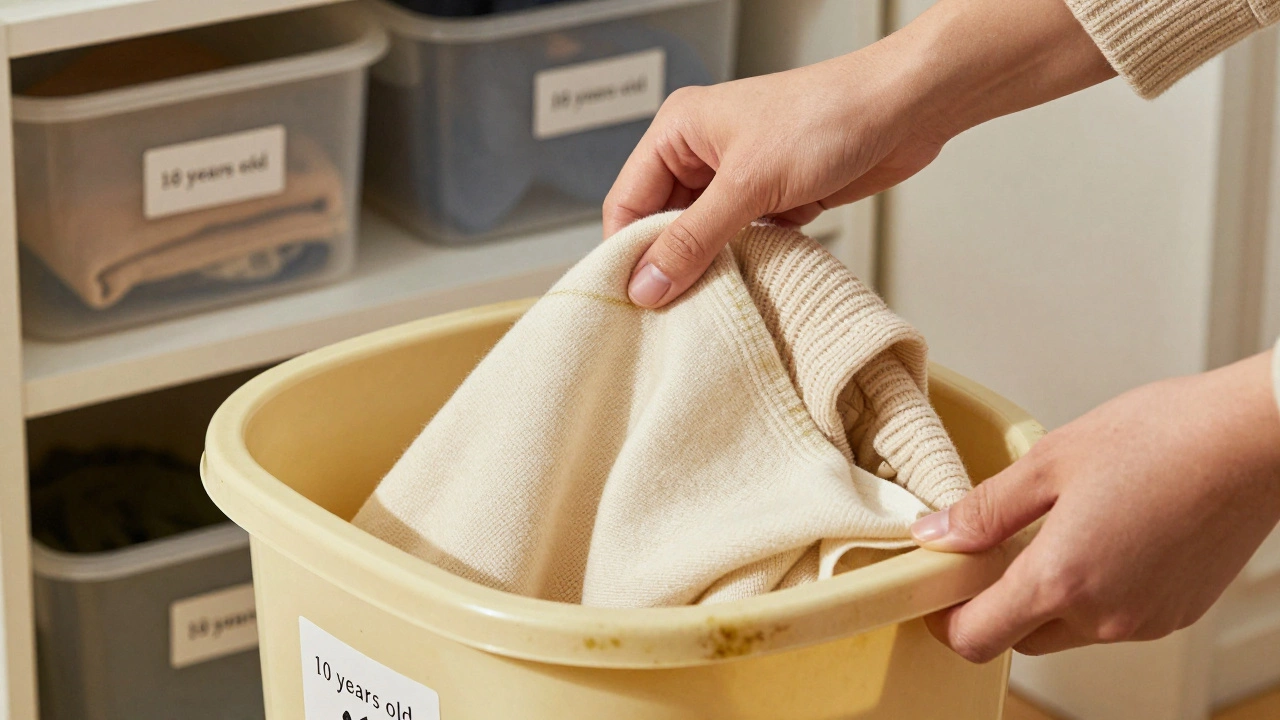
Plastic containers can trap moisture. If you store wool sweaters or leather shoes in a sealed plastic bin, you’re inviting mold, mildew, or insect damage. Fabric experts recommend breathable cotton storage bags for seasonal clothing. If you use plastic, leave a small vent or add silica gel packs to absorb humidity.
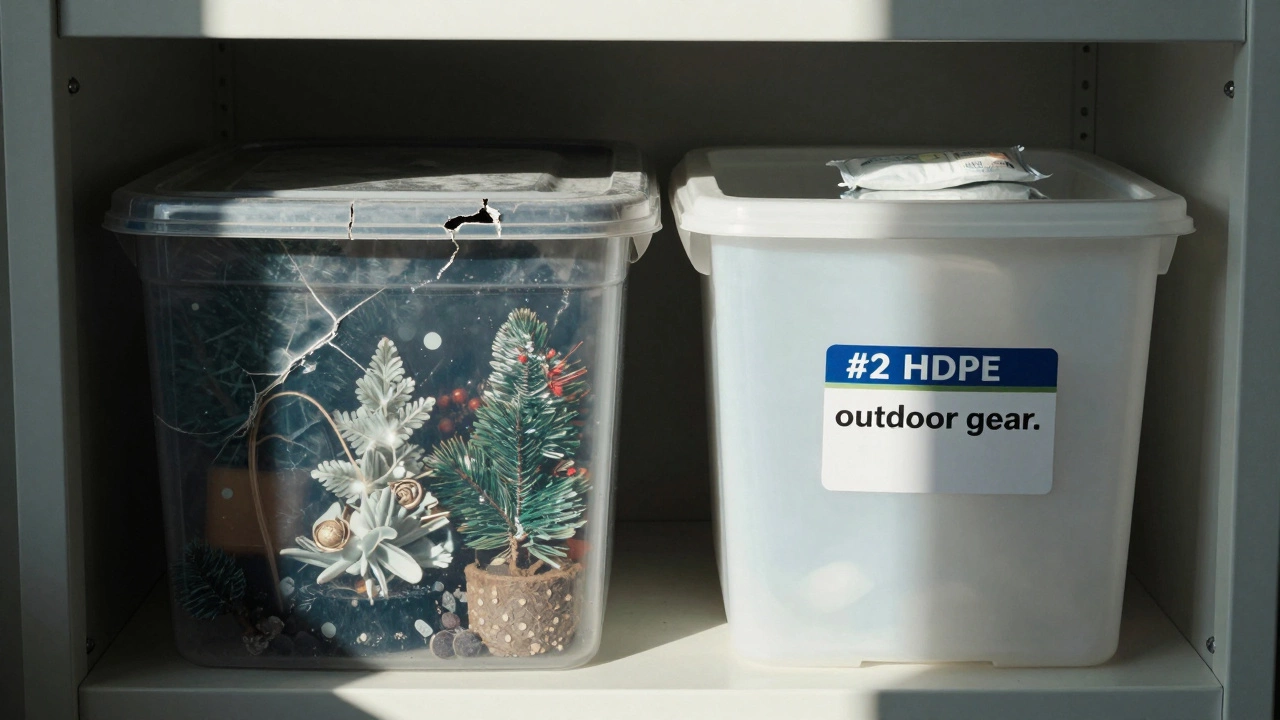
Also, UV light from windows can degrade plastic over time. If you store bins in a garage or attic, the sun will make them brittle. After a few years, they crack and break - leaving your stuff exposed. For long-term storage, use opaque, UV-resistant bins. Look for ones labeled "indoor/outdoor" or "UV-stabilized."
And don’t forget about odors. Plastic can absorb smells. If you store strong-smelling items like onions, cleaning supplies, or old books in plastic, the odor sticks. It can transfer to other things. That’s why some people keep stored items in cardboard boxes - they’re breathable and don’t hold smells.
Environmental and Health Trade-Offs
Plastic containers last a long time - which is good for reuse, but bad for the planet. Most plastic storage bins aren’t recyclable in curbside programs. They’re made from mixed plastics or contain additives that make recycling difficult. Even if they’re labeled "recyclable," few facilities actually take them.
According to the EPA, only 9% of all plastic waste gets recycled in the U.S. The rest ends up in landfills, incinerators, or the environment. If you’re using plastic containers, make them last. Don’t upgrade just because a new design came out. Reuse them until they break. When they do, check if your local recycling center accepts rigid plastics. Some do - but you’ll need to clean them thoroughly first.
On the health side, newer plastic containers made after 2012 are mostly BPA-free. But BPA replacements like BPS and BPF are showing up in studies as potentially just as harmful. Regulatory agencies haven’t caught up yet. So even if a container says "BPA-free," it doesn’t mean it’s completely safe. Stick to trusted brands like LocknLock, Rubbermaid, or IKEA’s VARIERA line - they test for chemical leaching.
What to Use Instead?
If you’re tired of guessing whether your plastic is safe, here are simple swaps:
- For food: Glass jars with lids (like Mason jars) or stainless steel containers.
- For clothes: Cotton storage bags or wooden trunks.
- For tools: Metal toolboxes or heavy-duty canvas bins.
- For documents: Acid-free cardboard boxes.
These alternatives cost more upfront, but they last decades. No clouding, no cracks, no chemicals. And they’re easier to recycle or compost at end-of-life.
When Plastic Is Still the Best Choice
Don’t throw out all plastic containers just yet. For certain uses, they’re still the most practical option. Here’s where plastic wins:
- Storing dry pantry goods like rice, pasta, or cereal - especially in #2 or #5 containers.
- Keeping kids’ toys organized - lightweight, stackable, and easy to clean.
- Travel storage - you can’t carry a glass jar in your suitcase.
- Emergency kits - plastic bins are durable and waterproof.
The key is matching the plastic type to the job. Use #5 for food. Use thick, UV-resistant #2 for outdoor gear. Avoid thin, flimsy plastics for anything important.
How to Make Plastic Containers Last Longer
If you’re keeping your plastic bins, here’s how to keep them safe:
- Wash them by hand with mild soap - avoid harsh scrubbers or dishwashers unless labeled safe.
- Don’t store hot food. Let it cool first.
- Label containers with contents and date. This helps you rotate old ones out.
- Store them away from sunlight and heat sources.
- Check for cracks, cloudiness, or strange smells every 6 months.
- Replace containers that show signs of wear - don’t wait until they break.
Plastic isn’t evil. It’s a tool. Like any tool, it has limits. Respect those limits, and you’ll avoid health risks and wasted money.
Bottom Line
Yes, it’s OK to store things in plastic containers - if you choose the right kind and use them correctly. For food, stick to #5 (polypropylene) and avoid heat. For non-food items, use sturdy, UV-resistant bins and keep them dry. Replace worn-out containers. And when possible, switch to glass or metal for long-term storage.
Plastic won’t disappear. But your health and your stuff’s longevity should come first. Make smart choices, and plastic can still be part of your storage system - without the hidden costs.
Can I microwave food in plastic containers?
Only if the container is labeled "microwave-safe" and made from #5 polypropylene. Even then, it’s safer to transfer food to a glass dish. Microwaving plastic increases the risk of chemical leaching, especially with fatty or acidic foods. Don’t use takeout containers, yogurt cups, or old Tupperware in the microwave.
Are BPA-free plastic containers completely safe?
Not necessarily. BPA-free plastics often use substitutes like BPS or BPF, which studies suggest may have similar hormone-disrupting effects. The FDA considers current levels safe, but independent research shows potential risks with long-term exposure. If you’re concerned, use glass or stainless steel instead.
How long do plastic storage containers last?
Food containers should be replaced every 1-2 years due to wear and chemical exposure. Non-food containers can last 5-10 years if kept out of sunlight and not overloaded. Look for cracks, cloudiness, or odor retention - these are signs it’s time to replace them.
Can I store wet items in plastic containers?
Not without risk. Moisture trapped in sealed plastic can cause mold, mildew, or rot - especially with fabrics, paper, or wood. Use breathable storage for damp items, or add silica gel packs. If you must use plastic, leave the lid slightly open or drill small ventilation holes.
Is it better to store clothes in plastic or cardboard?
Cardboard is better for long-term clothing storage because it allows airflow and doesn’t trap moisture. Plastic bins are fine for short-term or moving, but if you’re storing wool, silk, or leather for months, use cotton bags. Plastic can cause yellowing, odor buildup, and attract pests.