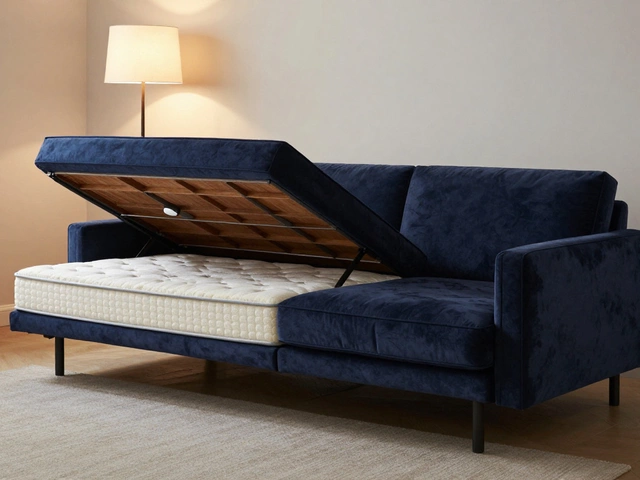
When you’re shopping for a new sofa, you’ll hear the same question over and over: firm or soft? It sounds simple, but the answer isn’t just about personal preference-it’s about how your body moves, how long you sit, and even how often you clean the couch. Most people think it’s a matter of taste, but the truth is, the right cushion firmness can change how you feel every day.
What Actually Makes a Sofa Firm or Soft?
The difference isn’t just about how much padding you feel. It’s about the layers underneath. A firm sofa usually has high-density foam-around 2.5 pounds per cubic foot or more-paired with a tight, supportive spring system. That means when you sit down, the couch doesn’t collapse under you. It holds your shape, giving your spine a stable base.
A soft sofa, on the other hand, uses lower-density foam-often under 1.8 pounds per cubic foot-along with feather or down blends. These materials compress easily, letting you sink in. You’ll notice the difference the moment you sit: one feels like you’re being held, the other like you’re being wrapped.
But here’s what most salespeople won’t tell you: a sofa that’s too soft doesn’t last. After six months, the foam flattens, the feathers clump, and what felt cozy turns into a slouchy mess. A firm sofa might feel stiff at first, but it keeps its shape for years.
Who Should Choose a Firm Sofa?
If you’re over 50, have lower back pain, or sit for long periods-whether working from home, reading, or watching TV-a firm sofa is the smarter pick. Why? Because your body needs support, not just comfort. A 2023 study from the Journal of Ergonomics found that people who sat on firm sofas for more than two hours a day reported 40% less lower back discomfort after three months than those on soft ones.
Also, if you have kids or pets, firm sofas are easier to clean. Spills don’t soak deep into the cushion. Pet hair doesn’t get trapped in loose stuffing. And when you need to move the sofa, it doesn’t sag unevenly from uneven weight distribution.
Even if you like to lounge, a firm sofa with a slightly deeper seat lets you lean back without losing support. You can still stretch out-just not sink in.
Who Should Go for a Soft Sofa?
Soft sofas aren’t bad-they’re just better for specific uses. If you’re under 30, have no back issues, and use your sofa mostly for napping, cuddling, or short TV sessions, then a soft cushion can feel amazing. The give in the foam makes it easy to curl up, and the plush feel creates a cozy, inviting vibe.
Soft sofas also work well in guest rooms or media rooms where people don’t sit for hours. They’re great for small spaces because they look lighter and more relaxed. And if you love the feel of sinking into a cloud, a high-quality down-blend sofa (with a removable, washable cover) can be worth the investment.
But beware: cheap soft sofas are a trap. Many use low-density foam that turns to mush in under a year. If you go soft, make sure the foam is at least 2.0 pounds per cubic foot and the frame is solid hardwood-not particleboard.

The Middle Ground: Medium Firmness
Most people don’t need to pick between extreme firm or extreme soft. The sweet spot is medium firm. That’s a foam density between 2.0 and 2.4 pounds per cubic foot, with a thin layer of fiber or down on top for softness. It’s the most common choice in modern sofas because it balances support and comfort.
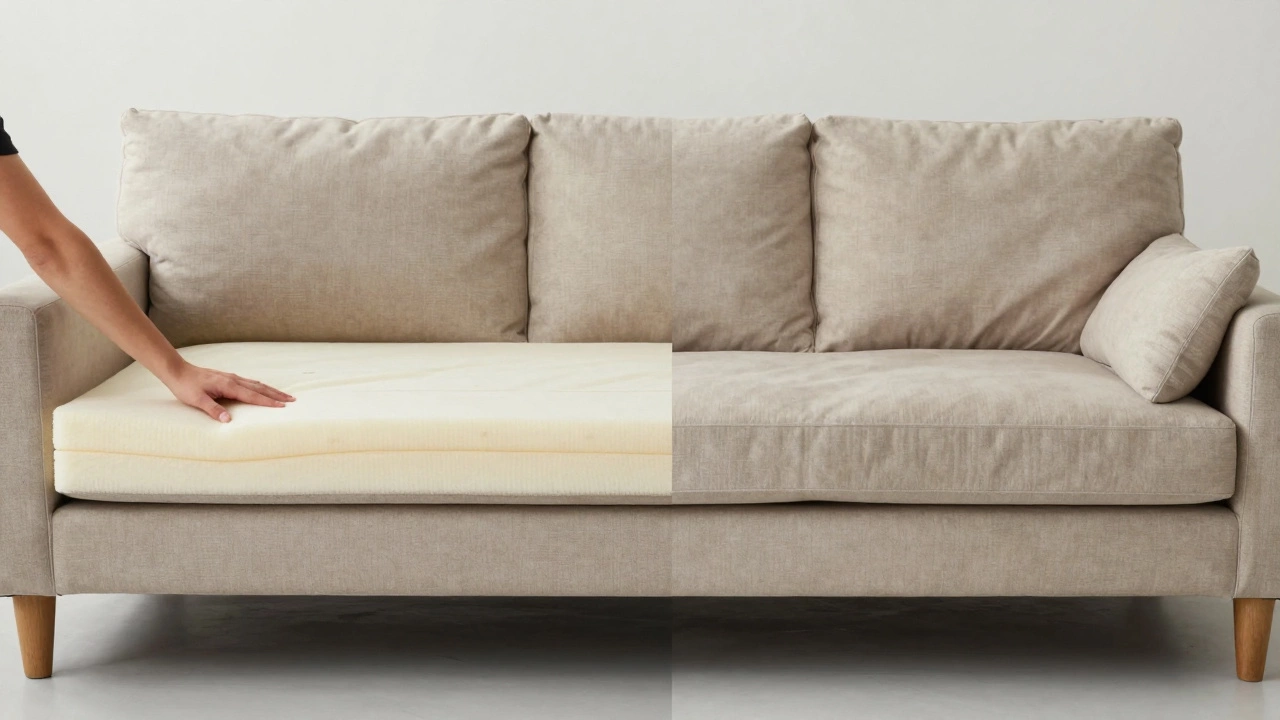
Here’s how to test it: sit down and try to press your hand into the cushion. If you can push down more than 2 inches without hitting the frame, it’s too soft. If you can’t press down at all, it’s too firm. The ideal gives you about 1.5 inches of give.
Also, stand up and look at the cushion. If it springs back quickly, the foam is still strong. If it stays dented, it’s already starting to break down.
What About Cushion Types?
Not all firm or soft sofas are made the same. Here’s what to look for:
- High-resiliency foam - Lasts 10+ years, holds shape, good for daily use
- Down-blend cushions - Soft, luxurious, but need fluffing. Best for occasional use
- Spring-core with foam wrap - Firm support with a soft top layer. Great compromise
- Memory foam - Too slow to rebound. Can feel sticky and trap heat. Avoid for daily seating
Most high-end sofas now use a mix: a firm foam base with a thin layer of fiber or down on top. That’s why a $1,200 sofa can feel softer than a $600 one-it’s not just padding, it’s engineering.
Real-Life Examples
Take Sarah, 42, who works from home. She bought a soft sectional because it looked inviting. After three months, she had constant lower back pain. She switched to a firm sofa with a 2.4 lb foam core and noticed the difference in two weeks. She now sits for six hours a day without discomfort.
On the other end, Jake, 26, uses his sofa only on weekends. He chose a deep, down-filled couch because he loves reading with a blanket. He doesn’t sit for long, and he fluffs the cushions every week. His sofa still looks new after two years.
The difference isn’t about price-it’s about matching the sofa to how you live.
How to Test a Sofa Before You Buy
You can’t tell from a photo. You need to sit on it. Here’s how:
- Sit in the sofa as you normally would-don’t just test it like you’re in a showroom.
- Lean back. Does your lower back feel supported? Or does it curve unnaturally?
- Stand up. Does the cushion spring back quickly?
- Press your hand into the seat. How deep does it go? Use the 1.5-inch rule.
- Ask for the foam density. If they don’t know, it’s probably low quality.
And don’t forget: test it at home. Many stores offer trial periods. If you can take it home for 14 days, do it. Your body will tell you what it really needs.
Final Thought: It’s Not About Comfort Alone
Soft sofas feel good in the moment. Firm sofas feel good over time. If you’re looking for a sofa that lasts, supports your body, and doesn’t turn into a pile of fluff in a year, go firm. If you want a cozy retreat for occasional lounging, soft works.
But if you’re unsure, choose medium firm. It’s the most balanced choice for most people. And remember: a sofa isn’t just furniture. It’s where you rest, relax, and recharge. Make sure it’s built for how you actually live-not just how you imagine you’ll live.