Furniture Mold Risk Calculator
Answer the questions below to gauge how likely your stored furniture is to grow mold, then follow the tailored tips to lower your risk.
- Your personalized tips will appear here.
Imagine opening a storage unit after six months only to find your favorite armchair smelling like wet socks and covered in fuzzy white spots. It’s a nightmare scenario that costs thousands of pounds in replacement fees. The good news? furniture mold prevention is entirely within your control if you handle the environment correctly before the spores even get a chance to settle.
Mold doesn’t just appear out of thin air; it thrives on three specific ingredients: moisture, organic material (like wood or fabric), and warmth. When you move furniture into a non-climate-controlled space, you are essentially handing over two of those ingredients for free. Your job is to eliminate the third one-moisture-and keep the temperature stable enough to stop condensation from forming on cold surfaces.
Understanding the Enemy: Why Storage Units Become Mold Factories
Most people assume that if they put a plastic sheet over their sofa, they are safe. They aren’t. Plastic sheets create a microclimate. If there is any residual moisture inside the furniture or in the air of the storage unit, that plastic traps it against the fabric or wood. This trapped humidity creates a perfect incubator for Aspergillus and Penicillium, two of the most common fungi found in UK homes and storage facilities.
In the UK, where relative humidity often hovers between 70% and 80% during autumn and winter, this risk is amplified. Wood is hygroscopic, meaning it absorbs and releases moisture based on the surrounding air. If your oak table was stored in a damp basement, it likely holds more water than you think. When that warm, moist wood meets a cooler wall in a storage unit, condensation forms directly on the surface. That is where the mold starts.
Preparation Phase: Cleaning Before You Store
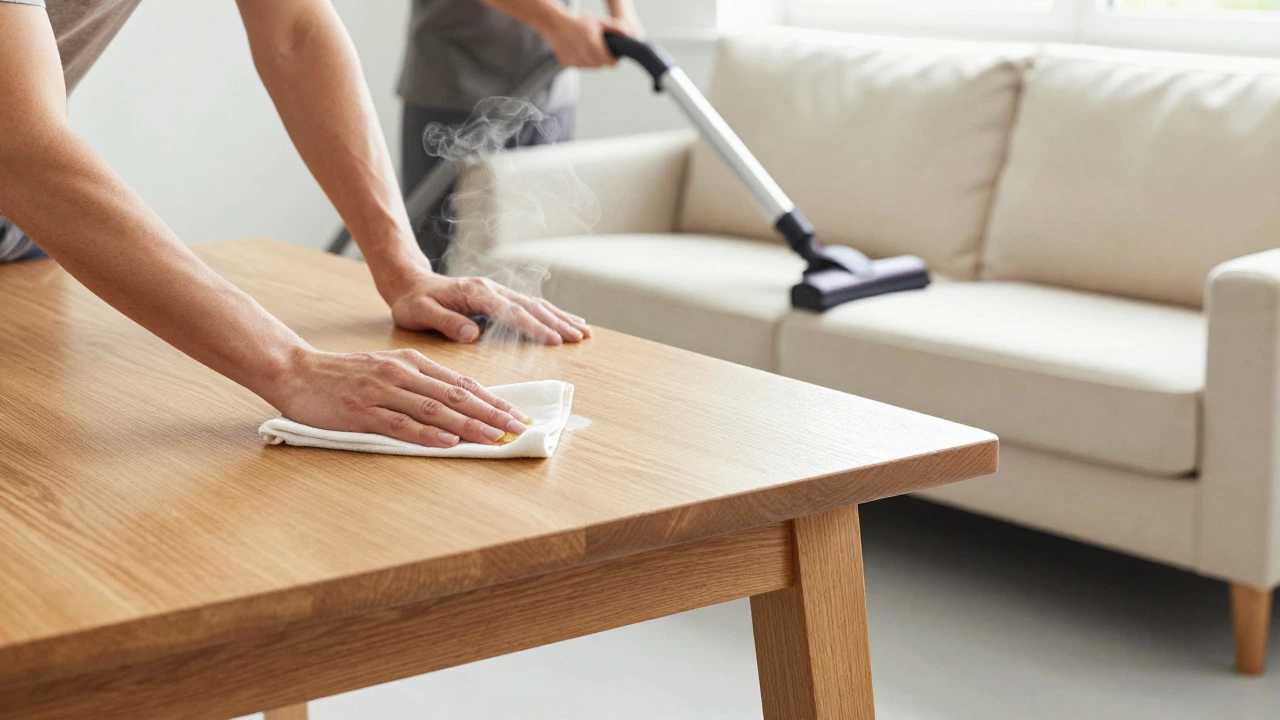
You cannot protect dirty furniture. Spores love dirt because it provides nutrients. Before anything goes into the unit, every piece must be thoroughly cleaned.
- Deep clean fabrics: Use a vacuum with an upholstery attachment to remove dust mites and debris. For stains, use a mild detergent solution. Ensure the fabric is bone dry. If it feels slightly cool to the touch, it still has moisture in it.
- Wipe down hard surfaces: Use a mixture of water and vinegar (1:1 ratio) for wood and metal. Vinegar is a natural fungicide that kills existing spores without damaging finishes. Avoid harsh chemicals that might strip varnish.
- Check hidden areas: Lift cushions, check under legs, and inspect drawer bottoms. These are the dark, stagnant zones where mold loves to hide.
If you have leather furniture, condition it. Dry leather cracks, and those cracks become entry points for moisture later on. A good leather conditioner keeps the pores sealed and flexible.
Choosing the Right Storage Environment
Not all storage units are created equal. If you have the budget, a climate-controlled unit is the gold standard. These units maintain temperatures between 15°C and 20°C and keep humidity below 50%. This stability prevents the daily expansion and contraction cycles that stress wood joints.
If you are using a standard, unheated unit, you need to manage the variables yourself. Look for a unit that is elevated off the ground. Concrete floors radiate cold and draw up moisture through capillary action. Placing your furniture directly on a concrete floor guarantees a damp bottom layer.
| Condition Type | Humidity Control | Risk Level | Best For |
|---|---|---|---|
| Climate-Controlled Unit | Active dehumidification (40-50%) | Low | Antiques, high-end electronics, upholstered pieces |
| Standard Indoor Unit | Passive ventilation only | Medium | Solid wood, metal frames, short-term storage |
| Outdoor Shed/Garage | No control, high fluctuation | High | Disposables, heavily sealed items only |
Strategic Placement and Airflow
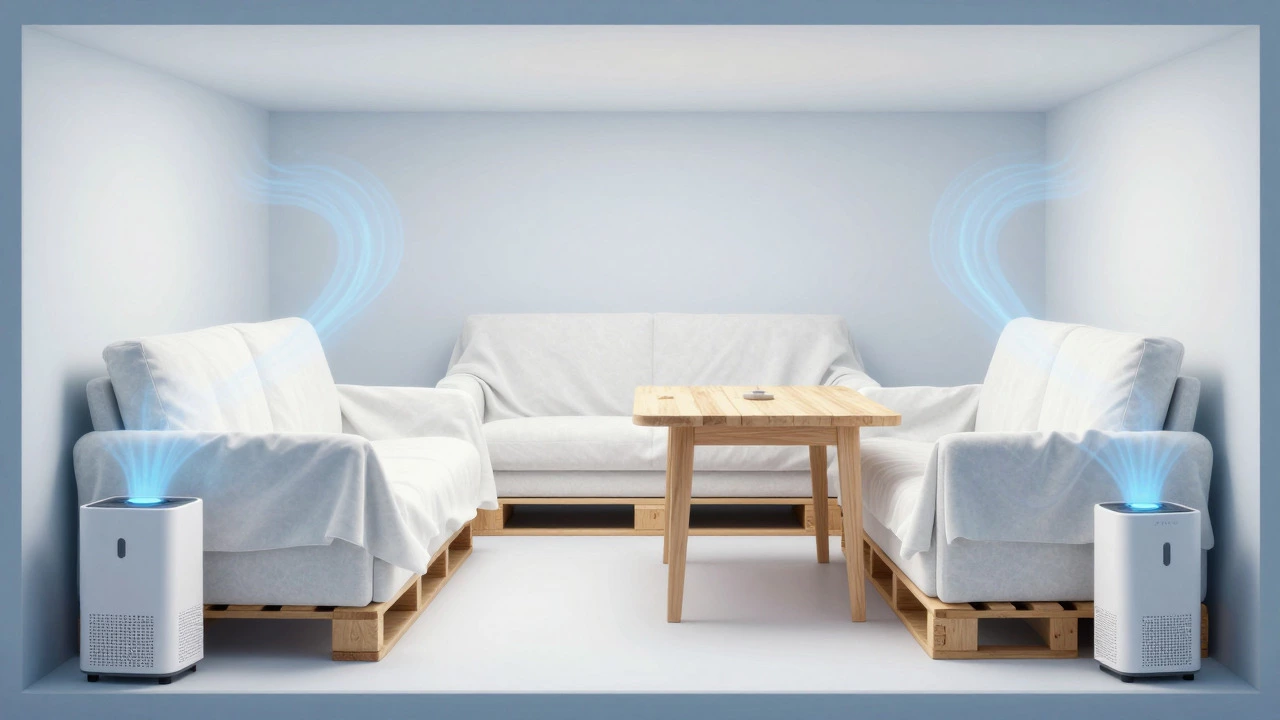
Airflow is your best friend. Stagnant air allows moisture to accumulate. When arranging your furniture, leave at least 6 inches (15 cm) of space between each piece and the walls. Do not stack items tightly. If you have multiple chairs, stagger them so air can circulate around the backrests and seats.
Elevate everything. Use pallets, shelving units, or sturdy blocks to lift furniture at least 6 inches off the floor. This breaks the connection with the cold, damp concrete and allows air to flow underneath the baseboards of tables and cabinets.
Consider the orientation. If possible, store wooden items vertically rather than horizontally if they are prone to warping. However, for large sofas, horizontal is fine as long as they are on a raised platform. Just ensure the legs are protected with felt pads to prevent scuffing, but do not let the legs touch the floor directly.
Moisture Management Tools
You need active tools to fight passive humidity. Relying on "fresh air" from a small vent is rarely enough in a sealed unit.
- Dehumidifiers: A compact electric dehumidifier is the most effective tool. Run it continuously if power is available. Aim for a relative humidity reading of 45-50%. If you don't have power, consider silica gel packets. Place large bags of industrial-grade silica gel near the furniture. They absorb moisture passively but need regular regeneration (drying out in an oven).
- Ventilation Fans: If the unit has a door gap, a small battery-operated fan can help circulate air. This prevents pockets of stale, humid air from settling in corners.
- Desiccants vs. Chemicals: Avoid using strong chemical air fresheners. They mask the smell of early mold growth, giving you a false sense of security. Stick to neutral, odorless desiccants.
Wrapping Techniques That Actually Work
Here is where most people go wrong. Never wrap furniture in tight plastic cling film. Instead, use breathable cotton moving blankets or specialized furniture covers made from polyester-cotton blends. These materials allow moisture vapor to escape while protecting against dust and minor scratches.
If you must use plastic, use it sparingly. Wrap only the top surfaces of flat items like tables, leaving the sides open. Or, better yet, use a heavy-duty polyethylene drop cloth draped loosely over the item, ensuring it does not touch the fabric or wood directly. The goal is to create a barrier against dust, not a seal against air.
For electronic components like TV stands that contain wiring, make sure the ports are covered with tape to prevent dust ingress, but again, avoid sealing the entire unit in plastic which can trap heat and moisture generated by residual static or ambient changes.
Monitoring and Maintenance Schedule
Storage is not a "set it and forget it" activity. You need to monitor the conditions.
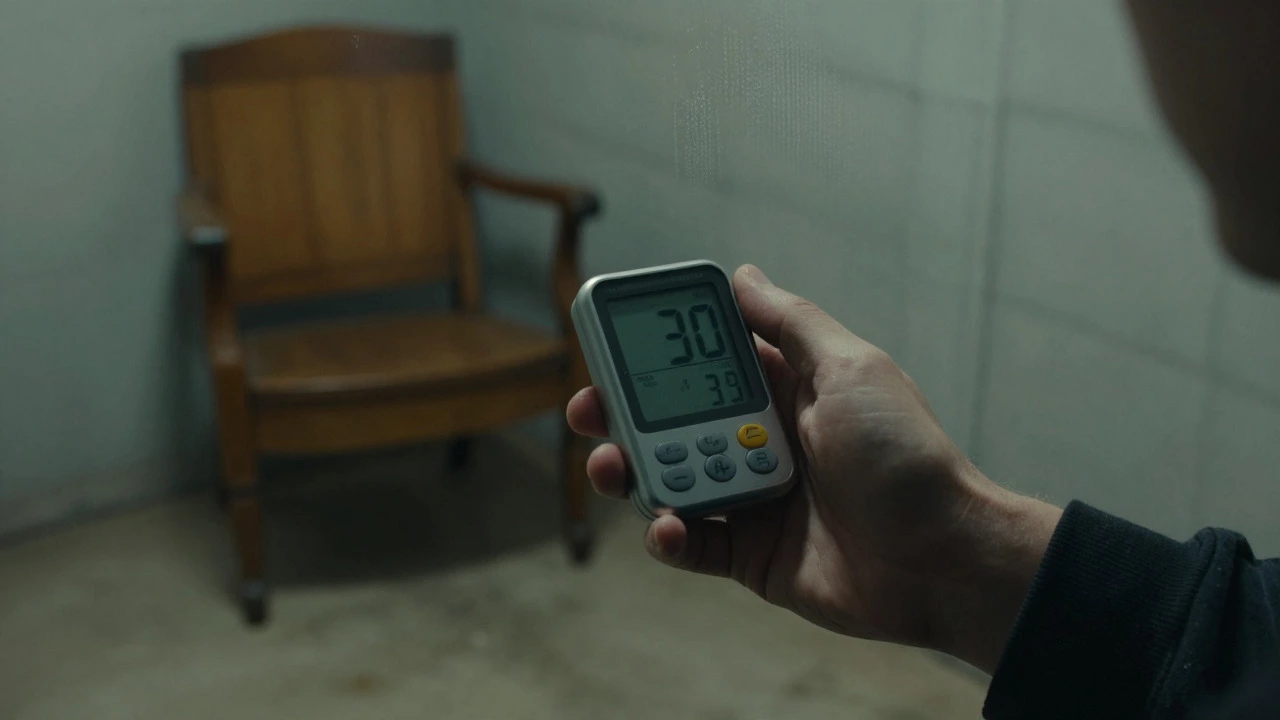
- Weekly Check-ins: Visit the unit once a week. Open the doors for 30 minutes to exchange air. Check the hygrometer readings. If humidity spikes above 60%, investigate why. Is it raining heavily outside? Did you forget to run the dehumidifier?
- Visual Inspection: Look for signs of condensation on the glass of display cabinets or on the metal parts of frames. Wipe it down immediately.
- Scent Test: Trust your nose. A musty smell is the earliest warning sign of fungal growth. If you smell it, treat it as an emergency. Pull the item out, air it in direct sunlight for 24 hours, and re-clean it.
Keep a simple logbook in the unit. Note the date, humidity level, and any observations. This helps you identify patterns. For example, you might notice that humidity always spikes on rainy Tuesdays, allowing you to pre-emptively adjust your dehumidifier settings.
What To Do If You Spot Early Mold
If you catch it early-within the first few days-the damage is reversible. Do not panic. Here is the protocol:
- Isolate the item: Move it to a well-ventilated area, ideally outdoors in direct sunlight. UV rays are natural sterilizers.
- Clean aggressively: For wood, use a solution of 1 part bleach to 10 parts water. Apply with a brush, scrub gently, and rinse with clean water. Dry immediately with a fan.
- Treat fabric: For upholstery, use a steam cleaner if available. The high temperature kills spores. If not, use a specialized fabric antimicrobial spray. Let it air dry completely before putting it back.
- Address the source: Fix the environmental issue that caused the mold. If it was humidity, increase dehumidification. If it was a leak, fix the roof or seal the crack.
If the mold has penetrated deep into porous materials like particle board or thick velvet, it may be time to cut your losses. Sometimes, replacing a damaged piece is cheaper than trying to save it and risking cross-contamination to other items.
Can I store furniture in a garage?
Yes, but with caution. Garages are typically unheated and can experience significant temperature fluctuations. Ensure the garage is dry, elevate the furniture on pallets, and use a dehumidifier if possible. Avoid storing delicate antiques or unfinished wood in a garage due to higher risks of cracking and warping.
How long can I store furniture without checking on it?
Ideally, you should check on your furniture every two weeks. While modern dehumidifiers can run for months, mechanical failures happen. A bi-weekly check ensures that equipment is working and allows you to spot early signs of condensation or pest intrusion before they become major problems.
Is newspaper good for stuffing drawers?
No. Newspaper contains ink and moisture that can transfer to the interior of your drawers, causing staining and promoting mold growth. Instead, use acid-free tissue paper or bubble wrap to cushion contents and maintain shape without introducing organic material that decays easily.
Do cedar blocks prevent mold?
Cedar blocks primarily deter moths and insects rather than preventing mold. While they do have some natural oils that repel pests, they do not actively reduce humidity. Use cedar for pest control in combination with dehumidifiers for mold prevention.
Should I leave lights on in the storage unit?
It is generally recommended to keep lights off to save energy, unless the unit is very dark and you want to discourage certain pests. However, if you have a dehumidifier, ensure it has adequate lighting for maintenance checks. The primary factor for mold is humidity, not light, so prioritize airflow and dryness over illumination.