Ergonomic Stomach Flattening Checklist
Office Posture & Flat Belly Checker
Follow these steps to instantly improve your silhouette.
Sit on Your Sit Bones
Slide forward until you feel weight on the bony parts of your pelvis (ischial tuberosities), not your tailbone.
Check Seat Depth
Ensure there is a gap of about two to three fingers between the back of your knees and the seat edge.
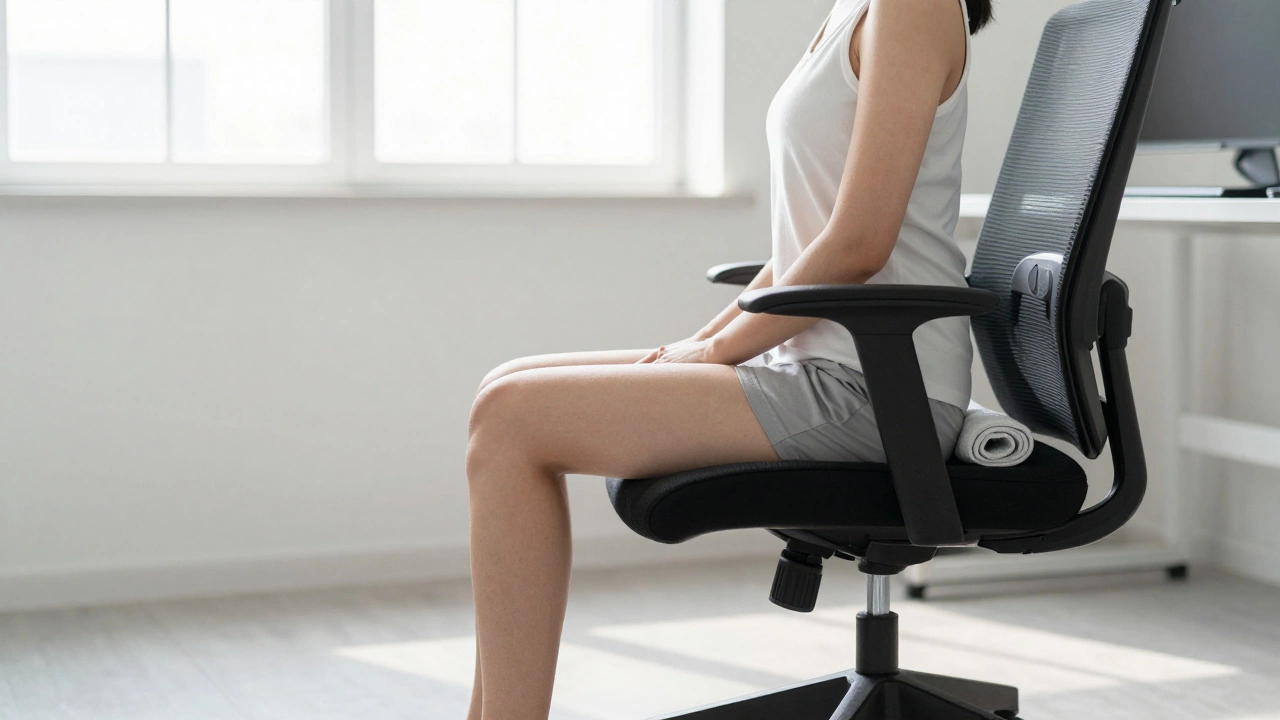
Add Lumbar Support
Place a rolled towel or cushion at the curve of your lower back to maintain a neutral pelvis.
Feet Flat on Floor
Plant feet firmly on the floor or a footrest to provide a foundation for core stability.
The 'Draw-In' Maneuver
Gently pull belly button toward spine as if zipping tight jeans. Breathe normally while holding this tension.
Diaphragmatic Breathing
Inhale deeply through nose expanding the belly, exhale slowly. Avoid shallow chest breathing.
Start Checking
Click the steps above as you complete them to see your score.
You’ve been sitting at your desk for four hours. You stand up to grab coffee, and suddenly you feel a tightness in your midsection that wasn’t there before. It’s not just the lunch you ate; it’s the way your body has collapsed into your chair. We often think of 'flattening your stomach' as a gym goal, but for most of us, the real battle happens during the nine hours we spend seated. If you want to look slimmer and feel better while working, you don't need a six-pack routine. You need to fix how you interact with your office chair.
The myth is that sitting passively keeps your belly flat. The reality? Slouching compresses your internal organs, pushes your abdominal wall outward, and creates what looks like a 'spillover' effect. By adjusting your seat, engaging specific muscles, and changing how you breathe, you can instantly create a flatter silhouette and protect your spine. This isn’t about dieting; it’s about mechanics.
The Physics of the Seated Belly
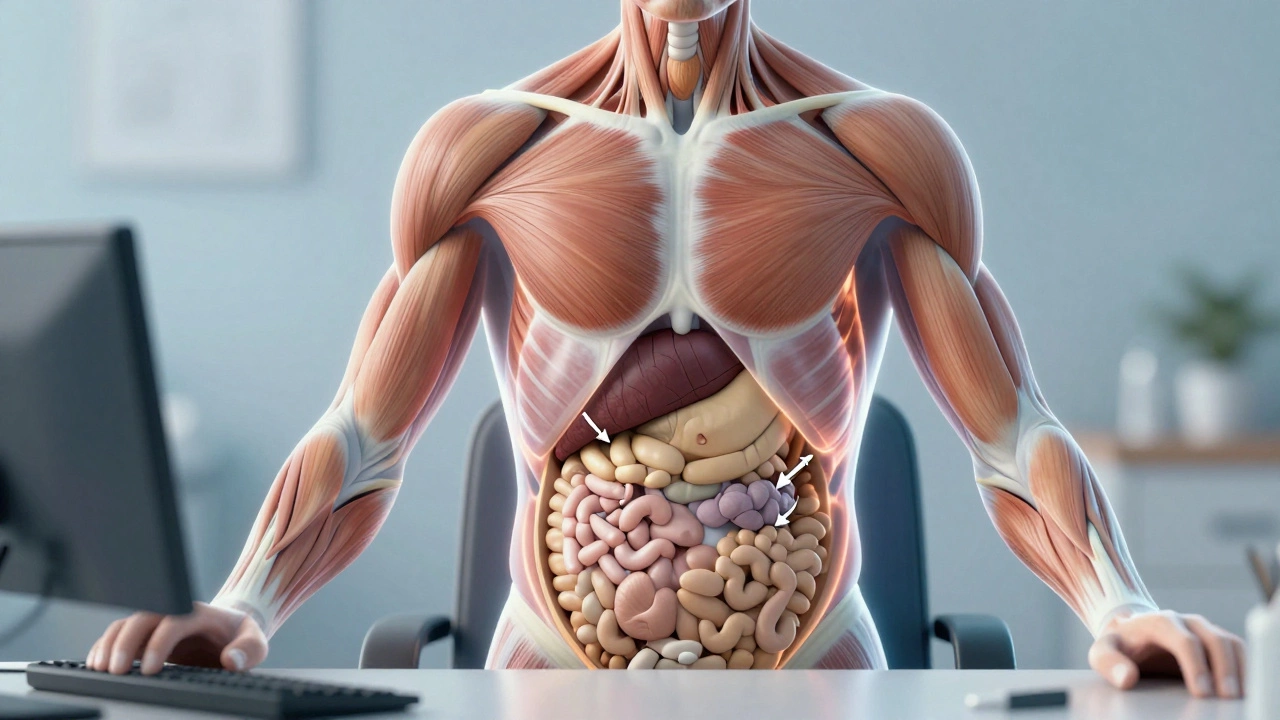
To understand why your stomach pokes out when you sit, you have to look at gravity and geometry. When you slump forward-a position ergonomists call 'slouch relaxation'-your pelvis tilts backward. This posterior pelvic tilt folds your lower back inward and forces your abdomen to fold over itself. Think of it like bending a garden hose; the pressure builds up and bulges out sideways or forward.
This compression does two things. First, it physically displaces your intestines upward and outward, creating visible bulk. Second, it turns off your deep core stabilizers, specifically the transverse abdominis. This muscle acts like a natural corset. When it’s inactive, your waistline expands. To flatten your stomach while sitting, you must reverse this mechanical failure by aligning your spine and reactivating that inner corset.
Optimizing Your Chair Setup
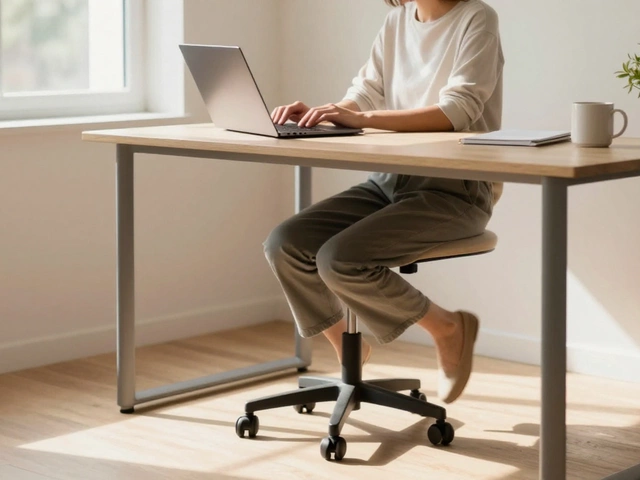
Your chair is either your ally or your enemy. Most people buy a chair and never adjust it, leading to poor posture by default. Here is how to set up your workstation to naturally encourage a flat stomach:
- Sit on Your Sit Bones: Don’t perch on the edge or slide down into the cushion. Find your ischial tuberosities (the two bony parts of your pelvis). Slide forward until you feel them resting firmly on the seat pan. This opens the angle between your torso and thighs, preventing your gut from being squeezed.
- Adjust Seat Depth: There should be a gap of about two to three fingers between the back of your knees and the edge of the seat. If the seat is too deep, you’ll slide forward to reach your keyboard, causing you to slouch and bunch up your stomach.
- Use Lumbar Support: Place a small rolled-up towel or an ergonomic cushion at the curve of your lower back. This supports the natural lordotic curve, keeping your pelvis neutral rather than tilted backward. A neutral pelvis means your abs stay smooth against your ribs instead of folding over.
- Feet Flat on the Floor: If your feet dangle, your hips flex tightly, pulling your stomach out. Use a footrest if necessary. Stable feet provide a foundation for core stability.
The 'Draw-In' Maneuver
Once your chair is set, you need to engage your body. You don’t need to suck in your gut painfully, which restricts breathing. Instead, use the 'abdominal draw-in' technique. This is a subtle activation of the transverse abdominis.
- Exhale fully through your mouth.
- Gently pull your belly button toward your spine. Imagine you are trying to zip up a pair of jeans that are slightly too tight.
- Hold this slight tension while continuing to breathe normally. Do not hold your breath.
- Maintain this engagement while typing or reading. It should feel like a gentle brace, not a strain.
This action pulls your abdominal wall inward, flattening the profile immediately. It also stabilizes your spine, reducing the load on your lower back discs. Try doing this every time you send an email or switch tabs. It becomes a habit that keeps your posture upright and your midsection streamlined throughout the day.
Breathing Mechanics and Bloating
Stress changes how we breathe. When we’re focused or anxious, we tend to take shallow breaths into our chest, or worse, we hold our breath. This increases intra-abdominal pressure. Over time, chronic shallow breathing can contribute to digestive issues and bloating, which makes the stomach appear distended.
Switch to diaphragmatic breathing. Place one hand on your chest and one on your belly. Inhale deeply through your nose, aiming to expand the hand on your belly, not your chest. Exhale slowly through pursed lips. This lowers cortisol levels and massages your digestive organs, helping gas move through the system more efficiently. A relaxed diaphragm allows your ribcage to settle, creating a longer, leaner torso appearance.
Micro-Movements to Break Static Posture
Sitting still for long periods causes fluid retention and stiffness. You need to incorporate micro-movements that reset your alignment without leaving your desk.
| Exercise | Action | Benefit |
|---|---|---|
| Seated March | Lift one knee towards chest, then alternate. Keep torso tall. | Activates hip flexors and lower abs without leaning back. |
| Shoulder Blade Squeeze | Pull shoulder blades together and down. Hold for 5 seconds. | Opens chest, prevents hunching, which indirectly flattens the front. |
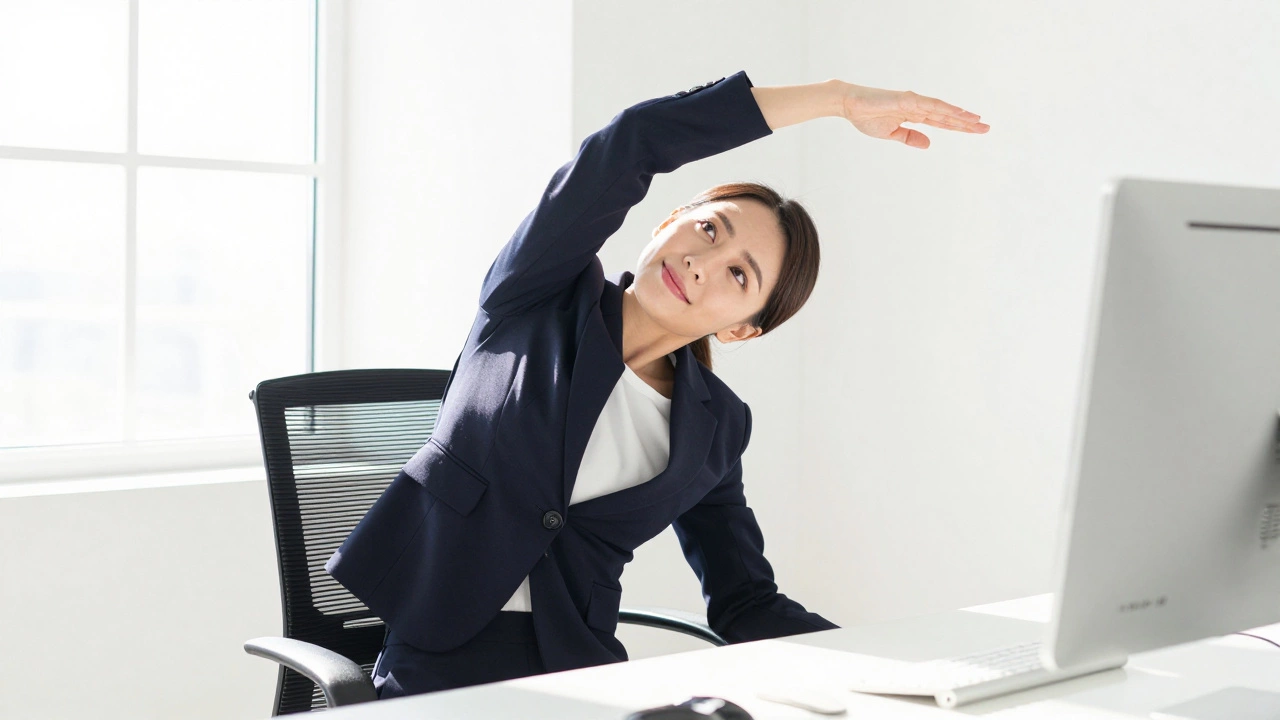
| Seated Side Bend | Reach one arm overhead and lean gently to the side. Return to center. | Stretches obliques, reducing lateral bulging. |
| Posterior Pelvic Tilt | While seated, tuck tailbone under slightly, rounding lower back gently, then release. | Wakes up deep core muscles and resets pelvic position. |
Set a timer for every 30 minutes. Stand up, walk around for 60 seconds, or perform these seated moves. Movement pumps lymphatic fluid, reducing swelling in the legs and abdomen. It also reminds your brain to check your posture.
Clothing Choices That Help
What you wear matters. High-waisted trousers or skirts with a firm waistband can provide external support, acting as a reminder to keep your core engaged. Avoid belts that dig in too tightly, as they can cause 'muffin top' effects by pushing tissue up and down. Opt for fabrics with a bit of stretch and structure. Darker colors and vertical lines also create a visual illusion of a narrower waist, complementing your physical efforts.
When to Seek Professional Advice
If you experience pain, numbness, or persistent bloating despite good posture, consult a healthcare provider. Conditions like hiatal hernia, gastroparesis, or spinal issues can affect abdominal appearance and comfort. An occupational therapist or physiotherapist can assess your workspace and provide personalized exercises to strengthen weak areas.
Can I lose belly fat just by sitting correctly?
No, you cannot burn significant fat through posture alone. However, correct posture eliminates the 'postural belly' caused by slouching and organ compression. This can make your stomach appear visibly flatter immediately, even if body fat percentage remains unchanged. For actual fat loss, combine good posture with regular exercise and a balanced diet.
Is it bad to sit on a stool without back support?
Sitting on a stool requires active core engagement to maintain balance, which can strengthen your abs over time. However, it can lead to fatigue and slouching if held for too long. Use a stool for short periods or choose one with a small backrest to prevent excessive strain on your lower back.
Why does my stomach stick out more after eating when I sit?
After eating, your stomach expands to accommodate food. Slouching compresses this expanded organ, forcing it outward. Sitting upright with a neutral pelvis gives your digestive system room to expand vertically rather than horizontally, minimizing the visible bulge.
How often should I adjust my posture during the day?
Aim to check and reset your posture every 30 to 45 minutes. Static postures, even 'good' ones, can cause muscle fatigue. Setting a recurring alarm or using software that reminds you to stand and stretch can help maintain consistent awareness.
Does wearing a posture corrector help flatten the stomach?
Posture correctors primarily target the upper back and shoulders, encouraging you to open your chest. While this indirect improvement can reduce overall slouching, it doesn't directly engage the abdominal muscles. Active core engagement and proper chair setup are more effective for flattening the stomach.