Ever sat down in your living room only to realize you’re either stretching too far for your coffee table or squished up against it like you’re in a tiny elevator? You’re not alone. Getting the right distance between your chair and coffee table isn’t just about looks-it’s about comfort, safety, and how easily you can actually use the space.
What’s the Right Distance?
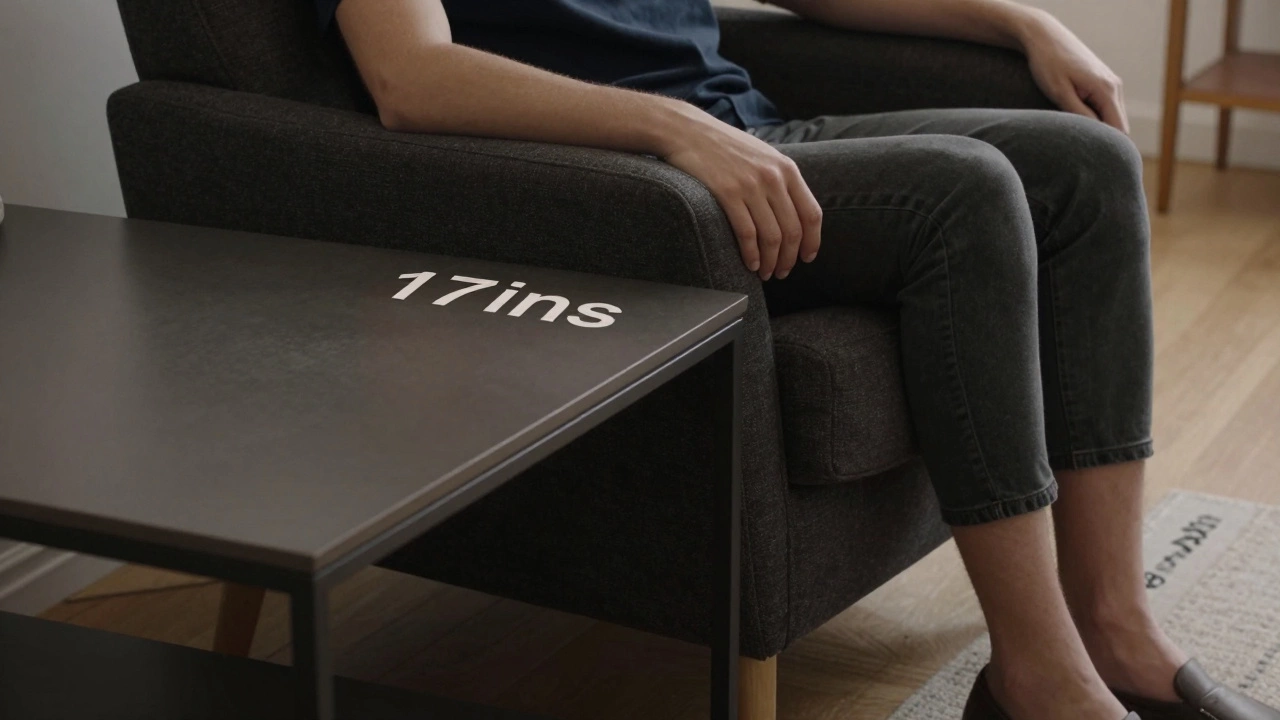
The sweet spot for most chairs is 16 to 18 inches from the front edge of the coffee table. This gives you enough room to comfortably reach for your drink, book, or remote without leaning forward awkwardly-or accidentally knocking things over when you shift your weight. If you’re sitting on a deep sofa or a plush armchair, you might need closer to 18 inches. For lower-profile chairs like mid-century modern designs or dining chairs pulled into the living room, 16 inches often works better.
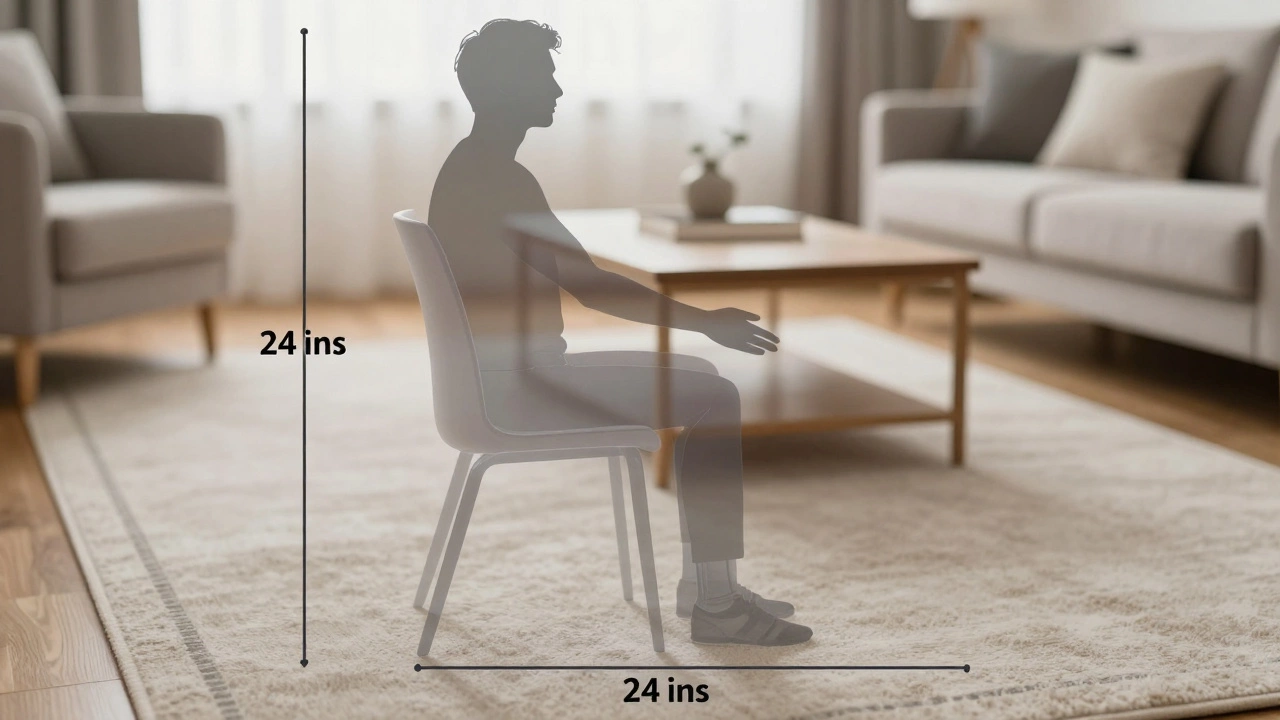
Why this range? It’s based on human anatomy. The average person’s arm length from shoulder to fingertips is about 24 inches. With 16-18 inches between you and the table, your forearm can rest comfortably on the surface without your elbow bending too sharply. Too close, and you’re cramped. Too far, and you’re constantly reaching, which feels tiring after just a few minutes.
Don’t Forget the Seat Height
Chair height matters more than you think. If your chair seat is too high compared to the coffee table, your legs will dangle awkwardly, and your arms will have to reach down sharply. If it’s too low, you’ll be hunching forward to grab your mug. The ideal setup? The top of your coffee table should be roughly the same height as the seat of your chair-or up to 2 inches lower.
Standard coffee tables are usually 16-18 inches tall. That matches perfectly with standard sofa and armchair seat heights, which also sit around 17-19 inches off the floor. If you’ve got a low-slung chair like a pouf or a floor seat, go for a lower table-maybe 14 inches. If you’re using a tall accent chair with a 20-inch seat, consider a table that’s 18-20 inches tall to keep things balanced.
Leave Room to Move
It’s not just about sitting still. You need space to get up and walk around. If your chair is pushed right up against the table, you’ll bump your knees every time you stand. That’s not just annoying-it’s a tripping hazard, especially for older adults or kids.
At minimum, leave 24 inches of walking space behind the chair. That way, when you rise from the seat, you can swing your legs out without hitting the table leg. If you’ve got a side table or a lamp nearby, make sure you’ve got at least 18 inches between the chair and any other piece of furniture. Think of your living room like a puzzle: every piece needs breathing room to function.

Real-Life Examples
Take a typical 3-seater sofa with two matching armchairs. The sofa sits 18 inches from the coffee table. Each armchair sits 17 inches away. That works because the sofa and chairs have similar seat heights. You can reach your drink, your book, or your phone without straining. And when someone gets up, they’ve got room to step back without bumping into the table.
Now imagine someone who bought a deep, reclining chair and paired it with a low, glass coffee table. The chair’s seat is 19 inches high. The table is only 14 inches. Now you’re leaning forward like you’re trying to read a menu across a crowded restaurant. After five minutes, your back aches. That’s not style-that’s poor ergonomics.
Another common mistake: using a large, heavy table with a wide top. If the table is 48 inches wide and the chair is only 14 inches away, you’re practically sitting on top of it. Your knees will hit the table leg, and you’ll have to twist awkwardly to reach things on the far side. A table that’s 36 inches wide or less works better with standard seating distances.
What About Ottomans and Side Tables?
If you use an ottoman instead of a coffee table, the same 16-18 inch rule applies. Ottomans are often softer and lower, so you might need to sit a little farther back-maybe 18-20 inches-to avoid sinking into it too much. The goal is still the same: easy access without strain.
Side tables? They’re different. You don’t need to sit directly across from them. But if you’re using a side table as a secondary surface-say, next to a reading chair-leave 14-16 inches between the chair’s arm and the table edge. That way, you can set down your coffee without stretching or knocking over your lamp.
Adjust for Your Body
Not everyone’s built the same. If you’re taller than average (6’1” or more), you might need a little more space-maybe 20 inches. If you’re shorter, 16 inches might feel more natural. Try this: sit in your chair, then extend your arm. If your fingertips just brush the edge of the table, you’re golden. If you have to bend your elbow sharply, move the chair back. If you’re practically lying on the table, move it farther away.
Also consider mobility. If you use a cane, walker, or have limited knee flexibility, extra space is not optional-it’s necessary. A 20-22 inch gap gives you room to push off the chair safely and avoid sudden shifts in balance.
Common Mistakes to Avoid
- Putting the table too close because you think it looks "cozy." Cozy doesn’t mean you can’t breathe.
- Using a table that’s too tall or too short for your chair height.
- Ignoring the depth of your chair. Deep seats need more room.
- Forgetting that people walk around the furniture. Always leave a clear path.
- Assuming all chairs are the same. A recliner, a wingback, and a stool all need different spacing.
Quick Check: Is Your Setup Right?
- Can you reach your coffee without leaning forward?
- Do your knees hit the table when you sit back?
- Can you stand up without bumping into the table?
- Is the table height within 2 inches of your chair seat?
- Do you feel cramped or stretched out after 10 minutes of sitting?
If you answered "no" to any of these, adjust the distance. Move the chair back or forward by just 2 inches. Sit there for a few minutes. Notice how your body feels. That’s your real test-not a magazine photo or a Pinterest board.
Final Thought: Function Over Form
Design blogs love to show living rooms with coffee tables inches from the sofa. It looks sleek. But in real life? It’s uncomfortable. Prioritize how you live over how it looks in a catalog. A little extra space doesn’t ruin the aesthetic-it makes your space usable. And that’s what matters.
What if my coffee table is too big for the space?
A table that’s too wide or long can make the room feel cluttered and block movement. If your table is over 48 inches wide and you’re using standard seating, consider switching to a smaller one-around 36 inches is ideal for most living rooms. You can still have style with a narrower table. Look for shapes like oval or rectangular with rounded corners to soften the look.
Can I use a coffee table with a sectional sofa?
Yes, but you need to think differently. Sectionals often have multiple seating zones. Instead of one large table, consider two smaller ones-one for each end of the sectional. Or use a long, narrow table that runs parallel to the armrests. Keep the distance at 16-18 inches from the front of the seating, even if it’s a corner piece.
Does rug size affect how far the chair should be from the table?
Not directly, but it matters indirectly. If your rug is too small and only under the coffee table, your chair legs might hang off the edge, making the space feel unbalanced. For a cohesive look, make sure the front legs of your chair are on the rug. That means your rug should be large enough to accommodate both the table and at least the front half of your seating. This helps anchor the layout and makes the spacing feel intentional.
I have kids or pets. Should I change the spacing?
Absolutely. Kids and pets move fast. A 20-inch gap gives them room to dart in and out without knocking things over. Avoid sharp table corners-go for rounded edges. Also, keep heavy or breakable items toward the center of the table, not near the edge. A slightly larger gap also makes it easier to clean around the furniture.
What if I want to use a different chair for reading?
If it’s a dedicated reading chair, consider placing it slightly farther away-18-20 inches-and pairing it with a small side table. That way, you can set down your book or tea without leaning. You don’t need to use the coffee table for everything. Let each chair have its own zone. It makes the room more flexible and comfortable for different activities.
If you’ve been living with a chair too close to the table, try moving it back just 2 inches tonight. Sit there with your favorite drink. Notice how your shoulders relax. How your arms rest naturally. That’s the difference between a room that looks good and one that actually feels good.