Key Takeaways
- A wardrobe is defined by its ability to store garments in their natural hanging or folded state.
- The presence of a hanging rail is the primary technical differentiator from a standard cupboard.
- Modern versions range from freestanding units to integrated built-in systems.
- Design focuses on accessibility, preservation of textiles, and spatial efficiency.
The Anatomy of a True Wardrobe
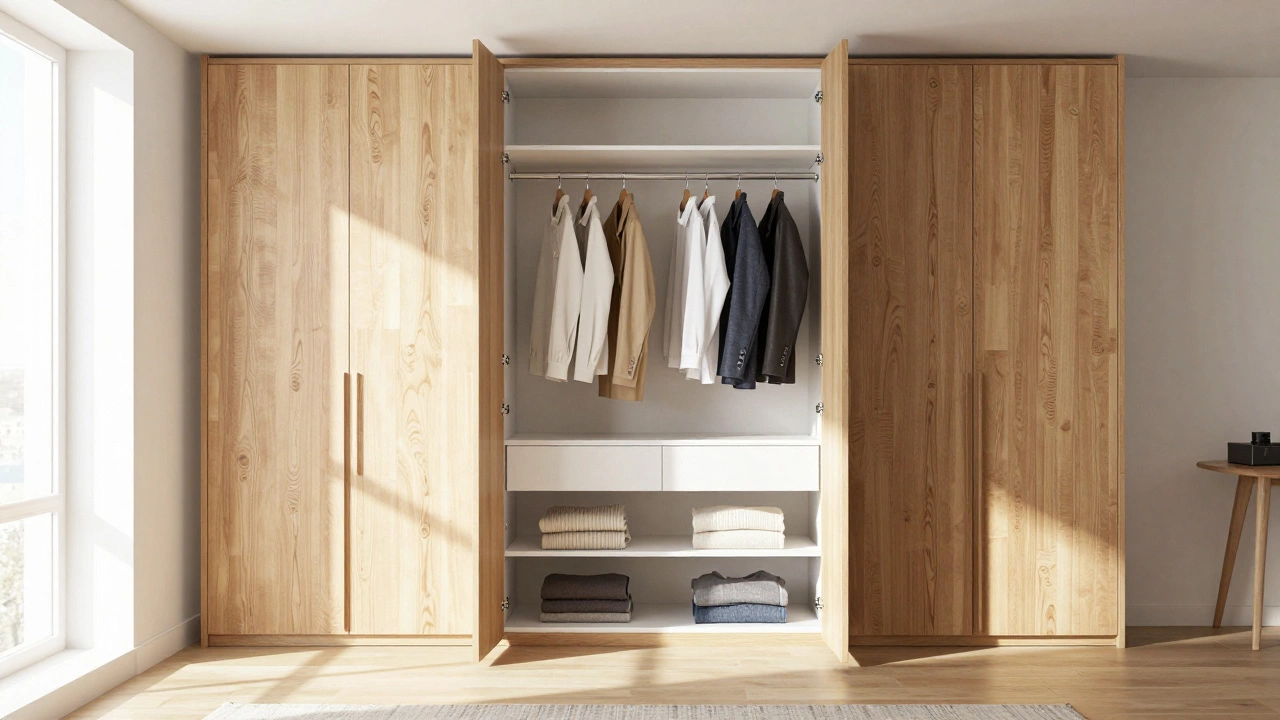
At its core, Wardrobe is a tall, freestanding cabinet or built-in unit specifically designed for storing clothes. While you could technically put a coat in a kitchen cupboard, that doesn't make the cupboard a wardrobe. The magic lies in the internal architecture. To qualify, a unit generally needs to accommodate the verticality of a garment.
The most critical component is the hanging rail. Without a way to suspend a dress or a suit, you're just dealing with shelving. A true wardrobe understands that different clothes have different needs. A long coat needs a deep void, while a stack of t-shirts needs a flat, stable surface. When we talk about Ergonomics, we're talking about placing these rails and shelves at heights that don't require you to be an acrobat just to find your favorite socks.
Wardrobe vs. Armoire vs. Closet: What's the Difference?
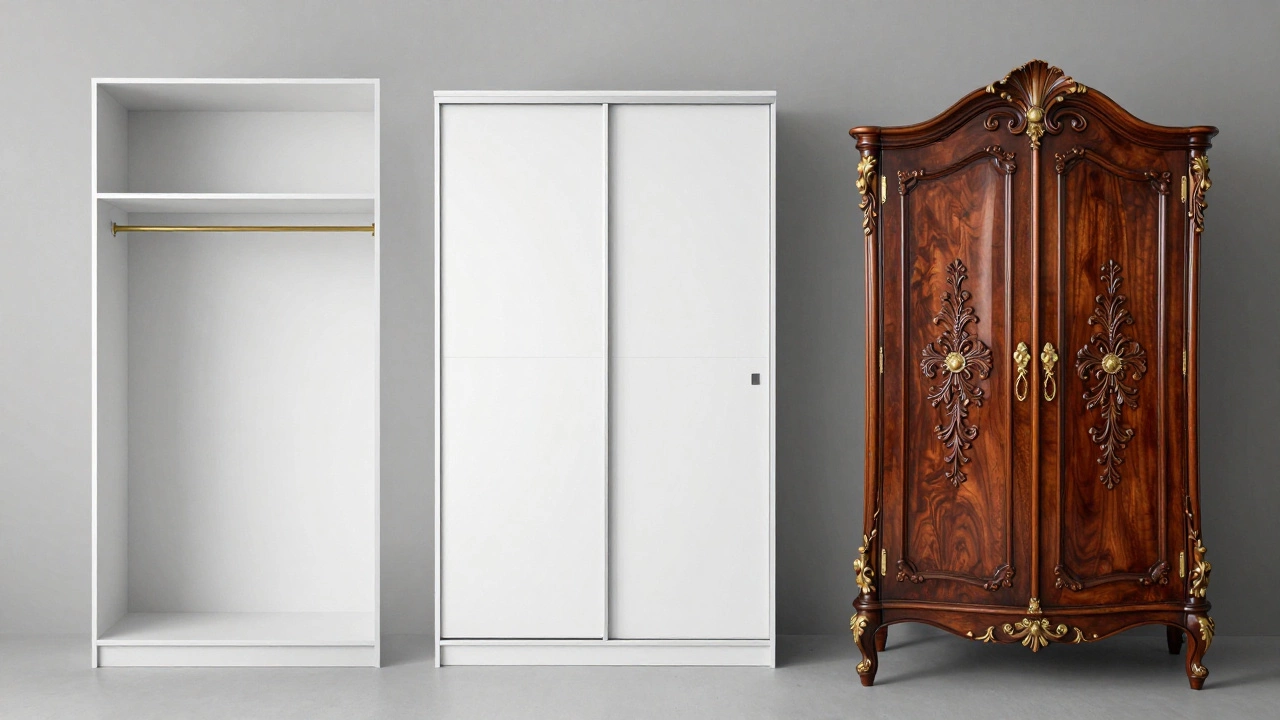
People often use these terms interchangeably, but in the world of furniture design, they aren't the same. A closet is typically a part of the house's architecture-a hole in the wall with a door. A wardrobe is a piece of furniture you can theoretically move (though your back might disagree). Then there is the Armoire, which is essentially a wardrobe's fancy French cousin. Armoires often have more ornate carvings and were historically used for more than just clothes, sometimes housing linens or even early televisions.
| Feature | Wardrobe | Armoire | Closet |
|---|---|---|---|
| Mobility | Freestanding / Movable | Heavy / Ornate | Permanent / Fixed |
| Primary Goal | Clothing Organization | Aesthetic Statement | Spatial Utility |
| Typical Structure | Rail + Shelves | Large Doors + Cabinetry | Built-in Wall Cavity |
The Engineering of Clothing Preservation
Why not just use a rack? Because a wardrobe design is about protection. Airflow, light exposure, and dust are the enemies of fine fabrics. A wardrobe provides a sealed or semi-sealed environment that prevents your winter woolens from becoming a feast for moths. The use of Solid Wood or high-density MDF (Medium Density Fibreboard) ensures the structure doesn't bow under the weight of twenty heavy coats. If the rail sags, the wardrobe is failing its primary job.
Consider the physics of a sliding door. In a small bedroom, a swinging door is a liability-it eats up floor space and hits the bed. Sliding mechanisms allow for a massive storage volume without sacrificing the room's footprint. This transition from hinged to sliding doors shifted the wardrobe from a piece of static furniture to a dynamic storage system.
Types of Wardrobes and Their Specific Jobs
Not every wardrobe is built for the same task. Depending on your lifestyle, you might need a different configuration:
- The Fitted Wardrobe: These are customized to fit the exact dimensions of a wall. They use every millimeter of space, often reaching the ceiling to store off-season bedding in the top rafters.
- The Capsule Wardrobe (Physical Version): Small, minimalist units designed for people who own few, high-quality items. These prioritize visibility over volume.
- The Walk-in Wardrobe: This is where the entity shifts from "furniture" to "room." It's a dedicated space where the user can dress entirely within the storage zone.
- The Open Wardrobe: Essentially a high-end clothing rack with a few shelves. It's for the brave-those who don't mind dust but love the "boutique" look.
Materials: How They Affect Function
The material isn't just about looks; it's about how the wardrobe breathes. Oak and Pine are classics because they handle weight well and offer a natural feel. However, modern wardrobes often use laminated particle board for a reason: it's consistent. You don't get the warping that can happen with natural wood in humid environments, which would otherwise jam your doors.
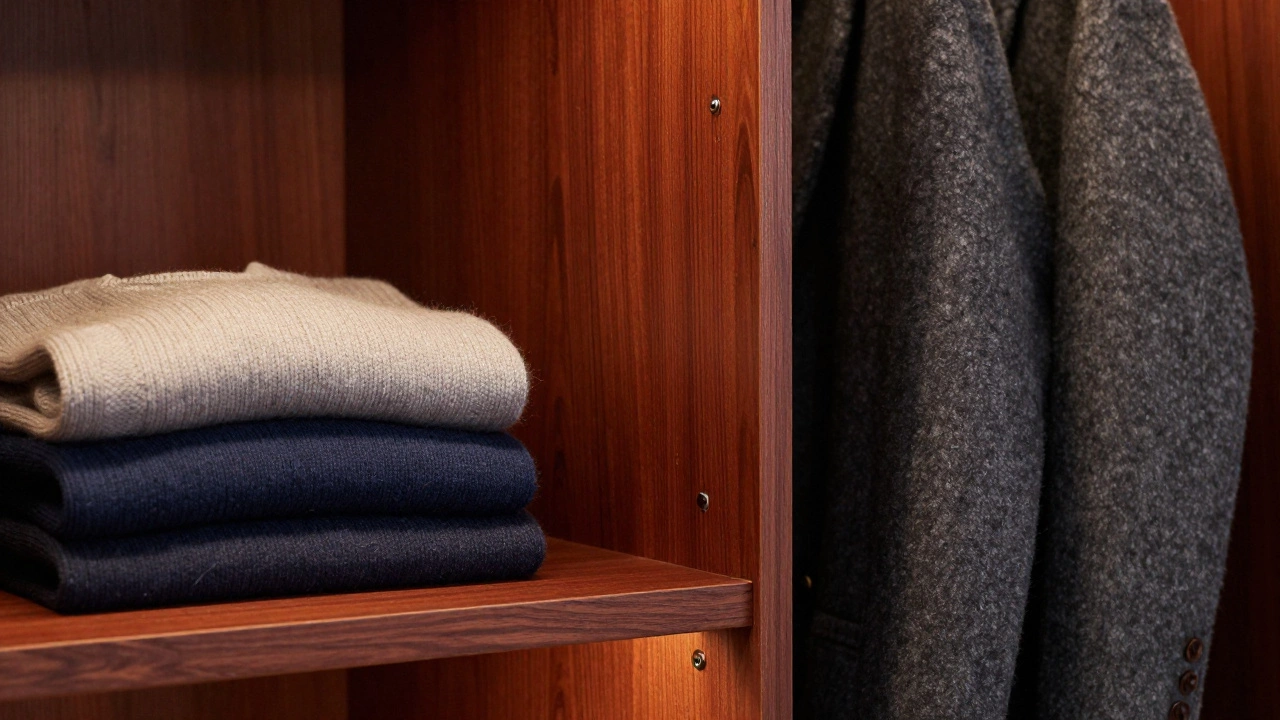
Then there's the interior lining. Many high-end wardrobes use cedar lining. Why? Because cedar contains natural oils that repel insects. This turns the wardrobe from a simple box into a biological defense system for your cashmere sweaters. If a piece of furniture is actively protecting the items inside it, it's operating at a higher level of functional design.
Common Pitfalls in Wardrobe Selection
A lot of people buy a wardrobe based on how it looks in the showroom, but they forget to measure their longest garment. There's nothing more frustrating than buying a wardrobe only to find your maxi dresses are bunching up at the bottom, creating permanent creases. Always measure the "drop"-the distance from the rail to the base.
Another mistake is ignoring the depth. A standard hanger is about 45cm wide. If your wardrobe is too shallow, the doors will push your clothes against the back wall, causing them to wrinkle. You need a minimum depth of 60cm to allow the clothes to hang freely without touching the doors. If you're tight on space, look for "transverse rails" that let clothes hang facing sideways rather than forward.
Can a chest of drawers be considered a wardrobe?
No. While both store clothes, a chest of drawers is designed exclusively for folded items. A wardrobe's defining characteristic is its ability to accommodate hanging garments via a rail or high vertical space.
What is the ideal depth for a bedroom wardrobe?
The industry standard is 60cm. This ensures that standard-sized hangers fit comfortably without the sleeves of your clothes getting caught in the doors when you close them.
Do sliding doors save more space than hinged doors?
Yes, in terms of usable floor space. Sliding doors don't require a "swing zone," meaning you can place your bed or a bedside table closer to the wardrobe without blocking access.
What is the best material for a long-lasting wardrobe?
Solid hardwoods like oak are the most durable and can be refinished over decades. For a more budget-friendly but stable option, high-quality MDF with a thick veneer is a practical choice for modern homes.
How do I stop my wardrobe from smelling musty?
Ensure there is a small gap between the back of the wardrobe and the wall to allow air circulation. Using cedar blocks or lavender sachets can help absorb moisture and add a fresh scent.
Next Steps for Your Storage Setup
If you're struggling with a cluttered room, start by auditing your clothes. If 80% of your wardrobe is folded, you might actually need a larger dresser rather than a massive wardrobe. If you have a lot of long dresses or suits, prioritize a unit with a dedicated "long hang" section.
For those in tiny apartments, consider modular systems. These allow you to start with a basic rail and add shelves or drawers as your wardrobe grows. It's a more sustainable way to manage your space without committing to a massive piece of furniture that might not fit your next home.