China Bed Space Calculator
Determine Your Room Fit
China beds require 80 inches of length when extended plus 36 inches of clearance for smooth operation. The sofa mode is typically 70-80 inches wide and 35 inches deep. Enter your room dimensions to see if it fits.
A china bed isn't a bed made in China - despite what the name might suggest. It’s a specific style of sofa bed that’s been around since the early 20th century, originally designed for small homes and apartments in urban areas. Unlike regular sofa beds that fold out awkwardly or require you to remove cushions, a china bed slides or lifts out smoothly from beneath the seating area, turning into a full-size sleeping surface without any hassle. It’s a clever piece of furniture built for space-saving without sacrificing comfort.
How a China Bed Works
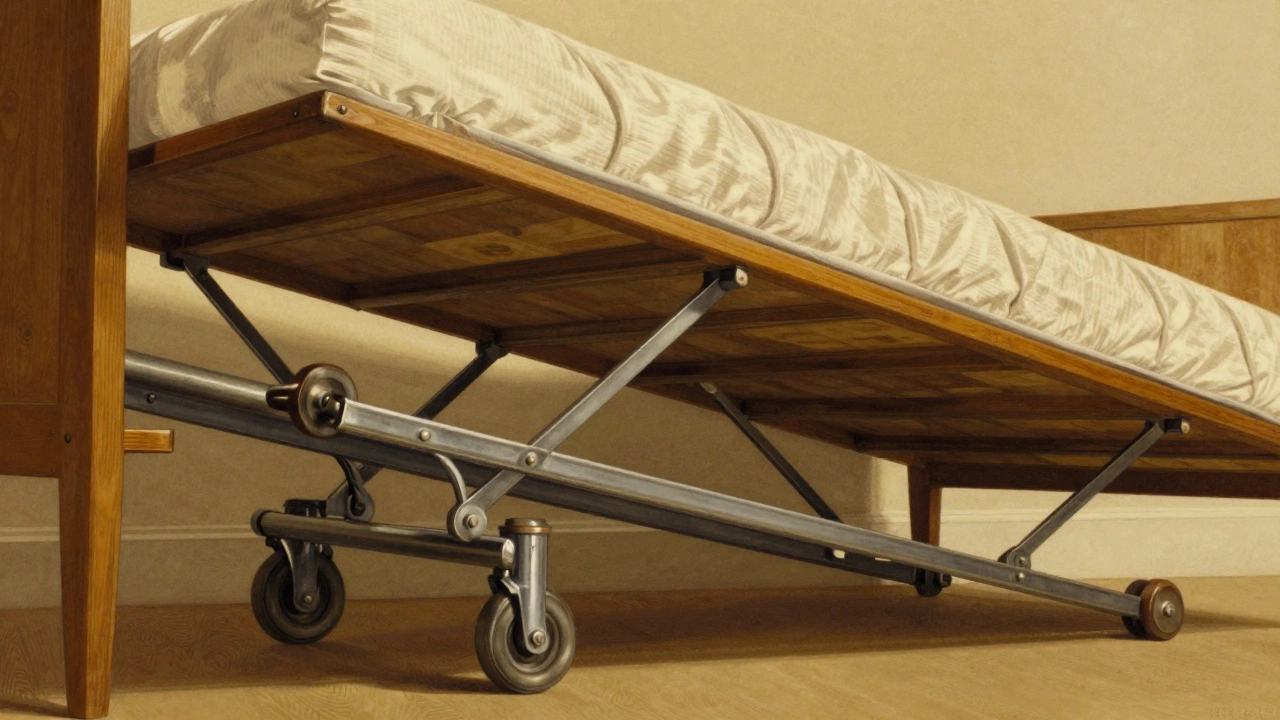
The magic of a china bed lies in its mechanism. Most models use a simple sliding or pull-out system. When you want to convert it from sofa to bed, you pull the seat forward, and the entire base - mattress and all - glides out on metal rails. No lifting, no flipping, no rearranging cushions. The backrest folds flat to meet the extended base, creating one continuous sleeping surface.
This design eliminates the common frustration of traditional sofa beds, where the mattress is too thin, the frame is uneven, or you’re left with a lumpy mess of pillows. A china bed typically uses a single, continuous foam or spring mattress that’s the same thickness whether it’s in sofa mode or bed mode. That means no more waking up with a spine misaligned because the bed mechanism didn’t lock right.
Why It’s Called a China Bed
The name doesn’t come from the country. It comes from the word "chaise," as in chaise lounge. Early versions of this design were called "chaise beds," and over time, the pronunciation shifted to "china bed," especially in British and American homes during the 1920s and 30s. The term stuck, even though it’s misleading. You won’t find any Chinese manufacturing labels on a true china bed - it’s a Western design through and through.
Some people confuse it with futons or pull-out couches, but those are different. A futon flips and folds, often with a thin cotton mattress. A pull-out couch usually has a separate mattress stored underneath, which you drag out manually. A china bed is one solid unit. The mattress is built into the frame, so there’s no separate piece to lose, store, or replace.
Typical Features of a China Bed
- One-piece mattress: Usually 6 to 8 inches thick, made of high-density foam or pocket springs.
- Smooth glide mechanism: Steel or aluminum rails with ball bearings for quiet, easy movement.
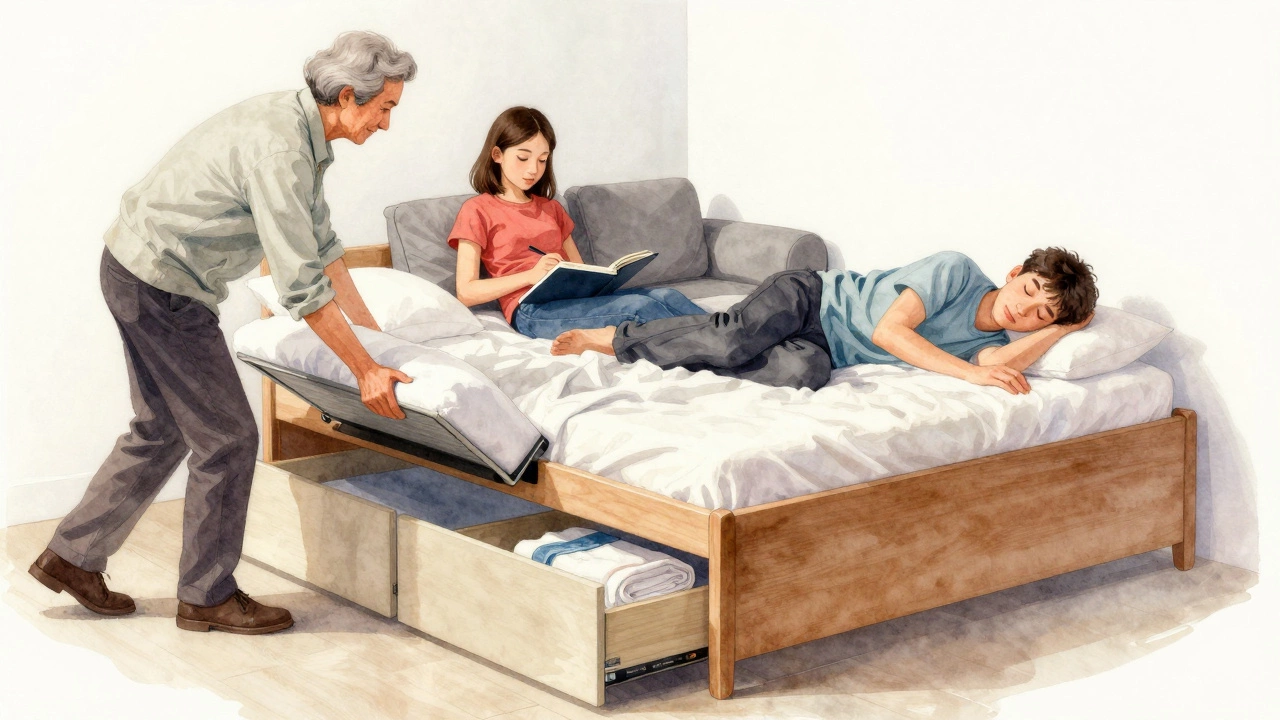
- Storage space underneath: Many models include drawers or a hidden compartment for bedding or linens.
- Sturdy frame: Solid wood or reinforced metal, designed to handle daily use as both sofa and bed.
- Compact footprint: Fits in rooms as small as 8x10 feet, ideal for studio apartments or guest rooms.
Modern china beds often come with upholstered frames in fabrics like linen, microfiber, or faux leather. Some even have built-in USB ports, LED lighting, or adjustable headrests. But the core design hasn’t changed much since the 1930s - it’s still all about simplicity, durability, and smart space use.
China Bed vs. Other Sofa Beds
Not all sofa beds are created equal. Here’s how a china bed stacks up against the most common types:
| Type | Conversion Ease | Mattress Quality | Storage | Best For |
|---|---|---|---|---|
| China Bed | Very easy - slides out in one motion | High - full-thickness, integrated mattress | Often includes under-bed drawers | Small spaces, daily use |
| Pull-Out Sofa | Moderate - requires pulling a mattress from under the frame | Low to medium - often thin or uneven | Minimal | Occasional guests |
| Futon | Hard - must flip and fold manually | Low - thin cotton or foam | None | Minimalist, temporary use |
| Click-Clack | Easy - hinges at the back | Medium - mattress is separate | None | Living room use |
If you’re using your sofa bed every night - not just for guests - the china bed is the only one that won’t leave you sore. It’s built for daily use. Most pull-out sofas and futons are designed for occasional guests. A china bed? It’s meant to be your primary bed.
Who Should Buy a China Bed?
There are three main types of people who benefit most from a china bed:
- Apartment dwellers: If you live in a studio or one-bedroom flat, a china bed gives you a full-size sleeping area without needing a separate bedroom. You can have a living room that doubles as a bedroom without sacrificing style.
- Parents of teens: A china bed fits perfectly in a teen’s room. It’s a sofa for hanging out with friends and a bed for sleeping. No need to buy two pieces of furniture.
- Seniors or mobility-limited users: The smooth glide mechanism requires no lifting, bending, or heavy effort. You just pull the seat forward - no more struggling with heavy mattresses or awkward mechanisms.
It’s also a great pick if you’re renting. Most china beds are lightweight enough to move, and they don’t require permanent installation. Landlords often appreciate them because they’re low-maintenance and don’t damage floors.
Things to Watch Out For
Not every china bed is built the same. Here are a few red flags to avoid:
- Plastic rails: If the mechanism feels flimsy or makes a grinding noise, it’s likely made of cheap plastic. Look for steel or aluminum rails.
- Thin mattresses: Anything under 6 inches won’t support your spine long-term. Ask for foam density (should be at least 2.5 lb/cu ft).
- No storage: If the bed doesn’t have drawers or space underneath, you’re missing out on a major perk. Use it to store extra pillows, blankets, or even seasonal clothes.
- Hard-to-clean fabric: If you have kids or pets, avoid velvet or linen. Microfiber or performance fabric is easier to wipe down.
Also, check the weight limit. Most china beds support up to 400 pounds, but cheaper models may cap out at 250. If you’re planning to use it daily, go for the higher capacity.
Where to Find a Real China Bed
True china beds aren’t common in big-box stores. You’ll find more copies than originals at places like IKEA or Walmart. For a real one, look at smaller, independent furniture makers or UK-based brands like Harvey Jones, Restoration Hardware, or John Lewis’s in-house line. These companies still build them with solid frames and proper mechanisms.
Online retailers like Wayfair and Amazon have listings labeled "china bed," but many are just click-clack sofas with misleading names. Read reviews carefully. Look for comments like "slides out smoothly," "no mattress gap," or "used it every night for years." Those are signs of a real china bed.
Final Thoughts
A china bed isn’t just another sofa bed. It’s a smarter solution for people who need one piece of furniture to do two jobs well. It’s quiet, reliable, and built to last. If you’re tired of waking up with a kink in your neck because your sofa bed didn’t lock right, or if you’re trying to squeeze a bedroom into a small space, this might be the only option that actually works.
It’s not flashy. It doesn’t have a million features. But it does one thing better than any other sofa bed: turns into a real bed, every time, without drama.
Is a china bed the same as a futon?
No. A futon requires you to flip and fold the mattress, often leaving a gap between the seat and backrest. A china bed slides out as one solid unit with a continuous mattress. Futons are better for occasional use; china beds are built for daily sleeping.
Can a china bed be used as a permanent bed?
Yes. Many people use china beds as their primary bed, especially in studios or small apartments. The mattress is thick enough, the frame is sturdy, and the mechanism is designed for daily use. It’s more durable than most traditional beds in terms of daily wear and tear.
Why is it called a china bed if it’s not from China?
The name comes from "chaise," as in chaise lounge. Over time, the pronunciation shifted in British and American English to "china bed." It’s a linguistic accident, not a geographic one. You won’t find any Chinese manufacturing on a genuine china bed.
How much space do I need for a china bed?
A standard china bed (full size) needs about 80 inches of length when extended. In sofa mode, it takes up roughly the same space as a standard sofa - around 70 to 80 inches wide and 35 inches deep. Make sure you have at least 3 feet of clearance in front for the bed to slide out fully.
Are china beds comfortable for side sleepers?
Yes, if they have a high-density foam or pocket spring mattress. Side sleepers need cushioning for shoulders and hips, which a quality china bed provides. Avoid models with thin mattresses under 6 inches - those won’t offer enough pressure relief.