Bookcase Repurposing Idea Generator
Don't just store books. Transform your shelves into functional living spaces. Select your primary need below to get tailored setup instructions.
You probably bought that bookcase to hold your novels, but let’s be honest-half the shelves are empty or cluttered with things that definitely aren’t books. Maybe you’re staring at a blank wall in your hallway and wondering how to fill it without buying new furniture. Or perhaps you’ve got a tiny studio flat where every square inch counts, and you need one piece of furniture to do the work of three.
The truth is, a bookcase is one of the most versatile pieces of kit in your house. It’s not just for reading material. With a little creativity, it can become a wardrobe, a room divider, a plant stand, or even a workspace. I’ve seen people turn cheap IKEA Kallax units into everything from pet houses to home office hubs. The key is looking past the label "bookshelf" and seeing the structural potential hiding in those vertical slots.
Turn Your Bookcase Into a Wardrobe
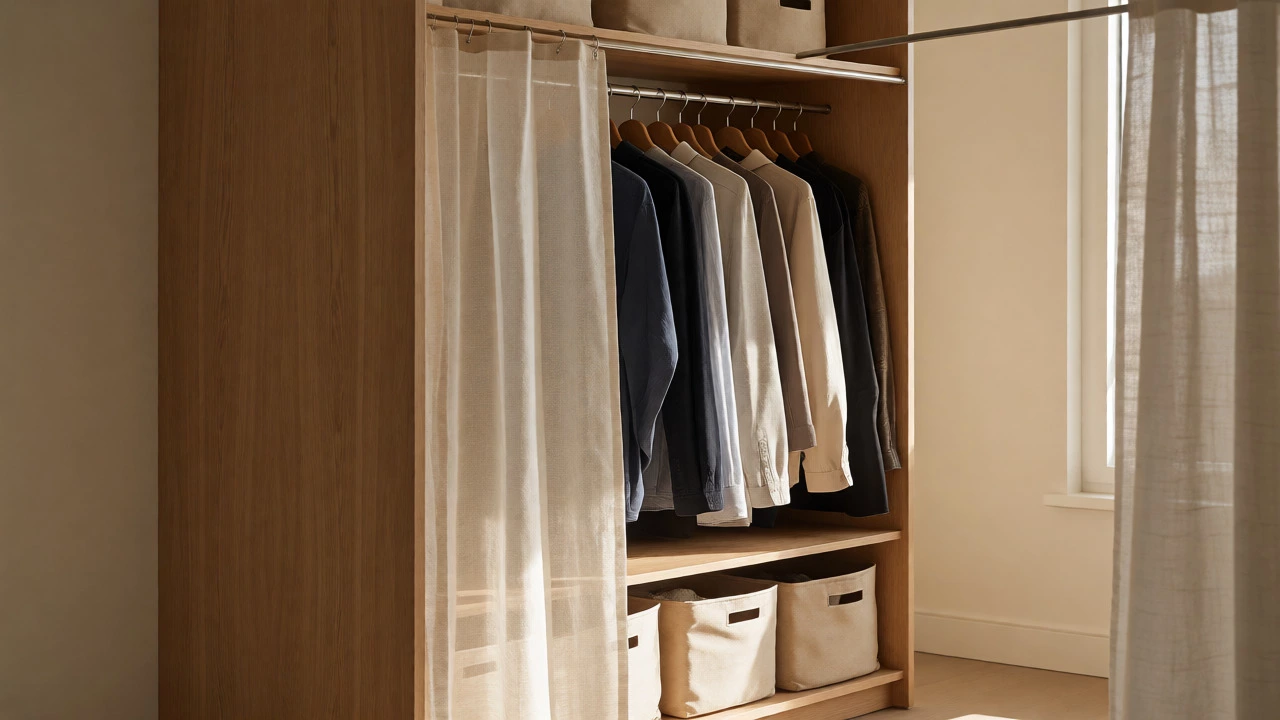
If you live in a small apartment or a dorm room, you might not have space for a bulky wardrobe. That’s where the bookcase steps in. By swapping out standard shelves for hanging rails, you instantly create a closet system. This isn’t some flimsy hack; it’s a legitimate organizational strategy used by minimalists everywhere.
Here’s how to make it work:
- Add a tension rod or fixed rail: Measure the width of your shelf opening. If it’s open-front, a simple tension rod works fine. For closed-back units, drill two holes and install a proper hanging rail. This supports heavier coats and suits better than plastic alternatives.
- Use fabric bins for socks and underwear: You don’t want your undergarments visible to guests. Place matching fabric boxes on the lower shelves. They hide the mess and add texture to the look.
- Install a curtain rod across the front: This turns an open bookcase into a closed cabinet. Use a light, breathable fabric if you’re storing clothes that need air circulation. It hides the chaos when you’re not looking for your favorite shirt.
This setup costs a fraction of a built-in wardrobe. Plus, if you move house, you can take it with you. A built-in wardrobe stays behind; your bookcase wardrobe travels.
Create Instant Room Dividers
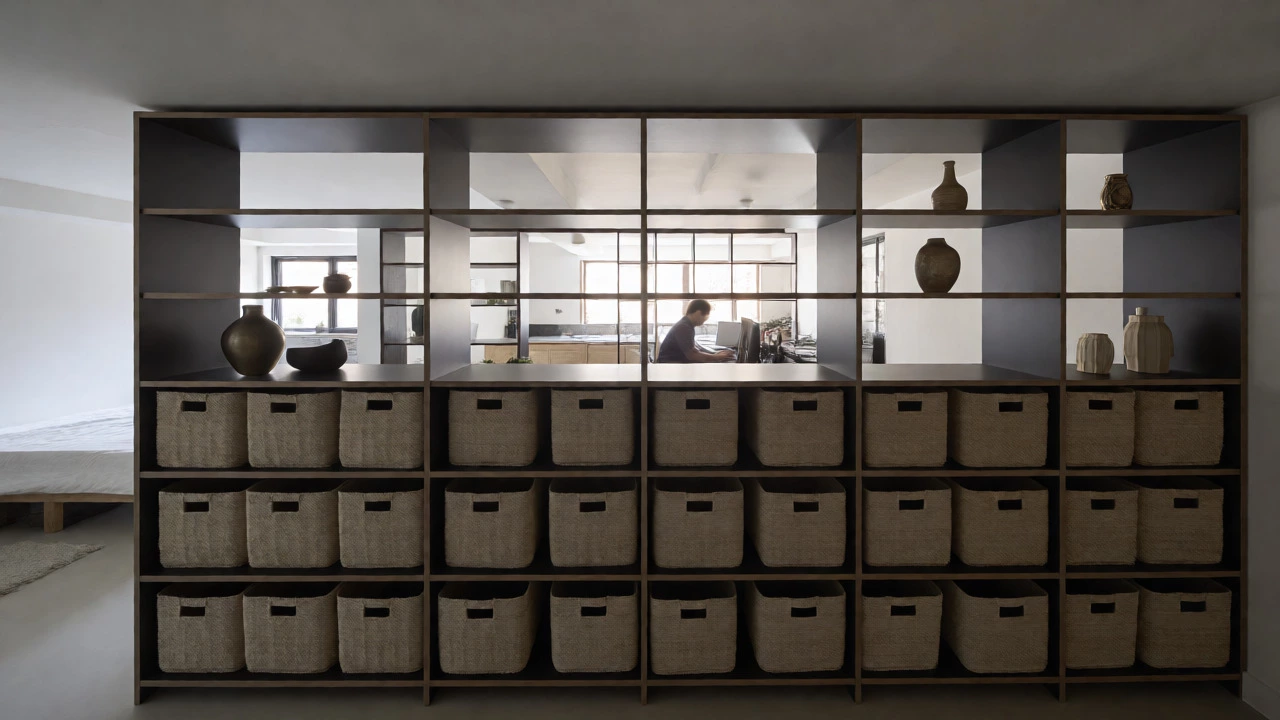
Open-plan living sounds great until you realize you can hear someone chewing toast while you’re trying to work. Or maybe you’ve got a studio where your bed is right next to your kitchen counter. A bookcase makes an excellent room divider. Unlike a solid wall, it lets light pass through, keeping the space feeling airy rather than cramped.
When choosing a bookcase for this job, stability is non-negotiable. Anchor it to the wall or floor using anti-tip brackets. If it wobbles, it’s dangerous. Look for wider units (at least 80cm) so they feel substantial. Don’t overload the top shelves with heavy encyclopedias; keep the weight low to maintain balance.
You can also play with visibility. Fill the bottom half with opaque baskets to block sightlines, leaving the top half open for display. This gives you privacy without shutting out natural light completely. In my own place in Leeds, I used a double-sided bookcase to separate my sleeping area from my desk. It stopped me from seeing the unmade bed when I was working, which surprisingly helped my focus.
A Living Wall for Plants
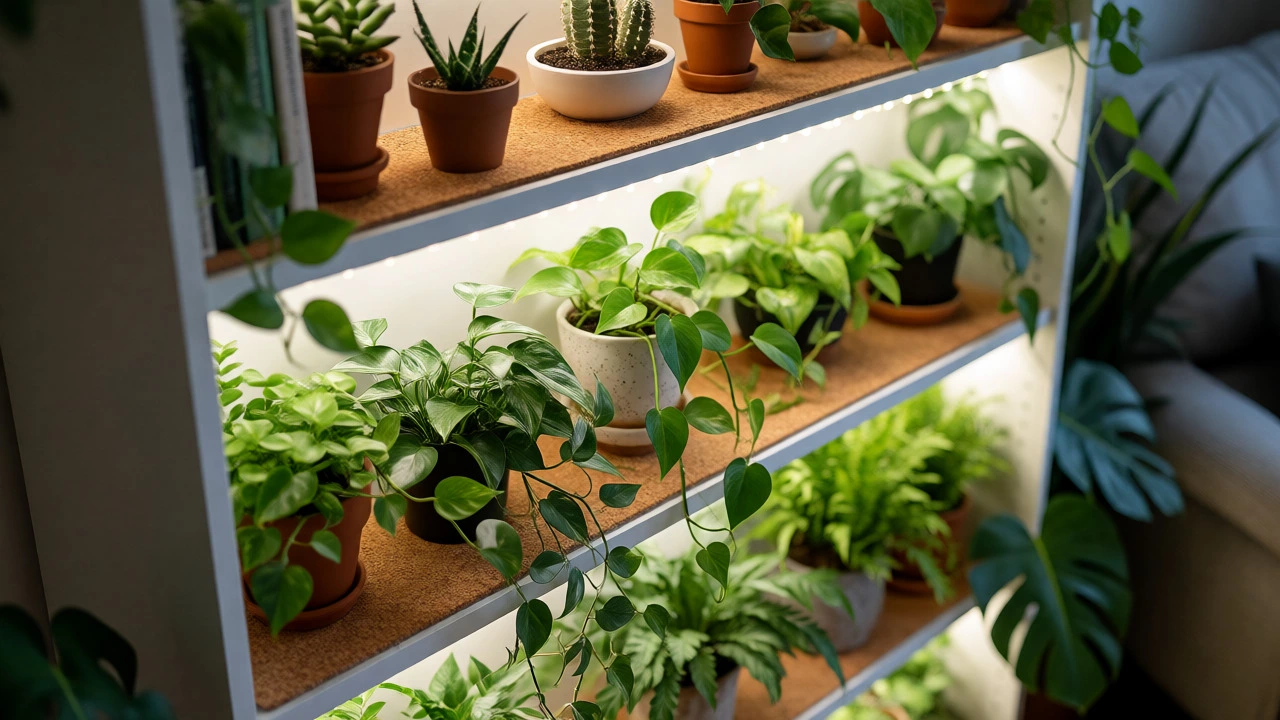
Houseplants are having a moment, but finding space for them is tricky. Windowsills get full fast. Enter the bookcase as a plant stand. Vertical gardening saves floor space and creates a lush, green focal point in any room.
Not all plants suit all shelves, though. Here’s a quick guide to positioning:
| Shelf Level | Light Condition | Best Plant Types | Care Tip |
|---|---|---|---|
| Top Shelves | Brightest Light | Succulents, Cacti, Snake Plants | Water less frequently; heat rises here. |
| Middle Shelves | Indirect Light | Pothos, Philodendron, Monstera | Great for trailing vines; trim regularly. |
| Bottom Shelves | Lower Light | Zamioculcas (ZZ Plant), Ferns | Check for dampness; avoid overwatering. |
One warning: protect your wood. Water damage kills cheap particleboard bookcases. Always use saucers under pots, and consider lining the shelves with waterproof vinyl or cork mats. If you have a metal bookcase, you’re safer, but still check for rust spots near water sources.
Display Collections Like a Curator
Do you collect vinyl records, vintage cameras, or ceramic mugs? Scattering them around looks messy. Grouping them on a bookcase turns them into a deliberate design feature. This technique, often called "vignetting," relies on grouping objects by color, height, or theme.
Start by clearing a single shelf. Remove everything. Then, place your largest item first-maybe a big vase or a stack of coffee table books. Build around it. Add smaller items like framed photos or figurines. Leave negative space. Crowding shelves makes them look chaotic. Aim for odd numbers of items (3 or 5) per cluster; our brains find asymmetry more appealing than perfect symmetry.
Lighting matters here too. Install LED strip lights under each shelf edge. It’s cheap, easy to wire, and makes glassware or ceramics glow. Suddenly, your collection of old bottles looks like a museum exhibit instead of junk drawer overflow.
Build a Dedicated Home Office Station
Working from home doesn’t require a massive desk. A narrow bookcase can serve as a standing desk alternative or a compact workstation. Mount a fold-down desktop to the side of a tall bookcase, or simply use the top surface if it’s sturdy enough.
Use the shelves below to store office supplies. Keep printers, paper reams, and chargers organized in labeled boxes. This keeps your actual desk surface clear for your laptop and notebook. A cluttered desk leads to a cluttered mind, according to various productivity studies. Keeping cables hidden inside the bookcase body cleans up visual noise.
If you’re renting, this is ideal because you can dismantle it easily. No drilling into walls required if you use freestanding units. Just ensure the unit is wide enough to support your monitor arm without tipping forward. Test it by pressing down firmly before setting up your expensive gear.
Kid-Friendly Storage Solutions
Children’s rooms are battlefields of toys. Low bookcases are perfect for accessible storage. Kids can reach their own toys, encouraging them to clean up independently. Choose rounded-edge models to prevent injuries during rough play.
Label the shelves with pictures, not words. A picture of a train means "train shelf." A picture of a doll means "doll shelf." This helps pre-readers understand where things belong. As they grow older, switch to text labels. Rotate toys occasionally-store half in a closet and swap them monthly. This keeps interest high without needing more storage space.
Can I use a bookcase as a TV stand?
Yes, but check the weight limit. Most standard bookcases hold 10-15kg per shelf. Large TVs weigh more. Ensure the bottom shelf is reinforced or place the TV directly on the floor-supported base. Secure the TV to the back panel to prevent tipping.
How do I stop books from falling off open shelves?
Use bookends for individual rows. For entire shelves, install a thin wooden lip or acrylic barrier along the front edge. This keeps items contained while maintaining visibility. Tension rods placed vertically at the ends of shelves also work well.
Is particleboard safe for bathroom bookcases?
Standard particleboard swells when exposed to humidity. Use MDF with moisture-resistant coating or sealed plywood. Alternatively, line shelves with waterproof liners and keep wet towels away from direct contact. Ventilation is crucial in bathrooms.
What’s the best way to anchor a bookcase?
Always anchor tall bookcases to the wall. Use L-brackets or anti-tip straps. Locate studs in the wall for maximum strength. If you can’t hit a stud, use heavy-duty drywall anchors rated for the bookcase’s total loaded weight.
Can I paint a melamine bookcase?
Melamine is slippery, so paint peels easily. Sand the surface lightly with fine-grit sandpaper to create tooth. Apply a bonding primer designed for laminate surfaces. Once dry, use latex or acrylic paint. Two thin coats are better than one thick one.