Office Chair Ergonomic Risk Calculator
Work Setup Profile
Fatigue Risk Analysis
Why this matters:
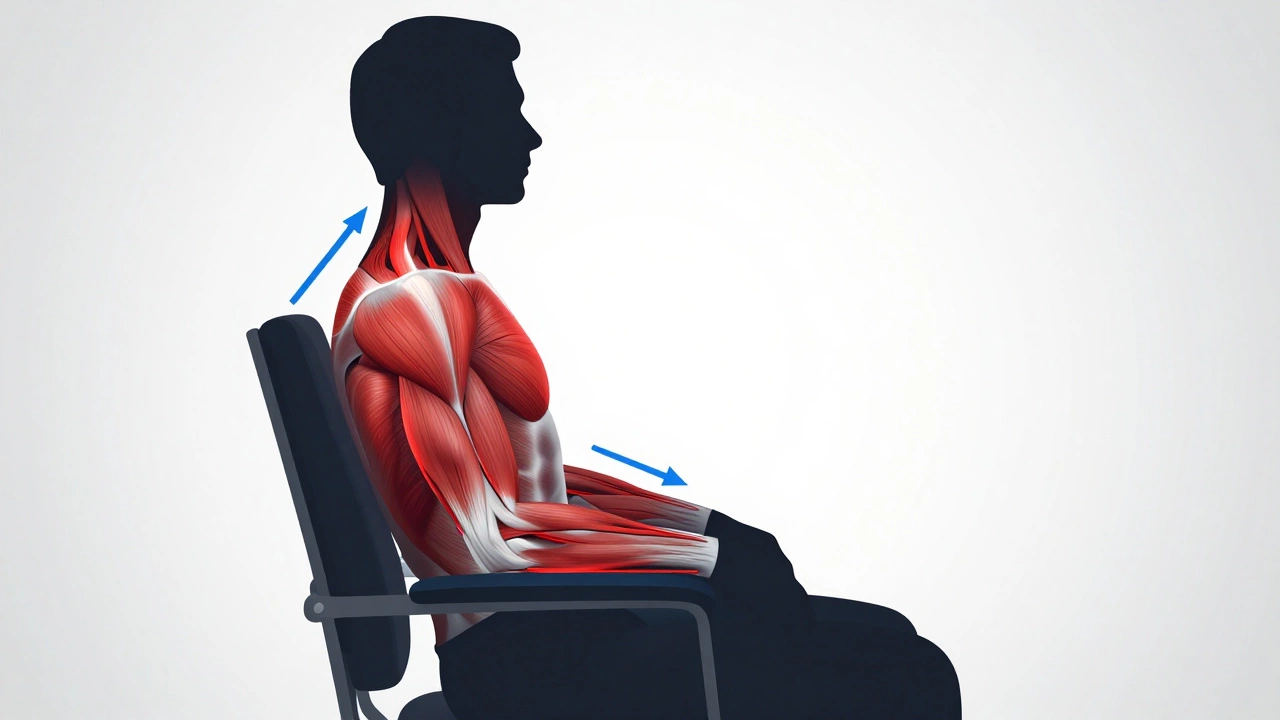
Without arm support, your trapezius muscles must hold roughly 5% of your body weight constantly. This creates static load, restricting blood flow and causing rapid fatigue.
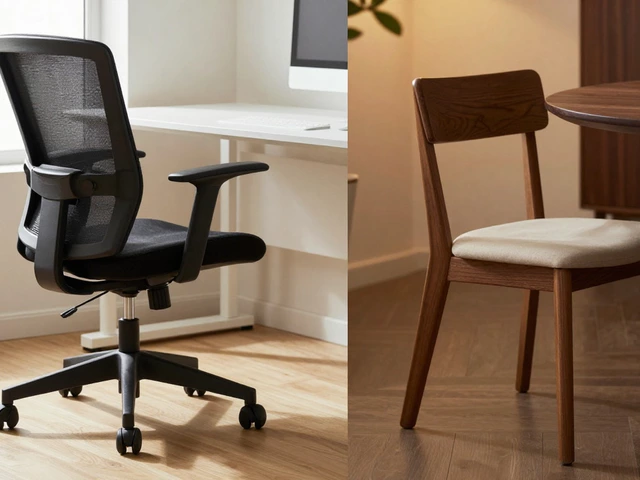
Have you ever sat at your desk for two hours and suddenly realized your shoulders are screaming? You’re not imagining it. That creeping tension in your neck and the ache between your shoulder blades often come from a surprising culprit: the lack of armrests on your office chair is a piece of furniture designed for seated work that supports posture and comfort during long periods of sitting. While many modern minimalist designs strip away armrests to save space or cut costs, this omission creates a significant biomechanical problem that affects nearly everyone who works at a computer.
The core issue isn’t just about missing something to rest your arms on. It’s about how your body compensates for that absence. When your chair lacks armrests are adjustable supports attached to the sides of a chair that hold the user's elbows and forearms, reducing strain on the upper body, your entire upper body structure changes. Your shoulders have nowhere to go but up and forward, leading to a cascade of discomfort that can turn a productive workday into a battle against chronic pain.
The Biomechanics of Shoulder Strain
To understand why an armless chair is an office seating solution without lateral arm supports, often used in space-constrained environments or specific ergonomic setups, is problematic, we need to look at basic anatomy. Your arms weigh roughly 5% of your total body weight. That might sound small, but when you hold them out in front of you while typing, that weight multiplies in terms of leverage and muscle effort required to keep them suspended.
Without armrests to bear this load, your trapezius muscles are large superficial muscles spanning the back of the neck and shoulders, responsible for moving the scapula and supporting the head and deltoids are muscles forming the rounded contour of the shoulder, essential for lifting and stabilizing the arm must work overtime. These muscles are designed for movement, not static holding. When they contract continuously to keep your arms from dropping onto your lap or keyboard, they enter a state of sustained tension. This leads to what ergonomists call "static load," which restricts blood flow to the muscles, causing lactic acid buildup and rapid fatigue.
You’ve probably felt this before. It starts as a subtle tightness between your shoulder blades. If you ignore it, it progresses to sharp pains in the neck and even headaches. This isn’t just discomfort; it’s your body signaling that the mechanical demand exceeds its capacity for recovery during the task.
The Posture Domino Effect
The problems don’t stop at the shoulders. Human bodies are interconnected systems. When your upper body is unstable because your arms aren’t supported, your spine reacts. To compensate for the floating arms, many people unconsciously hunch their shoulders forward. This action pulls the scapulae (shoulder blades) are flat triangular bones located on the back of the rib cage, providing attachment points for many muscles that move the arm and shoulder out of their neutral position.
This forward rounding initiates a chain reaction down the spine. As your shoulders roll forward, your thoracic spine (upper back) becomes more kyphotic, or curved outward. To keep your eyes level with your screen, your neck then has to crane forward. This puts immense pressure on the cervical vertebrae. For every inch your head moves forward, the effective weight on your neck doubles. So, a simple 10-pound head can feel like 30 pounds pulling on your neck muscles if you’re slouching due to unsupported arms.
Furthermore, without armrests to help stabilize your torso, you may find yourself gripping the edge of your desk or leaning heavily on one side. This asymmetrical loading twists the spine slightly over time, potentially leading to lower back pain and uneven wear on spinal discs. The chair, intended to support you, effectively forces you into a compromised posture just to stay comfortable enough to type.
Impact on Productivity and Focus
It’s easy to dismiss physical discomfort as a minor annoyance, but the impact on cognitive performance is significant. Pain is a distraction. When your brain registers signals of strain from your shoulders or neck, it diverts attention away from your work. You might find yourself shifting positions constantly, rubbing your neck, or taking frequent breaks to stretch-breaks that fragment your deep focus sessions.
Studies in occupational health consistently show a correlation between poor ergonomic setups and reduced productivity. An employee fighting against shoulder fatigue is less efficient than one who is physically supported. The mental energy spent managing discomfort could be directed toward problem-solving or creative tasks. In a professional setting, this translates to slower output and higher error rates, especially in detailed work where precision matters.
Additionally, the stress response triggered by chronic pain can elevate cortisol levels. Over time, this contributes to burnout and general workplace dissatisfaction. Investing in proper seating isn’t just about feeling good; it’s about maintaining the mental clarity needed to perform well.
Who Might Actually Benefit from Armless Chairs?
Before condemning all armless designs, it’s worth noting that they do have a place in specific scenarios. The primary advantage is space efficiency. In dense open-plan offices or small home offices, armrests can prevent chairs from sliding fully under desks. An armless chair allows for tighter spacing between workstations, maximizing floor area.
They are also beneficial for individuals who use standing desks frequently. If you alternate between sitting and standing every 30 minutes, bulky armrests can get in the way of transitioning smoothly. Some users prefer the freedom of movement that armless chairs provide, allowing them to rotate easily or reach for items on adjacent surfaces without obstruction.
However, these benefits apply mostly to short-duration sitting or highly mobile work styles. For anyone spending four or more continuous hours at a desk, the ergonomic drawbacks usually outweigh the spatial advantages. The key is matching the chair to the actual usage pattern, not just the available square footage.
Solutions Beyond Buying a New Chair
If you’re stuck with an armless chair due to budget constraints or office policy, there are practical ways to mitigate the risks. First, consider adding external support. Adjustable desk-mounted armrests or portable lap desks with arm supports can provide the necessary relief without replacing the entire seating setup.
Second, focus on active sitting techniques. Since passive support is missing, you must engage your core and back muscles more intentionally. Set reminders to check your posture every 20 minutes. Are your shoulders rolled back? Is your head aligned over your spine? Small adjustments can reduce the static load significantly.
Third, incorporate regular micro-breaks. Stand up, shake out your arms, and do gentle neck stretches. Rolling your shoulders backward and upward can release some of the tension built up from holding your arms unsupported. These brief movements restore blood flow and reset muscle memory.
| Feature | Standard Armrest Chair | Armless Chair | Chair + External Support |
|---|---|---|---|
| Shoulder Strain | Low | High | Medium to Low |
| Space Efficiency | Medium | High | Medium |
| Cost | Variable | Lower | Low to Medium |
| Postural Stability | High | Low | Medium |
| Mobility | Restricted | High | Variable |
Choosing the Right Support for Your Body
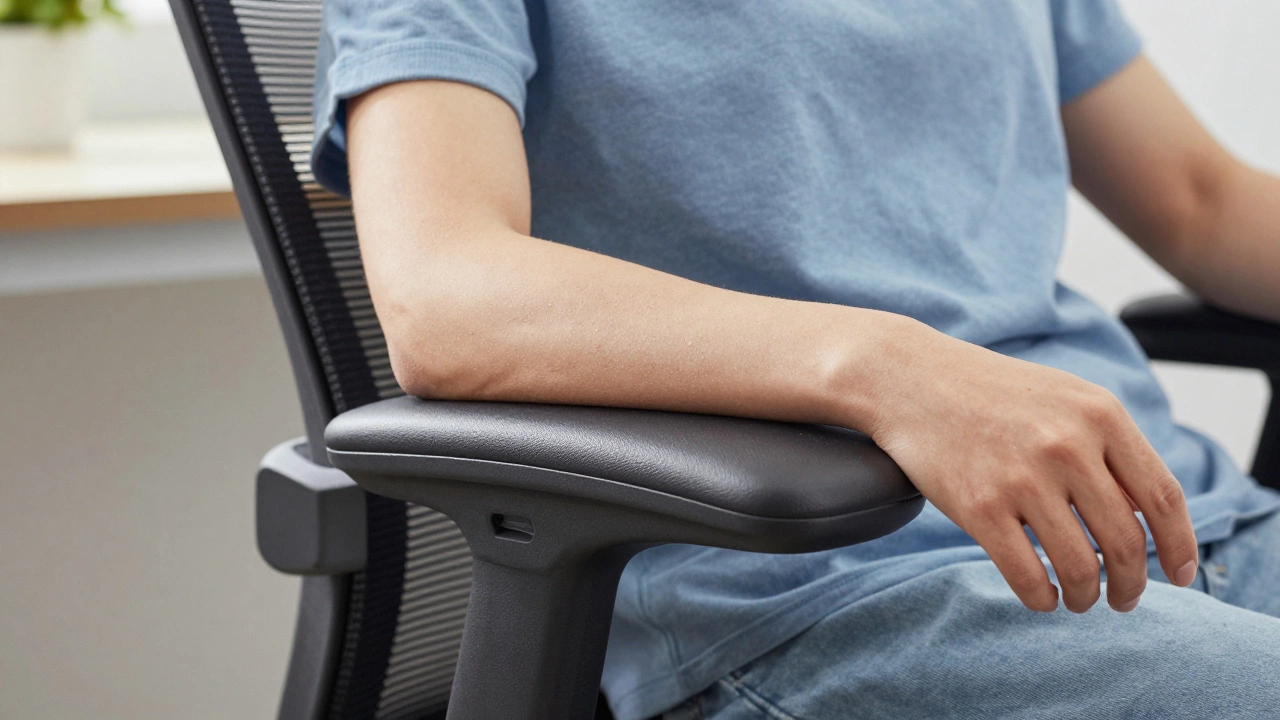
Not all armrests are created equal. If you decide to upgrade to a chair with armrests, look for adjustability. Height, width, and pivot adjustment allow you to customize the support to your body dimensions. Ideally, your elbows should rest at a 90-degree angle, with your forearms parallel to the floor. The armrests should be close enough to your body that your shoulders remain relaxed and not pushed forward.
Material matters too. Soft, padded armrests can conform better to your forearm shape, distributing pressure evenly. Hard plastic or metal bars can create pressure points, leading to nerve compression in the wrist or elbow over time. Mesh or breathable materials are preferable for hot climates or long sessions where heat buildup is a concern.
Remember that ergonomics is personal. What works for someone else might not work for you. Pay attention to how your body feels after a full day of sitting. Discomfort is data. Use it to guide your choices, whether that means buying a new chair, adding accessories, or changing your habits.
Can an armless chair cause permanent damage?
While occasional use won't cause permanent harm, prolonged daily use of an armless chair can lead to chronic conditions such as tendinitis, bursitis, or cervical spine issues. The constant strain on soft tissues and joints can result in long-term inflammation and structural changes if not addressed early.
Are armless chairs bad for everyone?
No, they are not universally bad. People who stand frequently, have very small spaces, or use specialized equipment that requires wide access may benefit from armless designs. However, for typical desk workers spending hours seated, the lack of support poses significant ergonomic risks.
How high should armrests be set?
Armrests should be adjusted so that your elbows form a 90-degree angle when resting on them. Your shoulders should remain relaxed and down, not hunched up towards your ears. If your shoulders rise, the armrests are too high; if your arms hang loosely, they are too low.
What is the best alternative if I cannot buy a new chair?
You can purchase adjustable desk-mounted armrests or use a lap desk with integrated arm supports. Additionally, practicing regular stretching exercises and being mindful of your posture can significantly reduce the negative effects of sitting without arm support.
Do mesh chairs with armrests offer better support?
Mesh chairs often provide excellent breathability and lumbar support, but the quality of armrests varies. Look for models with 4D adjustable armrests (height, depth, width, and pivot) to ensure comprehensive support. The mesh material itself does not directly affect arm support, but the overall ergonomic design of the chair does.