Sofa Choice Decision Tool
Answer these 5 questions to find the perfect seating arrangement for your specific space and habits.
Loading...
Your Ideal Choice: ...
Quick Summary: The Main Trade-offs
- Corner Sofa: Best for lounging, maximizing small spaces, and creating a defined "zone" in open-plan homes.
- Two Sofas: Best for formal conversations, flexibility in room layout, and easier moving/transport.
- Comfort: Corner sofas win for napping; two sofas win for structured seating.
- Space: Corner sofas use corners efficiently; two sofas allow for more walking paths.
The Case for the Corner Sofa: Maximum Coziness
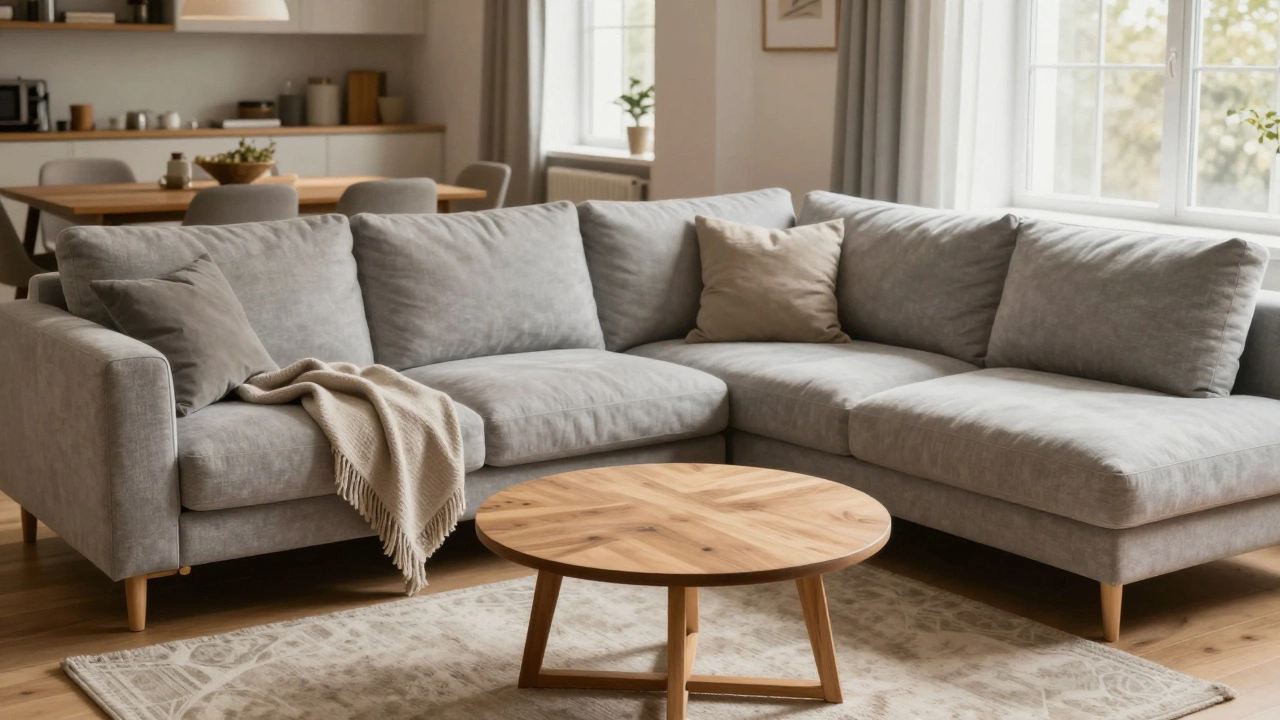
If your primary goal is to create a "den" feel, a corner sofa is the clear winner. Because these units are often connected, they eliminate the gaps you find between separate pieces. This makes them the ultimate choice for movie marathons or afternoon naps. If you have kids or pets, the L-shape creates a natural boundary, keeping the "mess" contained in one area of the room.
From a design perspective, these are lifesavers in open-concept living. In a flat where the kitchen and lounge share one big room, a sectional sofa acts as a physical wall. By placing the back of the sofa toward the dining area, you've effectively built a room within a room without needing a single piece of drywall. It creates a psychological shift from "eating mode" to "relaxing mode."
However, there is a catch: the "dead zone." In many corner sofas, the very corner seat is a bit of a trap. Once someone settles in there, it's hard for them to get out without making everyone else move. Also, if you move house, these beasts are a nightmare. A massive L-shaped frame often doesn't fit through standard narrow hallways or around tight corners in older buildings, which is why many people now opt for modular versions that snap together.
The Flexibility of Two Sofas: Versatility and Flow
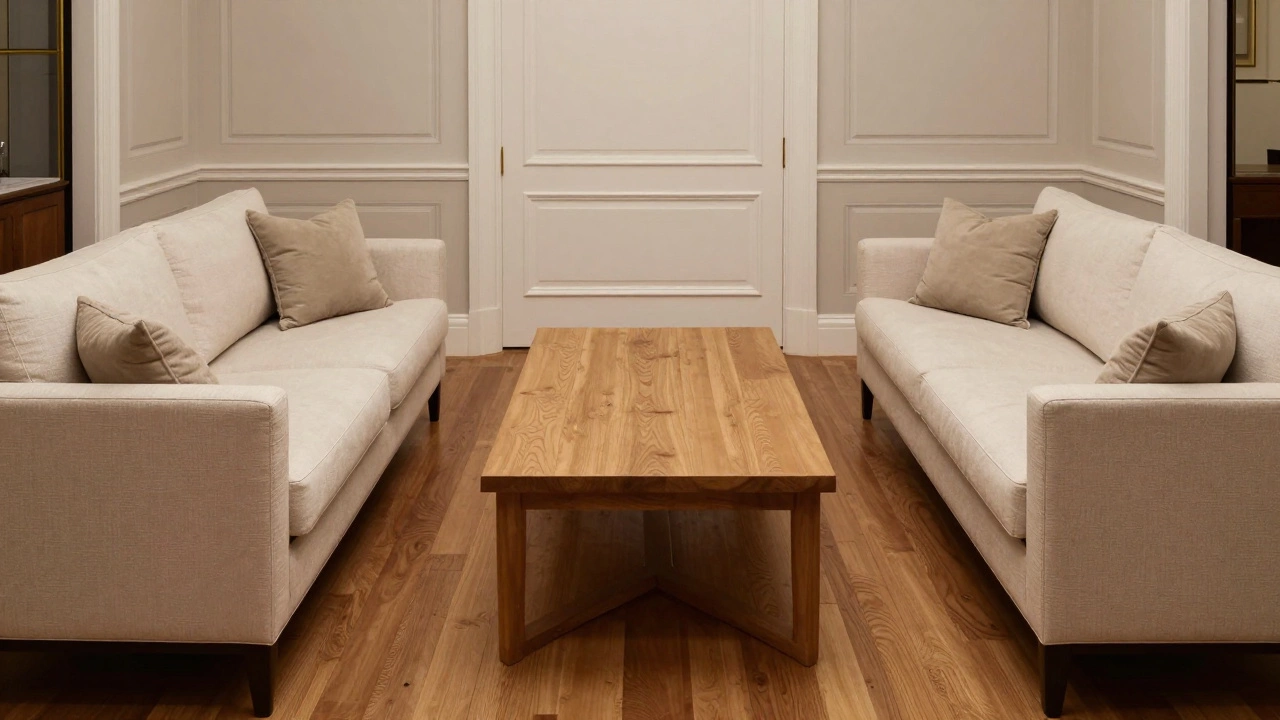
Having two separate sofas-usually a three-seater and a two-seater-gives you a level of control that a single unit simply can't match. The biggest advantage here is the "conversation circle." When you place two sofas facing each other with a coffee table in between, you create an intimate environment that encourages eye contact and talking. This is why you'll see this setup more often in formal sitting rooms or homes where hosting guests for coffee and chat is a priority over watching TV.
Think about the "flow" of your room. A giant corner unit can sometimes act like a boulder in a stream, forcing everyone to walk a long way around to get to the balcony or the kitchen. With two sofas, you can leave gaps. You can place one against a wall and another perpendicular to it, leaving a clear walkway. If you decide you hate the layout after six months, you can just slide one sofa a few inches or swap their positions. Try doing that with a 3-meter-long sectional.
There's also the "guest comfort" factor. Not everyone likes being crammed shoulder-to-shoulder. Two separate sofas provide a psychological sense of personal space. Someone can sit on the end of the second sofa and still feel like they are part of the group without being physically touching the person next to them.
Comparing the Two: A Detailed Breakdown
| Feature | Corner Sofa (Sectional) | Two Separate Sofas |
|---|---|---|
| Seating Capacity | Higher (utilizes corners) | Moderate (depends on size) |
| Conversation | Side-by-side / Lounging | Face-to-face / Formal |
| Room Flow | Can block pathways | Easier to navigate around |
| Moving House | Difficult (bulky/heavy) | Easier (two smaller pieces) |
| Napping Potential | Excellent (chaise end) | Good (depending on depth) |
Which One Wins for Your Specific Room?
To make the right call, you need to look at your floor plan. If you have a small, square room, a corner sofa is often the only way to get enough seating without making the room feel like a cluttered warehouse. By pushing the sofa into the corner, you open up the center of the floor, which actually makes the room feel larger than if you had two smaller sofas floating in the middle.
On the other hand, if you have a long, narrow "tunnel" room, avoid the corner sofa. Placing a giant L-shape in a narrow room usually cuts the space in half, leaving you with a tiny corridor. In this scenario, one long sofa against the wall and a smaller love seat placed strategically is a much better move. It maintains the length of the room and prevents the space from feeling claustrophobic.
You also need to consider your Interior Design style. A corner sofa leans toward a modern, casual, and "lived-in" aesthetic. Two sofas, especially if they are matched in a Sofa Set, tend to look more traditional and organized. If you love the look of a curated, symmetrical room, the two-sofa approach is the way to go.
Practical Pitfalls to Avoid
One mistake people often make with corner sofas is ignoring the "orientation." You'll see terms like "left-hand facing" or "right-hand facing." This refers to where the long part (the chaise) is when you are looking at the sofa from the front. Buy the wrong one, and you'll end up with a sofa that blocks your only entrance to the room. Always sketch your room on paper and mark the "L" before ordering.
For those choosing two sofas, the biggest trap is the "mismatched look." While eclectic styles are trendy, having two completely different heights, depths, and colors can make a room look accidental rather than intentional. If you aren't buying a matching set, try to keep at least one element consistent-like the height of the seat cushions or the color palette of the fabric.
Lastly, consider the Coffee Table. A corner sofa usually requires a round or oval table. Why? Because a rectangular table creates a "barrier" that makes it hard to get into the corner of the sofa. Two sofas, however, work perfectly with a large rectangular table, providing a sturdy center point for the conversation area.
Is a corner sofa better for small living rooms?
Generally, yes. By utilizing the corner, you save the floor space that would otherwise be wasted. It allows you to maximize the number of seats without cluttering the center of the room with multiple pieces of furniture.
Are corner sofas more expensive than buying two separate ones?
Not necessarily. While a high-end large sectional can be pricey, buying two separate high-quality sofas often costs more in total because you are paying for two separate frames and sets of legs. However, a corner sofa is often a single large shipment, which might affect delivery costs.
What is the best layout for a long, narrow room?
In a narrow room, avoid L-shapes as they can cut the room off. Instead, go for one long sofa against the longest wall and a smaller one (or a pair of armchairs) opposite or perpendicular to it to keep the walkway clear.
Can I change the orientation of my corner sofa later?
Only if you bought a modular sectional. Standard L-shaped sofas are built into a specific frame. Modular versions allow you to move the chaise from the left to the right side whenever you rearrange your furniture.
Which option is better for people who host many guests?
If your guests are family and kids, a corner sofa is great for lounging. If you host more formal gatherings or professional acquaintances, two sofas are better because they facilitate face-to-face conversation and provide more personal space.
Next Steps: Making Your Final Choice
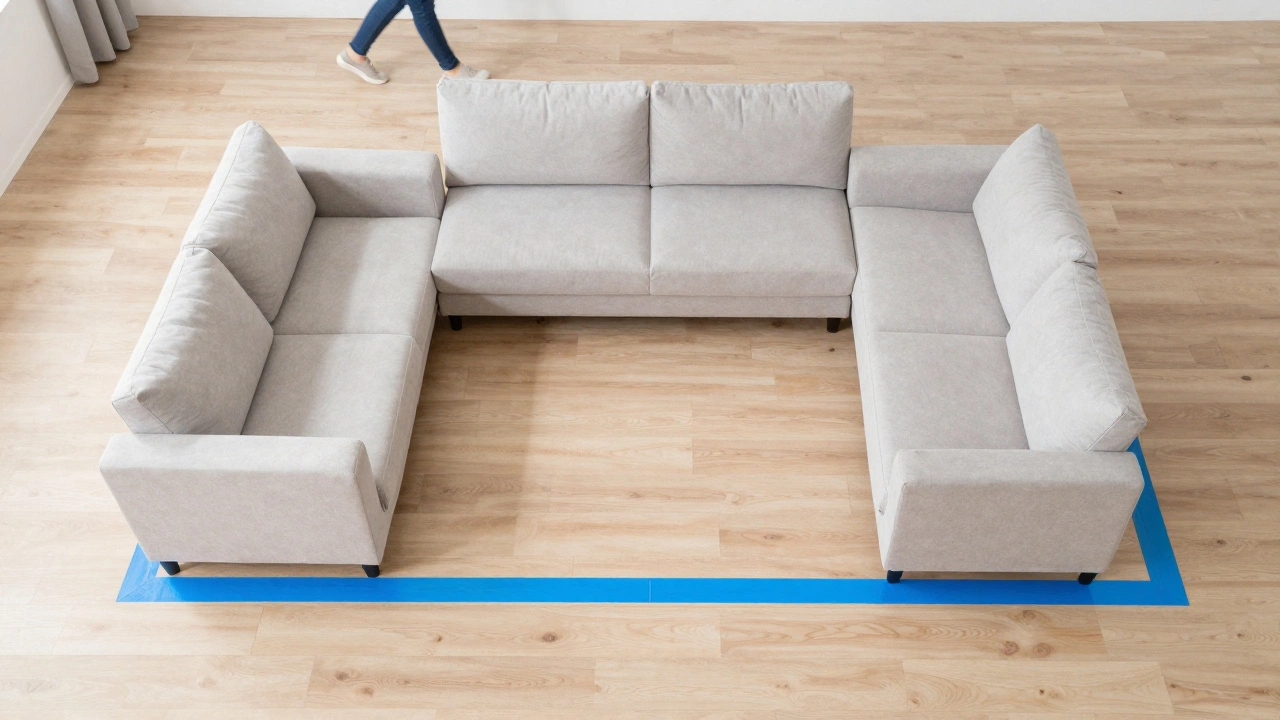
Before you hit the "buy" button, try the masking tape trick. Get some painter's tape and mark out the exact dimensions of the sofa on your floor. Walk around the tape for a full day. If you find yourself tripping over the "sofa" or feeling like you can't get to the light switch, you know the layout is too big. If the space feels empty, you might need to step up to a larger sectional.
If you are still torn, consider a hybrid: a large three-seater sofa paired with two comfortable armchairs. This gives you the flexibility of separate pieces but allows you to arrange them in an L-shape when you want that cozy, corner-sofa vibe. It's the safest bet for those who can't decide and might move house in the next few years.