TV Viewing Height: What You Need to Know for Comfort and Eye Health
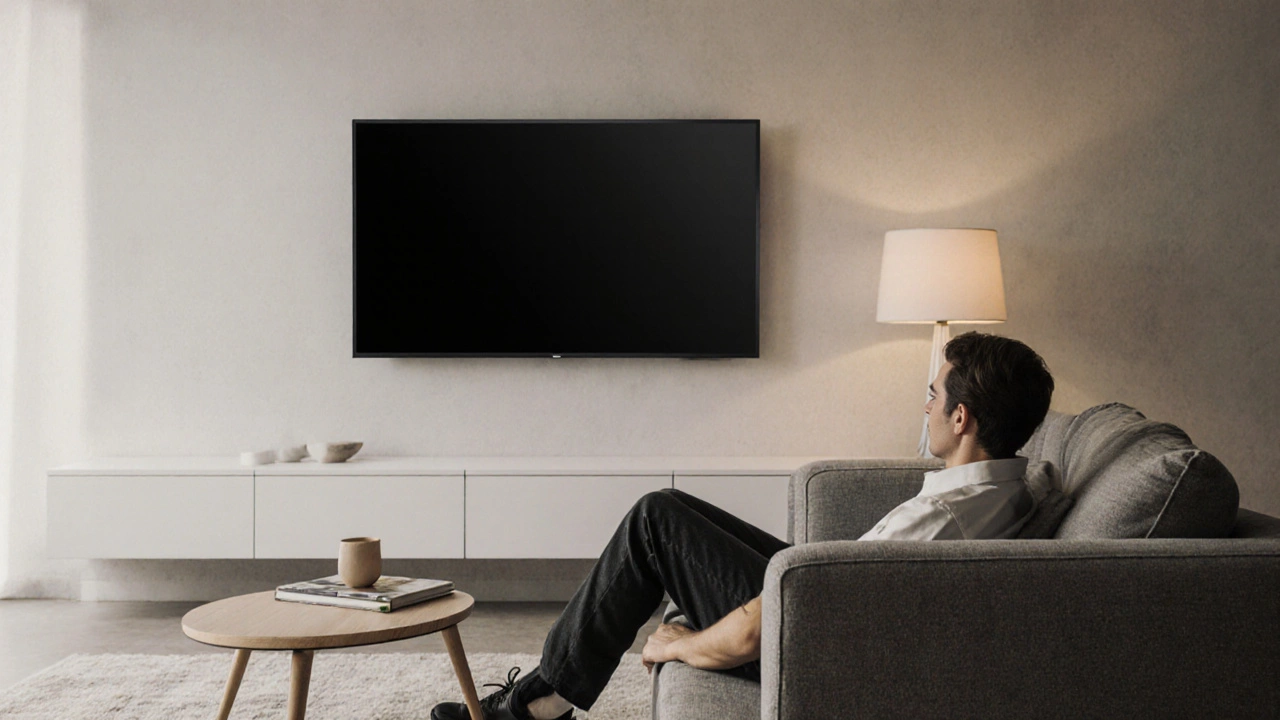
When you sit down to watch TV, your TV viewing height, the vertical position of the screen relative to your seated eye level. It's not just about where the TV fits on the wall—it's about how your neck, eyes, and spine react over time. If your screen is too high, you’re looking up. Too low, and you’re constantly dipping your chin. Both cause strain. Most people don’t realize this isn’t normal discomfort—it’s a sign the setup is wrong.
There’s a simple rule: the center of your screen should be at or slightly below eye level when you’re seated. That’s it. For most people, that means the bottom of the TV is about 24 to 30 inches off the floor. But it changes if you’re on a couch, a recliner, or a low Japanese-style floor seating setup. A recliner, a chair designed for lounging with adjustable back and leg support shifts your posture, so your eye level drops. That means your TV might need to sit lower than you think. And if you’re using a TV stand, a piece of furniture built to hold a television and often used in living rooms, make sure it’s tall enough to bring the screen to that sweet spot—not too short, not too tall.
Size matters too. A 75-inch TV isn’t just bigger—it changes how far back you sit and how high the center should be. You can’t just slap a huge screen on a stand meant for a 50-inch model. Weight, balance, and viewing angle all shift. That’s why so many people end up with neck pain after an hour of watching. It’s not the show—it’s the setup.
And it’s not just about comfort. Poor TV viewing height can mess with your sleep, your focus, and even your posture over time. You don’t need a home theater expert to fix it. Just sit where you normally sit, measure your eye level, and adjust from there. A few inches can make all the difference.
Below, you’ll find real advice from people who’ve been there—how to fix a TV that’s too high, why some stands don’t work with modern screens, and what to do if you’re stuck with a wall-mounted TV that’s way above eye level. These aren’t theories. These are fixes people used after their necks started hurting.