How Humidity Impacts Your Furniture and What You Can Do About It
Ever notice a wooden chair swelling after a rainy week? That’s humidity at work. Too much moisture makes wood expand, while dry air can shrink it, leading to cracks or wobble. Upholstery isn’t safe either – dampness fuels mold, smells and stains. The good news? A few everyday habits can protect your pieces.
Control the Air Around Wood
First, aim for a stable room humidity of 45‑55 % if you can. A small dehumidifier in the living room or bedroom does wonders during wet seasons. On the flip side, in winter use a humidifier to stop the air from getting bone‑dry, which can split table legs. Keep the device near larger wooden items so the moisture level stays even.
Don’t forget ventilation. Open a window for a few minutes each day to exchange stale, humid air. If you have a bathroom attached to a bedroom, use the exhaust fan while showering – the extra steam can creep into nearby furniture otherwise.
Smart Storage Choices
Storing furniture in an unheated garage or a cold annex sounds cheap, but it’s risky. Wood left in a chilly, damp space will warp over months. If you must keep pieces outside the house, wrap them in breathable cloth, not plastic. Plastic traps moisture and can cause mildew.
For items you store long‑term, consider climate‑controlled storage units. They keep temperature and humidity steady, cutting down on warping, cracking and mold growth. If that’s out of reach, place a silica‑gel packet or a small bucket of charcoal in the storage box – both absorb excess moisture silently.
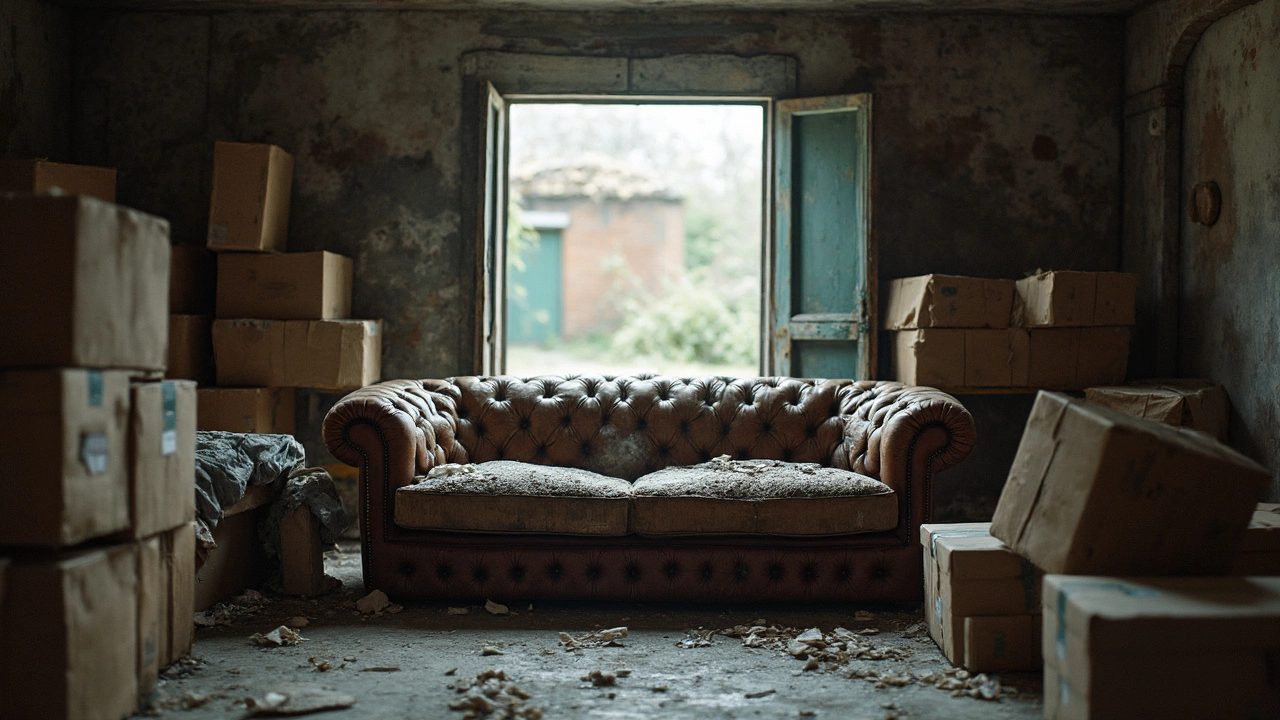
Upholstered items need extra care, too. Before you tuck a sofa into a storage unit, vacuum it thoroughly and let it air out under the sun for a few hours. Sunlight kills spores and dries out hidden dampness. Once dry, cover the sofa with a cotton sheet rather than a plastic drop.
When moving furniture between rooms, avoid quick temperature shifts. A wooden coffee table moving from a warm kitchen to a cold hallway can develop stress cracks. Let it sit for 15‑20 minutes in the new room before you set it down.
Cleaning plays a role in humidity battles. Wipe spills on wood immediately with a dry cloth; any liquid left can soak in and expand the fibers. For mold on fabric, mix equal parts white vinegar and water, spray lightly, and let air dry. The vinegar kills most common mold species without harsh chemicals.
Finally, keep an eye on indoor plants. They release moisture, which can raise humidity near nearby furniture. If you love greenery, place pots on shelves a foot away from wooden desks or dressers.
By controlling the air, choosing the right storage, and staying on top of cleaning, you’ll keep your furniture looking great for years. Small steps today prevent costly repairs or replacements later. So next time the weather turns, remember: a little air control goes a long way for your beloved pieces.