Ergonomic Chair: What Makes a Chair Actually Good for Your Back
When you sit for hours, your ergonomic chair, a chair designed to support the natural curve of your spine and reduce physical strain during prolonged sitting. Also known as task chair, it’s not about luxury—it’s about keeping your body from breaking down over time. Most people think comfort means soft cushions, but true comfort comes from structure. A good ergonomic chair holds your lower back in place, lets your feet rest flat, and keeps your arms level with your desk. It’s not magic. It’s science—built around how your spine, hips, and shoulders actually move.
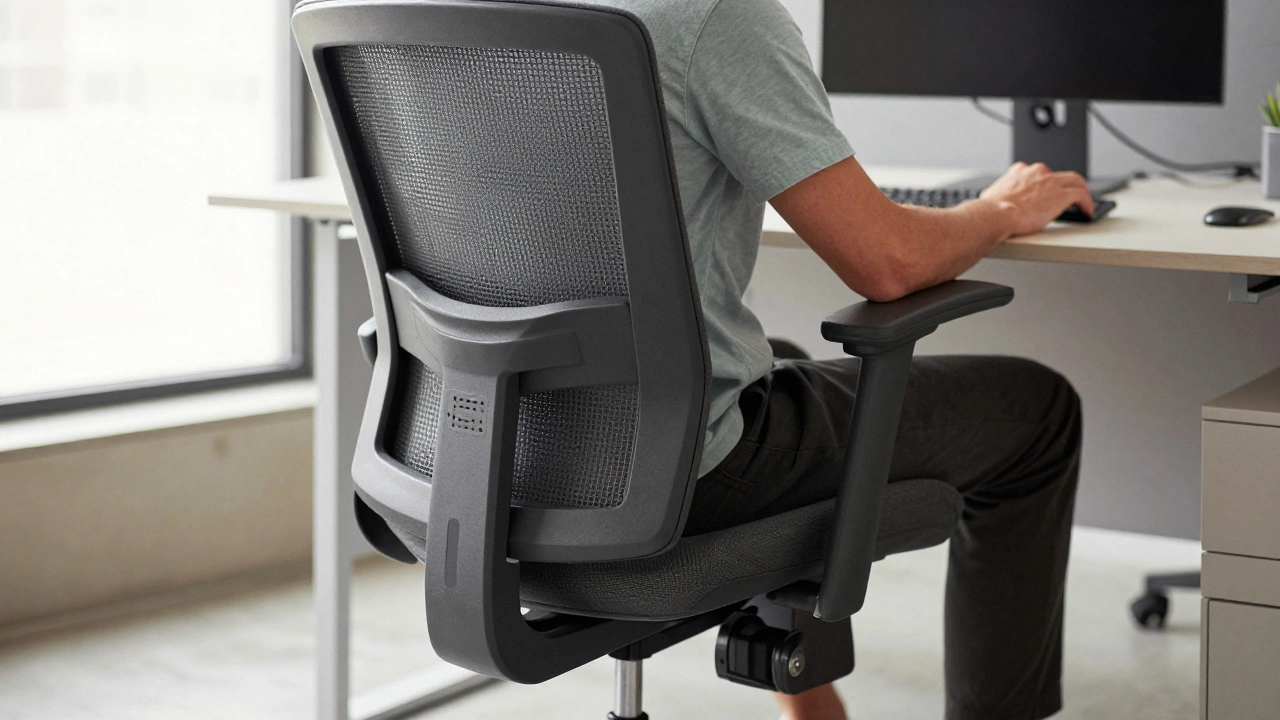
What makes an ergonomic chair, a chair designed to support the natural curve of your spine and reduce physical strain during prolonged sitting. Also known as task chair, it’s not about luxury—it’s about keeping your body from breaking down over time. different from a regular one? It’s the details. lumbar support, a contoured section at the lower back that maintains the spine’s natural inward curve isn’t just a pillow you can add on. It’s built into the frame, positioned right where your spine needs it. seat depth, the distance from the front to the back of the seat, adjusted so your thighs are fully supported without pressure behind the knees matters more than you think. Too shallow, and your legs dangle. Too deep, and you’re squished. Then there’s adjustable armrests, height- and width-adjustable supports that let your shoulders relax without shrugging. If your arms are floating or pulled down, your neck and shoulders pay the price.
Who really needs this? Not just office workers. Anyone sitting for more than three hours a day—teachers, writers, remote workers, even people who binge-watch TV—can benefit. Seniors with back issues, people recovering from injury, or those with chronic pain often find relief only when they switch to a properly fitted chair. It’s not a cure, but it stops things from getting worse. And if you’re shopping for one, skip the flashy designs. Look for adjustability, sturdy materials, and real feedback from people who’ve used it for months, not just days.
You’ll find posts here that dig into what makes a chair work—or fail. Some compare models. Others explain how poor posture from bad chairs leads to long-term pain. There’s advice on adjusting height, choosing the right backrest, and even how to fix a worn-out chair without buying new. No fluff. No hype. Just what actually helps your body stay in one piece.