Couch Storage Risk Calculator
Wrapping your couch in plastic might seem like a smart move when you’re storing it-especially if you’re worried about dust, moisture, or pests. But here’s the truth: plastic isn’t your friend when it comes to long-term couch storage. In fact, it can do more harm than good.
Why Plastic Is a Bad Idea for Couch Storage
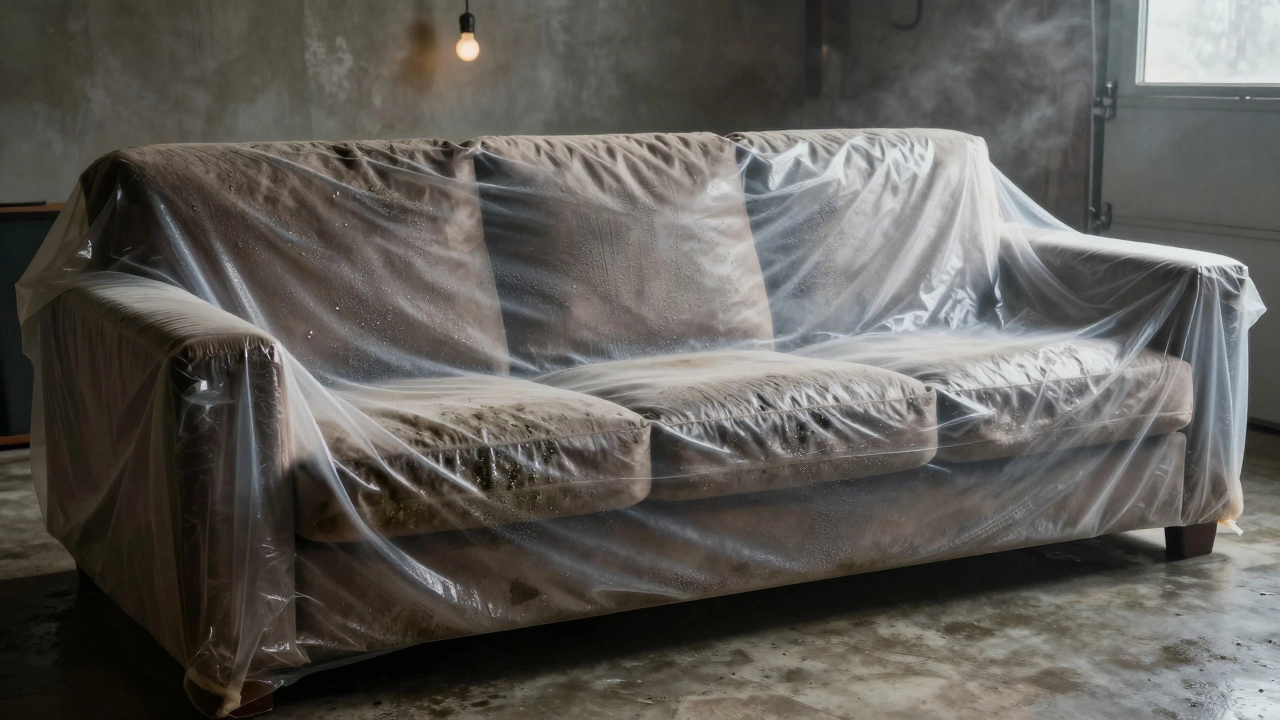
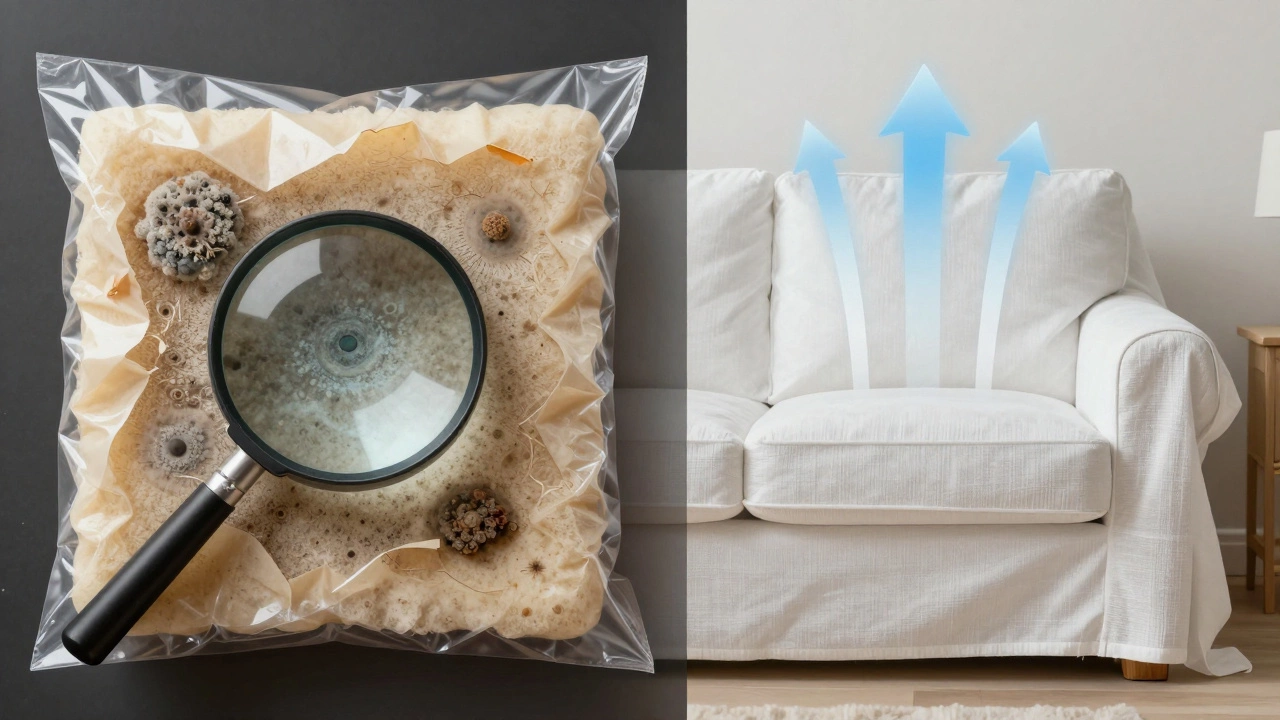
Most couches are made with fabric, foam, and wood. These materials need to breathe. When you seal them in plastic, you trap moisture inside. That moisture doesn’t just sit there-it turns into condensation, and that’s how mold and mildew start growing. You might not see it right away, but after a few months in a damp garage, basement, or storage unit, your cushions could be covered in fuzzy black or green spots. And once mold sets in, it’s nearly impossible to fully remove without replacing the foam.
Plastic also traps heat. In summer, temperatures inside a plastic-wrapped couch can climb 10-15 degrees higher than the surrounding air. That heat breaks down the foam’s structure faster. You’ll end up with a couch that sags in the middle, even if you never sat on it.
And what about pests? Plastic doesn’t keep out rodents or insects-it just hides them. Mice and cockroaches love dark, enclosed spaces. If they get in while the couch is wrapped, you won’t know until you unwrap it months later-and by then, they’ve chewed through the fabric, nested in the cushions, and left droppings everywhere.
What Happens When You Use Plastic on a Couch
Let’s say you wrapped your 2020 sectional in heavy-duty clear plastic for storage during a move. You thought you were being smart. Six months later, you pull it out. The plastic is still intact, but when you lift the cushion, the underside is damp. The fabric smells musty. You wipe it down with a cloth and notice dark patches forming along the seams. That’s mold. And it’s not just cosmetic-it’s a health risk. People with allergies or asthma can have serious reactions to mold spores in enclosed spaces.
Another common issue: plastic sticks to fabric. Vinyl and polyethylene can fuse with certain upholstery materials over time, especially if the couch was slightly damp when wrapped. You might end up peeling off bits of your couch’s fabric along with the plastic. Repairing that? Costly. Reupholstering? Even more so.
What to Use Instead of Plastic
You still need to protect your couch-but not with plastic. Here’s what actually works:
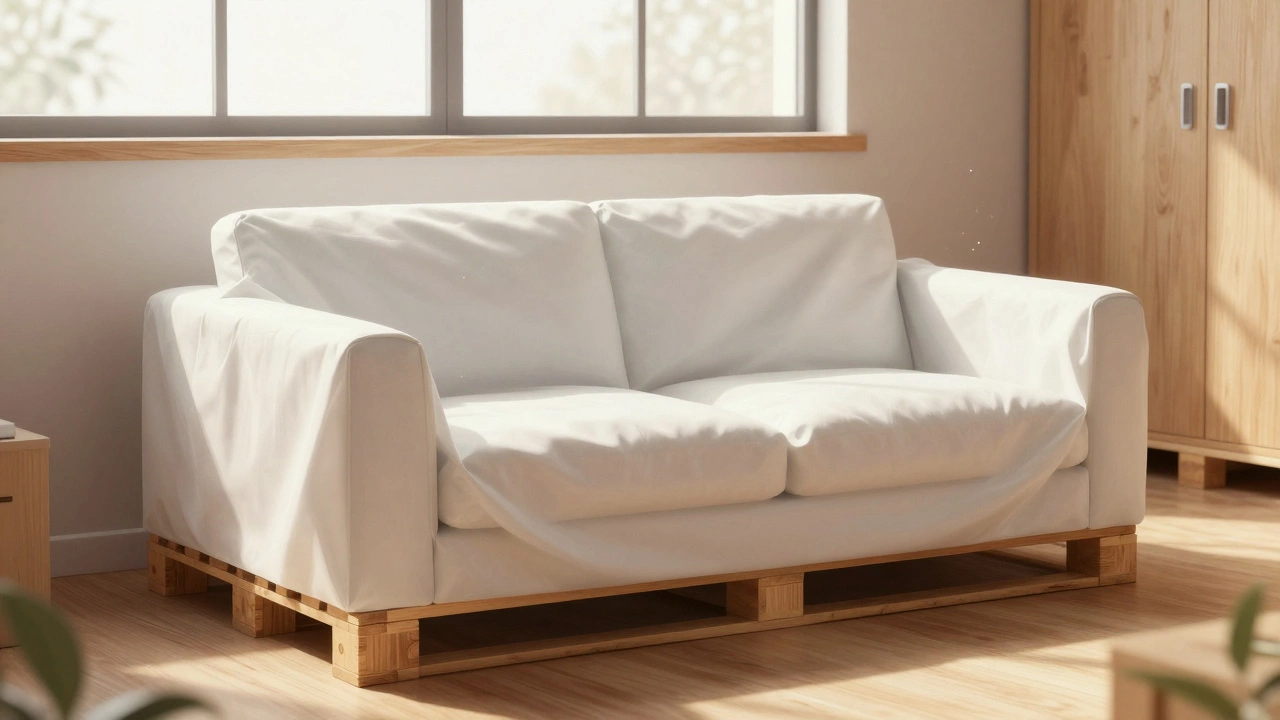
- Breathable cotton or canvas covers: These are the gold standard. They let air circulate while keeping dust and dirt out. Look for covers labeled as “furniture storage covers” or “moving covers.” They’re usually made of 100% cotton or a cotton-polyester blend with a water-resistant coating on the outside.
- Specialized furniture bags: Brands like U-Haul and Moving Help sell reusable storage bags designed for sofas. They’re made of non-woven polypropylene, which is breathable, tear-resistant, and doesn’t trap moisture.
- Plastic only for short-term, dry conditions: If you’re moving your couch from one room to another in the same house and it’s dry and climate-controlled, a light plastic sheet for a few days won’t hurt. But never use it for storage longer than a week.
Pro tip: Always clean your couch before storing it. Vacuum it thoroughly-especially under the cushions and along the seams. Dust and crumbs attract pests and can stain fabric over time. If your couch has removable covers, wash them according to the care label. Let everything dry completely before covering.
Storage Conditions Matter More Than the Cover
Even the best cover won’t save your couch if you store it in the wrong place. Avoid:
- Basements: They’re damp. Even if they feel dry, humidity levels are often above 60%-perfect for mold.
- Unheated garages: Temperature swings cause condensation. In winter, cold air meets warm air inside the couch and creates moisture.
- Attics: Too hot in summer, too cold in winter. Both extremes damage foam and wood frames.
Best storage spots:
- Climate-controlled storage units: These maintain a steady 55-75°F and humidity below 50%. Ideal for long-term storage.
- Indoor closets or spare rooms: If you’ve got space, keep it in your own home. Elevate it off the floor with wooden pallets or furniture sliders.
- Under-bed storage (for small couches): Use breathable fabric bins with handles. Don’t stack heavy items on top.
How to Store Your Couch the Right Way
Follow these steps to keep your couch in good shape:
- Remove all cushions and clean them separately.
- Vacuum the entire couch, including under the arms and along the base.
- Let it air out for 24 hours in a dry room if it’s been exposed to humidity.
- Wrap it in a breathable cotton or specialized storage cover. Don’t stretch it tight-leave some room for airflow.
- Place it on wooden pallets or furniture risers, not directly on concrete or carpet.
- Store in a cool, dry, climate-controlled space.
- Check it every 2-3 months. Unwrap it briefly to let it breathe if you notice any dampness.
What About Plastic for Moving?
If you’re moving your couch across town in a truck, plastic wrap can help prevent scratches and dirt during transit. But here’s the catch: remove it as soon as you get to your destination. Don’t leave it wrapped for more than 24 hours. Use plastic only as a temporary shield during transport-not as a storage solution.
Professional movers use stretch wrap for moving, but they also use breathable pads underneath and remove the plastic immediately after unloading. That’s the model you should copy.
Signs Your Couch Was Damaged by Plastic Storage
After unwrapping, watch for these red flags:
- A musty or mildew smell that won’t go away after airing out
- Stains or discoloration on the fabric that weren’t there before
- Cushions that feel soggy or don’t spring back when pressed
- Visible mold-black, green, or white fuzzy patches
- Fabric that feels stiff or brittle
If you see any of these, your couch might need professional cleaning-or worse, replacement. Mold remediation for furniture isn’t always effective. Foam that’s broken down from heat and moisture can’t be fixed.
Real-World Example: A Leeds Storage Mistake
A friend in Leeds stored her 2022 sectional in a friend’s unheated garage for five months while she moved abroad. She wrapped it in thick plastic she bought from a hardware store. When she returned, the couch smelled like a damp basement. The cushions were discolored, and the fabric had started to peel where the plastic had stuck. She spent £400 on professional cleaning and still had to replace two cushions. She later learned the garage’s humidity was over 70% the whole time. Plastic didn’t protect it-it sealed in the problem.
Final Verdict
No, you should not wrap your couch in plastic for storage-not even for a few months. It’s a common mistake that leads to expensive damage. Instead, use breathable covers, store in a dry climate-controlled space, and check on it regularly. Your couch will thank you. And your wallet will too.