If you’ve ever fidgeted through a meeting, bounced your leg under the desk, or stood up every few minutes to stretch while working, you’re not just restless-you might be wired for movement. That’s where an ADHD chair comes in. It’s not a gimmick. It’s not a luxury. It’s a tool designed to help people with attention-deficit/hyperactivity disorder (ADHD) stay focused by letting their bodies move in ways that calm their minds.
What Makes an ADHD Chair Different?
Most office chairs are built for stillness. You sit. You lean back. You adjust the height. Done. But for someone with ADHD, sitting still isn’t just uncomfortable-it’s mentally exhausting. The brain craves stimulation, and when it doesn’t get it, focus collapses. That’s why an ADHD chair is built around movement, not restraint.
These chairs don’t force you to sit perfectly still. Instead, they encourage small, natural motions: rocking, swiveling, bouncing, shifting. The idea? Movement releases dopamine and norepinephrine, two neurotransmitters that help regulate attention and executive function. When you’re moving, even slightly, your brain gets the input it needs to stay engaged.
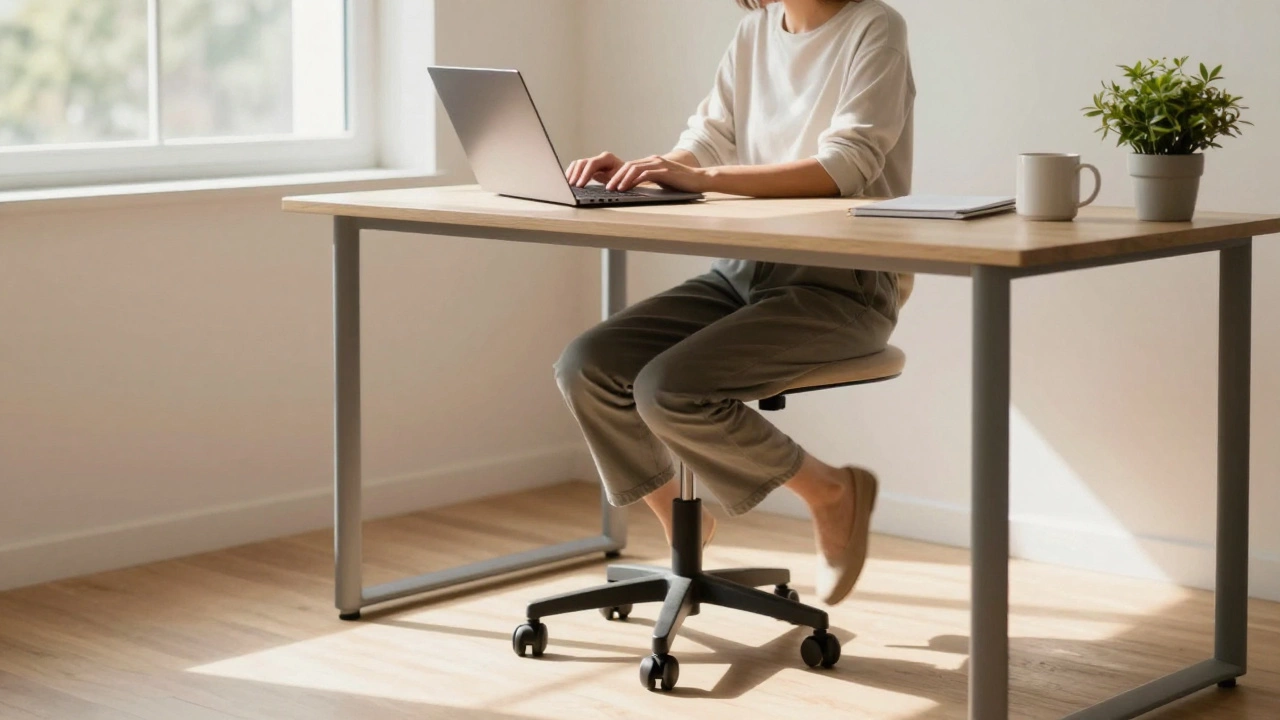
Unlike traditional ergonomic chairs that prioritize lumbar support and armrest alignment, ADHD chairs prioritize kinetic freedom. They often have no fixed backrest, no armrests, or even no back at all. Some look like giant exercise balls. Others are low-slung, with curved bases that let you sway. The most common types include:
- Wobble stools - Round, flat seats on a curved base that tilt in all directions
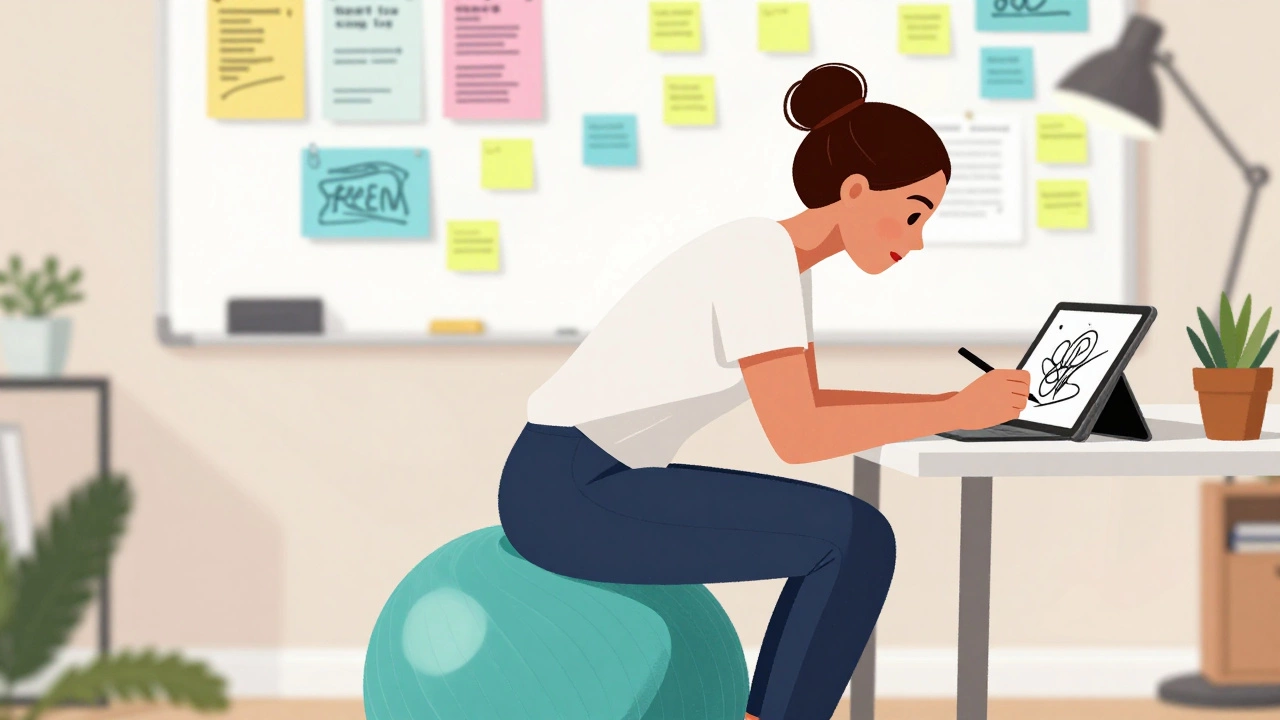
- Balance balls - Inflatable balls used as seats, forcing core engagement
- Dynamic sitting stools - Like the HÅG Capisco, with a saddle-style seat and adjustable height and tilt
- Rocking chairs for desks - Compact, low-profile rockers designed for small workspaces
Why Movement Helps Focus (The Science)
It sounds backwards: how can fidgeting help you concentrate? But research backs it up. A 2017 study from the University of Hertfordshire found that children with ADHD performed better on attention tasks when allowed to move-like bouncing their legs or tapping their fingers. The same applies to adults. Movement isn’t a distraction; it’s a self-regulation strategy.
ADHD isn’t about being unable to focus. It’s about being unable to focus on the *right* thing at the *right* time. Your brain needs sensory input to stay on task. Without it, it drifts. Movement provides that input. It’s like background noise for your mind-just enough to block out the static.
Neuroscientists call this arousal regulation. People with ADHD often have lower baseline levels of alertness. Movement raises that level just enough to hit the sweet spot: not too sleepy, not too overloaded. That’s why someone with ADHD can sit still during a movie (high stimulation) but not during a Zoom call (low stimulation).
Real-World Examples: Who Uses These Chairs?
You don’t need a formal ADHD diagnosis to benefit from a movement-based chair. Many people use them without ever being diagnosed. Teachers, writers, coders, and remote workers who struggle with brain fog or restlessness often find these chairs life-changing.
One user in Leeds, a freelance graphic designer, switched from a standard office chair to a wobble stool after years of back pain and midday crashes. She said, "I used to feel like my brain was underwater. Now I’m awake all day. I don’t even realize I’m moving-I just am."
Another example: a high school teacher in Manchester started using a balance ball chair during lessons. Her students noticed she was more energetic, less irritable, and more responsive. She didn’t realize it at first, but her own movement was helping her regulate her attention-and by extension, her classroom energy.
What to Look for in an ADHD Chair
Not all "active seating" is created equal. Here’s what actually matters:
- Freedom of motion - Can you tilt, rock, or bounce without resistance? If it feels locked, it’s not right.
- No armrests or backrest - These limit movement. The goal is to engage your core, not lean.
- Height adjustability - Your feet should rest flat on the floor. If you’re dangling, it won’t work.
- Stability - A wobble stool should move, but not tip. Look for a wide base and non-slip bottom.
- Material - Breathable fabric or firm, easy-to-clean surfaces. Avoid memory foam-it’s too soft.
Price range? You can find decent options from £60 to £200. Don’t overspend on branded "ADHD chairs"-many are just marketing. Focus on function, not labels.
Who Should Avoid These Chairs?
They’re not for everyone. If you have:
- Severe back or joint pain
- Balance issues or vertigo
- Neurological conditions affecting motor control
then a movement chair might not be safe. Always consult a physical therapist if you’re unsure. Also, if you’re in a quiet office environment where rocking might distract others, consider a silent option like a foot rocker under your desk.

Alternatives to ADHD Chairs
If a full chair isn’t right for you, try these:
- Foot rockers - A small, low platform under your desk that lets you gently rock your feet
- Resistance bands - Loop one around your chair legs and rest your feet on it for light tension
- Standing desks - Combine with a cushioned mat to shift weight and stay active
- Seated yoga balls - A cheaper, temporary option if you’re testing the waters
Some people use a combination: a regular chair with a foot rocker. That’s fine. The goal isn’t perfection-it’s finding what keeps your brain engaged without exhausting you.
How to Try One Before You Buy
Most furniture stores won’t carry these, but online retailers like Amazon, Wayfair, and specialized ergonomic sites often offer return policies. Look for ones with 30-day trials. Try it for a full workweek. Don’t judge it after one day. Your body needs time to adapt.
Pay attention to:
- Do you feel more alert after an hour?
- Do you stop fidgeting because you’re focused-or because you’re bored?
- Does your back feel better, or worse?
If the answer is yes to the first two, you’ve found something that works.
ADHD Chairs and Productivity: The Bigger Picture
This isn’t just about chairs. It’s about rethinking how we define "good posture" and "proper work habits." For decades, workplaces have punished movement. We’re told to sit straight, stay still, look professional. But for a huge portion of the population, that’s the opposite of productive.
ADHD chairs are part of a growing movement toward neuroinclusive design. Companies like Microsoft, Google, and even some UK public sector offices now offer movement seating as part of their wellness programs. It’s not about accommodating disability-it’s about optimizing human performance.
The most successful workers aren’t the ones who sit the straightest. They’re the ones who move the most-without being distracted by it.