Japanese Bedding Selector
What is your current sleeping arrangement?
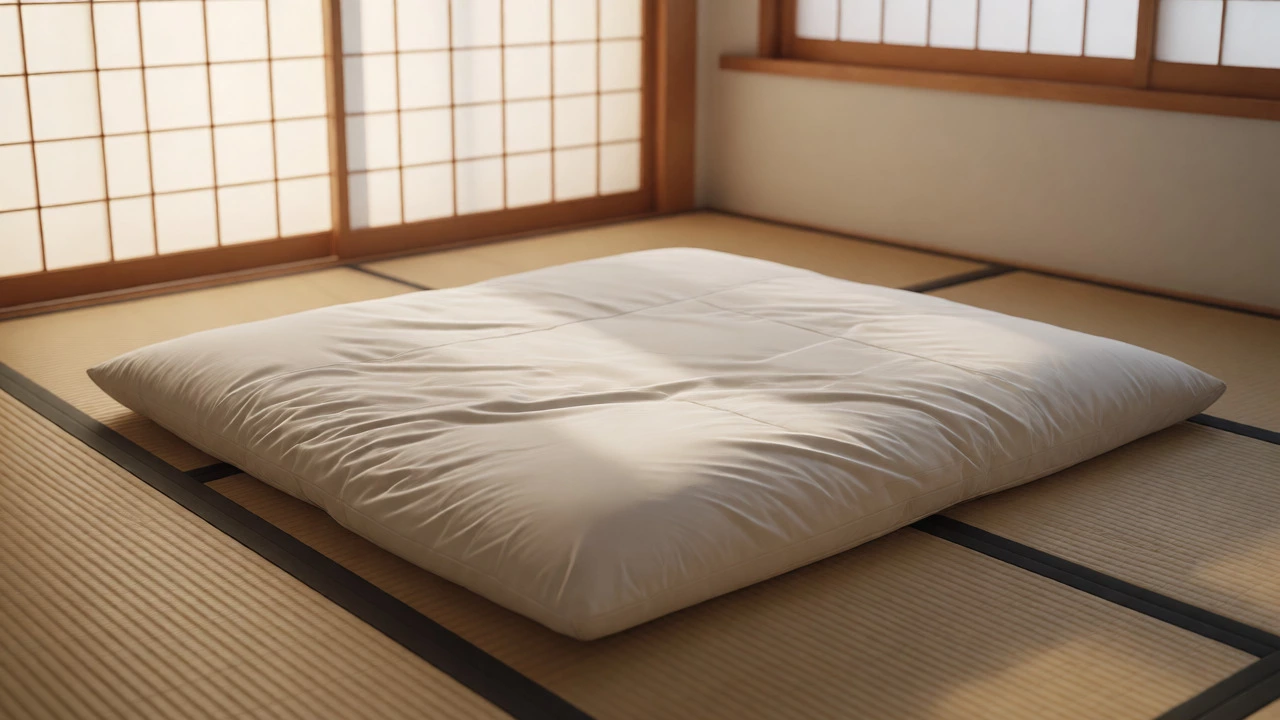
You walk into a Japanese-style bedroom or browse online for a minimalist sleep solution, and suddenly you're hit with two unfamiliar words: shikibuton is the thick mattress pad that goes directly on the floor, and kakebuton is the comforter or duvet that covers you while you sleep. It’s easy to mix them up if you aren’t familiar with traditional Japanese sleeping arrangements. But getting this wrong means buying the wrong product, ending up with no mattress or no blanket, and wasting money.
The confusion usually stems from the word "futon." In the West, a futon often refers to a sofa-bed hybrid frame. In Japan, a futon is simply a set of bedding components. The shikibuton is the foundation; the kakebuton is the warmth layer. They serve completely different physical functions, require different care routines, and are made from different materials. If you are trying to recreate an authentic low-profile sleep experience, knowing which is which isn't just trivia-it's essential for comfort and hygiene.
The Core Difference: Foundation vs. Covering
Think of your standard Western bed setup. You have a box spring or platform, then a mattress, then sheets, and finally a comforter or duvet. Japanese bedding simplifies this by removing the heavy frame and separating the support layer from the warmth layer.
The shikibuton acts as the mattress. It is designed to be firm enough to support your spine while lying on the floor (tatami mats) but soft enough to be comfortable without a box spring. It does not have a cover attached in the same way a modern mattress might; it is often used with fitted sheets specifically designed for its thickness.
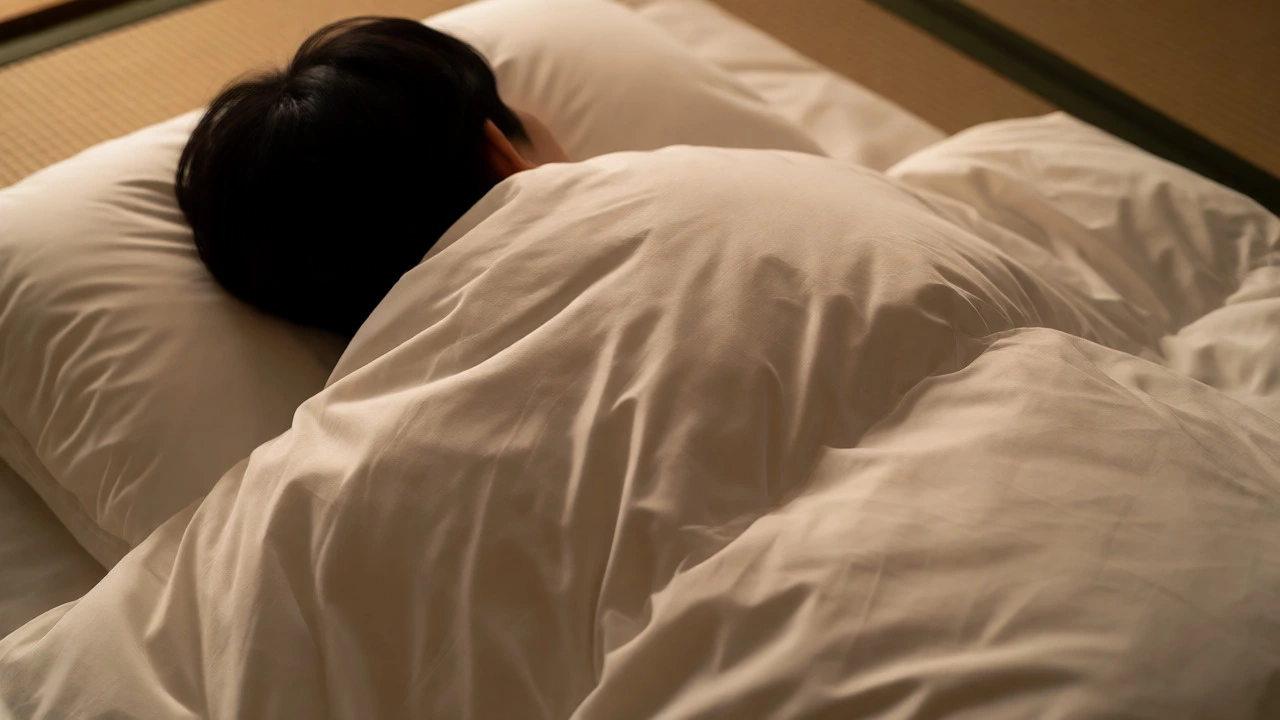
The kakebuton acts as the blanket or duvet. It is filled with down, wool, or synthetic fibers to provide insulation. It is lightweight compared to Western comforters because Japanese homes traditionally rely on layered clothing or heating rather than massive thermal mass in the bedding itself. Crucially, the kakebuton is never slept on directly; it is always covered by a duvet cover (called a kakegawa) for hygiene.
| Feature | Shikibuton (Mattress) | Kakebuton (Comforter) |
|---|---|---|
| Primary Function | Supports body weight; replaces the mattress. | Provides warmth; replaces the comforter/duvet. |
| Placement | Goes directly on the floor or tatami mats. | Goes on top of the sleeper, over the shikibuton user. |
| Thickness | Typically 3-6 inches (7-15 cm). | Variable loft, generally thinner than Western duvets. |
| Care Routine | Requires regular airing out to prevent mold. | Easier to wash if removable cover is used. |
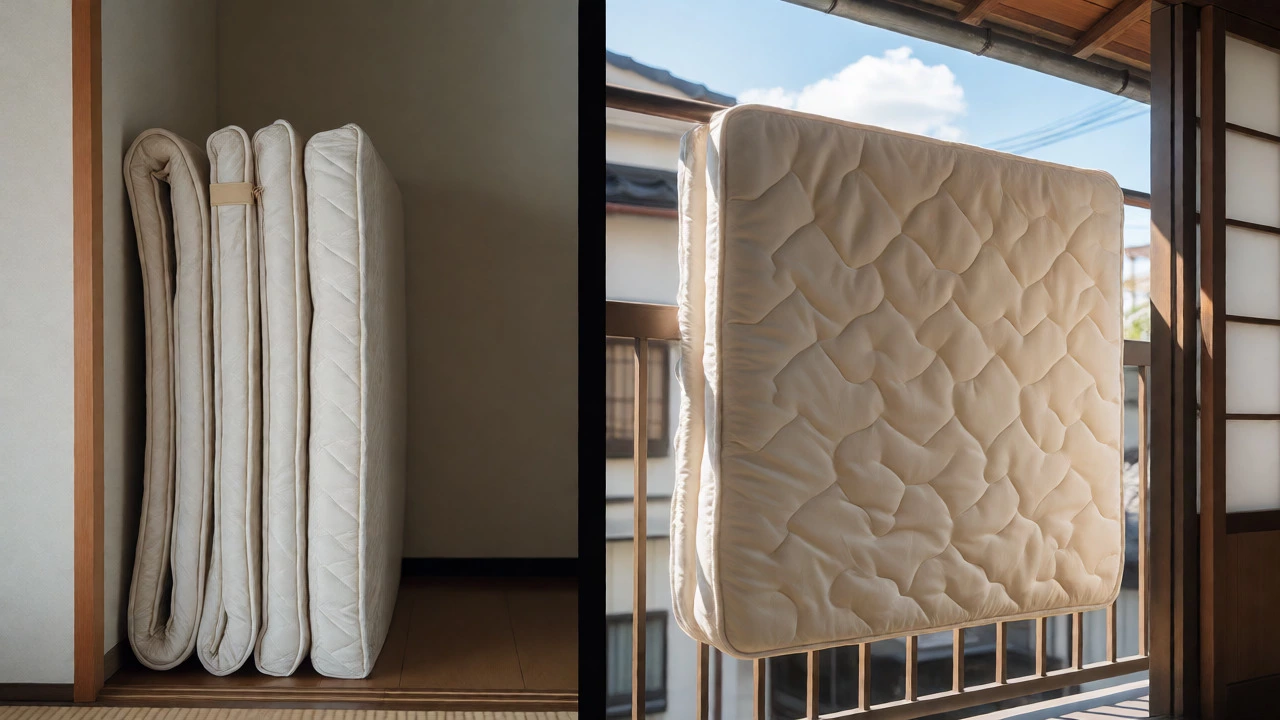
| Storage | Bulky when folded; takes up more closet space. | Compact when compressed; easier to store. |
Deep Dive: What Exactly Is a Shikibuton?
If you buy only one of these thinking it’s the whole bed, you’ll likely end up with a shikibuton. This is the piece that defines the "sleeping on the floor" aesthetic. A proper shikibuton is not just a thin yoga mat. It needs density. Cheap versions are little more than quilted cotton batting, which flattens out after a few weeks of use, leaving you feeling every bump in the floorboards.
High-quality shikibutons use high-density foam or natural latex cores wrapped in layers of cotton or wool. The goal is spinal alignment. Because there is no spring system underneath, the material must distribute weight evenly. If you sleep on your side, you need a thicker shikibuton (around 4-6 inches) to cushion your hips and shoulders. Back sleepers can get away with thinner models (2-3 inches), provided they are dense.
One major pitfall here is humidity. Since the shikibuton sits directly on the floor, moisture from your body gets trapped between the mattress and the ground. Without airflow, this creates a perfect environment for mold. This is why traditional advice insists on airing out your shikibuton daily. You hang it over a balcony railing or place it near an open window for several hours. If you live in a humid climate like Florida or Southeast Asia, you might need a dehumidifier or a slatted base to lift the shikibuton off the concrete or tile.
Deep Dive: What Exactly Is a Kakebuton?
The kakebuton is often mistaken for a simple throw blanket, but it’s engineered differently. Unlike a heavy down comforter meant for freezing winters, a standard kakebuton is designed for moderate temperatures. Japanese bedrooms are often smaller and harder to heat uniformly, so the bedding focuses on trapping body heat efficiently without adding bulk.
Most kakebutons come in three seasonal weights:
- Summer: Thin, breathable cotton or silk fill. Often used alone in warm weather.
- All-Season: Medium-weight down or synthetic fill. Suitable for spring and autumn.
- Winter: Thicker down or wool fill. Still lighter than a typical American winter duvet.
A critical feature of the kakebuton is the lack of an integrated cover. You almost always buy a separate duvet cover (kakegawa). This serves two purposes. First, it keeps the expensive filling clean. Second, it allows you to change the look of your room without washing the entire comforter. When you wake up, you fold the kakebuton neatly. It compresses easily, making it ideal for small apartments where storage is at a premium.
Why Confusion Happens: The "Futon" Misnomer
In the United States and Europe, the term "futon" has been hijacked. Retailers sell wooden frames with tri-fold mattresses as "futon beds." These are hybrids-part sofa, part bed. They are structurally different from traditional Japanese bedding. A Western futon mattress is often placed on a raised frame, whereas a shikibuton is strictly floor-based.
When people search for "futon," they might expect a sofa-bed replacement. But if you click on a listing for a "Japanese Futon Set," you are likely looking at a shikibuton and kakebuton combo. There is no frame included. If you already have a bed frame, you don't need a shikibuton unless you want to add extra padding to a too-firm mattress. If you want to sleep on the floor, you absolutely need the shikibuton.
This distinction matters for cost, too. A full Japanese bedding set (shikibuton + kakebuton) can range from $100 for basic synthetics to over $500 for hand-stitched silk and down. A Western futon frame-and-mattress combo usually starts around $200-$300. Knowing what you’re actually buying prevents sticker shock.
Care and Maintenance: Keeping Your Bedding Fresh
Maintaining a shikibuton and kakebuton requires a different mindset than maintaining a box-spring bed. You cannot just toss the shikibuton in the dryer. Most are not machine washable due to their size and internal structure. Washing them ruins the batting or foam core.
Instead, follow this routine:
- Daily Air-Out: Flip the shikibuton over before making the bed. Open windows to let air circulate under the mattress.
- Weekly Sunlight: Hang the shikibuton outside in direct sunlight for 2-4 hours. UV light kills bacteria and evaporates moisture. Do this on dry days only.
- Spot Cleaning: Use a mild detergent and cold water for stains on the shikibuton surface. Blot, don’t rub.
- Wash Covers Only: The kakebuton’s duvet cover and the shikibuton’s sheet can be machine washed regularly.
Neglecting this leads to the dreaded "mattress smell" and potential mold growth. If you notice a musty odor, the shikibuton needs aggressive airing. In extreme cases, professional cleaning services specializing in Japanese bedding can steam-clean the core, but prevention is far cheaper.
Who Should Buy Which? Decision Guide
Not everyone should switch to Japanese bedding. Here is how to decide based on your lifestyle.
Choose a Shikibuton if:
- You have limited square footage and need to fold your bed away during the day.
- You prefer sleeping on a firm surface and want to avoid back pain associated with sagging sofas.
- You enjoy minimalist design and want to eliminate visual clutter.
- You are willing to commit to the daily maintenance routine.
Choose a Kakebuton if:
- You already have a bed frame or mattress but want better temperature regulation.
- You dislike the heaviness of traditional comforters.
- You want easy-to-wash bedding options for allergies (using hypoallergenic fills).
- You travel frequently and need compact bedding solutions.
Buy Both if:
- You are creating a dedicated guest room or meditation space.
- You want the complete authentic experience and have the storage space to manage both items.
Related Concepts: Tatami Mats and Pillow Sets
To truly understand the difference, you must look at the ecosystem surrounding these two items. The shikibuton rarely touches bare wood or carpet. Traditionally, it rests on tatami mats is traditional Japanese flooring made from woven straw and rush grass. Tatami provides natural insulation and humidity regulation. If you skip the tatami and put a shikibuton directly on concrete, you will feel the cold in winter and sweat in summer.
Similarly, the pillow situation differs. Standard Western pillows are often too high for the flat sleeping position supported by a shikibuton. Many users opt for lower-profile pillows or specialized Japanese neck pillows to maintain cervical alignment. Ignoring this mismatch can lead to morning stiffness, negating the benefits of the firm mattress.
Frequently Asked Questions
Can I use a shikibuton on a regular bed frame?
Yes, but it may be too thin for some preferences. If your current mattress is too hard, placing a shikibuton on top adds cushioning. However, if your mattress is already soft, adding a shikibuton might make it feel unstable. Ensure the shikibuton fits the dimensions of your bed frame exactly to prevent sliding.
How do I clean a shikibuton if I can't wash it?
Regular airing out is the primary method. For deeper cleaning, sprinkle baking soda on the surface, let it sit for an hour to absorb odors, and then vacuum it thoroughly. For stains, spot clean with a damp cloth and mild soap. Avoid soaking the core, as drying it completely is difficult and risks mold.
Is a kakebuton warmer than a regular comforter?
Generally, no. Kakebutons are designed to be lighter and less bulky than Western comforters. They trap heat efficiently but rely on the ambient room temperature. If you run cold, you might need a heavier winter-grade kakebuton or additional layers of clothing, whereas a thick down comforter provides immediate, heavy insulation regardless of room temp.
Do I need a special sheet for a shikibuton?
Standard fitted sheets often slip off because shikibutons are smooth and rectangular. Look for sheets specifically labeled for futons or mattresses with deep pockets (12+ inches). Some users prefer using a flat sheet tucked tightly under the edges to keep it secure.
Which lasts longer, shikibuton or kakebuton?
A high-quality shikibuton with a latex or high-density foam core can last 5-10 years with proper care. Cheaper cotton-batting shikibutons may flatten in 1-2 years. Kakebutons typically last 5-7 years, though down-filled ones can last longer if the fabric remains intact and they are aired regularly. The limiting factor for both is usually hygiene and structural integrity rather than outright failure.