Reupholster vs. Buy New Calculator
Your Sofa Details
Enter your sofa details to see if repairing or replacing saves you money.
That tear in the armrest isn’t just ugly; it’s a financial decision waiting to happen. You’re sitting on a piece of furniture that either needs a few hundred dollars and some patience to look brand new, or you need to drop $1,000+ on a replacement that might fall apart in five years. It feels like a gamble, but it doesn’t have to be. The answer to whether it is cheaper to recover a couch or buy a new one depends entirely on what is underneath the fabric.
If your sofa has a solid hardwood frame and high-density foam that hasn’t bottomed out, repairing it is almost always the smarter financial move. If the legs are wobbly, the springs are poking through, or the wood is rotting, no amount of beautiful velvet will save you money. Let’s break down the real costs so you can stop guessing and start deciding.
The Hidden Value of Your Existing Frame
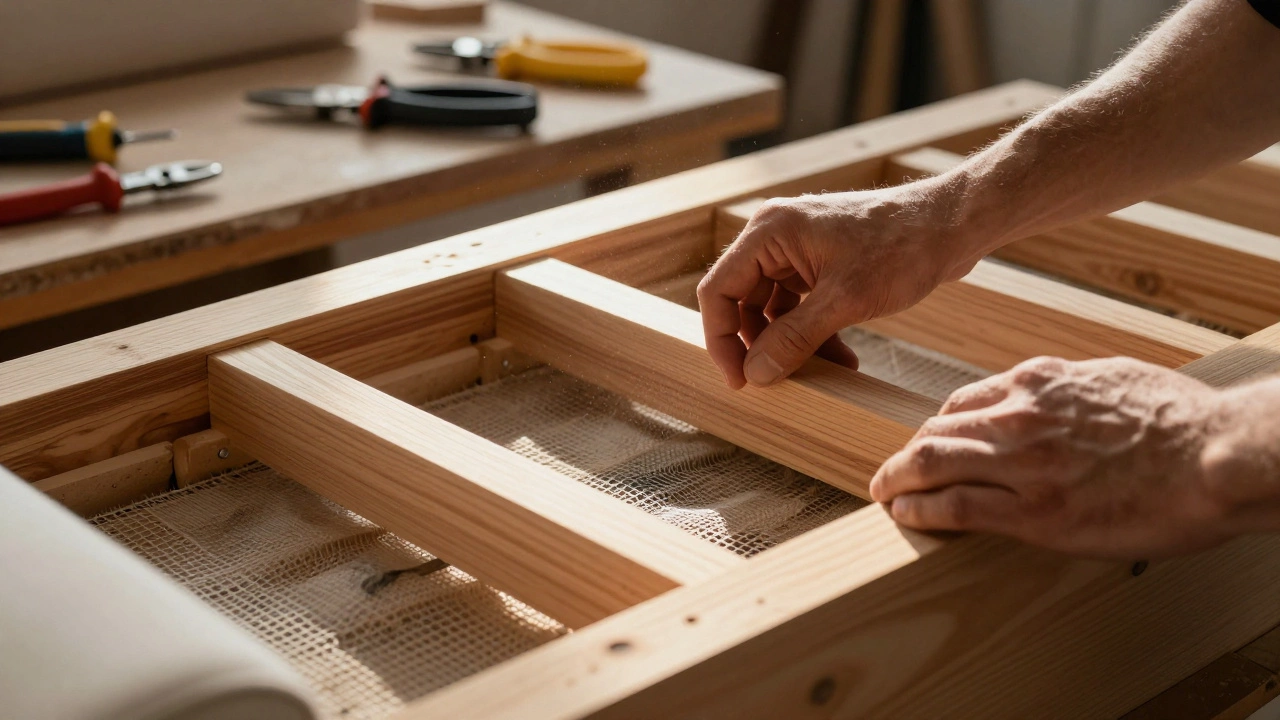
Most people focus on the fabric because that’s what they see. But the couch frame is the structural skeleton that determines the lifespan and repair value of your sofa is the engine under the hood. When you buy a new mid-range sofa today, you are paying for assembly, shipping, markup, and often particle board construction. When you repair an existing sofa, you are paying for labor and materials only.
To decide if recovery is worth it, perform the "shake test." Grab the back and the seat cushion and try to rock the sofa. Does it feel solid? If yes, your frame is likely made of kiln-dried hardwoods like oak, maple, or ash. These woods last decades. If the frame flexes significantly or makes creaking sounds, it is probably engineered wood or softwood, which degrades quickly. Reupholstering a weak frame is throwing good money after bad. A new frame costs between $300 and $600 to build from scratch, whereas buying a new sofa with a decent frame starts around $800 and rarely drops below that without sacrificing quality.
Breaking Down the Cost of Reupholstery
Recovering a couch involves stripping the old fabric, repairing any broken webbing or springs, replacing worn-out foam, and sewing on new material. Here is what that actually looks like in terms of dollars.
| Component | Repair/Recover Cost | New Sofa Equivalent |
|---|---|---|
| Fabric Only (Labor + Material) | $400 - $900 | Included in total price |
| Foam Replacement (Seat Cushions) | $150 - $300 | $200 - $400 (if sold separately) |
| Spring/Webbing Repair | $100 - $250 | Included in total price |
| New Mid-Range Sofa | N/A | $800 - $1,500 |
| New High-End Sofa | N/A | $2,000+ |
A standard three-seater sofa typically requires 15 to 20 yards of fabric. If you choose a synthetic blend like polyester or microfiber, the material cost is low, keeping the total job near $400-$600. If you opt for natural fibers like linen or cotton, or luxury options like velvet and leather, the price jumps. Leather alone can cost $50-$100 per yard, pushing the total bill past $1,200. At that point, you are entering the price range of a brand-new high-quality sofa, which brings us to the next critical factor: longevity.
Longevity: The Five-Year Rule
Cheap sofas are designed to fail. Many mass-produced units use compressed foam that flattens within two years and frames that snap under heavy use. If your current couch is ten years old and still holds its shape, it was built better than most new furniture on the market. Recovering it gives you another decade of use. Buying a cheap new sofa ($500-$700) might get you three years before it sags again.
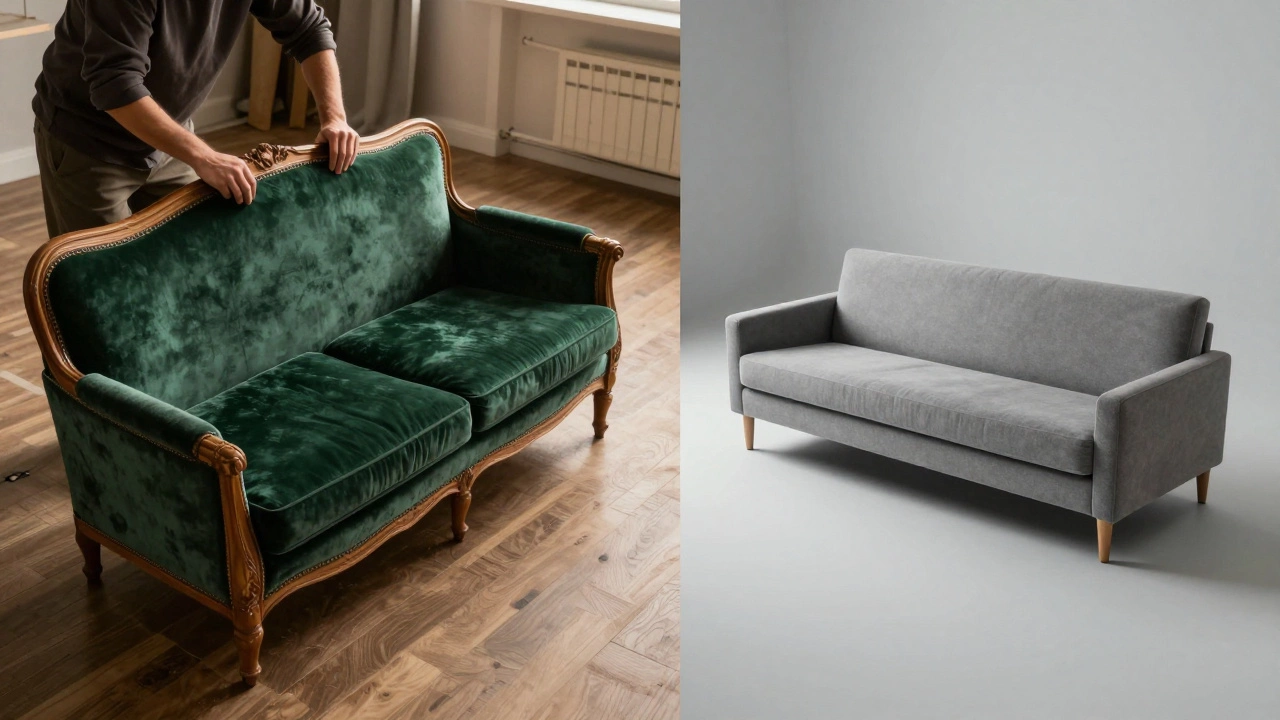
Think of it this way: spending $600 to extend the life of a durable sofa by ten years costs you $60 a year. Spending $800 on a new sofa that lasts five years costs you $160 a year. The math favors repair if the foundation is sound. However, if your current sofa is already sagging badly, the cost of replacing the internal structure (springs, webbing, foam) plus the fabric can exceed $1,000. In that scenario, buying new is often cleaner and less stressful.
When DIY Makes Sense (And When It Doesn't)
You might be tempted to save money by doing it yourself. Slips and covers are easy, but true reupholstery requires a staple gun, a utility knife, sewing skills, and the ability to pull fabric tight without wrinkles. If your couch has simple, removable cushions, you can recover just the cushions for under $100 in materials. This is a great weekend project for beginners.
However, recovering the arms, back, and seat base of a full sofa is complex. One mistake in cutting the pattern means wasting expensive fabric. Professional upholsterers charge for their expertise because they know how to hide staples, create clean corners, and ensure the fabric stretches evenly. For a first-timer, the risk of ruining a $200 roll of fabric usually outweighs the savings on labor. Stick to DIY if you are only doing slipcovers or simple cushion wraps.
Environmental Impact: The Silent Factor
We often forget that furniture is a major contributor to landfill waste. The average sofa weighs between 100 and 200 pounds. When you throw away a functional sofa, you are sending hundreds of pounds of wood, metal, and foam into a dump where it will sit for centuries. Reupholstering keeps that waste out of the environment. Additionally, the production of new furniture involves significant carbon emissions from manufacturing and global shipping. By choosing to repair, you are making a sustainable choice that benefits your wallet and the planet.

How to Get Accurate Quotes
Don’t guess at the price. Contact three local upholsterers. Send them clear photos of your sofa, including close-ups of any damage, and ask for a written estimate. Be specific about the fabric you want. Bring swatches if you have them. Ask if the quote includes:
- Removal of old fabric and disposal fees.
- Inspection and repair of the frame, springs, and webbing.
- Replacement of foam if it is crushed or crumbling.
- Taxes and delivery/pickup charges.
If one quote is significantly lower than the others, ask why. They might be using lower-quality padding or skipping necessary structural repairs. Cheap repairs often lead to quick failures.
Decision Checklist: Repair or Replace?
Use this simple checklist to make your final call. If you answer "yes" to most of these, repair your couch. If you answer "no," buy a new one.
- Is the frame solid? No wobbling, no cracks, no rot.
- Do you love the shape? Sometimes the style of the sofa is perfect for your room, and only the color is wrong.
- Is the damage superficial? Tears, stains, or fading are easy fixes. Structural collapse is not.
- Is the cost under 50% of a new equivalent? If the repair is more than half the price of a comparable new sofa, lean toward buying new.
- Are you attached to the piece? Emotional value matters. If it’s a family heirloom or a favorite spot, the extra cost is worth the comfort.
In the end, recovering a couch is cheaper if you treat it as maintenance rather than a miracle cure. A good frame deserves a second life. A bad frame deserves the recycling bin. Check the bones before you check the price tag.
How much does it cost to reupholster a couch in 2026?
The average cost ranges from $400 to $1,200 depending on the size of the sofa and the type of fabric chosen. Synthetic fabrics like polyester are on the lower end, while leather and high-end velvets push the price higher. Labor typically accounts for 50-60% of the total cost.
Is it worth reupholstering an old couch?
Yes, if the frame is solid hardwood and the internal structure (springs/webbing) is intact. Old couches were often built with higher quality materials than many modern budget options. If the frame is weak or rotten, it is not worth the investment.
Can I reupholster my couch myself?
You can recover simple, removable cushions easily with a staple gun and fabric. However, reupholstering the entire sofa, especially the arms and back, requires professional skill to avoid wrinkles and ensure durability. DIY is risky for full sofas unless you have prior experience.
What is the best fabric for reupholstering a couch?
For households with pets or kids, performance fabrics like Crypton or tightly woven microfiber are best because they resist stains and wear. For a luxurious look, velvet is popular but may show pet claws more easily. Linen looks great but wrinkles easily and can be prone to tearing.
How long does reupholstery take?
A professional upholsterer typically takes 2 to 4 weeks to complete a full sofa reupholstery job. This includes time for stripping the old fabric, repairing the frame, and sewing the new cover. Simple cushion covers might be done in a few days.
When should I definitely buy a new sofa instead of repairing?
Buy a new sofa if the frame is cracked or wobbly, if the springs are broken and costly to fix, or if the repair cost exceeds 60-70% of the price of a new, comparable sofa. Also, consider replacing if the style no longer fits your home decor needs.