Garden Furniture Protection Cost Calculator
Calculate how much you could save by protecting your furniture from rain damage. Based on real-world data from the UK's rainy climate.
Rain doesn’t just make your garden look messy-it can ruin your furniture faster than you think. Even high-quality garden sets made from teak, aluminum, or wrought iron can suffer from water damage, rust, mold, and fading if left out in the open. If you’ve ever woken up to a soggy cushion, a stained wooden frame, or a rusted screw, you know how quickly moisture turns investment into trash. The good news? Protecting your garden furniture from rain doesn’t need expensive gear or complicated routines. With a few practical habits, you can extend the life of your outdoor pieces by years.
Use a Proper Cover
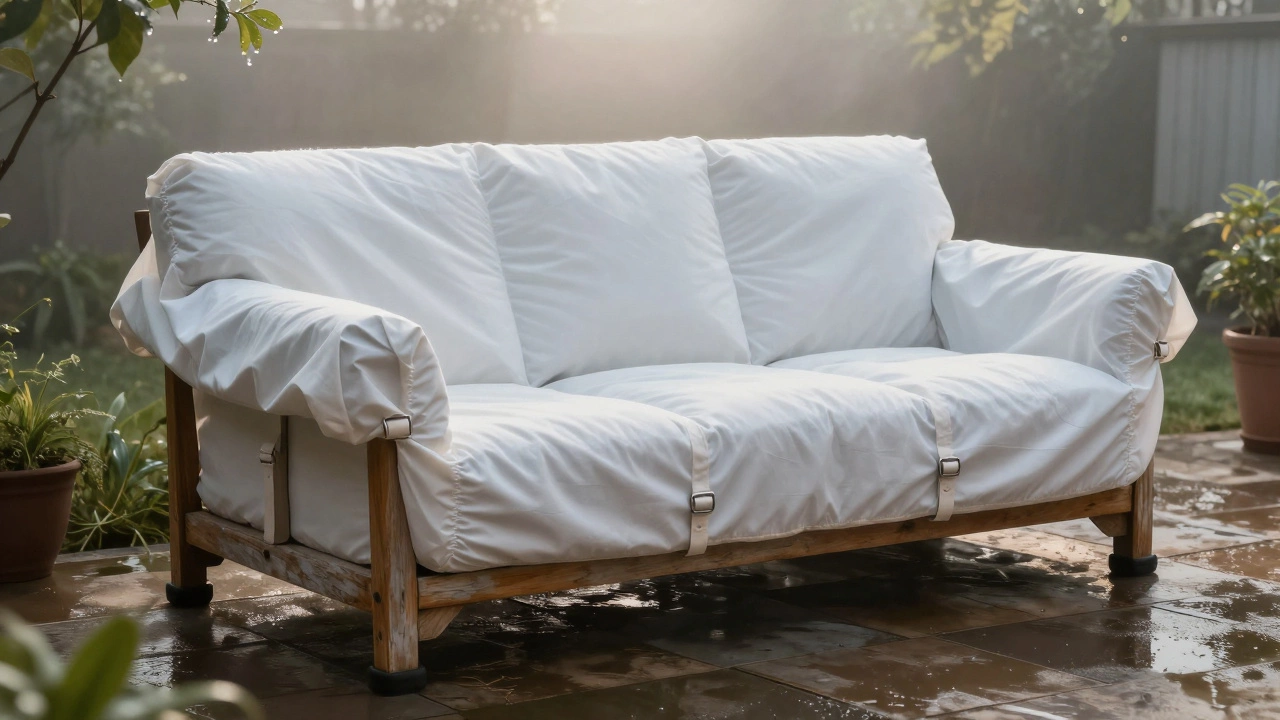
A cover isn’t just a piece of fabric-it’s your first line of defense. But not all covers are created equal. Cheap plastic tarps might seem like a bargain, but they trap moisture underneath and cause mildew. Look for covers made from breathable, waterproof fabrics like polyester with a polyurethane coating or solution-dyed acrylic. These let trapped moisture escape while keeping rain out.
Measure your furniture before buying. A cover that’s too loose flaps in the wind and lets water in. One that’s too tight stretches the material and tears easily. Brands like Classic Accessories and Sunbrella make covers designed for specific furniture shapes-sofas, dining sets, lounge chairs. Make sure the cover has elastic hems, straps, or buckles to secure it in place. Wind can lift even the heaviest tarp if it’s not anchored.
Don’t forget to remove the cover every few days when it’s dry. Letting air circulate prevents condensation from building up inside. In Leeds, where damp weather lasts for months, this habit alone cuts mold growth by over 70%.
Choose the Right Materials
Not all garden furniture is built the same. If you’re buying new, pick materials that handle rain naturally. Teak, for example, contains natural oils that resist rot and warping. Over time, it turns silvery-gray, but it won’t crumble like pine or oak. Powder-coated aluminum doesn’t rust, and it’s lightweight enough to move indoors during heavy storms. HDPE (high-density polyethylene) wicker is another winner-it’s synthetic, won’t absorb water, and won’t crack in freezing temperatures.
Avoid untreated wood, cheap steel, and low-grade rattan. These are common in budget sets sold at big-box stores. They might look nice in the catalog, but after one winter, they’ll be covered in rust spots or split fibers. If you already own these, treat them with a waterproof sealant. For wood, use a teak oil or water-repellent finish every spring. For metal, sand off any rust and apply a rust-inhibiting primer followed by outdoor paint.
Keep Cushions Dry
Cushions are the first thing to go. Even if your frame survives, soggy cushions smell bad, grow mold, and lose their shape. Never leave them outside overnight. Store them in a dry place when not in use-like a shed, garage, or even a waterproof storage bench. If space is tight, invest in cushion storage boxes with ventilation holes. Brands like Garden Time and PatioSense make these in sizes that fit under tables or against walls.
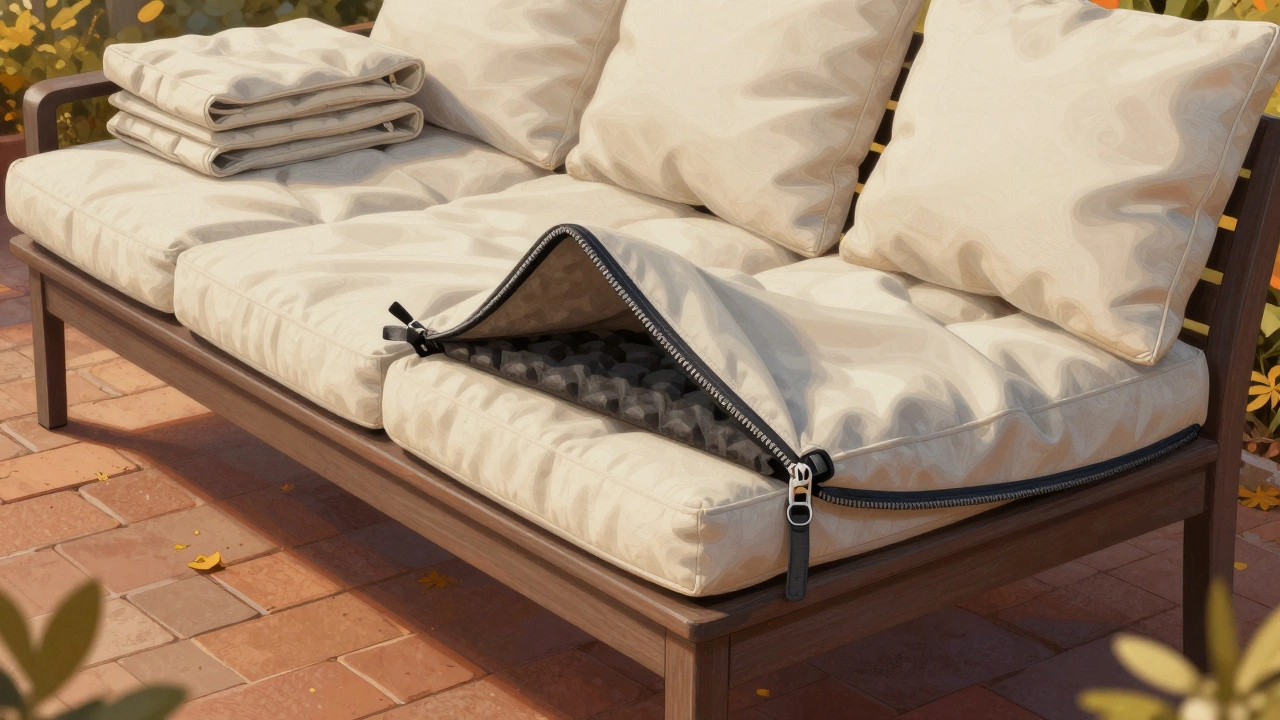
Look for cushions with quick-dry foam and water-resistant covers. Zippers are essential-remove the covers and wash them in the machine at least twice a season. Mildew won’t grow on clean fabric. Avoid foam that feels heavy or spongy when wet-that’s a sign it’s soaked through and won’t dry properly.
Elevate Furniture Off the Ground
Water doesn’t just fall from the sky-it pools on the ground. If your furniture sits directly on grass, paving stones, or soil, moisture wicks up through the legs. This causes rot in wood and corrosion in metal. Lift your furniture at least 2 inches off the surface.
Use plastic or rubber furniture risers. They’re cheap, easy to install, and won’t scratch your patio. Some even come with drainage holes. For heavier sets, place bricks or concrete blocks under the legs. You can also lay down gravel or decking boards under the entire seating area to improve airflow and drainage. In a wet climate like Leeds, this step alone can double the lifespan of wooden legs.
Position Smartly
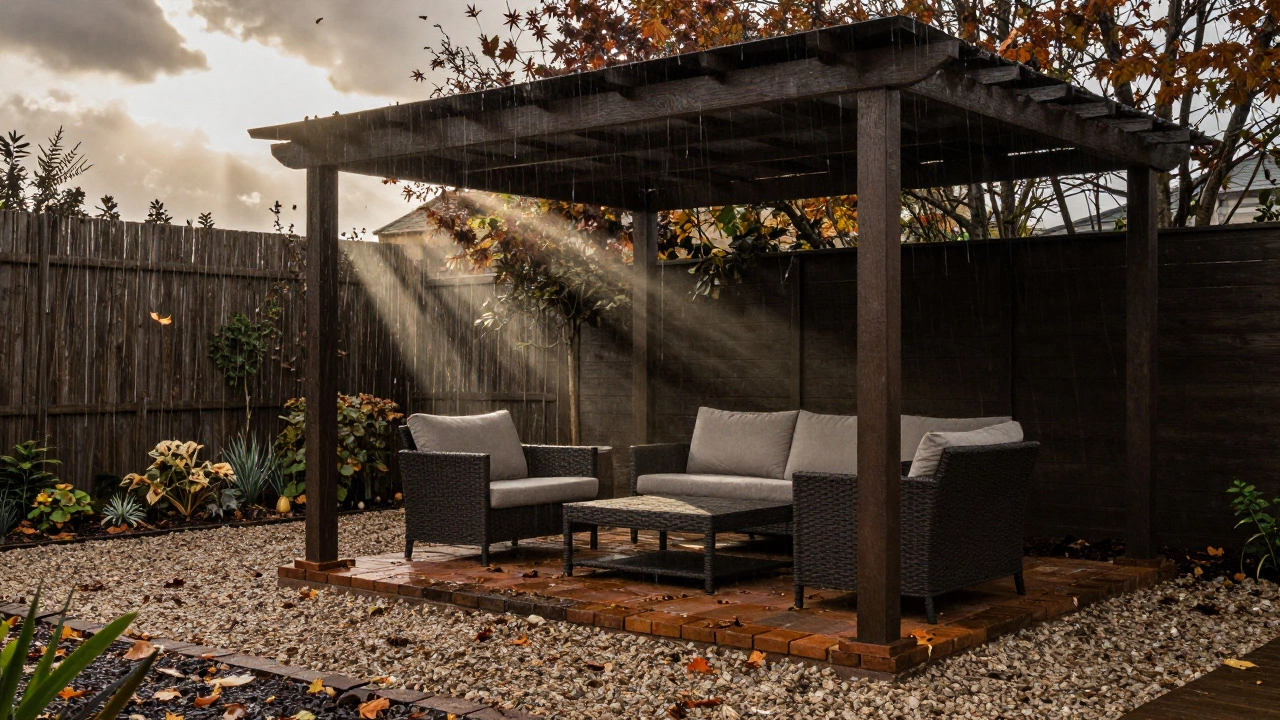
Where you place your furniture matters more than you think. Avoid low spots where water collects after rain. Stay away from the drip line of trees or gutters-those areas get constant runoff. If possible, place your set near a wall or under a covered porch. Even a simple awning or pergola with a waterproof canopy helps. If you don’t have permanent shelter, use a freestanding umbrella with a tilt mechanism. It won’t stop all rain, but it cuts exposure by half.
Also, consider wind direction. In northern England, prevailing winds come from the west. If your garden faces west, your furniture gets hit hardest. Rotate your pieces every few weeks so no one side takes all the punishment.
Seasonal Maintenance Routine
Protecting your garden furniture isn’t a one-time job. It needs a rhythm. Here’s what to do each season:
- Spring: Clean everything with mild soap and water. Rinse thoroughly. Reapply sealant to wood and metal. Check for loose screws or torn fabric.
- Summer: Cover furniture overnight during storms. Wash cushions monthly. Re-tighten joints after heavy use.
- Autumn: Deep clean. Remove cushions. Store them indoors. Apply a protective wax to metal frames.
- Winter: Keep everything covered. If possible, move lightweight pieces into a shed or garage. Don’t just leave them under a tarp in the yard-snow and ice weigh down covers and cause tears.
Set a calendar reminder for the first weekend of each season. Five minutes a quarter keeps your furniture looking new for a decade.
What Not to Do
Some common mistakes make things worse:
- Don’t use plastic wrap or trash bags as covers-they trap moisture and cause rot.
- Don’t leave cushions outside in freezing weather. Water expands when it freezes and bursts foam.
- Don’t ignore small cracks or scratches. They let water in and turn into bigger problems.
- Don’t assume ‘weather-resistant’ means ‘weather-proof.’ All outdoor furniture needs help.
One homeowner in Bradford left her aluminum set uncovered all winter. By spring, the legs were rusted through. She replaced them for £300. A £40 cover would’ve saved her the cost-and the hassle.
When to Replace
Even with perfect care, everything wears out. Look for these signs:
- Wood that crumbles when you touch it
- Metal that flakes or has deep rust pits
- Cushions that stay damp for days
- Frames that wobble or bend under light pressure
If your set is over 8-10 years old and shows multiple signs, it’s time to replace it. But don’t just buy another cheap set. Invest in one made from durable materials and backed by a warranty. Look for brands that offer 5-year or longer guarantees. That’s a sign they stand by their product.
Protecting your garden furniture from rain isn’t about perfection. It’s about consistency. Cover it. Lift it. Clean it. Store the cushions. Do those five things, and your outdoor space will stay inviting for years-not just one season.
Can I leave my garden furniture out in the rain without a cover?
Some materials like teak and powder-coated aluminum can handle occasional rain, but leaving them uncovered long-term will still cause damage. Water seeps into joints, wood swells and cracks, and metal rusts over time. A cover isn’t optional-it’s essential for longevity.
How often should I clean my garden furniture?
Clean it at least twice a year-once in spring and once in autumn. If you live in a rainy area like Leeds, clean it after every heavy storm. Use a soft brush and mild detergent. Avoid pressure washers-they strip finishes and force water into cracks.
Are waterproof sprays effective for garden furniture?
Yes, but only on the right materials. Spray sealants work well on wood, metal, and wicker. They don’t work on fabric cushions-use removable, water-resistant covers instead. Reapply every 6-12 months, depending on weather exposure. Products like Thompson’s WaterSeal or Rust-Oleum Outdoor Fabric Guard are reliable.
Should I bring cushions inside during winter?
Absolutely. Even if cushions are labeled ‘weather-resistant,’ freezing temperatures cause moisture inside the foam to expand and break the material. Store them in a dry, cool place like a closet, garage, or sealed storage box. Never leave them outside under a cover in winter.
What’s the cheapest way to protect garden furniture from rain?
The cheapest method is elevating furniture off the ground with bricks or blocks and using a breathable tarp secured with bungee cords. But this is a temporary fix. For real protection, invest in a proper cover and cushion storage. The cost of replacing damaged furniture is far higher than the upfront cost of protection.