
Wardrobe Versatility Calculator
Discover the power of a capsule wardrobe. Instead of counting items, calculate how many unique combinations you can create by matching your tops and bottoms.
Главные выводы (Key Takeaways)
- Focus on "mix-and-match" potential rather than a total count of garments.
- A sustainable baseline for most women is around 30 to 50 core pieces per season.
- Prioritize versatility: one item should work in at least three different outfits.
- Quality over quantity reduces the long-term cost and environmental impact.
The Myth of the Magic Number
There is no single number that fits every woman because your life in a small village in the Cotswolds looks very different from a high-paced corporate role in London. However, if we look at the math of dressing, the number of items is less important than the number of combinations. For example, if you have 10 tops and 5 bottoms that all coordinate, you have 50 unique outfits. If you have 100 items that don't match, you still only have a handful of outfits.
When we talk about a Capsule Wardrobe is a curated collection of essential clothing pieces that can be mixed and matched to create a wide variety of outfits with few items. , the focus shifts from "how many do I own?" to "how many ways can I wear this?"
Building Your Core: The Essential Breakdown
To figure out your personal number, start with your "life pillars." These are the activities that take up 80% of your time. If you work from home, your needs differ from someone commuting to a law firm. Let's break down a balanced, versatile wardrobe into categories to see where the numbers actually land.
For a standard professional and social life, a sustainable baseline often looks like this:
- Tops (10-15): A mix of basic tees, crisp white shirts, knit sweaters, and a few "statement" blouses.
- Bottoms (5-8): Two pairs of high-quality jeans (different washes), a pair of tailored trousers, a versatile skirt, and perhaps a casual legging or chino.
- Dresses (3-5): One little black dress (LBD), one casual day dress, and a few seasonal options.
- Outerwear (4-6): A heavy winter coat, a light trench or denim jacket, a blazer for formal settings, and a cozy cardigan.
- Shoes (5-7): Comfortable sneakers, versatile loafers or flats, a pair of heels, and weather-specific boots.
If you add these up, you're looking at roughly 30 to 40 items. Because these are chosen for their Versatility is the ability of a garment to be worn in multiple settings, such as both casual and professional environments ], these few pieces can easily generate over 100 distinct looks.
| Feature | Minimalist (Capsule) | Diverse (Maximalist) |
|---|---|---|
| Total Item Count | 30-50 pieces | 100+ pieces |
| Decision Time | Fast (Everything matches) | Slow (More filtering needed) |
| Cost per Wear | Lower (High usage) | Higher (Many unused items) |
| Storage Needs | Low (Small closet/rack) | High (Walk-in or multiple chests) |
| Style Consistency | Very High (Signature look) | Varied (Experimental) |
The "Three-Outfit Rule" for New Purchases
The fastest way to bloat your wardrobe with useless clothes is buying a "single-occasion" piece. We've all done it-the neon dress for a themed party or the stiff skirt for one interview. To keep your numbers manageable, apply the Three-Outfit Rule: before buying any new item, you must be able to visualize three different ways to wear it with things you already own.
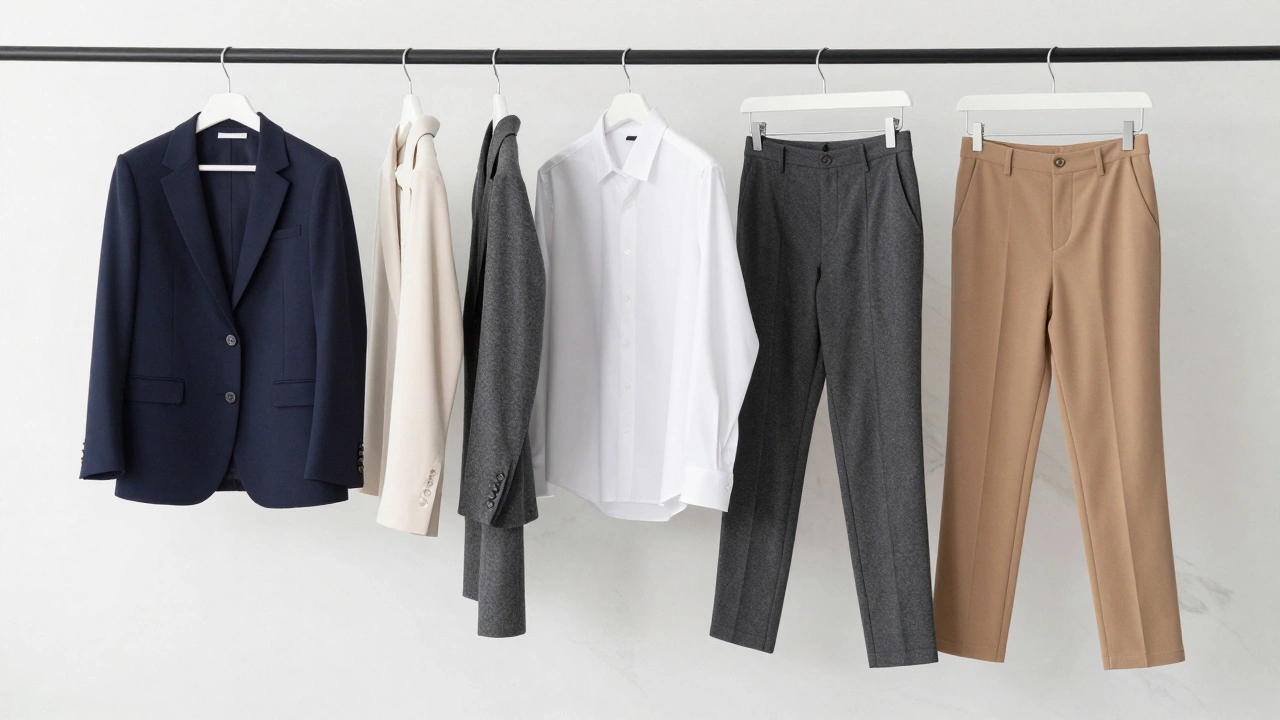
For instance, if you're eyeing a Blazer is a structured jacket typically worn as part of a suit or as a separate layering piece for professional attire ], ask yourself: Can I wear it with my work trousers? Does it work over a t-shirt and jeans for a casual dinner? Can it be draped over a dress for a wedding? If the answer is no, the item will likely sit in your closet for months, adding to the count but not to the utility.
Managing Seasonal Rotations
One of the biggest mistakes people make is trying to fit every season into their active wardrobe. In the UK, where the weather can swing from freezing sleet to unexpected sunshine in a week, seasonal rotation is a lifesaver. Instead of wondering if you have "too many" clothes, divide your wardrobe into active and stored.
Use Vacuum Storage Bags is airtight plastic containers used to compress bulky clothing like winter coats and blankets to save space ] or under-bed storage bins for off-season gear. By moving your heavy woolens out in April and bringing them back in October, you reduce the visual noise in your closet. This makes it easier to see what you actually have, preventing the "I have nothing to wear" panic that usually leads to unnecessary shopping.
The Psychology of the "Decision Fatigue"
Why does having fewer, better outfits actually make you happier? It comes down to decision fatigue. Every choice we make in a day-from what to eat for breakfast to how to handle a work crisis-drains our mental energy. When you have a wardrobe of 200 items that don't coordinate, you spend 15 minutes every morning fighting with your clothes.
When you narrow your selection to a curated set of high-quality pieces, you eliminate the friction. You know that the navy trousers work with the cream silk blouse and the gray cashmere sweater. This efficiency allows you to start your day with more mental clarity. It's the same reason many successful people adopt a "uniform"-it's not about lack of creativity, but about maximizing mental resources.

Audit and Purge: How to Find Your Real Number
If you're currently overwhelmed, it's time for a wardrobe audit. Don't just throw things away; analyze them. Try the "Reverse Hanger Method": turn all your hangers backward. When you wear an item, turn the hanger the right way. After three months, look at the hangers that are still backward. These are the items that aren't serving you.
Ask yourself why those items aren't being worn. Is the fit wrong? Is the color outdated? Or do they simply not match anything else? Once you identify the gaps, you can replace five mediocre items with one high-quality, versatile piece. This is how you transition from a cluttered closet to a strategic one.
What is a realistic number of outfits for a working woman?
Rather than a number of outfits, focus on a number of pieces. A wardrobe of 30-50 versatile items (including shoes and outerwear) can create hundreds of outfit combinations. For a professional, this usually means 10-12 tops, 5-8 bottoms, 3-5 dresses, and 4-6 outerwear pieces per season.
How do I start building a capsule wardrobe from scratch?
Start by identifying your primary color palette-usually two neutrals (like black, navy, or beige) and two or three accent colors. Then, list the items you wear most often. Replace worn-out versions of those pieces with higher-quality fabrics (like organic cotton or merino wool) and ensure every new piece fits at least three existing items.
Does a smaller wardrobe mean I have to wear the same thing every day?
Not at all. The secret is in the layering and accessorizing. A simple white tee and jeans can look completely different depending on whether you add a structured blazer, a chunky cardigan, or a statement necklace. Mixing textures and silhouettes keeps the look fresh even with a limited number of items.
What are the most versatile colors for a woman's wardrobe?
Neutrals are the foundation of versatility. Black, navy, gray, white, and camel are the most adaptable. Once you have these, you can add "pop" colors like emerald green, royal blue, or burgundy, which tend to pair well across different neutral bases.
How often should I audit my wardrobe?
Ideally, perform a full audit twice a year during the seasonal transitions (spring and autumn). This allows you to store off-season clothes and identify which pieces from the previous season actually worked and which didn't, helping you make smarter purchases for the upcoming months.
Next Steps for Your Wardrobe Journey
If you're feeling overwhelmed, don't try to fix everything in one afternoon. Start with one category-maybe your shoes or your t-shirts. Once you've pruned that section and identified what truly works, move to the next. If you find you're struggling with color coordination, try sketching out a few "formula outfits" (e.g., Dark Jeans + White Shirt + Tan Blazer) and photograph them on your phone so you don't have to think about it in the morning.
For those transitioning to a more minimalist style, remember that it's a process of subtraction. You don't need to buy a whole new "capsule set" from a store. The most authentic and sustainable wardrobe is the one you build over time, based on what you actually love and how you actually live.