Coffee Table Rug Size Calculator
How to Use This Calculator
Enter your coffee table's dimensions. The calculator will recommend the ideal rug size based on the article's guidelines (all four legs on rug, at least 12 inches beyond each side).
Tip: For round tables, enter the diameter. For square tables, enter the same dimension for both width and length.
Key Recommendations
According to the article: All four legs of the coffee table should sit on the rug, with at least 12 inches of rug extending beyond each side. This creates a balanced, grounded look.
Pro Tip: For round tables, center the rug under the table with at least 18 inches of rug extending beyond the table on all sides.
You bought a new coffee table. It looks great. But now you’re staring at the bare floor and wondering-do you have to put a rug under it? The answer isn’t yes or no. It’s about what works for your space, your style, and your daily life.
It’s Not Required, But It Helps
No one’s going to knock on your door and fine you for skipping the rug. There’s no building code, no interior design police. But if you’ve ever slid a coffee table across hardwood and heard that awful screech, or watched your kids chase a toy under the table only to have their socks catch on the edge-you know why rugs matter.A rug under a coffee table isn’t about rules. It’s about function. It’s about comfort. It’s about making your living room feel finished, not just furnished.
Why Rugs Work Under Coffee Tables
- Stops sliding: Wood, laminate, or tile floors are slippery. A rug with a non-slip backing keeps your table where you put it. No more repositioning after every movie night.
- Reduces noise: That clink of a glass, the thud of a book, the scrape of a footrest-rugs absorb sound. Your living room becomes quieter, calmer.
- Defines the space: In an open-plan home, a rug acts like a visual anchor. It tells your eyes, “This is the seating area.” Without it, furniture looks scattered.
- Protects your floor: Legs, especially metal or hard plastic ones, can scratch or dent floors over time. A rug is cheap insurance.
- Adds warmth: Hard floors are cold. A rug adds texture, color, and coziness. In winter, your bare feet will thank you.
How Big Should the Rug Be?
Size matters more than you think. A rug that’s too small looks like an afterthought. Too big, and it overwhelms the space.The rule of thumb? All four legs of the coffee table should sit on the rug. If you have a sectional sofa, aim for the front legs of the sofa to rest on the rug too. That creates a cohesive, grounded look.
For a standard 72-inch coffee table, a 9x12 rug works well in most living rooms. If your space is smaller, go for 8x10. Never go smaller than 5x8 under a coffee table unless it’s a tiny accent table.
Here’s a quick guide:
| Coffee Table Size | Recommended Rug Size | Best For |
|---|---|---|
| Under 60 inches | 5x8 or 6x9 | Small apartments, studio spaces |
| 60-72 inches | 8x10 | Most standard living rooms |
| 72+ inches | 9x12 | Large open-plan spaces, L-shaped sofas |
What If Your Coffee Table Has Legs?
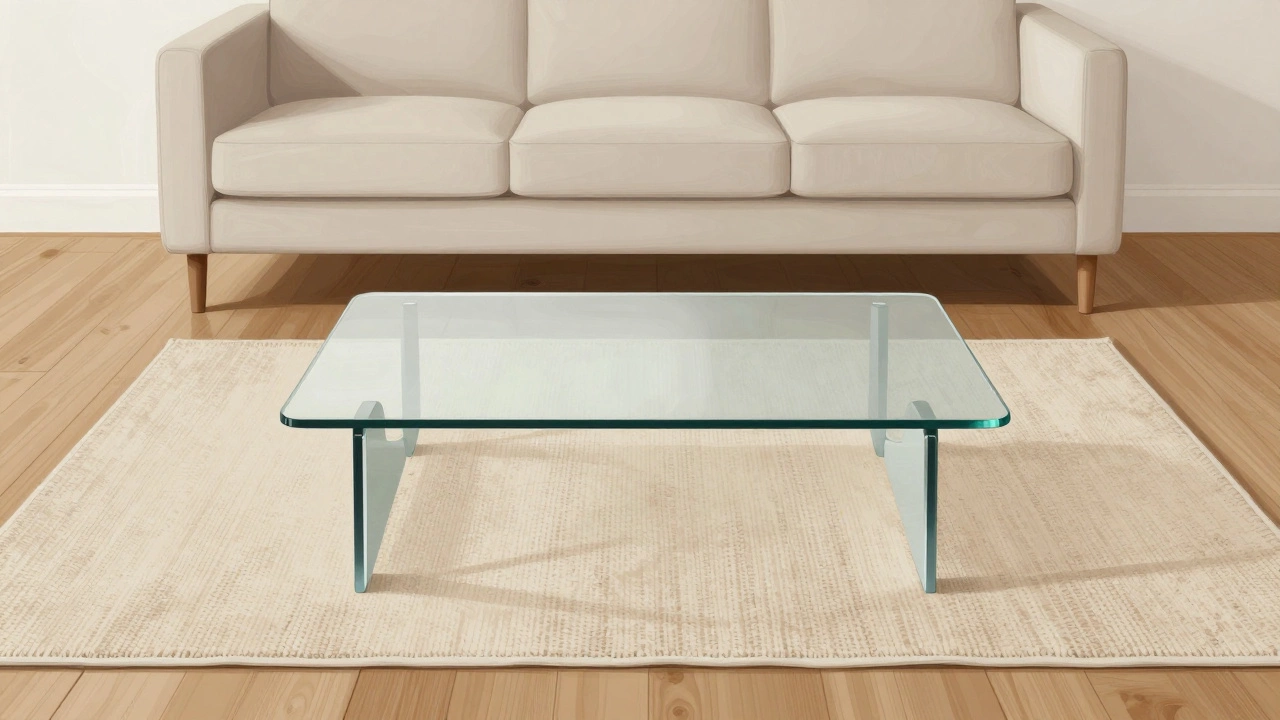
This trips up a lot of people. If your table has tall, thin legs-like mid-century modern designs-you might think the rug should go under the legs only. But that’s not how it works.Even with thin legs, the rug should extend past the table’s edges. Why? Because the visual weight of the table needs to feel anchored. If the rug stops right at the legs, it looks like the table is floating, which breaks the flow.
Try this: place the rug so the table sits centered on it, with at least 12 inches of rug showing beyond each side. That’s enough to make it feel intentional, not accidental.
What About Round Coffee Tables?
Round tables are trickier. You can’t just line up edges. The goal is still the same: the rug should frame the table, not fight it.For a 48-inch round table, a 6x9 or 8x10 rectangular rug works best. Place it so the table sits centered, and the rug extends evenly on all sides. A circular rug is an option too-but make sure it’s at least 18 inches wider than the table on all sides.
Pro tip: Avoid small round rugs under large round tables. They look like a coaster, not a foundation.
Material Matters
Not all rugs are made equal. The wrong material can ruin the look-or the comfort.- Wool: Durable, soft, naturally stain-resistant. Best for high-traffic living rooms. Holds up well under heavy furniture.
- Synthetic (polypropylene, nylon): Great for families with pets or kids. Easy to clean, budget-friendly. Doesn’t breathe as well as wool, but holds color well.
- Flat-weave (kilim, dhurrie): Low profile, modern look. Doesn’t interfere with table legs. Good for tight spaces.
- Shag or high-pile: Luxurious, but avoid under heavy tables. The weight can crush the fibers and make it hard to move the table later.
Go for low to medium pile if you plan to move the table often. High pile rugs look beautiful but can be a hassle if you rearrange furniture regularly.
Common Mistakes to Avoid
- Too small: A rug that barely fits under the table looks like a mistake, not a design choice.
- Too loud: A busy pattern clashes with a bold coffee table. Match the rug’s energy to the room. If your table is modern and minimalist, go for a solid or subtle texture.
- Wrong color: A rug that doesn’t tie into your sofa or walls feels disconnected. Pull a color from your throw pillows or curtains to create harmony.
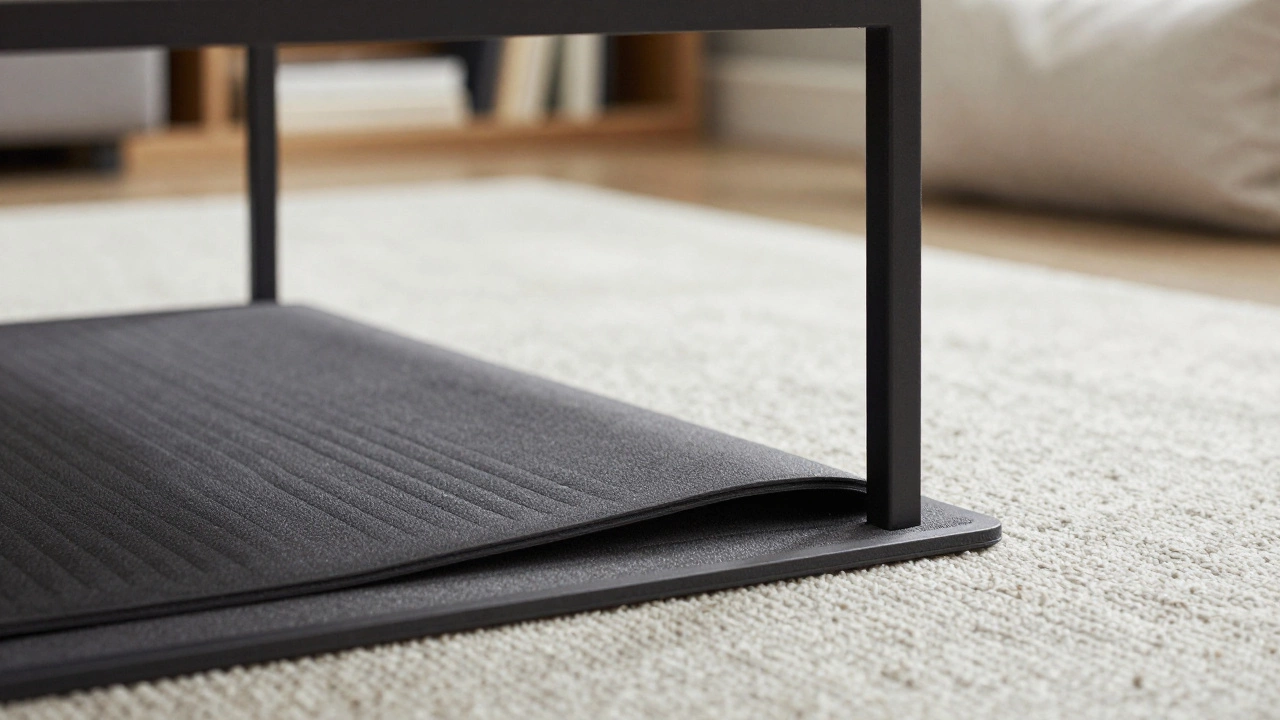
- No pad: Even good rugs slide. Always use a non-slip rug pad. It protects the floor, reduces noise, and keeps the rug flat.
What If You Don’t Want a Rug?
You don’t have to. Some people prefer the clean lines of bare floors-especially in modern, Scandinavian, or industrial spaces. If that’s your style, go for it.But if you skip the rug, make sure your coffee table has rubber or felt pads on the legs. Otherwise, you’ll end up with scratches, dents, and a noisy floor. Also, consider adding a soft throw blanket or a textured side table to bring warmth back into the space.
Real-Life Example: A Leeds Living Room
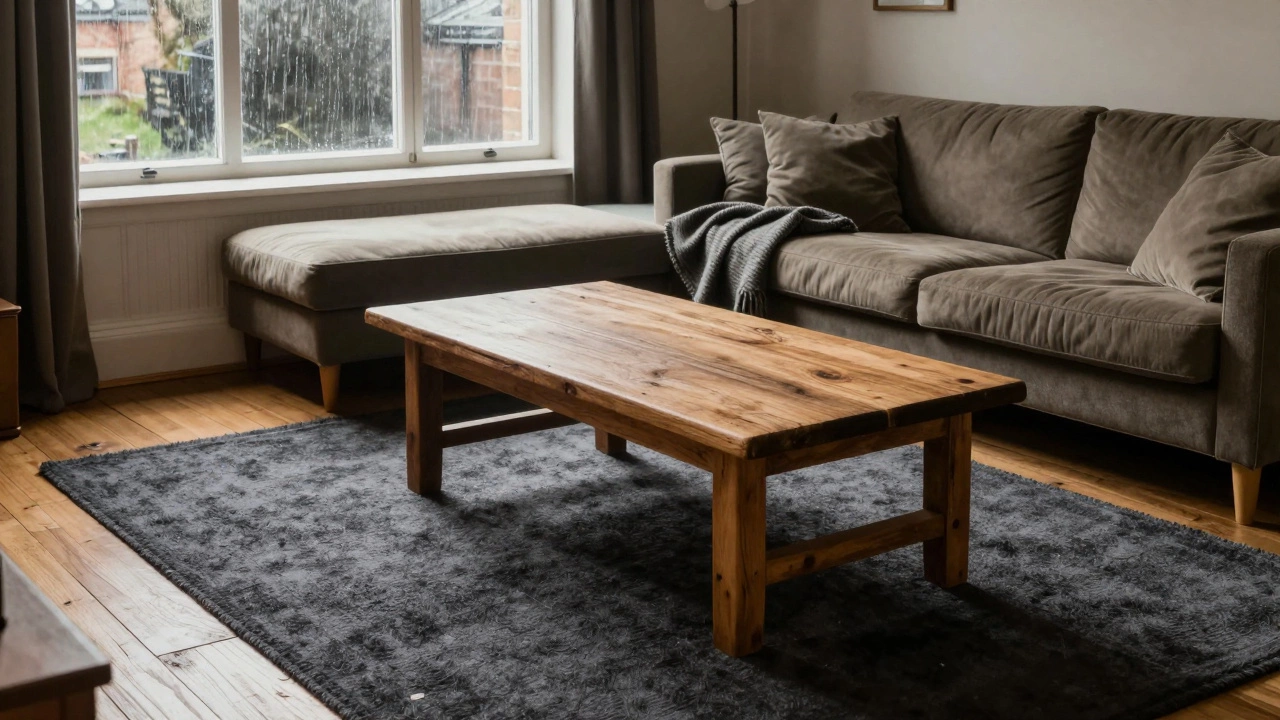
In my own home in Leeds, I have a reclaimed oak coffee table with thick, chunky legs. The floor is original 1930s pine. Without a rug, the table looked lost. I tried a small 5x7 rug-it looked like a mistake. Then I went with an 8x10 wool rug in a soft charcoal. The table now feels rooted. The room feels complete. And when the rain comes in (and it does, often), the rug catches the damp from boots before it hits the floor.That’s the real win: rugs aren’t just decorative. They’re practical. They’re part of the life of the room.
Final Thought: It’s About Flow
You don’t need a rug under your coffee table. But if you want your living room to feel like a place you want to sit in-rather than just a collection of furniture-you’ll find that a well-chosen rug makes all the difference.It’s not about following rules. It’s about creating a space that feels right. Try it. Live with it for a week. See how the room changes. You might be surprised how much a simple rug can do.
Do you need a rug under a coffee table?
No, you don’t need one-but most people benefit from having one. Rugs prevent sliding, reduce noise, protect floors, and make the space feel more connected and cozy. It’s a practical choice, not a requirement.
How big should a rug be under a coffee table?
The rug should be large enough so that all four legs of the coffee table sit on it, with at least 12 inches of rug extending beyond each side. For a standard 72-inch table, an 8x10 or 9x12 rug works best. Smaller rooms can use a 6x9.
Can you put a rug under a glass coffee table?
Yes, and it’s often a good idea. Glass tables can look cold and floating without a rug. A rug grounds the piece and adds warmth. Just make sure the rug isn’t too thick-high-pile rugs can make the table wobble. Stick to low-pile or flat-weave options.
Should the rug go under the sofa too?
For the best look, yes. At least the front legs of your sofa should rest on the rug. This ties the seating area together and makes the space feel intentional. If your sofa is very large, you can let the back legs stay off the rug.
What if my coffee table has wheels?
Wheels make rugs harder to use. The rug can bunch up or get caught. If you need mobility, consider a low-pile rug with a non-slip pad, or skip the rug entirely and use furniture glides on the table legs instead. Some people use a small, round rug just under the table and leave the rest of the floor bare.
Can you use two rugs under one coffee table?
It’s possible, but risky. Layering rugs can look intentional if done right-like a small jute rug under a larger patterned one. But if the layers aren’t flat or the textures clash, it looks messy. Most people avoid it unless they’re going for a very deliberate, boho look.